This article was automatically translated from the original Turkish version.
+1 More
Registration Number | 1307 | ||||||||
|---|---|---|---|---|---|---|---|---|---|
Registration Date | 09.01.2023 | ||||||||
Application Number | C2022/000106 | ||||||||
Application Date | 21.03.2022 | ||||||||
Name of the Geographical Indication | Malatya Kareli Çarşafı | ||||||||
Product / Product Group(s) | Dokuma Çarşafı / Dokumalar | ||||||||
Type of Geographical Indication | Mahreç İşareti | ||||||||
Applicant/Registrant(s) | Yeşilyurt Municipality | ||||||||
Address of the Registrant | M. Kasım Mah. Adıyaman Cad. Yeşilyurt MALATYA | ||||||||
Geographical Boundary | Yeşilyurt District Malatya Province | ||||||||
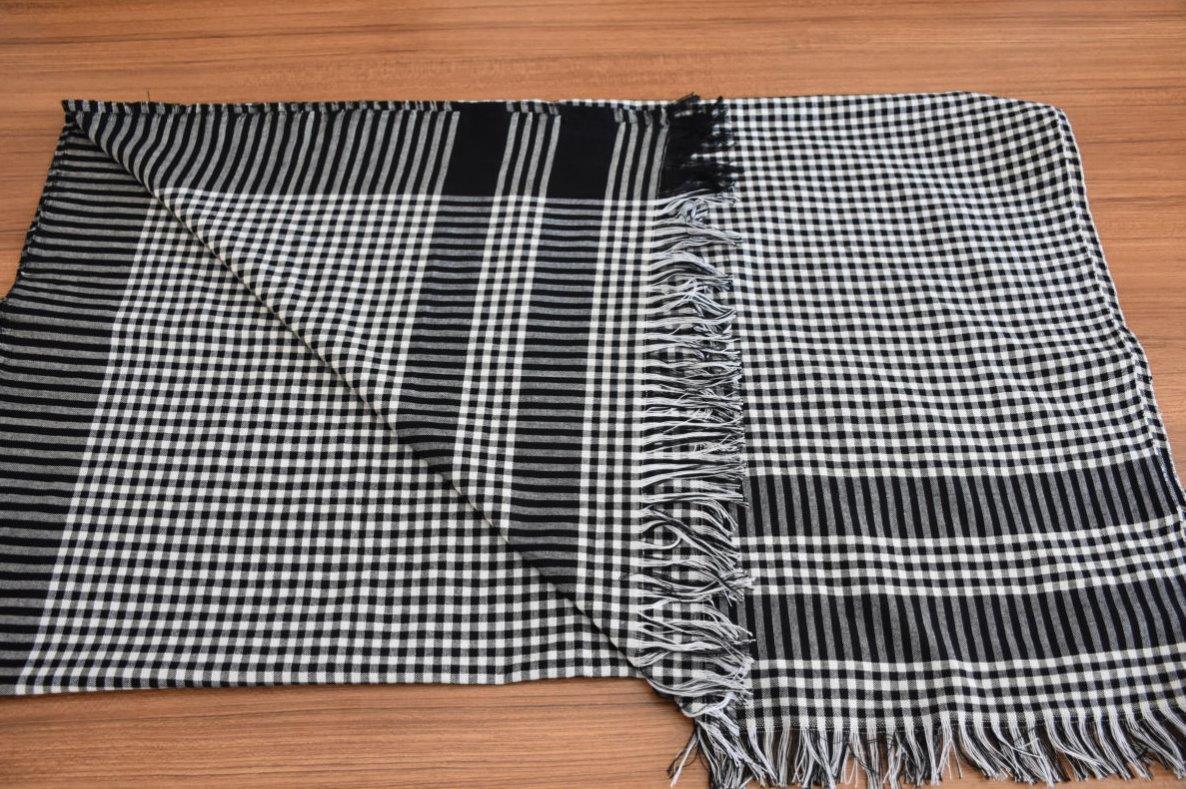
Malatya Kareli Çarşafı is a handwoven fabric sheet produced in the Yeşilyurt district of Malatya province and registered under a geographical indication. Measuring 240 x 90 cm, this product is distinguished by an ecose (checkerboard) pattern composed of approximately 42,600 small black and white squares. Its production requires a total of 86 spools: 43 black and 43 white, each wound with 40-count cotton thread. Locally, the Malatya Kareli Çarşafı is also known by names such as “hane-i kareyi çırmıhtı,” “alaca çarşaf,” “ehram,” and “satranç mahrama.” It is woven on looms using specific techniques to interlace warp and weft threads, and two sheets may be sewn together perpendicularly to create a larger textile intended for women’s veiling.
The Malatya Kareli Çarşafı is known by various local names including “hane-i kareyi çırmıhtı,” “alaca çarşaf,” “ehram,” and “satranç mahrama.” These names reflect both its functional uses and its distinctive pattern structure.
The Malatya Kareli Çarşafı is typically woven to a length of 240 cm and a width of 90 cm. Its surface features an ecose (checkerboard) pattern made up of approximately 42,600 small black and white squares, each measuring 0.5 cm. Each square is formed during weaving using seven spools of thread. A total of 86 spools—43 black and 43 white—are used in the weaving process, all wound with 40-count cotton thread.
The weaving consists of two main sections: the border and the main body. The border is constructed following a specific pattern: first, 5 cm of black-and-white checkerboard weave, followed by 5 cm of plain black-and-white weave, then another 5 cm of checkerboard, and finally another 5 cm of plain weave, resulting in a total border width of 20 cm on three sides. After completion of this border, the weaving proceeds to the main checkerboard field.
Primarily used as a woven sheet, the Malatya Kareli Çarşafı is also employed in regional culture for the veiling of women. When intended for this purpose, two finished sheets are sewn together perpendicularly after weaving to create a larger, usable textile.
The production of the Malatya Kareli Çarşafı requires a specific technical infrastructure and specialized tools. The loom consists of the following components: main frame, seat attached to the main frame, footrest, heddles, arms, tefe, mitit, shuttle, bobbin, selman, fixing iron (el demiri), dehdün, reed, gücü, tahsin stick, roof rope, and needle.
The production process proceeds as follows:
This unique weaving technique produces the characteristic checkerboard pattern of the product.
The weaving tradition of the Malatya Kareli Çarşafı has a long history within the Yeşilyurt district. Consequently, the product carries a geographical indication. All stages of production must be carried out within the boundaries of the Yeşilyurt district of Malatya province. This geographical dependency is one of the most important factors preserving the product’s distinctive qualities.
The Malatya Kareli Çarşafı is registered under geographical indication protection. The label “Malatya Kareli Çarşafı” and the geographical indication emblem must appear on the product or its packaging. In cases where this labeling cannot be applied directly to the product or packaging, it must be clearly displayed within the production facility.
After registration, production and marketing processes are monitored by an oversight body established under the coordination of the Yeşilyurt Municipality. This body consists of one expert representative each from the Malatya Provincial Directorate of Culture and Tourism, the Malatya Provincial Directorate of Industry and Technology, and the Yeşilyurt Municipality. Inspections are conducted at least once annually; additional inspections may be carried out at any time if deemed necessary or upon complaint.
The following elements are examined during inspections:
The oversight body may receive support or procure services from experts employed by public institutions or private organizations. The registering entity, namely the Yeşilyurt Municipality, is responsible for initiating legal procedures to protect rights related to the product.
Turk Patent and Trademark Office. "Malatya Kareli Çarşafı Coğrafi İşaret Tescil Belgesi (PDF)." Accessed July 13, 2025. https://ci.turkpatent.gov.tr/Files/GeographicalSigns/fc404e5d-3f6f-40a1-bf80-9a2143e7743c.pdf
Türk Patent ve Marka Kurumu. "Coğrafi İşaret Detay – Malatya Kareli Çarşafı." Accessed July 13, 2025. https://ci.turkpatent.gov.tr/cografi-isaretler/detay/6303
Registration Number | 1307 | ||||||||
|---|---|---|---|---|---|---|---|---|---|
Registration Date | 09.01.2023 | ||||||||
Application Number | C2022/000106 | ||||||||
Application Date | 21.03.2022 | ||||||||
Name of the Geographical Indication | Malatya Kareli Çarşafı | ||||||||
Product / Product Group(s) | Dokuma Çarşafı / Dokumalar | ||||||||
Type of Geographical Indication | Mahreç İşareti | ||||||||
Applicant/Registrant(s) | Yeşilyurt Municipality | ||||||||
Address of the Registrant | M. Kasım Mah. Adıyaman Cad. Yeşilyurt MALATYA | ||||||||
Geographical Boundary | Yeşilyurt District Malatya Province | ||||||||
No Discussion Added Yet
Start discussion for "Malatya Kareli Sheet" article
Naming and Local Terminology
Physical Characteristics
Applications
Production Method
Geographical Boundary and Production Link
Registration and Oversight