


This article was automatically translated from the original Turkish version.
+1 More
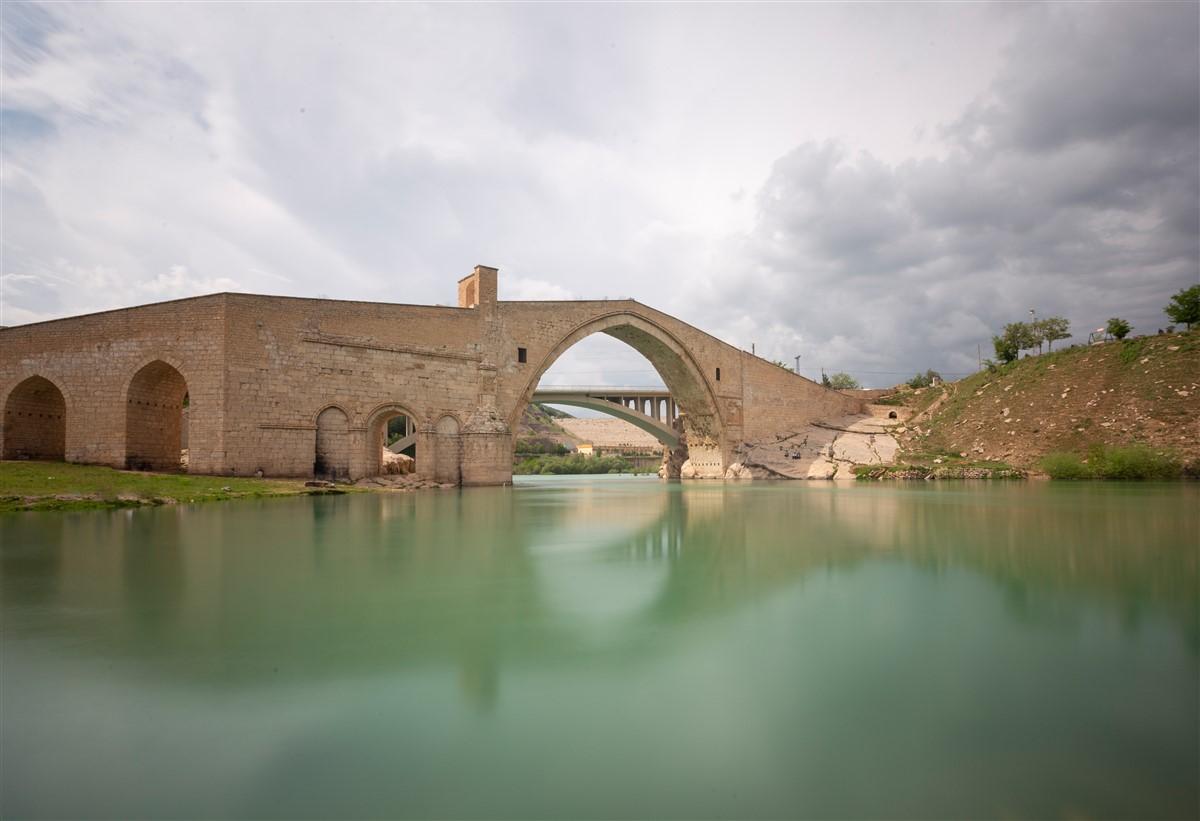
Malabadi Bridge
Location | Diyarbakır Silvan (half of it belongs to Batman) Within the boundaries of Kozluk Over the Batman River | ||||||||
|---|---|---|---|---|---|---|---|---|---|
Construction Date(s) | 1147 | ||||||||
Patron | Hüsamettin Timurtaş (Artuklid ruler) | ||||||||
Historical Origin | During the Marwanid period (992–1085), an older bridge existed and was destroyed | ||||||||
Architectural Feature | Width: 7.20 m Spans: 38.60 m (widest among stone bridges in the world) Shelter Rooms: On both sides of the arch, for caravans and travelers Construction: Single pointed arch with a total of five openings made of colored stones Height: 19 m (from water level to the keystone) Length: 150 m | ||||||||
Important Features | Sloped on both sides, oriented north-south Transmission of caravan sounds through passageways (legend) Stone gate and Nahçıvan steel railings (according to Evliya Çelebi) | ||||||||
Cultural Value | Evliya Çelebi: 'Can fit under the dome of Hagia Sophia' On the UNESCO World Heritage Tentative List Masterpiece of Artuklid architecture Albert Gabriel: 'Awe-inspiring before modern statics' | ||||||||
Function | Transportation, shelter, checkpoint | ||||||||
Similarity | Considered a 'twin' of the Mostar Bridge | ||||||||
Malabadi Bridge is a historic stone bridge located within the boundaries of the Silvan district of Diyarbakır province, spanning the Batman Çayı. It is recognized as the stone bridge with the widest arch span in Türkiye and the broader Near Eastern region. The structure standing today was commissioned in 1147 by Hüsameddin Timurtaş (Timurtaş bin İlgazi bin Artuk), a ruler of the Artukids. However, sources indicate that an older bridge dating back to the Marwanid period (992–1085) once stood at the same location, though it was eventually destroyed and did not survive to the present day.
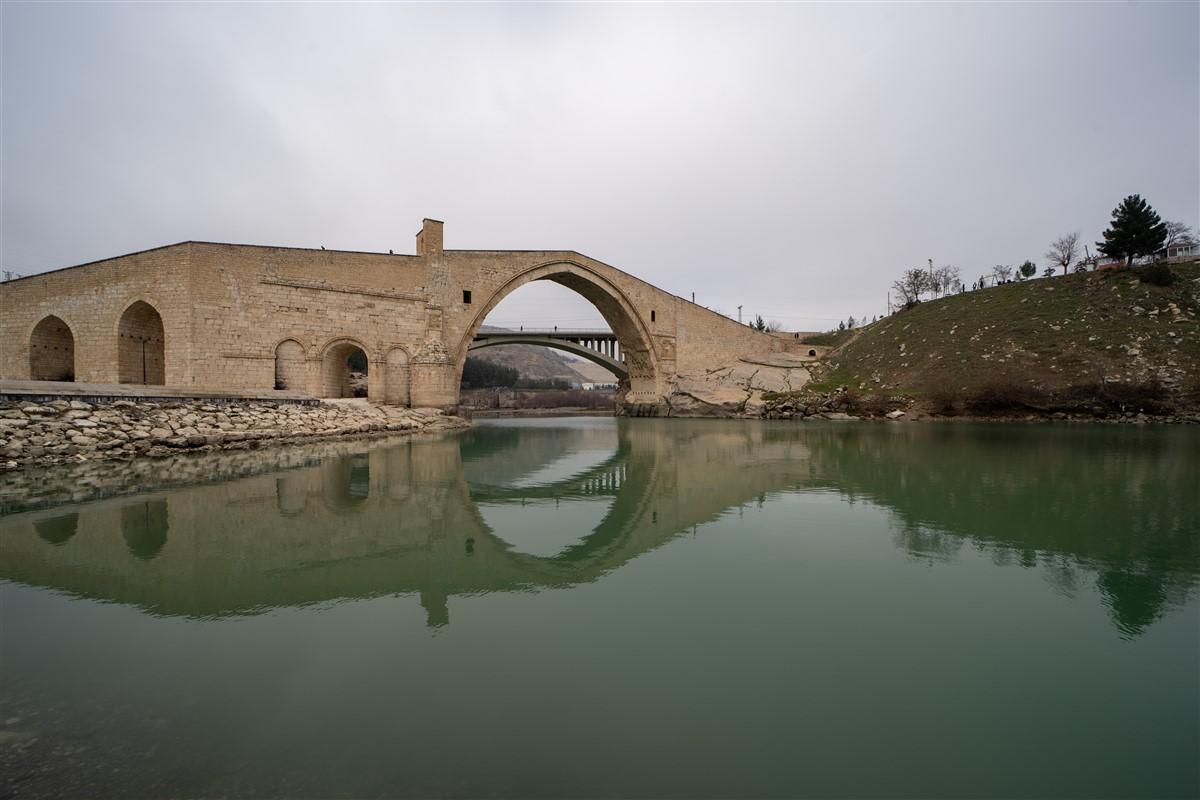
Malabadi Köprüsü (Diyarbakır Valiliği)
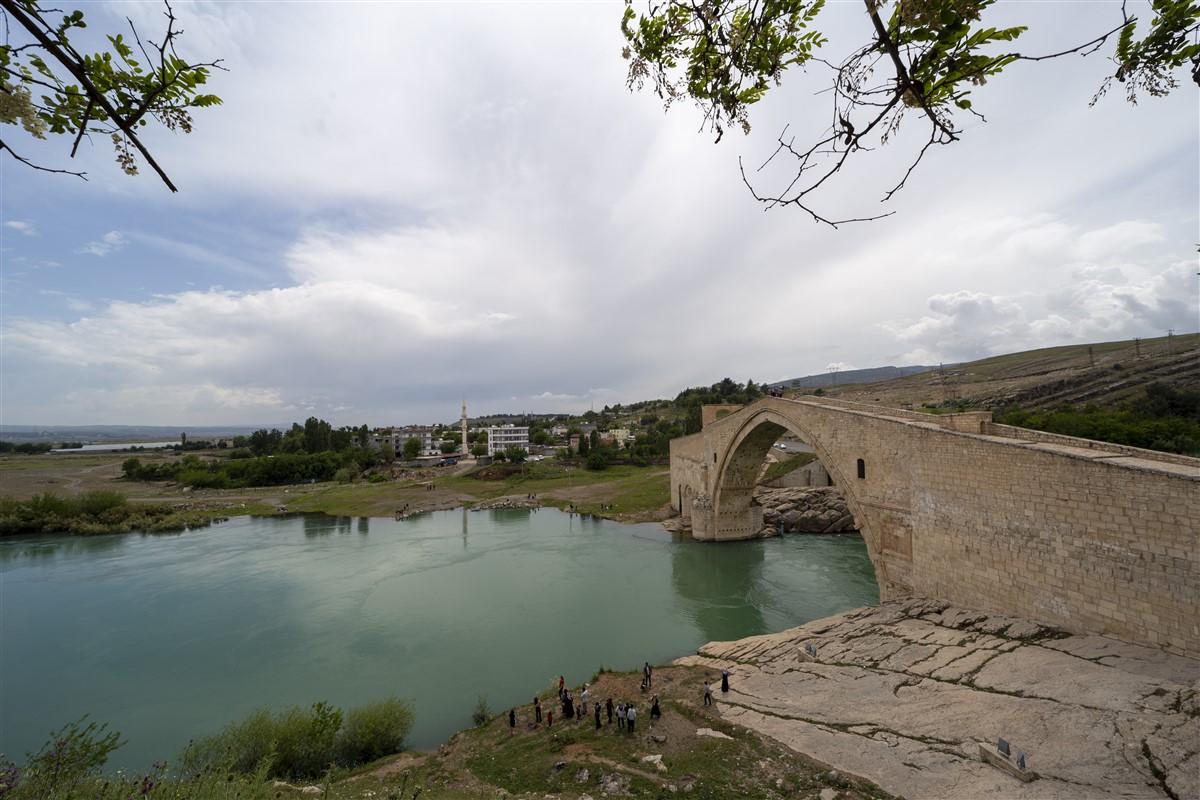
Malabadi Bridge is oriented north-south and features a sloping design on both sides, making it a remarkable example of architectural form and engineering solution. The bridge consists of a single main arch with a pointed profile spanning 38.60 meters, a feature that places it among the stone bridges with the widest spans in the world. The structure measures approximately 150 meters in length, 7.20 meters in width, and reaches a height of 19 meters from the water level to the keystone. Built using colored stone, the bridge has survived to the present day thanks to various restoration efforts carried out over the centuries.
The structure comprises three main sections: two side sections with broken lines and gently sloping approaches connecting to the eastern and western ends, and a central section resting on a rocky foundation. In the central section, alongside the main pointed arch spanning 38.60 meters, there is a smaller arch shaped like a basket handle with a span of 3 meters. Additionally, two other pointed arch openings exist elsewhere on the bridge, along with one more opening at the point of connection to the roadway. Thus, the entire structure exhibits a system of five arch openings.
On either side of the main arch, two rooms are situated on the inner face. These high-ceilinged, brick-vaulted rooms with large windows were used as shelter for caravans and travelers, particularly during the winter months. There are accounts suggesting that these rooms were also used by bridge guards and that in the past, underground passages connected them to the lower parts of the bridge, allowing the footsteps of caravans to be heard from considerable distances.
At the top of the bridge, a 5-meter-wide stone main gate and two side gates were constructed to control passage. Of these, only the side gate on the Batman side remains standing today; the other has been destroyed. Staircases provide access to the interior spaces through these gates. According to the traveler Evliya Çelebi, the bridge’s railings were adorned with ornate metalwork lattices made from Nahçıvan steel.
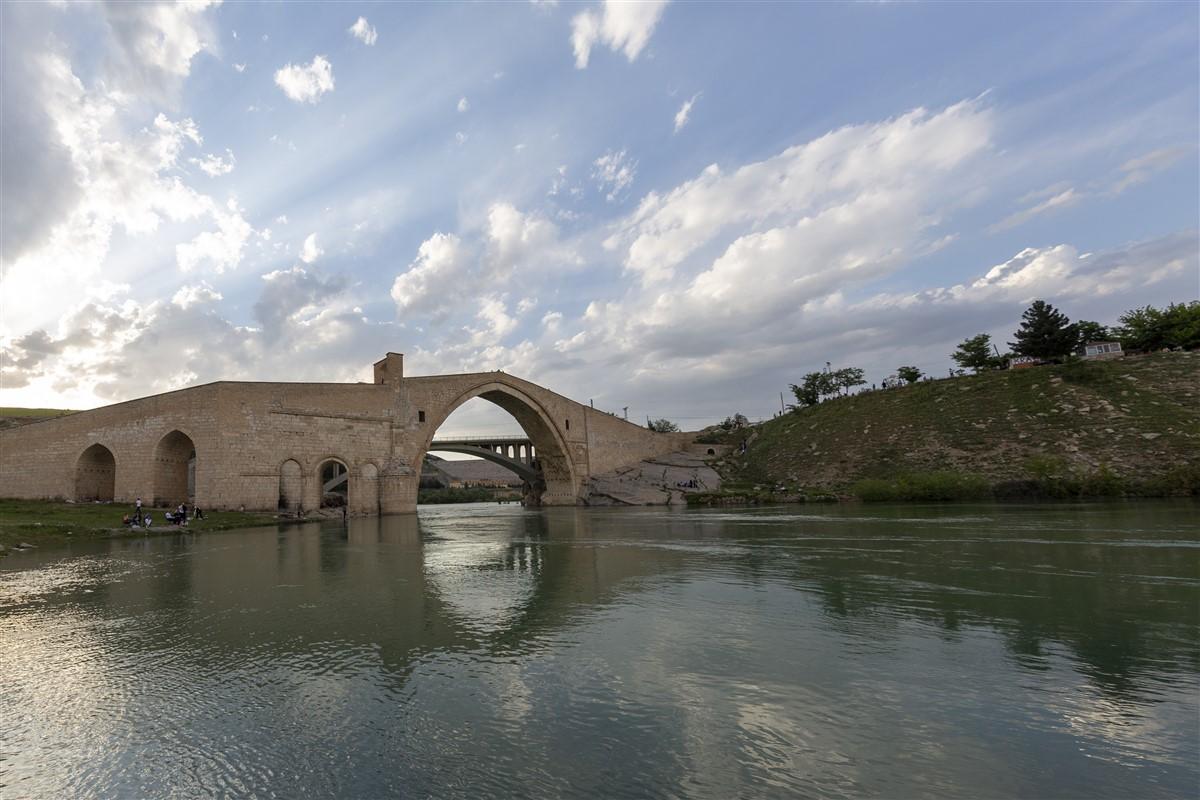
Malabadi Köprüsü (Diyarbakır Valiliği)
Malabadi Bridge is regarded as one of the finest examples of Artukid architecture and engineering. The Ottoman traveler Evliya Çelebi provided a detailed description of the bridge in his work Seyahatname, emphasizing its grandeur by stating that “the dome of Ayasofya could easily fit beneath its arch.” Çelebi noted that iron gates resembling those of a fortress stood on either side of the bridge, behind which were spaces used as hans where travelers lodged. He also described lively scenes of people conversing and fishing beneath the arches. Although Çelebi claimed the bridge was commissioned during the Abbasid period by a merchant for charitable purposes, historical and epigraphic evidence definitively confirms that it was constructed in 1147 under the orders of the Artukid ruler Timurtaş.
French architect and art historian Albert Gabriel also praised Malabadi Bridge, remarking that “the construction of such a structure with this span in an era devoid of modern static calculations is a source of admiration and respect,” highlighting its technical achievement. According to Gabriel, no other bridge of comparable span and age exists in the Balkans, Türkiye, or the Middle East. The bridge’s architectural and cultural value was internationally recognized when it was inscribed on UNESCO’s Tentative List of World Heritage Sites in 2016.
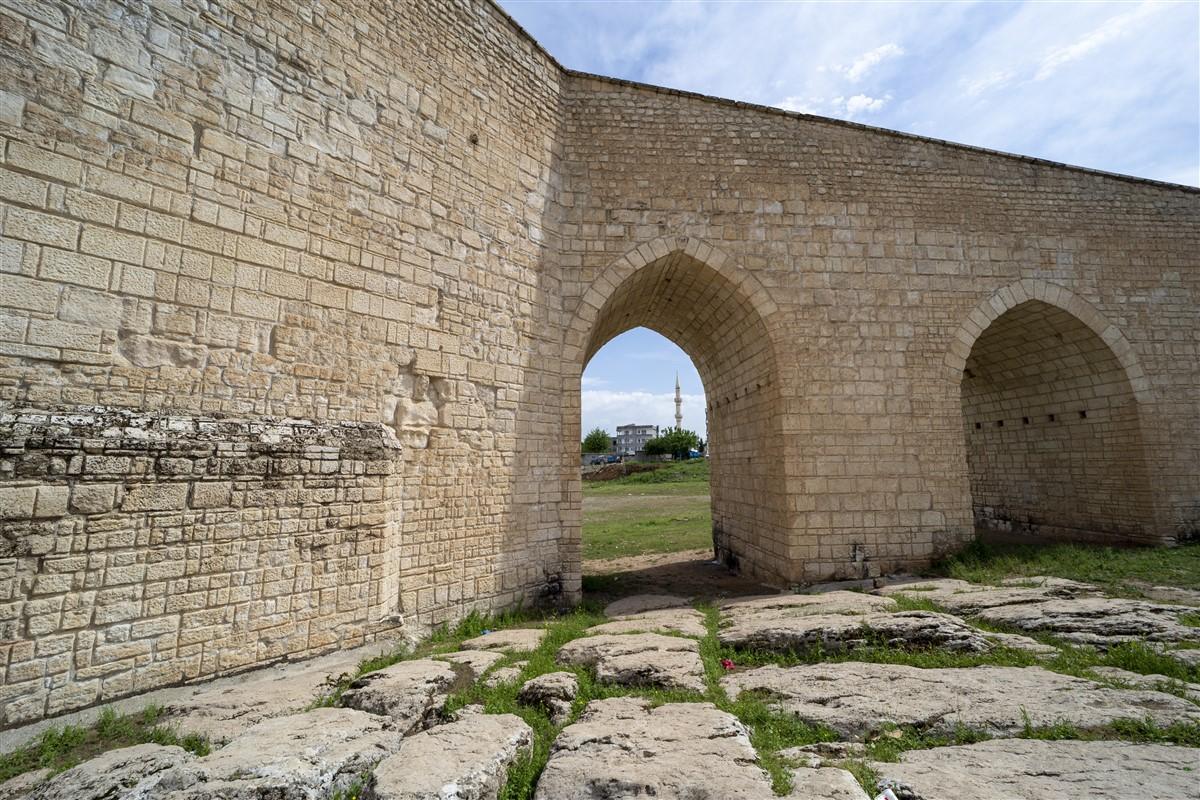
Malabadi Köprüsü (Diyarbakır Valiliği)
Beyond serving as a means of transportation, Malabadi Bridge stands out as a multifunctional architectural masterpiece. Its interior spaces were specifically designed to meet the needs of caravans and travelers for rest, shelter, and protection from external threats. Strategically located along the Silvan-Bitlis route, the bridge lies within the administrative boundaries of two different provinces: one section is in Silvan district of Diyarbakır, while the other falls within the boundaries of Kozluk district of Batman. Due to its structural form and aesthetic similarities, it is often compared to the Mostar Bridge in Bosnia-Herzegovina and is sometimes referred to as its “twin.”
Malabadi Bridge holds a distinguished position among historical structures due to its architectural elegance and engineering superiority. This monumental bridge, built over the Batman Çayı, is regarded as one of the most significant sites in the region for both local and foreign visitors.
Malabadi Köprüsü (Diyarbakır Valiliği)
Batman Valiliği. "Malabadi Köprüsü." Accessed April 5, 2025.http://www.batman.gov.tr/malabadi-koprusu
Diyarbakır Valiliği. "Diyarbakır Malabadi Köprüsü." Accessed April 5, 2025.http://www.diyarbakir.gov.tr/diyarbakir-malabadi-koprusu
Silvan Belediyesi. “Artukluların Şah Eseri Malabadi Köprüsü.” Accessed April 5, 2025.https://www.silvan.bel.tr/artuklularin-sah-eseri-malabadi-koprusu
Malabadi Bridge
Location | Diyarbakır Silvan (half of it belongs to Batman) Within the boundaries of Kozluk Over the Batman River | ||||||||
|---|---|---|---|---|---|---|---|---|---|
Construction Date(s) | 1147 | ||||||||
Patron | Hüsamettin Timurtaş (Artuklid ruler) | ||||||||
Historical Origin | During the Marwanid period (992–1085), an older bridge existed and was destroyed | ||||||||
Architectural Feature | Width: 7.20 m Spans: 38.60 m (widest among stone bridges in the world) Shelter Rooms: On both sides of the arch, for caravans and travelers Construction: Single pointed arch with a total of five openings made of colored stones Height: 19 m (from water level to the keystone) Length: 150 m | ||||||||
Important Features | Sloped on both sides, oriented north-south Transmission of caravan sounds through passageways (legend) Stone gate and Nahçıvan steel railings (according to Evliya Çelebi) | ||||||||
Cultural Value | Evliya Çelebi: 'Can fit under the dome of Hagia Sophia' On the UNESCO World Heritage Tentative List Masterpiece of Artuklid architecture Albert Gabriel: 'Awe-inspiring before modern statics' | ||||||||
Function | Transportation, shelter, checkpoint | ||||||||
Similarity | Considered a 'twin' of the Mostar Bridge | ||||||||
Architectural Features
Historical and Cultural Significance
Functions and Location