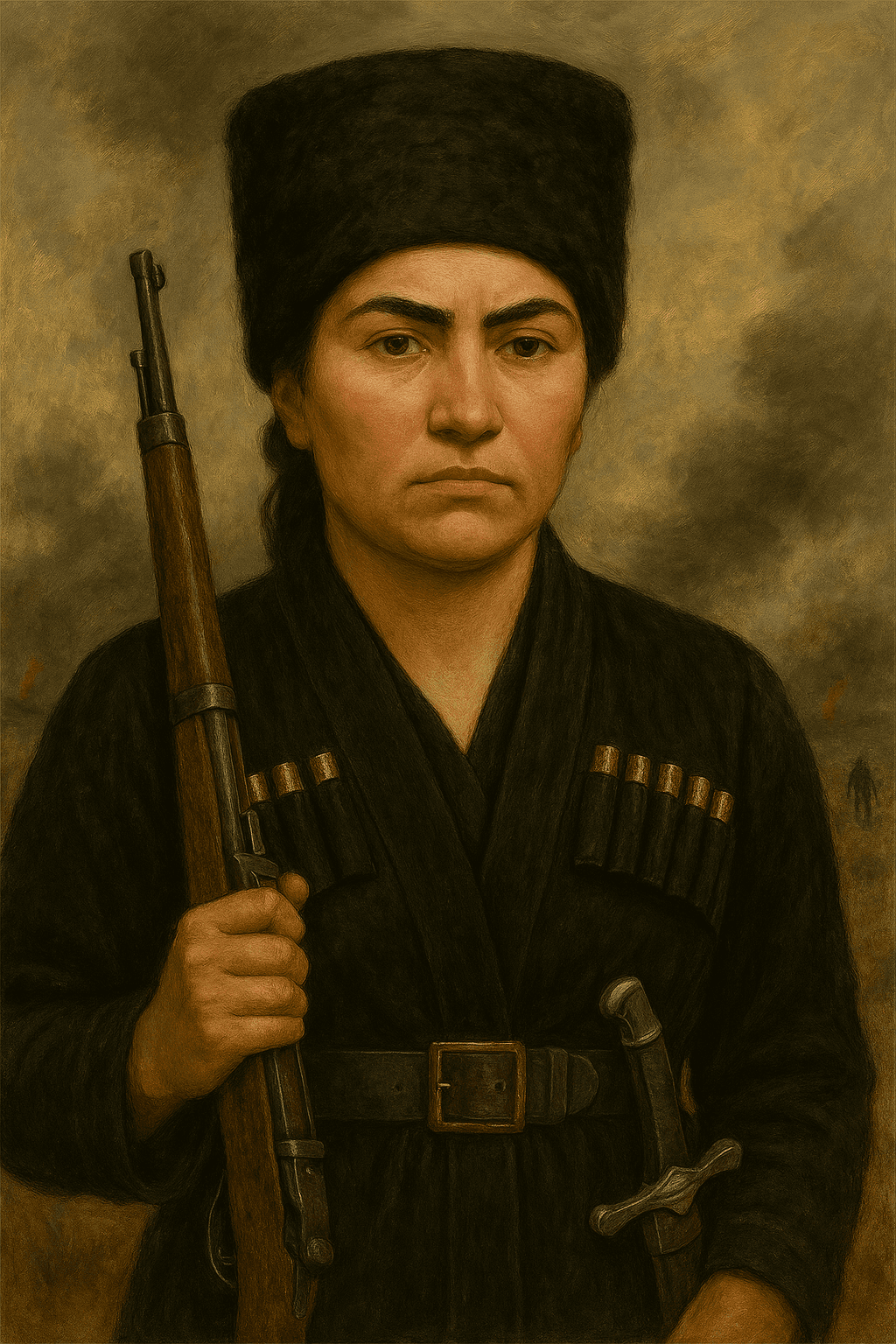


Makbule Hanım of Gördes
Makbule Hanım was born in 1902 in the district of Gördes, Manisa. Her childhood coincided with the final years of the Ottoman Empire. She lost her father during the First World War and her older brother during the Yemen War. After these losses, she was raised by her mother. From an early age, she learned to use firearms and ride horses. Because of these skills, she became known among her peers as "Soldier Makbule".
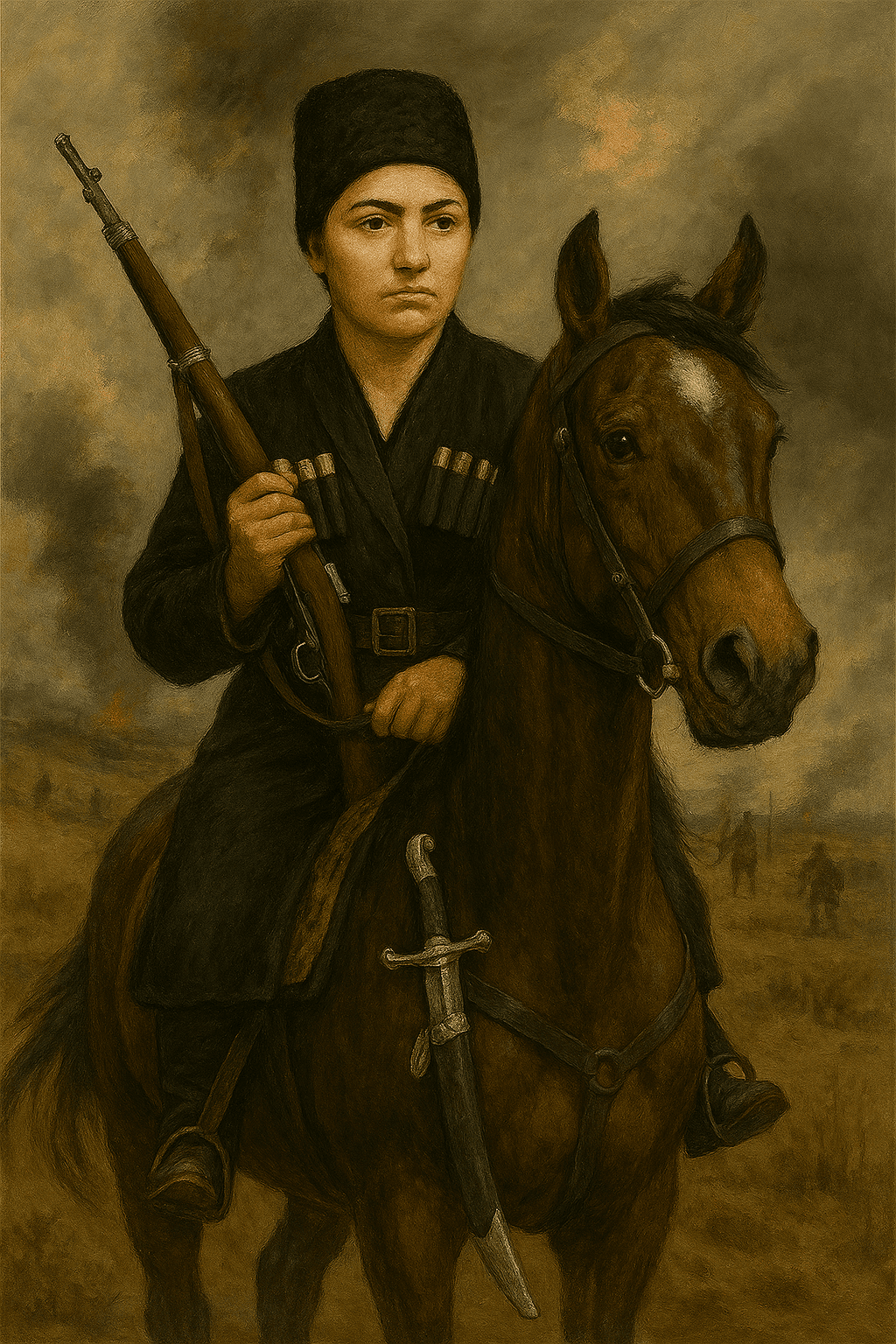
Gördesli Makbule Hanım (Generated by Artificial Intelligence)
Participation in the National Struggle
During the National Struggle, Makbule Hanım married Usturumcalı Halil Efe. Upon realizing that her husband was secretly preparing resistance against the occupying forces, she refused to remain at home. Following him, she went to Kaymakam İbrahim Ethem Bey, commander of the Demirci Partisan Organization, and expressed her desire to join the defense of the homeland. Impressed by her determination, İbrahim Ethem Bey accepted her into the Partisan detachment. Thus, Makbule Hanım became a soldier of the detachment, armed with her horse and rifle.
Battles and Martyrdom
Makbule Hanım participated in numerous engagements alongside the Partisans in the mountains of Demirci, Gördes, Simav, and Sındırgı. During the struggle, she wore black trousers, a jacket, a long coat, boots, and a black head covering that concealed her face, leaving only her eyes visible. She carried a rifle and operated from behind the detachment, riding a horse she had captured from the enemy. She played a crucial role in securing victory during the Güvemdere Battle, where she inspired the soldiers with her courage.
On 17 March 1922, at the age of 20, she was martyred in a clash with enemy forces in Kocayayla. To prevent her body from falling into enemy hands, she was secretly buried. Her husband, Halil Efe, also lost his life in another battle approximately two months after Makbule Hanım’s death.
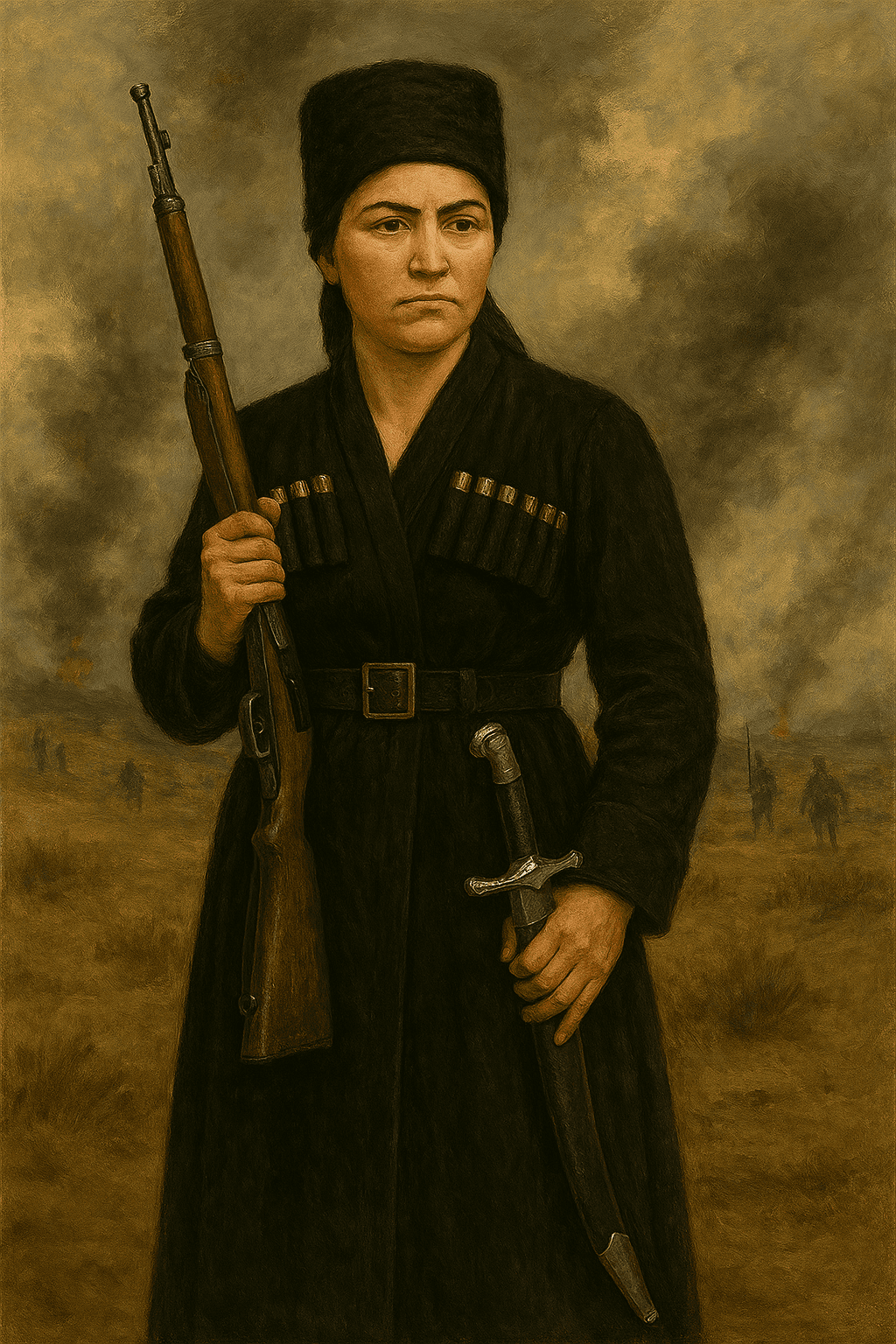
Gördesli Makbule Hanım (Generated by Artificial Intelligence)
Memorial and Legacy
Today, the memory of Makbule Hanım is kept alive in her hometown of Gördes. Her name has been given to squares, schools, and streets. Her grave has been transformed into a shrine. The municipalities of Gördes and Sındırgı organize commemorative events to pass on her heroism to future generations. She holds a place in history as one of the symbolic figures representing the active and self-sacrificing role of women in the Turkish War of Independence.