This article was automatically translated from the original Turkish version.
Location | Türkiye Kastamonu Kasaba Village | ||||||||
|---|---|---|---|---|---|---|---|---|---|
Construction Date(s) | ruler of the Candaroğulları Beylik) son of Emir Adil Bey 1366 (by Emir Mahmud Bey | ||||||||
Material(s) | Wood Stone | ||||||||
Number of Minarets | 1 | ||||||||
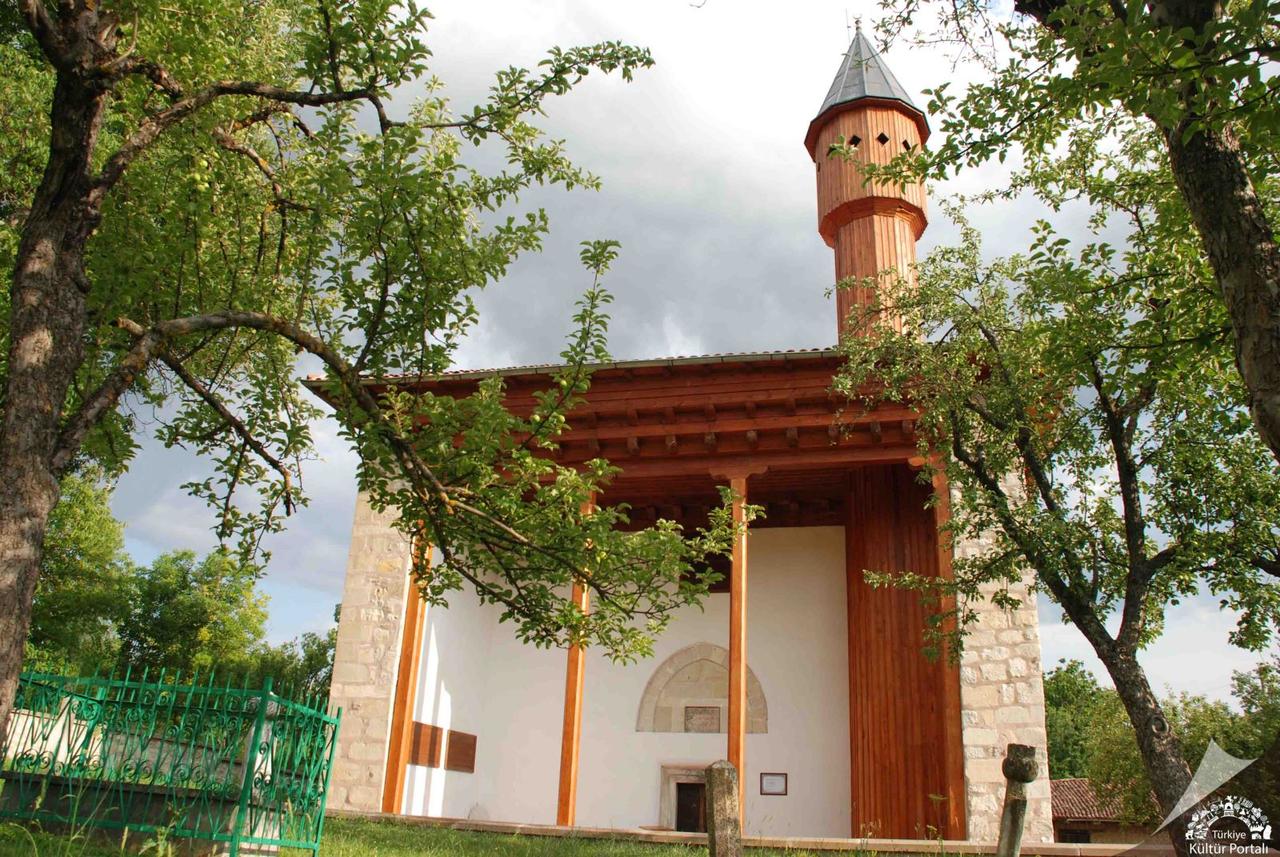
Mahmutbey Camii is a structure located in Kasaba Village, Kastamonu, reflecting the tradition of wooden architecture in Anatolian Turkish architecture. Built in 1366 during the rule of the Candaroğulları Beylik by Emir Hüsameddin Mahmut Bey, the mosque is also known as the “Çivisiz Camii” (Nail-Free Mosque) due to its wooden elements being joined together without the use of nails. Its architectural aesthetics, decorations, and construction technique make it a rare example not only as a religious building but also from the perspective of art history.
The Mahmutbey Camii was commissioned by Emir Hüsameddin Mahmut Bey, one of the prominent state officials of the Candaroğulları Beylik. The construction date is accepted as 1366. The Candaroğulları ruled over the western Black Sea region during the Anatolian Beyliks period and left behind a rich architectural heritage. Mahmutbey Camii is among the best-preserved examples of this era. The mosque’s foundation inscription has survived to the present day, confirming both its construction date and the name of its patron through this document.
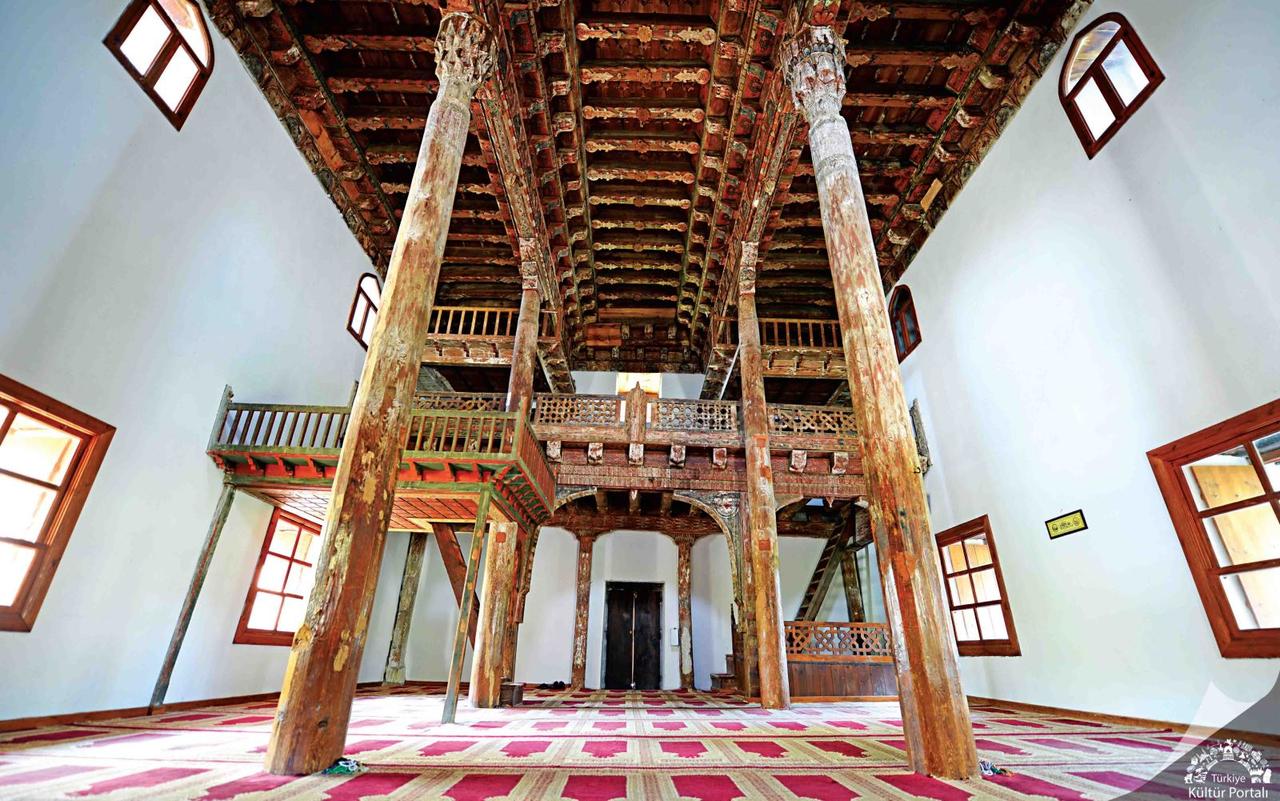
Mahmutbey Camii (Culture Portal)
The entire structure is built of wood, with no nails or metal elements used at any of the joints. The components are joined using mortise-and-tenon and carving techniques. The building has a rectangular plan and features a wooden columned prayer hall without a dome. The ceiling is entirely covered with wooden craftsmanship, and the main load of the structure is carried by twelve wooden columns. The mosque’s entrance door is regarded as one of the rare examples of wooden carving in Anatolia; its colorful penwork decorations attract attention with their geometric and vegetal motifs. The minaret was added later and constructed of wood on a stone foundation.
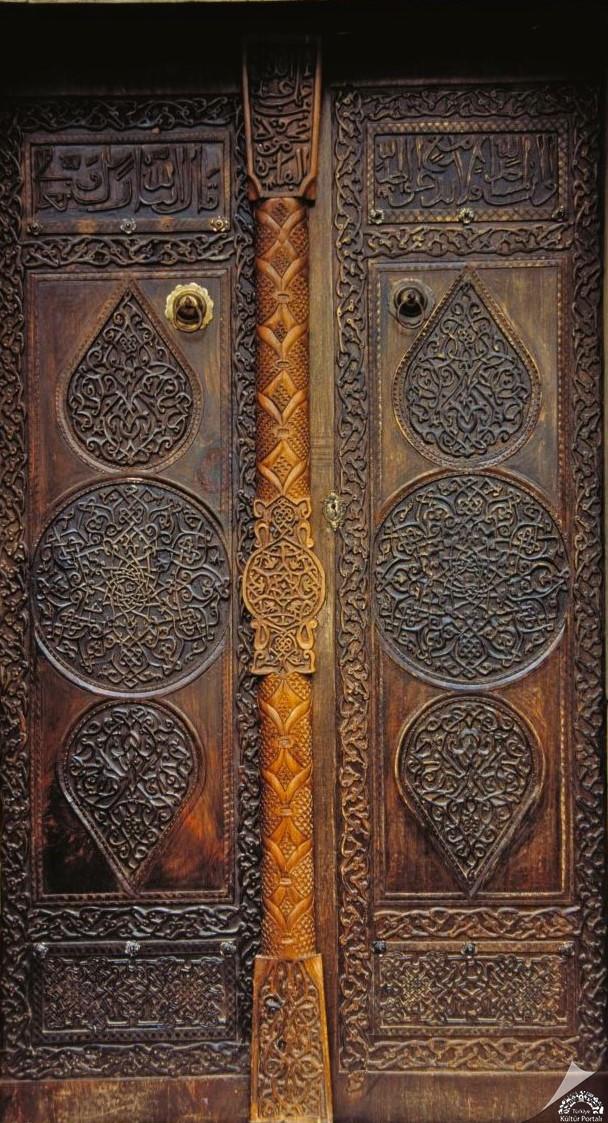
Mahmutbey Camii Door (Culture Portal)
The Mahmutbey Camii is an architecturally and culturally significant structure due to its status as one of the rare surviving examples of Anatolian wooden architecture. Its entrance door, crafted entirely using wooden carving techniques, is considered an original masterpiece in Turkish art history. The original door is currently preserved at the Kastamonu Ethnography Museum, while a faithful replica has been installed in the mosque. The interior decorations reflect a decorative approach that combines geometric compositions, vegetal motifs, and elements of calligraphy. Mahmutbey Camii preserves the character of pre-Ottoman beylik-period architecture and holds an important place in scholarly literature as one of the key representatives of this tradition.
Kastamonu Mahmut Bey Camii (Ministry of Culture and Tourism of Türkiye)
In 2014, Mahmutbey Camii was included in UNESCO’s Tentative List of World Heritage Sites, thereby gaining international recognition as a cultural heritage asset. The mosque, protected by the Turkish Ministry of Culture and Tourism, has maintained its structural integrity through various restoration efforts over the centuries. Additionally, due to its location along the historic İstiklal Yolu route in Kastamonu, it is regarded as an important stop on the region’s cultural itineraries.
Anadolu Ajansı. “UNESCO Listesi’ndeki Mahmutbey Camii’nin Yanındaki Hamamda Kazı Çalışmaları Sürüyor.” *TRT Haber*, January 8, 2025. Accessed August 3, 2025. https://www.trthaber.com/haber/kultur-sanat/unesco-listesindeki-mahmutbey-camiinin-yanindaki-hamamda-kurtarma-kazisi-yapiliyor-893721.html
Kastamonu Üniversitesi Gazete. “Asırlık Şaheser: Çivisiz Cami.” Kastamonu Üniversitesi Gazete, November 23, 2022. Accessed August 3, 2025. https://gazete.kastamonu.edu.tr/index.php/asirlik-saheser-civisiz-cami/
Kuzey Anadolu Kalkınma Ajansı (KUZKA). "Kasaba Köyü Mahmut-Bey Camisi UNESCO Dünya Miras Listesi’nde." Kuzka.gov.tr. Accessed August 3, 2025. https://www.kuzka.gov.tr/basinda-detay.asp?H=1820&Haber=kasaba-koyu-mahmut-bey-camisi-unesco-dunya-miras-listesinde
Ministry of Culture and Tourism of the Republic of Turkey. "Kasaba Köyü Mahmutbey Camii." *Kültür Portalı*. Accessed August 3, 2025. https://kastamonu.ktb.gov.tr/TR-361880/kasaba-koyu-mahmutbey-cami.html
T.C. Kültür ve Turizm Bakanlığı. "Mahmut Bey Camisi." Accessed August 8, 2025. https://www.kulturportali.gov.tr/turkiye/kastamonu/gezilecekyer/mahmut-bey-cam.

Location | Türkiye Kastamonu Kasaba Village | ||||||||
|---|---|---|---|---|---|---|---|---|---|
Construction Date(s) | ruler of the Candaroğulları Beylik) son of Emir Adil Bey 1366 (by Emir Mahmud Bey | ||||||||
Material(s) | Wood Stone | ||||||||
Number of Minarets | 1 | ||||||||
No Discussion Added Yet
Start discussion for "Mahmutbey Camii (Çivisiz Camii)" article
History
Architectural Features
Artistic and Cultural Significance
Conservation and Heritage Status