


This article was automatically translated from the original Turkish version.
+2 More
Lun Class MD-160 Ekranoplan
Producer | Alexeyev Central Hydrofoil Design Bureau | ||||||||
|---|---|---|---|---|---|---|---|---|---|
First Flight | 1987 | ||||||||
Entry into Service | 1987 (Soviet Navy) | ||||||||
Aircraft Type | Wing-in-ground effect (WIG), missile-carrying sea vehicle (Ekranoplan) | ||||||||
Models | MD-160 (only one model produced) | ||||||||
Crew | 15 personnel (6 officers 9 enlisted) | ||||||||
Fuselage Length | 73.8 metres (242.1 ft) | ||||||||
Wingspan | 44 metres (144.4 ft) | ||||||||
Height (Above Tail) | 19.2 metres (63.0 ft) | ||||||||
Wing Area | 550 m² (5,900 sq ft) | ||||||||
Engines | 8 × Kuznetsov NK-87 turbofans; each producing 127.4 kN (28,600 lbf) thrust | ||||||||
Draft | Approximately 2.5 metres (8.2 ft) | ||||||||
Empty Weight | 243,000 kg (535,723 lb) | ||||||||
Maximum Takeoff Weight | 380,000 kg (837,757 lb) | ||||||||
Maximum Speed | 550 km/h (342 mph 297 knots) | ||||||||
Cruise Speed | Cruising speed: 450 km/h (280 mph 243 knots) | ||||||||
Weapons | 6 × P-270 Moskit anti-ship guided missiles 2 × 23mm Pl-23 twin-barrel gun turrets | ||||||||
Lun Class MD-160 Ekranoplan is a specialized military vehicle concept developed by the Soviet Union in the 1980s that utilizes the ground effect to achieve high speeds just a few meters above the water surface. Ekranoplan, as this platform is known, was designed to combine the high speed and maneuverability of an aircraft with the payload capacity of a ship.
Its primary strategic objective was to gain tactical advantage against enemy naval forces by conducting rapid and unexpected attacks beyond the speed and maneuverability limits of conventional maritime vessels, particularly in anti-ship operations. In this context, the Lun Class represents a concrete example of the Soviet Union’s innovative and unconventional military approaches. International Maritime Organization (IMO) also classifies it as a maritime vessel.

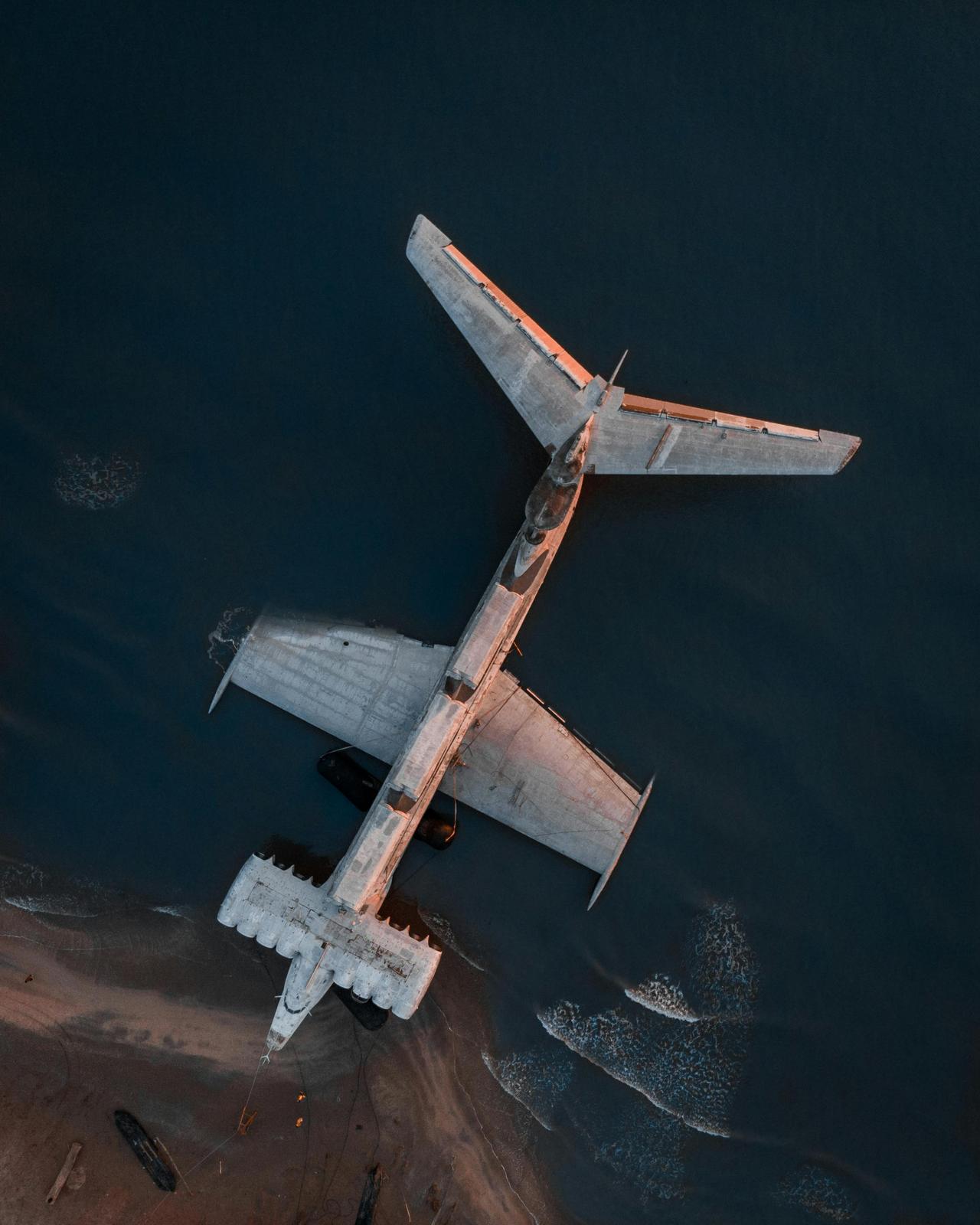
Lun Class MD-160 Ekranoplan (Pexels)
Development work began in the 1970s under the leadership of Rostislav Evgenievich Alexeyev. Alexeyev’s design bureau investigated the application of the ground effect for both civilian and military purposes and assessed its potential for creating high-speed surface vehicles. The development of the Lun Class was based on extensive data and experience gained from the earlier large-scale experimental KM ekranoplan. The Soviet Navy’s strategic need for a high-speed, heavily armed platform capable of countering NATO’s growing naval power and overcoming the limitations of conventional maritime vessels was a major driving force behind the Lun Class project. MD-160 was produced as the sole example of this class.
The Lun Class features an original design that integrates aerodynamic and hydrodynamic principles. Its hull has boat-like lines for stable buoyancy and low-speed travel on water. Short, wide wings are positioned to maximize efficiency from the ground effect. Eight powerful Kuznetsov NK-87 turbofan engines mounted at the front of the vehicle provide high thrust for takeoff and enable high subsonic speeds during cruise, typically at altitudes of 3 to 15 meters above the water surface. The placement and angle of the engines were carefully calculated to enhance thrust efficiency and contribute to stabilization under the ground effect. The vehicle has a single vertical stabilizer and a “T” tail configuration.
Lun Class MD-160 Ekranoplan (YouTube)
Ekranoplans such as the Lun Class have fundamental aerodynamic differences from conventional aircraft. While aircraft generate lift through pressure differentials created by airflow over and under their wings at high altitudes, ekranoplans derive a significant portion of their lift from the ground effect. This effect arises from a “cushion” of air compressed between the wing and the surface (water or land). This allows the vehicle to carry heavier loads and consume less fuel than a conventional aircraft of the same weight, using smaller wings. However, this aerodynamic advantage comes with certain limitations. These include:

Lun Class MD-160 Ekranoplan (Pexels)
The placement of the Lun Class’s eight powerful turbofan engines near the front of the fuselage and very close to the water surface introduces potential risks and maintenance challenges:
These risks and maintenance challenges have been significant factors negatively affecting the operational reliability and sustainability of ekranoplans.
Lun Class MD-160 Ekranoplan has a crew capacity of 15 personnel, consisting of 6 officers and 9 enlisted sailors. The vehicle’s fuselage length is 73.8 meters (242.1 feet) and its wingspan is 44 meters (144.4 feet). Its total height to the top of the tail is 19.2 meters (63.0 feet), with a wing area of approximately 550 square meters (5,900 sq ft). The draft when resting on water is about 2.5 meters (8.2 feet).
The Lun Class has an empty weight of 243,000 kilograms (535,723 pounds) and a maximum takeoff weight of 380,000 kilograms (837,757 pounds). Its propulsion system consists of eight Kuznetsov NK-87 turbofan engines, each producing 127.4 kN (28,600 lbf) of thrust. These engines enable the vehicle to reach a maximum speed of 550 km/h (342 mph, 297 knots), with a typical cruise speed of 450 km/h (280 mph, 243 knots). Its range is approximately 2,000 kilometers (1,243 miles, 1,080 nautical miles).
Operating using the ground effect, the Lun Class typically flies at altitudes between 1 and 5 meters (3–16 feet). Its operational performance is limited to sea conditions with wave heights of up to 3 meters (9.8 feet).
The ekranoplan is heavily armed, carrying a total of six P-270 Moskit (NATO designation SS-N-22 Sunburn) anti-ship guided missiles arranged in three twin launchers on top of the fuselage. For defensive purposes, it is also equipped with two 23 mm Pl-23 twin-barreled turret guns, one mounted at the tail and the other beneath the missile launchers.

Lun Class MD-160 Ekranoplan (Pexels)
The single MD-160 prototype was commissioned into the Soviet Navy in 1987 and served briefly with the Caspian Flotilla. Its primary operational concept was to conduct high-speed, low-altitude surprise attacks to penetrate enemy naval air defense systems. It was intended to serve as a strategic asymmetric deterrent against NATO aircraft carrier groups. However, the MD-160’s service life was very limited and it never progressed to full-scale production.
Lun Class ekranoplans possessed an extremely complex engineering structure and high production costs. Operationally, their heavy dependence on the water surface severely restricted their usability under adverse weather and sea conditions. Additionally, these platforms did not fully align with existing military doctrines and created significant challenges in command and control integration.
The economic difficulties and shifting strategic priorities following the dissolution of the Soviet Union played a major role in the abandonment of these projects. Moreover, piloting and maintaining these vehicles required specially trained personnel, resulting in high costs and operational complexity. The inherent instability of the ground effect flight regime introduced persistent stability issues. Finally, the placement of the engines close to the water surface led to serious reliability and maintenance problems, including foreign object damage, corrosion, water ingestion risks, and limited accessibility.
The single Lun Class ekranoplan, MD-160, remained idle for many years before being transferred in 2020 to the Patriot Park military museum in Derbent, where it is now on public display. This has preserved it as a unique and ambitious project of Soviet engineering and provided visitors with an opportunity to learn about this remarkable vehicle.
Aertec Solutions. “Ekranoplan: The Aircraft That Never Took Off.” Accessed April 23, 2025.https://aertecsolutions.com/en/2019/12/02/ekranoplan-the-aircraft-that-never-took-off/
AirTurkHaber. "Ekranoplan." AirTurkHaber. Accessed April 23, 2025.https://www.airturkhaber.com/yazarlar/ekranoplan/
BulgarianMilitary.com. Nikolov, Boyko. “Russia Fired P-270 Moskit and Sank Ukrainian Anti-Sub Corvette.” BulgarianMilitary.com. Accessed April 23, 2025.https://bulgarianmilitary.com/2023/07/22/russia-fired-p-270-moskit-and-sank-ukrainian-anti-sub-corvette/
Everyone for Aviation. "What Is an Ekranoplan?" Everyone for Aviation. Accessed April 23, 2025.https://herkesicinhavacilik.com/2022/02/15/ekranoplan-nedir/
Ilya, Sobolev. "Lun Class MD-160 Ekranoplan JPG." Pexels. Accessed April 24, 2025.https://www.pexels.com/tr-tr/fotograf/deniz-plaj-kum-su-12003053/
MilitaryFactory.com. "Lun (Ekranoplan) Ground Effect Flying Boat / Anti-Ship Warfare Aircraft." MilitaryFactory.com. Accessed April 23, 2025.https://www.militaryfactory.com/aircraft/detail.php?aircraft_id=522
Ruslan, Ataev. "Ekranoplan'ın Hava Görünümü JPG." Pexels. Accessed April 24, 2025.https://www.pexels.com/tr-tr/fotograf/mon-19639283/
Ruslan, Ataev. *Каспийский Monстр JPG.* Pexels. Accessed April 24, 2025.https://www.pexels.com/tr-tr/fotograf/ekranoplan-in-hava-gorunumu-19639288/
The War Zone. Trevithick, Joseph. “The Only Missile-Toting Ekranoplan Russia Ever Built Just Took Its Last Trip on the Caspian.” Accessed April 23, 2025.https://www.twz.com/35267/the-only-missile-toting-ekranoplan-russia-ever-built-just-took-its-last-trip-on-the-caspian
Uçaklar.org. "Hazar Denizi Canavarı: Ekranoplan." Accessed April 23, 2025.https://ucaklar.org/hazar-denizi-canavari-ekranoplan/

Lun Class MD-160 Ekranoplan
Producer | Alexeyev Central Hydrofoil Design Bureau | ||||||||
|---|---|---|---|---|---|---|---|---|---|
First Flight | 1987 | ||||||||
Entry into Service | 1987 (Soviet Navy) | ||||||||
Aircraft Type | Wing-in-ground effect (WIG), missile-carrying sea vehicle (Ekranoplan) | ||||||||
Models | MD-160 (only one model produced) | ||||||||
Crew | 15 personnel (6 officers 9 enlisted) | ||||||||
Fuselage Length | 73.8 metres (242.1 ft) | ||||||||
Wingspan | 44 metres (144.4 ft) | ||||||||
Height (Above Tail) | 19.2 metres (63.0 ft) | ||||||||
Wing Area | 550 m² (5,900 sq ft) | ||||||||
Engines | 8 × Kuznetsov NK-87 turbofans; each producing 127.4 kN (28,600 lbf) thrust | ||||||||
Draft | Approximately 2.5 metres (8.2 ft) | ||||||||
Empty Weight | 243,000 kg (535,723 lb) | ||||||||
Maximum Takeoff Weight | 380,000 kg (837,757 lb) | ||||||||
Maximum Speed | 550 km/h (342 mph 297 knots) | ||||||||
Cruise Speed | Cruising speed: 450 km/h (280 mph 243 knots) | ||||||||
Weapons | 6 × P-270 Moskit anti-ship guided missiles 2 × 23mm Pl-23 twin-barrel gun turrets | ||||||||
No Discussion Added Yet
Start discussion for "Lun Class MD-160 Ekranoplan" article
Development Process
Design Features
Aerodynamic Differences and Limitations
Engine Placement, Risks, and Maintenance Issues
Technical Specifications
Operational History
Reasons for Non-Adoption
Current Status