


This article was automatically translated from the original Turkish version.

Since the mid-1950s, this twin-lens reflex (TLR) camera produced in the Soviet Union has reached a wide user base due to its affordable price and relatively compact design. Today still, it is preferred by both collectors and creative analog photographers.
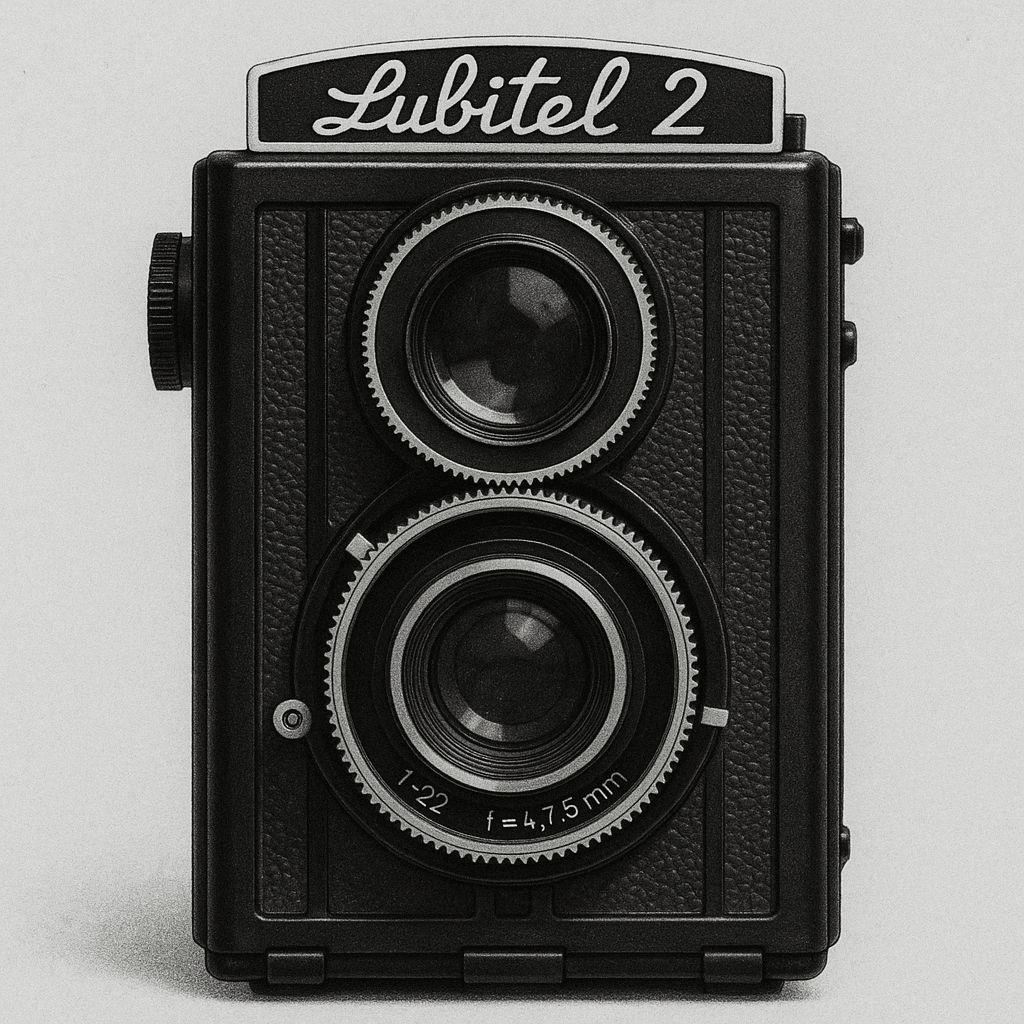
Lubitel 2 (Generated by artificial intelligence.)
The Lubitel 2 was manufactured by the LOMO company in the Soviet Union between 1955 and 1977. This medium format (120 film) camera produces square exposures (6x6 cm). It is equipped with a triplet lens named T-22, with a focal length of 75 mm and a maximum aperture of f/4.5. This lens allows manual focusing from approximately 1.3 meters to infinity.
The camera supports shutter speeds ranging from 1/15 to 1/250 seconds and also offers a “B” (bulb) mode for long exposures. The aperture can be adjusted between f/4.5 and f/22. The viewfinder system provides a classic TLR experience with a ground glass screen viewed at waist level. The shutter mechanism is a central shutter based on a relatively simple mechanical design.
One roll of film in the Lubitel 2 yields 12 square exposures of 6x6 cm. The viewfinder and exposure lenses are separate; the upper lens only reflects the image to the viewfinder, while the lower lens captures the actual image onto the film.
The Lubitel 2 features a sturdy body made of a combination of plastic and metal. Its lightweight design makes it easy to carry; however, its viewfinder ergonomics present a structure that requires adaptation by modern standards. When looking through the viewfinder, the image appears reversed due to mirror reflection. This requires practice, especially when photographing moving subjects.
On the front panel, two separate lenses are positioned for exposure and viewing. The upper lens only reflects the image to the viewfinder, while the lower lens captures the primary image. This is the defining feature of the TLR system.
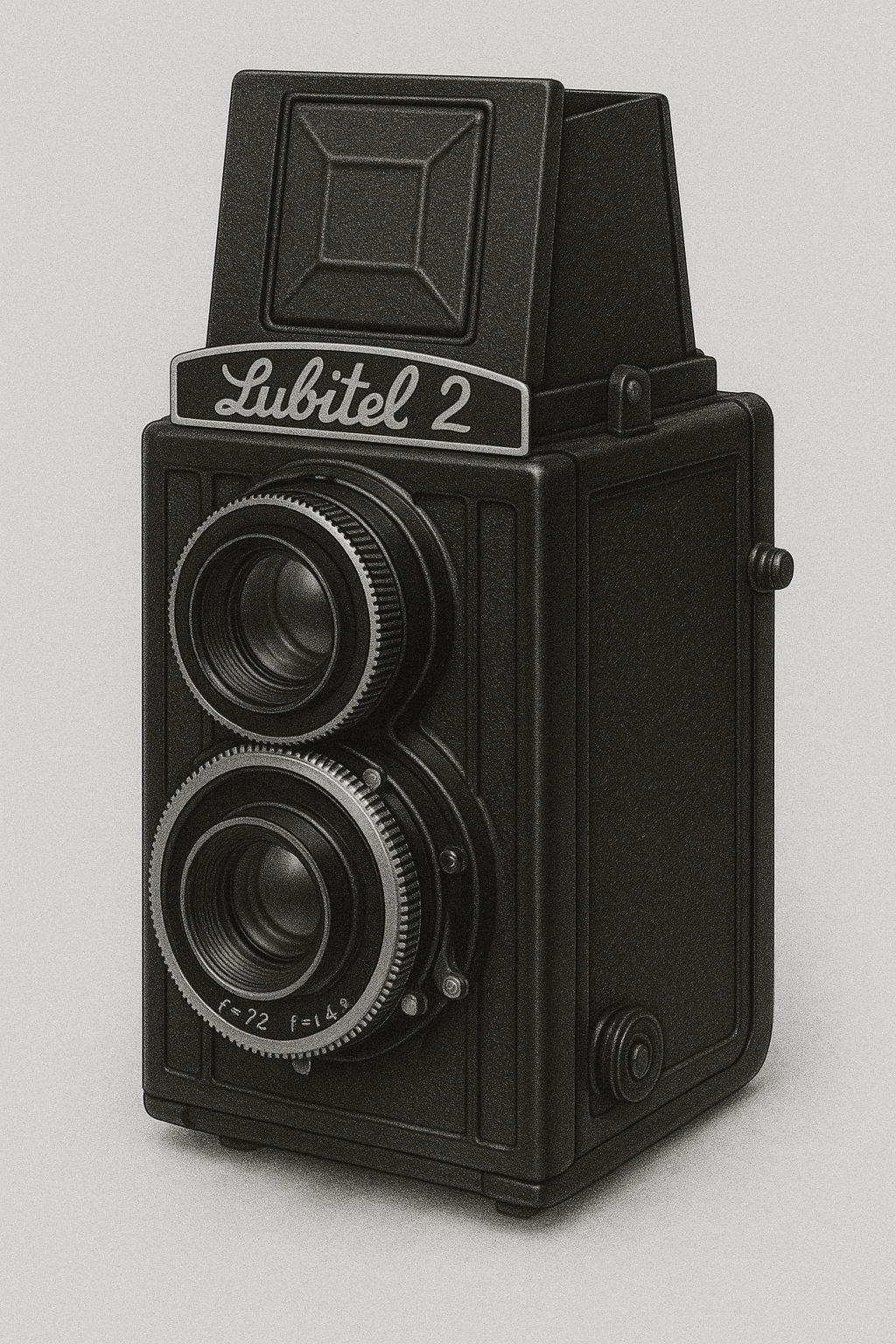
Lubitel 2 (Generated by artificial intelligence.)
The Lubitel 2’s T-22 lens features a classic triplet optical design, giving it the potential to produce softer, more characteristic bokeh compared to modern lenses. Images are quite sharp in the center but gradually soften toward the corners. This characteristic is particularly favored for portrait and art photography.
Color saturation is good, while contrast is moderate. When used with black and white film, it produces highly nostalgic and cinematic frames.
The Lubitel 2 is an ideal starting point for photographers interested in exploring medium format. It offers an enjoyable experience for those who wish to learn how TLR cameras work, enjoy producing nostalgic images, or want to fully embrace the analog process. However, it is not very practical for fast street photography or spontaneous moment captures.
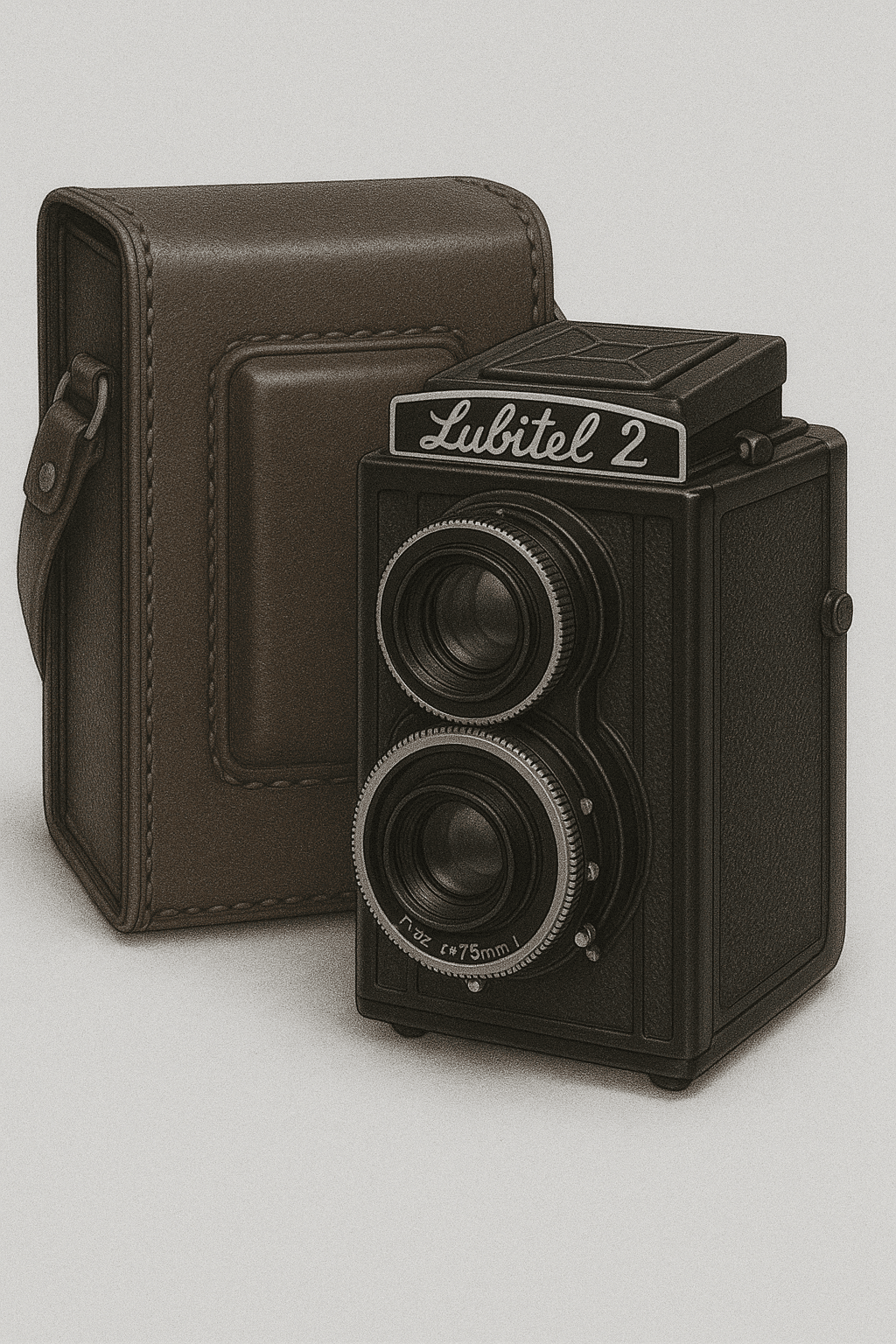
Lubitel 2 (Generated by artificial intelligence.)
One of the Lubitel 2’s standout advantages is its ability to deliver a medium format experience at an affordable cost. Its lightweight body makes it easy to carry, and its plastic-metal construction ensures durability. The lens character, distinct from modern lenses, offers soft transitions and nostalgic bokeh. Additionally, the TLR aesthetic, the viewfinder experience, and manual controls make the photographic process highly educational and satisfying. Its collectible value remains high.
However, some disadvantages should not be overlooked. The viewfinder’s dark and reversed image can make framing difficult. The absence of any automatic features means all controls rest entirely on the user, which can be challenging for beginners. Moreover, older models often suffer from technical problems such as light leaks, shutter malfunctions, or lens fungus. These factors highlight that the Lubitel 2 requires careful use and maintenance.
The Lubitel 2 is a medium format camera that stands out for its period-specific design, combining the technical and artistic aspects of analog photography. Produced by the Soviet Union for mass consumption, it has evolved over time from being merely a nostalgic object to becoming a distinctive production tool for experimental photographers. Its entirely manual operation compels users to master photographic techniques and engage consciously with the process.
The Lubitel 2 holds value both aesthetically and functionally. However, its limited viewfinder field of view, delicate shutter mechanism, and susceptibility to light leaks make it a device requiring careful handling. In this sense, the Lubitel 2 is an ideal choice not for those merely seeking to produce images, but for those who wish to understand the process.
In conclusion, the Lubitel 2 is a camera where technical simplicity meets optical elegance, presenting the production philosophy of the past to today’s enthusiasts. For anyone seeking to establish a connection with analog photography, it is a true classic worthy of thoughtful consideration.
Camera Go Camera. "Lubitel 2." Camera Go Camera, January 30, 2023. Accessed April 21, 2025.https://cameragocamera.com/2023/01/30/lubitel-2/
Hazel and Eye. "Lubitel 2 Review." Hazel & Eye Blog. September 4, 2021. Accessed April 21, 2025.https://www.hazelandeye.com/blog/2021/9/4/2yqgpm27l8guvfzmli7l5lj5xkdig0
Klomp, Alfred. "Lubitel 2." Alfred Klomp. Accessed April 21, 2025.http://cameras.alfredklomp.com/lubitel2/.
Lomography. "Lubitel 2: A Lubitel 166 Plus Minus 164." Lomography Magazine. Accessed April 21, 2025.https://www.lomography.com/magazine/177541-lubitel-2-a-lubitel-166-plus-minus-164.
Pearson, James L. "Lomo Lubitel 2." James L. Pearson. May 13, 2012. Accessed April 21, 2025.https://www.jameslpearson.co.uk/2012/05/13/lomo-lubitel-2/
Technical Specifications
Construction and Ergonomics
Image Quality and Lens Performance
Things to Note When Using
Who Is It Suitable For?
Advantages and Disadvantages