


This article was automatically translated from the original Turkish version.
Lovemark is a concept developed by Kevin Roberts that unites rational and emotional connections between brands and consumers. This concept aims to create consumer loyalty that goes beyond traditional brand loyalty. The Lovemark strategy seeks to transform brands into elements that are not only respected but also loved and passionately embraced.
According to Roberts, traditional brands offer consumers trust and quality, while Lovemarks appeal to their hearts. Therefore, when consumers form a bond with a Lovemark, neither price changes nor advantages offered by competitors can sway them.
The difference between a Lovemark and a traditional brand is defined by three key elements:
The Lovemark Grid, developed by Kevin Roberts, is a model that visualizes how brands are positioned in the minds of consumers along the axes of love and respect. This grid is an important tool for understanding the depth and nature of the relationship brands build with their customers.
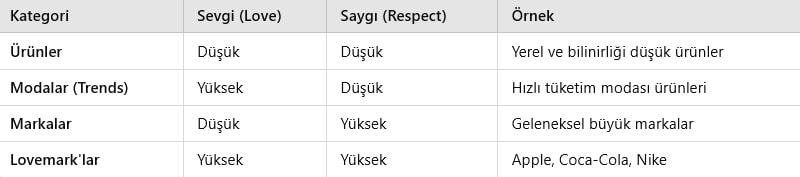
class=\
This grid highlights the distinction between Lovemarks and traditional brands: Lovemarks must be not only respected but also passionately loved.
The Lovemark strategy strengthens brand loyalty through emotional bonds. While traditional brand loyalty is based on rational foundations, Lovemark loyalty is fueled by emotional factors.
Research focused particularly on Generation Z has revealed a strong relationship between Lovemark components and brand image and loyalty. The brand’s intimacy and ability to form emotional connections play a critical role in securing long-term consumer loyalty.
For instance, Generation Z seeks personal connections with brands. Social media and interactive marketing are critical tools for Lovemark strategies.
a) Apple: Apple places consumer experience at the center through product design and user interface. The brand has built a loyal user base, with consumers consistently choosing its new products.
b) Coca-Cola: Coca-Cola uses themes of nostalgia, happiness, and sharing in its brand communication. Its advertising strategies are designed to establish emotional connections with consumers.
c) Nike: Nike has built its brand identity around themes of sports and motivation. The “Just Do It” slogan and collaborations with various athletes create emotional bonds with consumers. The brand highlights concepts such as individual achievement and perseverance in its advertising campaigns.
d) Harley-Davidson: Harley-Davidson has a strong brand image in the motorcycle industry. The brand builds connections with consumers through themes of community, freedom, and individuality. Consumers develop emotional bonds with Harley-Davidson through its brand identity and symbols.
The Lovemark concept enables brands to form not only functional but also emotional bonds with consumers, creating long-term brand loyalty. In today’s competitive market, brands that implement Lovemark strategies can enhance consumer loyalty and establish a sustainable brand perception.
Birin Atılgan, Cansu. "Lovemark." *İletişim Ansiklopedisi*, June 7, 2023. Accessed March 18, 2025.https://iletisimansiklopedisi.com/2023/06/07/lovemark/
Oyur, Emine. "Lovemark Oluşum Sürecinde Marka İmajı ile Marka Bağlılığı Arasındaki İlişkinin Z Nesli Özelinde İncelenmesi." ResearchGate, 2024. Accessed March 18, 2025.https://www.researchgate.net/publication/359453419_LOVEMARK_Olusum_Surecinde_Marka_Imaji_Ile_Marka_Bagliligi_Arasindaki_Iliskinin_Z_Nesli_Ozelinde_Incelenmesi

Lovemark Components
a) Mystery
b) Sensuality
c) Intimacy
Lovemark Grid: Brand – Lovemark Distinction
Lovemark and Consumer Loyalty
Lovemark Examples