


This article was automatically translated from the original Turkish version.
+1 More
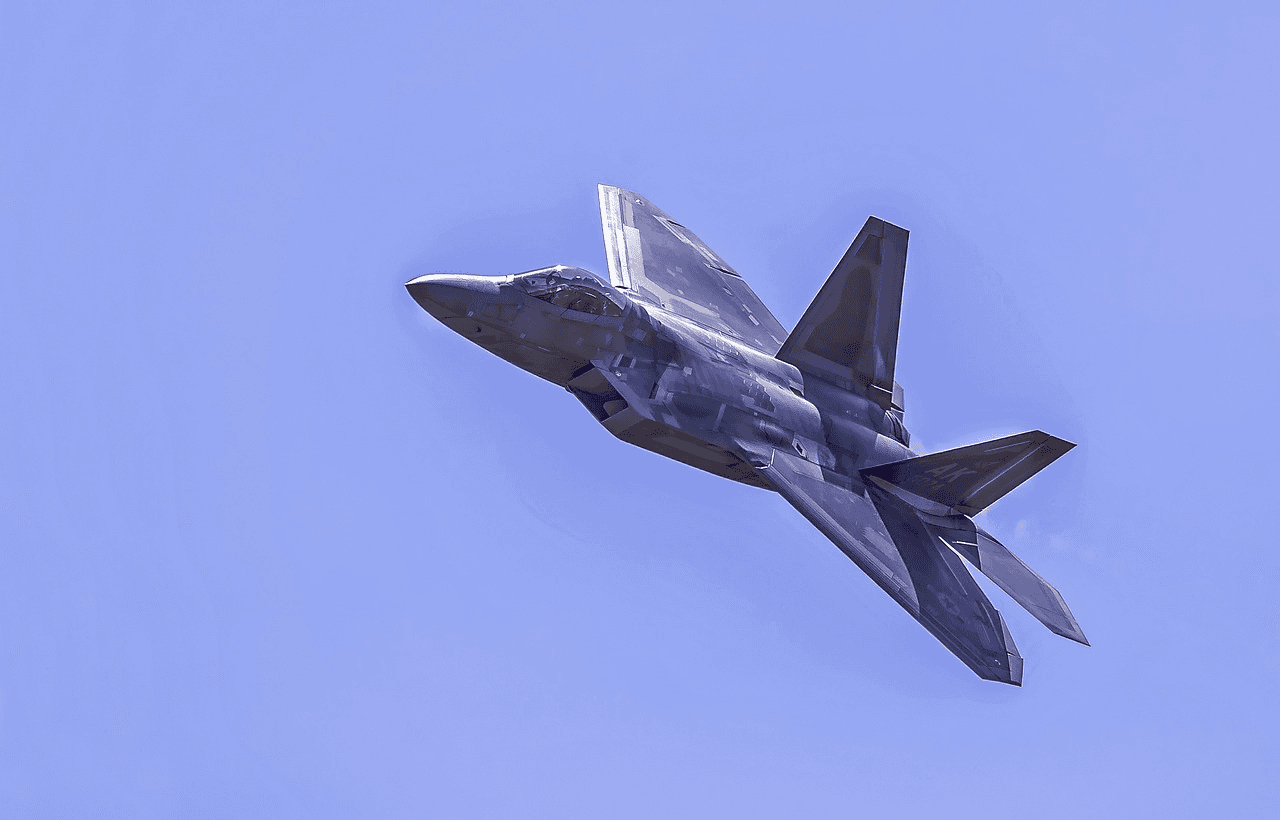
Lockheed Martin F-22 Raptor
Producer | Lockheed Martin | ||||||||
|---|---|---|---|---|---|---|---|---|---|
First Flight | 29 September 1997 (YF-22 prototype) | ||||||||
Entry into Service | 15 December 2005 | ||||||||
Aircraft Type | Single-seat, twin-engine, fifth-generation air superiority fighter aircraft | ||||||||
Models | F-22A | ||||||||
Airframe Structure | Highly composite materials, aluminum, titanium alloys | ||||||||
Competitors | Su-57, J-20 (can be considered indirect competitors with limited direct comparisons) | ||||||||
Lockheed Martin F-22 Raptor is a single-seat, twin-engine, fifth-generation, stealth-capable air superiority warfare aircraft developed and produced by the American aerospace and defense company Lockheed Martin. The F-22 stands out for its high maneuverability, advanced avionics, low radar cross-section (RCS), and supercruise capability—the ability to fly at supersonic speeds without using afterburners. Designed primarily to establish enemy air superiority through absolute dominance, it also has secondary ground attack capabilities.

Lockheed Martin F-22 Raptor (Source: Pixabay)
The development of the F-22 began in the late 1980s during the final years of the Cold War, under the Advanced Tactical Fighter (ATF) program initiated by the United States Air Force (USAF) to ensure technological superiority over potential adversaries’ advanced fighter aircraft. In a competition between Lockheed Martin and Boeing, Lockheed’s YF-22 prototype emerged victorious, leading to production under the designation F-22 in 1997. The aircraft’s design aimed to integrate low-observability technologies with aerodynamic performance to deliver a unique combat capability.
Lockheed Martin F-22 Raptor (Source: YouTube-Haci Productions)

Lockheed Martin F-22 Raptor (Source: Pixabay)
The F-22 Raptor is operated exclusively by the United States Air Force. Due to its high cost, complex technology, and U.S. concerns over preserving technological superiority, it has not been exported to other countries. With only a limited number produced, it plays a critical role in U.S. air superiority missions.
Abbotsford Airshow. "Raptor F22 Top Speed." Accessed April 16, 2025.https://abbotsfordairshow.com/raptor-f22-top-speed/
Lockheed Martin. "F-22 Raptor." Accessed April 16, 2025.https://www.lockheedmartin.com/en-us/products/f-22.html.
National Museum of the US Air Force. "Lockheed Martin F-22A Raptor." Accessed April 16, 2025.https://www.nationalmuseum.af.mil/Visit/Museum-Exhibits/Fact-Sheets/Display/Article/196040/lockheed-martin-f-22a-raptor/.
The Aviationist. "Lockheed Martin F-22 Raptor." Accessed April 16, 2025.https://theaviationist.com/2024/11/07/lockheed-martin-f-22-raptor/
US Air Force. "F-22 Raptor." Accessed April 16, 2025.https://www.af.mil/About-Us/Fact-Sheets/Display/Article/104506/f-22-raptor/

Lockheed Martin F-22 Raptor
Producer | Lockheed Martin | ||||||||
|---|---|---|---|---|---|---|---|---|---|
First Flight | 29 September 1997 (YF-22 prototype) | ||||||||
Entry into Service | 15 December 2005 | ||||||||
Aircraft Type | Single-seat, twin-engine, fifth-generation air superiority fighter aircraft | ||||||||
Models | F-22A | ||||||||
Airframe Structure | Highly composite materials, aluminum, titanium alloys | ||||||||
Competitors | Su-57, J-20 (can be considered indirect competitors with limited direct comparisons) | ||||||||
No Discussion Added Yet
Start discussion for "Lockheed Martin F-22 Raptor" article
Design and Development
Technical Specifications
Features and Capabilities
Usage