


This article was automatically translated from the original Turkish version.
Lock mechanisms are one of the fundamental structures used to ensure security and control access. In daily life, locks used on doors, safes, cabinets and in many other applications can consist of various mechanical and electronic systems.
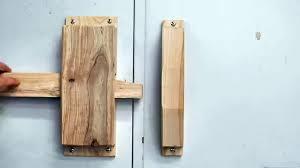
Lock systems have a history as old as human civilization. The earliest locks were simple mechanical devices made of wood, dating back approximately 4000 years to Ancient Egypt and Mesopotamia. During the Roman Empire, metal locks and keys became widespread and more advanced security mechanisms began to be used. In the Middle Ages, advances in blacksmithing techniques led to the development of more durable and complex lock systems. With the Industrial Revolution, lock technology underwent a major transformation, giving rise to modern cylinder locks, coded systems and biometric security solutions. Today, both traditional mechanical locks and intelligent electronic systems hold essential roles in security.
class=\
Over time, lock systems have given rise to numerous professions. Locksmithing, which deals with the traditional production and repair of locks, is one of the oldest such professions. Locksmiths handle tasks such as opening, maintaining and repairing mechanical and electronic locks. With the advancement of technology, professions such as security experts, cyber security analysts and electronic lock system engineers have also gained importance. In addition, software engineers developing biometric security systems and smart lock manufacturers play critical roles in this sector.
Lock systems are widely used in many different areas to ensure security. The most common examples include door locks in homes and workplaces, cabinet and drawer locks in offices, and safe locks in financial institutions. Additionally, lock technologies are also used in automobiles, bicycles, smart devices and even on digital platforms to ensure data security. These systems cover a broad range from protecting personal belongings to large-scale security measures.
class=\
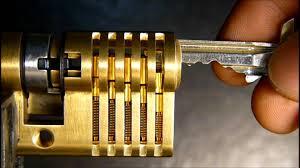
The primary purpose of a lock is to prevent access by individuals who do not possess the correct key or access method. Mechanical locks typically consist of a lock body, a locking pin or tumbler and a key mechanism. The key aligns the pins or wheels inside the mechanism to a specific position, allowing the lock to open.
1. Cylinder (Tubular) Locks: One of the most commonly used lock types. The key rotates a cylinder that aligns internal pins to unlock the mechanism.
2. Padlocks: Small and portable locks that can be opened with a key or a combination code.
3. Traditional Bolt Locks: Simple mechanical locks widely used in interior spaces.
4. Multi-Point Locks: Lock at multiple points to enhance door security.
5. Gear Mechanism Locks: Locks containing gear systems and generally offering higher security.
1. Code Locks: Open when a user-defined code is entered.
2. Card Locks: Operate by reading magnetic or chip-based cards.
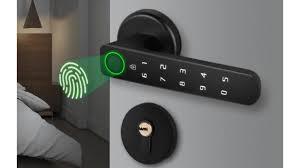
3. Biometric Locks: Open using biometric data such as fingerprint scans, retinal scans or facial recognition.
4. Remote-Controlled Locks: Locks that can be opened via remote control.
class=\
1. Magnetic Locks: Use electromagnets to secure doors.
2. Smart Locks: Can be controlled remotely via Wi-Fi or Bluetooth and managed through smartphones.
3. RFID Locks: Systems that grant access using radio frequency identification.
4. Voice-Recognizing Locks: Modern security systems that operate by recognizing the user’s voice.
Brown, K. *The Evolution of Locks.* Engineering Books, 2019. Accessed February 8, 2025.Accessed Adresi.
Electronic Security Systems Publication. "Biometric andRFID Kilit Technologies." 2022. Accessed February 8, 2025.Accessed Adresi.
Hill, R. *Ancient Locks and Security Systems.* History of Technology Press, 2018. Accessed February 8, 2025.Accessed Adresi
Johnson, L. *Modern Locking Systems.* TechLock Publications, 2020. Accessed February 8, 2025.Accessed Adresi
Locking Systems Review. "Common Applications of Locking Mechanisms." 2022. Accessed February 8, 2025.Accessed Adresi.
Locksmithing Today. "The Evolution of Locksmithing as a Profession." 2023. Accessed February 8, 2025.Accessed Adresi.
Security Careers Journal. "Careers in Electronic and Biometric Locking Systems." 2022. Accessed February 8, 2025.Accessed Adresi.
Security History Journal. "Sanayi Devrimi ve Kilit Teknolojisinin Evrimi." 2021. Accessed February 8, 2025.Accessed Adresi.
Security Technologies Journal. "Akıllı Kilitler ve Gelecek Trendleri." 2023. Accessed February 8, 2025.Accessed Adresi.
Smith, J. *Lock Mechanisms and Security.* Security Press, 2021. Accessed February 8, 2025.Accessed Adresi.
White, P. *Roman and Medieval Lock Mechanisms.* Archaeological Studies, 2017. Accessed February 8, 2025.Accessed Adresi

Origins of Lock Systems
Professions Arising from Lock Systems
Applications of Lock Systems
Fundamental Principle of Lock Operation
Types of Locks and Their Operating Mechanisms
Mechanical Locks
Electronic and Digital Locks
Magnetic and Smart Locks