


This article was automatically translated from the original Turkish version.
+1 More
With the rapid advancement of technology, artificial intelligence has begun to demonstrate its impact in many areas of our lives. Literature has also been affected by this interaction and has entered a new era through the inclusion of artificial intelligence in creative processes.
Artificial intelligence is actively used in areas such as literary work production, text analysis, and language processing. In particular, language models can imitate the style of a specific author and generate original texts. This situation has the potential to fundamentally transform literature’s evolution in the digital world and our reading habits.
Artificial intelligence is used to create novels, poems, and other literary works. These works challenge the boundaries of creativity.
Artificial intelligence analyzes texts to understand linguistic structures and is employed in text generation. This offers a new perspective in the study of literary works.
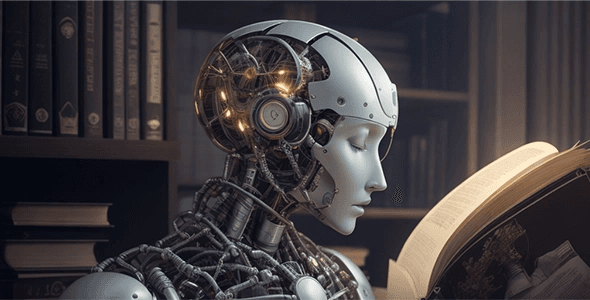
Artificial Intelligence and Literature - DijiGo
The ability of artificial intelligence to produce literary texts has reopened the debate on the concept of creativity. The fact that poems generated by artificial intelligence cannot be distinguished from human-made works and are sometimes even preferred demonstrates that the influence of artificial intelligence on art and literature is expanding every day.
AI can generate texts in literary genres such as poetry and novels. When compared with human creativity, these texts produce intriguing results.
The involvement of artificial intelligence in creative processes compels us to reevaluate the definition and boundaries of creativity.
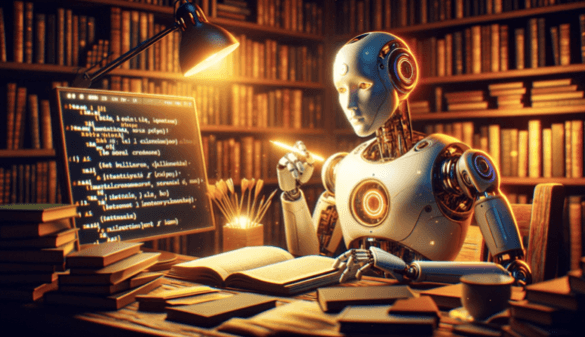
Artificial Intelligence and Literature - Bizim Çağ
Issues concerning copyright and reliability of texts generated by artificial intelligence have sparked significant debates in the literary world. Questions regarding the originality and copyright of AI-written works are creating a new paradigm in the world of authorship. Whether a text produced by artificial intelligence can possess the same aesthetic value as a human-created work will become one of the fundamental questions of literature.
It remains unclear to whom texts generated by artificial intelligence belong and how their copyrights should be regulated.
The use of artificial intelligence in literary production raises various ethical questions.
Artificial intelligence tools are also used in literature education. AI applications assist students in analyzing texts, improving their writing skills, and learning different writing styles, thereby supporting educational processes. Additionally, AI-supported applications can analyze readers’ reading habits and offer more effective learning and memory techniques.
Artificial intelligence provides applications that help students develop their writing skills.
Artificial intelligence supports students in analyzing and understanding texts.
Science fiction literature frequently explores themes of artificial intelligence. The potential impacts of artificial intelligence on humanity, ethical dilemmas, and possible future scenarios are deeply examined in such works. These works shape public perception and enable us to reflect on the future role of artificial intelligence.
In science fiction works, artificial intelligence frequently appears as a character.
The impact of artificial intelligence on society and related ethical issues are recurring themes in science fiction literature.
The potential impacts and possible developments of artificial intelligence in the future of literature encompass both opportunities and threats. Artificial intelligence has the capacity to transform the production and consumption processes of literature. However, the ethical, aesthetic, and social dimensions of this transformation must be carefully evaluated. In the future of literature, the role of artificial intelligence will become increasingly significant. Artificial intelligence offers both writers a creative tool and readers a new experience. The growing presence of artificial intelligence in the literary world can accelerate the evolution of written culture. At the same time, as artificial intelligence continues to develop, ethical and aesthetic debates are emerging. In particular, the originality of texts produced by artificial intelligence, authorship rights, and the limits of artificial intelligence in creative processes will be subjects of increasing discussion in the future.
Academia.edu. "Akademik Çalışmalarda Yapay Zeka Kullanımı: İletişim Bilimleri Özelinde Bir Araştırma." Accessed [Date].https://www.academia.edu/126954763/AKADEMİK_ÇALIŞMALARDA_YAPAY_ZEKA_KULLANIMI_İLETİŞİM_BİLİMLERİ_ÖZELİNDE_BİR_ARAŞTIRMA
Appfellas. "Yapay Zeka ile Etkileyici Makaleler Nasıl Yazılır?." Accessed [Date].https://appfellas.dev/yazi/yapay-zeka-ile-etkileyici-makaleler-nasil-yazilir
Artificial Intelligence and Literature: Murat Gülsoy's Blog,https://muratgulsoy.wordpress.com/2023/04/07/yapay-zeka-ve-edebiyat/
Artificial Intelligence in the Age of Producing Literary Works and Literary Science: Istanbul University Academic Data Management System,https://avesis.istanbul.edu.tr/yayin/caee67b1-0672-4ed3-ba32-187c91b856f7/yapay-zekayla-uretilebilirlik-caginda-edebiyat-yapiti-ve-edebiyat-bilimi
Journal of Artificial Intelligence in Health Sciences – Volume: 4 Issue: 2
Yapay Zeka ile Akademik Yazımınızı Geliştirmenin İpuçları: Textify,https://textify.now/blog/yapay-zeka-ile-akademik-yaziminizi-gelistirmenin-ipuclari
Yapay Zeka ile Makale Yazımı: Webtures,https://www.webtures.com/tr/blog/yapay-zeka-ile-makale-yazimi/
Yapay Zeka ve Edebiyat: Tehdit mi, Fırsat mı?: Balyaj.com,https://balyaj.com/yapay-zeka-ve-edebiyat-tehdit-mi-firsat-mi/
No Discussion Added Yet
Start discussion for "Literature and Artificial Intelligence" article
Artificial Intelligence and Literature: A Journey from Past to Future
Use of Artificial Intelligence in Literature
Production of Literary Works
Text Analysis and Language Processing
Artificial Intelligence and Creativity
Artificial Intelligence in Poetry and Novel Production
Definition and Boundaries of Creativity
Ethical and Copyright Issues
Copyright and Ownership
Ethical Issues
The Role of Artificial Intelligence in Literature Education
Student-Focused Applications
Text Analysis and Comprehension
Artificial Intelligence Representations in Science Fiction Literature
Artificial Intelligence as a Character
Social and Ethical Themes
The Future Relationship Between Artificial Intelligence and Literature