

This article was automatically translated from the original Turkish version.
+2 More
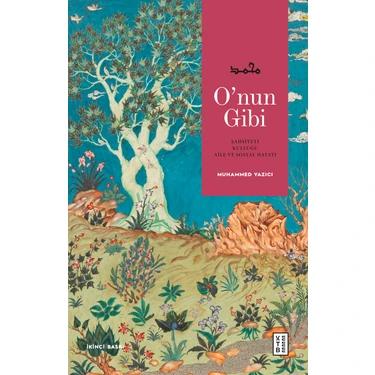
Like Him (Book)
Publisher(s) | Ketebe Yayınları | ||||||||
|---|---|---|---|---|---|---|---|---|---|
Type(s) | Siyer | ||||||||
Number of Pages(Number) | 384 | ||||||||
Author(s) | Muhammed Yazıcı | ||||||||
Muhammed Yazıcı’s work O’nun Gibi centers on Prophet Muhammad and explores the moral and behavioral transformation of the individual.
O’nun Gibi is structured in sections, each focusing on a distinct characteristic of Prophet Muhammad. The author aims to present the reader with an exemplary model by highlighting specific moral or behavioral traits in each section. The narrative does not follow a chronological or historical sequence; instead, it adopts a thematic organization. This approach reinforces the instructional character of the work.
The central theme of the work revolves around how contemporary individuals can internalize the attitudes and behaviors of Prophet Muhammad in daily life. Moral principles such as compassion, humility, justice, patience, loyalty, and integrity form the core of the text. Rather than explaining these concepts theoretically, Yazıcı prefers to concretize them through illustrative behaviors. This approach seeks to present the Prophet not merely as a historical figure but as a living, attainable example.
The language of the work is simple and direct, designed to reach a broad audience. The author avoids technical terminology. While employing an instructional tone, he enables readers to engage in personal reflection through descriptive and guiding sentences. The narrative style can be understood as a modern interpretation of the Islamic tradition of religious counsel.
The prophetic model presented by Yazıcı is not merely a theological figure but a human archetype applicable across all spheres of practical life. Here, Prophet Muhammad is portrayed not only as a sacred guide but also as a personality whose human qualities stand out prominently. This model is conceived as a transformative force for both individual development and social order. In this context, the text can be read as a contemporary interpretation of the Islamic concept of “üsve-i hasene” (the most beautiful example).
O’nun Gibi is one of the examples in modern Turkish religious literature that seeks to construct an individual-centered conception of the Prophet. Unlike traditional biographical works, it emphasizes the transmission of moral values over biographical details. In this regard, the text can be positioned as a religious narrative with pedagogical objectives at its core.
Yazıcı, Muhammed. *O’nun Gibi*. İstanbul: Ketebe Yayınları, 2016.

Like Him (Book)
Publisher(s) | Ketebe Yayınları | ||||||||
|---|---|---|---|---|---|---|---|---|---|
Type(s) | Siyer | ||||||||
Number of Pages(Number) | 384 | ||||||||
Author(s) | Muhammed Yazıcı | ||||||||
Overall Structure and Narrative Framework
Content and Themes
Language and Stylistic Features
Understanding the Prophetic Model
Place within Modern Religious Literature