


This article was automatically translated from the original Turkish version.
Education is a fundamental right that every child should be able to access on an equal basis. At this point, inclusive education emerges as an important practice that enables children with special needs to learn alongside their peers in the same educational environment. Especially in the early childhood period, inclusive education holds great significance in supporting children’s social, emotional, and academic development.
The primary aim of inclusive education is to ensure that children with special needs can receive education without being isolated from society and to support their integration into social life. Research shows that children in inclusive settings develop better communication skills, strengthen peer relationships, and increase their social interactions.【1】 At the same time, children with typical development also learn to respect differences, develop empathy, and acquire skills for coexistence. Thus, inclusive education benefits not only children with special needs but all children in the classroom.
The early childhood period is one of the phases during which children acquire social skills most rapidly. Therefore, initiating inclusive practices at an early age facilitates children’s acceptance of one another and enables them to experience shared learning. Research indicates that teachers observe that inclusive education enhances children’s social adaptation and produces positive developments particularly in peer communication.【2】 In addition, some teachers report that they lack sufficient knowledge about inclusive practices and encounter various challenges in the classroom. This situation highlights the need for greater support for teachers regarding inclusive education.
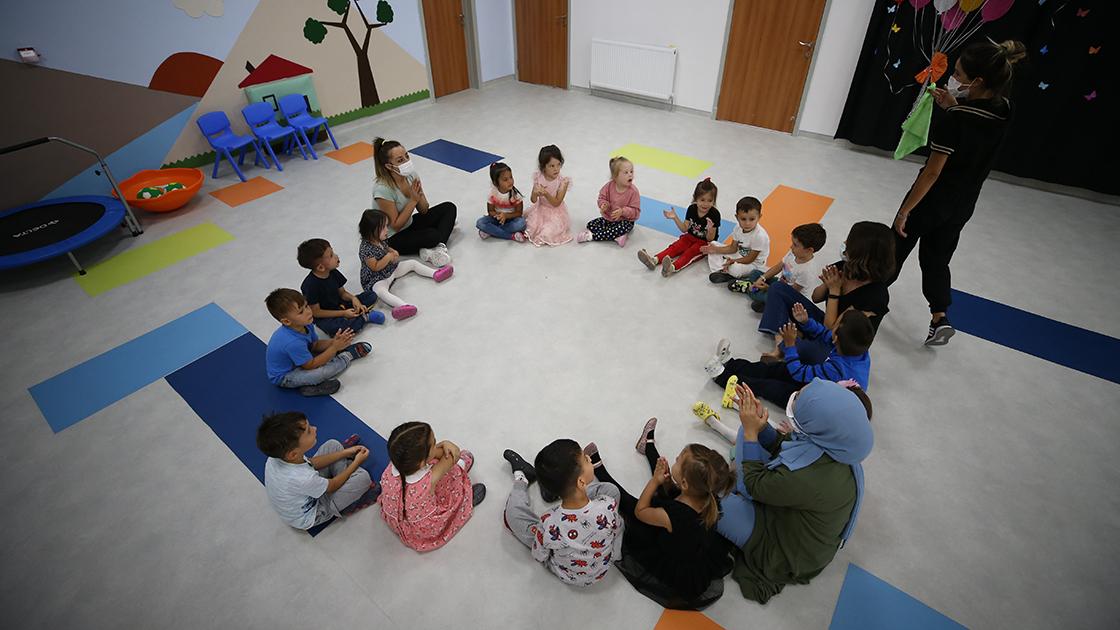
Inclusive Education (AA)
For inclusive education to be successful, it is essential that teachers have knowledge of special education. Research shows that a large proportion of teachers consider in-service training inadequate and express a need for expert support in implementing inclusive practices.【3】 Furthermore, organizing classroom environments, using appropriate materials, and collaborating with families are also essential components of the inclusion process. When collaboration among teachers, families, and specialists is established, children are observed to adapt more easily to the educational process.
Inclusive education is not merely an approach aimed at academic achievement. It also helps children feel valued, build self-confidence, and recognize themselves as members of society. Learning to live alongside differences from an early age contributes to the development of more conscious and empathetic individuals in the future.
Finally, inclusive education is a vital practice in the early childhood period that supports children’s social development, fosters empathy, and strengthens equity in education. However, for this practice to succeed, teachers must be supported, necessary training must be provided, and classroom environments must be adapted to accommodate inclusion. Only then can more inclusive educational environments be created where both children with special needs and their peers can learn together.
Batu, Sema. "Özel Gereksinimli Öğrencilerin Kaynaştırıldığı Bir Kız Meslek Lisesindeki Öğretmenlerin Kaynaştırmaya İlişkin Görüş ve Önerileri." Master's thesis, Anadolu Üniversitesi, 1998. Accessed May 15, 2026.
Gök, Gönül, and Dilek Erbaş. "Okulöncesi Eğitimi Öğretmenlerinin Kaynaştırma Eğitimine İlişkin Görüşleri ve Önerileri." International Journal of Early Childhood Special Education 3, no. 1 (2011): 66-87. Accessed May 15, 2026.
Sucuoğlu, Bülbin, and Osman Özokçu. "Kaynaştırma Öğrencilerinin Sosyal Becerilerinin Değerlendirilmesi." Özel Eğitim Dergisi 6, no. 1 (2005): 41-57. Accessed May 15, 2026.
https://dergipark.org.tr/en/download/article-file/159198
https://dergipark.org.tr/en/download/article-file/91493
https://dergipark.org.tr/tr/download/article-file/159202
[1]
Sucuoğlu, Bülbin, ve Osman Özokçu. “Kaynaştırma Öğrencilerinin Sosyal Becerilerinin Değerlendirilmesi.” Özel Eğitim Dergisi 6, sy. 1 (2005): 41-57. Erişim tarihi: 15 Mayıs 2026.
[2]
Gök, Gönül, ve Dilek Erbaş. “Okulöncesi Eğitimi Öğretmenlerinin Kaynaştırma Eğitimine İlişkin Görüşleri ve Önerileri.” International Journal of Early Childhood Special Education 3, sy. 1 (2011): 66-87. Erişim tarihi: 15 Mayıs 2026.
[3]
Gök, Gönül, ve Dilek Erbaş. “Okulöncesi Eğitimi Öğretmenlerinin Kaynaştırma Eğitimine İlişkin Görüşleri ve Önerileri.” International Journal of Early Childhood Special Education 3, sy. 1 (2011): 66-87. Erişim tarihi: 15 Mayıs 2026.
