This article was automatically translated from the original Turkish version.
History | 13 April 1975 – 13 October 1990 (15 years, 6 months) | ||||||||
|---|---|---|---|---|---|---|---|---|---|
Country | Lebanon | ||||||||
Agreement | Taif Agreement | ||||||||
Effective Parties of the War | Maronite Christian militias (Phalangists) Syrian Army Israeli Army Sunni-Druze alliance (Lebanese National Movement) Palestine Liberation Organization (PLO) | ||||||||
Main Causes of the War | Regional Intervention (Especially Syria and Israel) Presence of the PLO Sectarianism | ||||||||
Major Outcomes of the War | Brain Drain Constitutional Amendment Power Shift Syrian Hegemony Economic Devastation | ||||||||
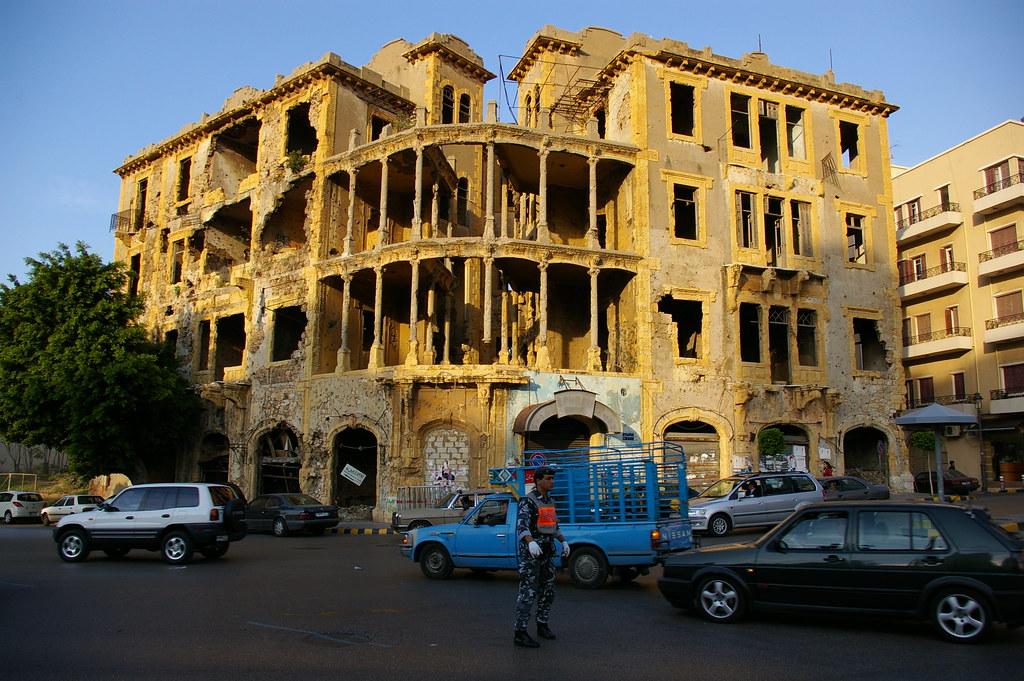
The Lebanese Civil War, which erupted in 1975 and officially ended in 1990, was a complex and multi-sided conflict lasting fifteen years. It is estimated that between 150,000 and 230,000 people lost their lives, approximately 300,000 were injured, and more than a million were forced to flee the country.
This civil war is generally referred to as “Arab world’s civil war” or “proxy war,” fueled not only by internal dynamics but also by interventions from regional and international powers.
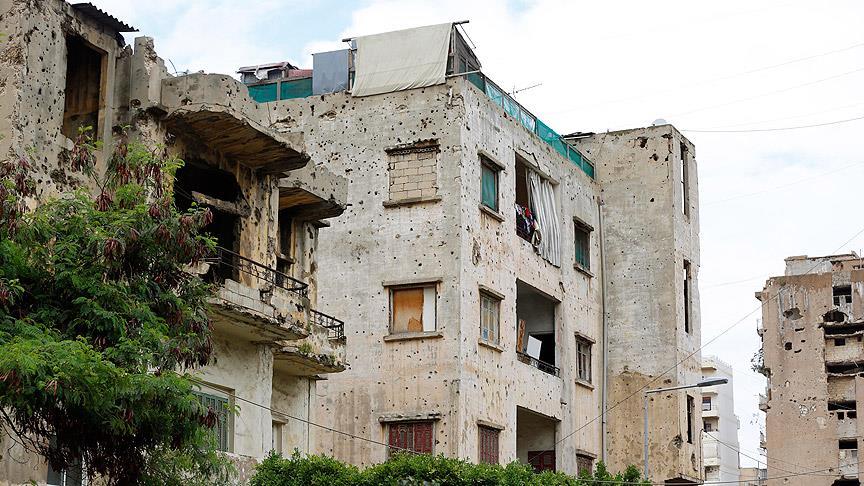
A visual from Beirut after the civil war(AA)
The roots of the conflict in Lebanon lie in the Confessional Political System established upon the country’s independence in 1943. This system gained formal legitimacy through the National Pact, which allocated key constitutional positions among the country’s leading religious communities according to demographic proportions. Accordingly, the presidency was assigned to Maronites (Christians), the prime ministership to Sunnis, and the speakership of parliament to Shiites.
However, over time this system created two fundamental structural vulnerabilities:
Demographic Imbalance
After the last official census in 1932, the Muslim population, particularly Shiites, grew rapidly. The static nature of the National Pact failed to adapt to these demographic changes, intensifying perceptions among Muslim communities of inequality in political representation and power sharing.
Political and Economic Inequality
The privileged position granted to Maronite Christians by the political system — notably the strong powers of the president — deepened the socio-economic marginalization of other religious groups, especially the rural and urban poor Shiite population. This situation created the social ground for transforming discontent into political divisions.
The outbreak of the war reflected accumulated tensions within Lebanon’s domestic politics:
Institutionalization of Sectarianism
Lebanon’s political structure defined citizenship not in modern civic terms but through religious affiliation. This led different religious communities to build their own political and military structures (militias), thereby hindering the consolidation of a centralized state and a unified national identity.
Weakness of the Central Government
The weak central government, built on sectarian alliances and compromises, failed to effectively manage rising social grievances and the growing power of militias. The army itself was divided along sectarian loyalties and lacked the capacity to confront the militias.
Although internal structural weaknesses existed, external factors were critical in making the Lebanese Civil War inevitable and intensifying its violence: the presence of the Palestine Liberation Organization (PLO), the influx of hundreds of thousands of Palestinian refugees into Lebanon following the 1948 and 1967 Arab-Israeli Wars, and the PLO’s use of Lebanese territory as a base for attacks against Israel disrupted the country’s delicate balance. Palestinian groups, particularly through an alliance with the Lebanese National Movement, formed a powerful counterweight to the Maronite Christian-dominated political structure.
Moreover, Clash of Regional Interests, driven by the Arab-Israeli conflict, turned Lebanon into a direct arena for intervention by regional powers — especially Israel and Syria — and laid the groundwork for proxy wars involving the United States and Britain indirectly. The Ayn al-Rummaneh Incident (1975), widely regarded as the war’s starting point, occurred when Maronite Phalangist militias targeted a bus, unleashing accumulated tensions and rapidly plunging the country into full-scale conflict among militias.
The Lebanese Civil War (1975–1990) became more than a struggle among internal groups; it evolved into a laboratory for regional and international proxy wars. The conflict progressed through multiple phases under the hegemony of militias organized along sectarian lines.
The war initially began between two main ideological and sectarian camps, though militias frequently switched sides:
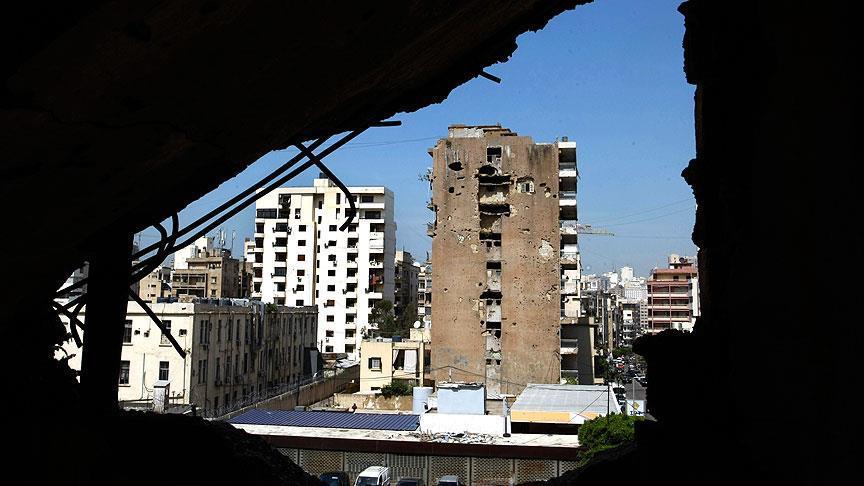
Some buildings in Beirut bearing traces of the openings made by bullets and bombs(AA)
The complexity of the war was amplified by direct military interventions from regional powers:
The end of the Lebanese Civil War was not the result of a military victory but of a political compromise imposed by regional and international pressure. While the war brought partial stability to Lebanon, it failed to eliminate the sectarian structures that caused the conflict; instead, it reinforced them with new dynamics.
After fifteen years of devastating internal conflict, the official end of the Lebanese Civil War was achieved through the Taif National Reconciliation Accord, signed in Taif, Saudi Arabia, in 1989. This agreement aimed to fundamentally reform Lebanon’s political, constitutional and security structures, but also created new areas of tension.
The Taif Agreement reformed the constitutional system based on the 1943 National Pact, adjusting the power balance previously tilted in favor of Christians. However, rather than abolishing sectarianism, the reforms re-institutionalized it on a constitutional basis. Parliamentary seats were redistributed from the previous 6:5 Christian-to-Muslim ratio to an equal 1:1 ratio between Christians and Muslims. This change responded to the growing demographic weight of the Muslim population. The agreement’s most significant reform transferred executive power from the Maronite President to the Sunni Prime Minister and the Council of Ministers, significantly limiting the president’s authority. Requirements for consensus or qualified majority in most decision-making processes indirectly reinforced the veto power of sectarian groups within the decision-making mechanism.
The most controversial provision of the Taif Agreement from a regional perspective was its legal legitimization of Syria’s military presence in Lebanon. The agreement granted Syria the authority to remain in Lebanon under the mission of “restoring peace,” providing a legal basis for Syria’s direct intervention in Lebanon’s domestic politics and security decisions. The agreement anticipated that Syrian forces would redeploy to the Bekaa Valley and other strategic areas within two years after the reorganization of the Lebanese Armed Forces (by 1991 at the latest). However, Syria did not fully comply with this condition and maintained its military presence and political hegemony until 2005.
The Taif Agreement mandated the disbandment of all militias involved in the civil war and the surrender of their weapons to the official Lebanese Armed Forces. Most sectarian militias complied, and former militiamen received limited political amnesty and opportunities for integration into the Lebanese Army. However, certain groups, notably Hezbollah (the Shiite group), were exempted from this obligation. Hezbollahrefused to surrender its weapons, arguing that they were necessary for an ongoing “resistance movement” against Israeli occupation in southern Lebanon. The agreement struggled to address the legitimacy of resistance groups, enabling Hezbollah to remain the most powerful armed actor in Lebanon after the civil war.
Although Lebanon is not a neighbor of Turkey, the Lebanese Civil War (1975–1990) indirectly influenced Turkish foreign policy in terms of regional stability, counterterrorism, and power balances in the Middle East. Despite Turkey’s traditionally Western-oriented foreign policy during the war, it could not escape the war’s repercussions.
The impact of the conflict on Turkey became particularly evident in the reassessment of security and regional policies: Security Pressure from Syria intensified as Syria’s hegemony over Lebanon became entrenched. This situation, combined with Syria’s support for the PKK, created serious security pressure on Ankara, and instability in Lebanon expanded the operational space for regional terrorist organizations.
In response to these complex and sectarian developments, Turkey reinforced its traditional policy of balance and distance and continued its conventional stance of non-intervention in Middle Eastern internal affairs. As the war deepened as a reflection of the Arab-Israeli conflict, Turkey’s diplomatic efforts increasingly focused on playing a more active role regarding the Palestinian issue and regional instability.
Later impacts (Post-2000s) were shaped by the lingering effects of Syrian tensions in the 1990s, but from 2002 onward, Turkey began pursuing a multidimensional and active policy toward Lebanon. This was evidenced by Turkey’s deployment of troops to the UNIFIL (United Nations Interim Force in Lebanon) mission after the 2006 Israel-Lebanon War and its diplomatic contributions during the Doha Agreement process (2008), demonstrating Turkey’s growing commitment to Lebanese stability.
Documentary on the Lebanese Civil War (Youtube)
The Lebanese Civil War remains a symbol of regional instability. This model — combining sectarian tensions, foreign intervention, and the collapse of the central state — has served as a reference for other conflicts in the Middle East. This phenomenon is termed “Lebanonization.” Turkey experienced this “Lebanonization” risk closely during the Syrian Civil War after 2011. One of the key motivations shaping Turkey’s foreign policy toward Lebanon is the potential for internal fragmentation in Lebanon to threaten broader regional stability. Turkey has frequently emphasized its efforts to promote an inclusive, non-sectarian actor in Lebanon and assist in the country’s reconstruction, grounded in these regional experiences.
32nd Day. 2024. "1987 Lübnan Savaşı." 7:27. YouTube Video. October 2, 2024.http://www.youtube.com/watch?v=B_wgvtC4NeM.
Anadolu Ajansı (AA). 2016. "Lübnan İç Savaşı Arşiv Görseli." Photograph. Accessed October 29, 2025.https://www.aa.com.tr/tr/dunya/lubnan-ic-savasinin-41-yil-donumu/554254
Anadolu Ajansı (AA). 2017. "Lübnan İç Savaşı Arşiv Görseli." Photograph. Accessed October 29, 2025.https://www.aa.com.tr/tr/dunya/lubnan-ic-savasinin-42-yili/796114
Anadolu Ajansı (AA). 2020. "ANALYSIS - Turkey as an actor of stability in Lebanon: Responses and scenarios." Accessed October 25, 2025.https://www.aa.com.tr/en/analysis/analysis-turkey-as-an-actor-of-stability-in-lebanon-responses-and-scenarios/2042900
Andırırbu, Rüveyda. “BÜTÜNLEŞEMEYEN LÜBNAN’DA TEMEL SİYASİ AKTÖR OLARAK DİNİ GRUPLAR.” *BELLEK Uluslararası Tarih Ve Kültür Araştırmaları Dergisi* 2, no. 2 (December 2020): 190–212. Accessed October 25, 2025.https://dergipark.org.tr/tr/pub/bellek/issue/59195/830603.
Benli Altunışık, Meliha. "Lübnan Krizi: Nedenleri ve Sonuçları." Report. Istanbul: TESEV (Türkiye Ekonomik ve Sosyal Etüdler Vakfı), 2007. Accessedhttps://www.tesev.org.tr/wp-content/uploads/rapor_Lubnan_Krizi_Nedenleri_Ve_Sonuclari.pdf.
Clarke Forum.org. "Timeline of the Lebanese Civil War." Accessed October 25, 2025.https://www.clarkeforum.org/wp-content/uploads/Topical-Background-v-final.pdf.
Erol, Hande. "Türkiye-Ortadoğu İlişkileri (1983–1993)." Master's thesis, Dokuz Eylül Üniversitesi, 2008. Accessedhttps://avesis.deu.edu.tr/yonetilen-tez/10edad09-3d47-4651-aa7c-75893bc5cfb5/turkiye-ortadogu-iliskileri-1983-1993.
Erol, Hande. "Türkiye-Ortadoğu İlişkileri (1983–1993)." Master's thesis, Dokuz Eylül Üniversitesi, 2008. Accessedhttps://avesis.deu.edu.tr/yonetilen-tez/10edad09-3d47-4651-aa7c-75893bc5cfb5/turkiye-ortadogu-iliskileri-1983-1993.
Gainer, Alex, Jerome Snesil, and Chris Mason. "Lebanese Civil War 1975–90 - Case Studies." U.S. Department of War. October 2024. Accessed October 25, 2025.https://media.defense.gov/2025/Apr/07/2003683785/-1/-1/0/20250407_LEBANESECIVILWAR_1975-90_FINAL.PDF
Gainer, Alex, Jerome Snesil, and Chris Mason. Defense.gov. 2025. "Lebanese Civil War 1975–90 - Case Studies." Accessed October 25, 2025.https://media.defense.gov/2025/Apr/07/2003683785/-1/-1/0/20250407_LEBANESECIVILWAR_1975-90_FINAL.PDF
Gaub, Florence. "Lebanon's civil war: seven lessons forty years on." EUISS (European Union Institute for Security Studies). 2015. Accessed October 25, 2025.https://www.iss.europa.eu/sites/default/files/EUISSFiles/Alert_21_Lebanon_civil_war.pdf
Gaub, Florence. EUISS (European Union Institute for Security Studies). 2015. "Lebanon's civil war: seven lessons forty years on." Accessed October 25, 2025.https://www.iss.europa.eu/sites/default/files/EUISSFiles/Alert_21_Lebanon_civil_war.pdf
Güler, Aslı. 2019. "Lübnan'da İç Savaş." *Akademik Tarih ve Araştırmalar Dergisi* 1, no. 1: 112–116.https://dergipark.org.tr/tr/pub/ataddergi/issue/51209/664655
Güler, Aslı. 2019. "Lübnan'da İç Savaş." *Akademik Tarih ve Araştırmalar Dergisi* 1, no. 1: 112–116.https://dergipark.org.tr/tr/pub/ataddergi/issue/51209/664655
Ministry of Foreign Affairs of the Republic of Turkey. "Relations between Türkiye and Lebanon." Accessed October 25, 2025.https://www.mfa.gov.tr/relations-between-turkiye-and-lebanon.en.mfa.
Ministry of Foreign Affairs of the Republic of Turkey. "Relations between Türkiye and Lebanon." Accessed October 25, 2025.https://www.mfa.gov.tr/relations-between-turkiye-and-lebanon.en.mfa.
Tınas, Murat. 2019. "Revisiting Lebanese Civil War." ResearchGate. Accessed October 25, 2025.https://www.researchgate.net/publication/330534492_Revisiting_Lebanese_Civil_War
Tınas, Murat. 2019. "Revisiting Lebanese Civil War." ResearchGate. Accessed October 25, 2025.https://www.researchgate.net/publication/330534492_Revisiting_Lebanese_Civil_War

History | 13 April 1975 – 13 October 1990 (15 years, 6 months) | ||||||||
|---|---|---|---|---|---|---|---|---|---|
Country | Lebanon | ||||||||
Agreement | Taif Agreement | ||||||||
Effective Parties of the War | Maronite Christian militias (Phalangists) Syrian Army Israeli Army Sunni-Druze alliance (Lebanese National Movement) Palestine Liberation Organization (PLO) | ||||||||
Main Causes of the War | Regional Intervention (Especially Syria and Israel) Presence of the PLO Sectarianism | ||||||||
Major Outcomes of the War | Brain Drain Constitutional Amendment Power Shift Syrian Hegemony Economic Devastation | ||||||||
No Discussion Added Yet
Start discussion for "Lebanese Civil War (1975–1990)" article
Lebanon’s Internal Structure
Primary Causes and Dynamics of the Civil War
Internal Causes of the Conflict
External and Triggering Causes of the Conflict
Main Actors and Phases of the Conflict
Key Belligerents and Alliances
Role of Regional Actors:
End of the Civil War and Its Consequences
Taif Agreement (1989)
Constitutional Reforms and Reinstitutionalization of Sectarianism
Syrian Hegemony in Lebanon
Disbandment of Militias and the Hezbollah Exception
Impact of the Lebanese Civil War on Turkey’s Politics and Foreign Policy
Model for Regional Instability