


This article was automatically translated from the original Turkish version.
+1 More
Large Animal Husbandry is a fundamental economic activity that provides essential animal proteins for human nutrition and supplies raw materials for numerous industries such as meat, milk, leather, and cosmetics. Globally, 83% of milk production and approximately 21% of meat production are derived from cattle. As one of the most important sub-sectors of agriculture, when integrated with crop production, it ensures the sustainability of rural development and agricultural employment.【1】
Large livestock are classified into three main categories based on breeding objectives and Total Performance Index (TPI) calculations:
In genetic improvement programs, genomic evaluation tests and progeny testing methods are used to analyze genes passed from parents to offspring. During breeding processes, not only milk and meat yield but also traits such as productive lifespan, somatic cell score, milking speed, fertility, and limb conformation—collectively termed “fitness” and “type” characteristics—are evaluated.
When selecting land for large livestock operations, areas with good drainage, low groundwater levels, and a gentle slope of 2–5% are preferred.
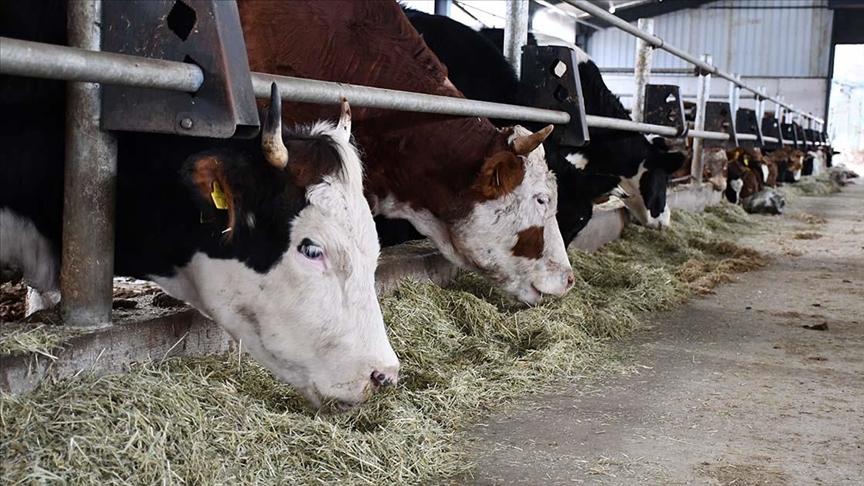
Since cattle are not adversely affected by temperatures as low as −20°C to −25°C, semi-open barn systems that ensure adequate air circulation are more suitable for animal health than fully enclosed barns.【2】 High humidity, ammonia, and carbon dioxide accumulation in enclosed barns create favorable conditions for respiratory diseases. Ventilation should be achieved through roof openings that create a chimney effect and side entrances.
The flooring where animals rest must be dry, soft, and clean. Materials such as sand, rubber, wood shavings, or straw should be used as bedding; hard and wet concrete floors are the primary cause of hoof and leg diseases.
To eliminate threats to human and environmental health posed by livestock operations located within residential areas in Türkiye, “Agriculture-Based Specialized Organized Industrial Zones (TDİOSB)” are established, featuring centralized waste management systems.
Cattle are ruminants. Feed provided to cattle primarily nourishes the microorganisms in the rumen, which in turn meet the animal’s nutritional needs.
For healthy rumen physiology, at least 60% of the daily ration (diet) on a dry matter basis must consist of high-quality roughages (e.g. hay, pasture grass, silage), while no more than 40% should be composed of concentrates.【3】
Roughages balance rumen acidity by increasing saliva secretion and rumination. A deficiency in high-quality roughage leads to reduced milk fat content and various metabolic disorders.
It is vital that newborn calves consume high-quality colostrum within the first hour after birth to develop immunity. To promote rumen papillae development, calves should be provided with starter feed and high-quality dry forage from an early age.
Improper management and feeding practices lead to various diseases in large livestock:
A metabolic disorder characterized by a drop in rumen pH due to excessive consumption of readily fermentable carbohydrates (e.g. grains, starch) and insufficient intake of structural fiber roughages. It predisposes animals to laminitis (hoof inflammation) and other hoof diseases.
Large Animal Husbandry (AA)
A condition in high-yielding dairy cows during the first weeks of lactation, caused by negative energy balance that leads to rapid mobilization of body fat and accumulation of ketone bodies in the blood.
A disease caused by insufficient blood calcium levels following calving due to increased calcium demand, resulting in recumbency and inability to stand.
Persistent wet flooring, contact with feces and urine, and improper rations trigger hoof diseases. Regular hoof trimming, foot baths, and use of dry bedding are essential components of preventive veterinary care.
In modern dairy farming, the primary economic indicator is the production of one calf per cow annually (12–13 month calving interval). To achieve optimal reproductive performance, cows must maintain an ideal Body Condition Score (BCS). The target age for first insemination is 14–17 months, and for first calving, 23–26 months.【4】
Animal welfare is a broad concept encompassing the physical and mental well-being of animals, built upon the “Five Freedoms”: freedom from hunger and thirst, discomfort, pain, injury and disease, fear and distress, and the freedom to express normal behavior. Biosecurity refers to the comprehensive set of measures taken to protect farms from infectious diseases. Key elements of biosecurity include quarantine procedures for imported animals, regular vaccination programs against zoonotic and epidemic diseases such as foot-and-mouth disease and brucellosis, and disinfection protocols.
A large proportion of livestock operations in Türkiye are small family-run enterprises; 59.7% of farms have 1–4 animals, and 21.3% have 5–9 animals.【5】 This small scale hinders the adoption of modern production techniques and market integration.
The main challenges facing the sector are as follows:
Warning: The content in this article is provided solely for general encyclopedic information. The information presented here should not be used for diagnosis, treatment, or medical advice. Before making any decisions regarding health, always consult a qualified veterinarian or healthcare professional. The author and KÜRE Encyclopedia assume no responsibility for any consequences arising from the use of this information for diagnostic or therapeutic purposes.
Gürsoy, Esra, and Muhlis Macit. “Erzincan İli Büyükbaş Hayvan Varlığı, Sorunları ve Çözüm Önerileri.” 2013. PDF. Accessed March 8, 2026. https://dergipark.org.tr/en/download/article-file/26310
T.C. Ministry of Agriculture and Forestry, General Directorate of Livestock. *Büyükbaş Hayvan Yetiştiriciliği*. Ankara: T.C. Ministry of Agriculture and Forestry, 2019. PDF. Accessed March 8, 2026. https://www.tarimorman.gov.tr/HAYGEM/Belgeler/Hayvancılık/Büyükbaş%20Hayvancılık/2019%20Yılı/Buyukbas_Hayvan_Yetistiriciligi.pdf
Tapkı, Nuran, Aybüke Kaya, İbrahim Tapkı, Erdal Dağıstan, and Tülay Çimrin. “The Current Situation of Large Animals Breeding and Changes by Years in Turkey.” Journal of Agricultural Faculty of Mustafa Kemal University 23, no. 2 (2018): 324–39. PDF. Accessed March 8, 2026. https://dergipark.org.tr/en/download/article-file/606236
Tosun, Duygu, and Nevin Demirbaş. “Türkiye’de Hayvancılık İhtisas Organize Sanayi Bölgelerinin Gelişimi ve Konunun Büyükbaş Hayvancılık Sektörünün Sorunları Açısından Değerlendirilmesi.” 10. Ulusal Tarım Ekonomisi Kongresi, 5–7 September 2012, Konya. PDF. Accessed March 8, 2026. https://www.researchgate.net/profile/Nevin-Demirbas/publication/330833900_Turkiye%27de_Hayvancilik_Ihtisas_Organize_Sanayi_Bolgelerinin_Gelisimi_ve_Konunun_Buyukbas_Hayvancilik_Sektorunun_Sorunlari_Acisindan_Deg_erlendirilmesi/links/5c55f54a458515a4c7538dad/Tuerkiyede-Hayvancilik-Ihtisas-Organize-Sanayi-Boelgelerinin-Gelisimi-ve-Konunun-Bueyuekbas-Hayvancilik-Sektoeruenuen-Sorunlari-Acisindan-Deg-erlendirilmesi.pdf.
Yüzbaşıoğlu, Rüveyda. “Büyükbaş Hayvancılık İşletmelerinin Mevcut Durumu, Teknik ve Ekonomik Yapısı, Sorunları ve Çözüm Önerileri Üzerine Bir Araştırma”. PDF. Accessed March 8, 2026. https://dergipark.org.tr/tr/download/article-file/2086644
Çevik, Müge. “Büyükbaş hayvan yetiştiriciliğinin püf noktaları.” *Türk Tarım Orman Dergisi*, April 16, 2025. Accessed March 8, 2026. https://www.turktarim.gov.tr/Haber/1203/buyukbas-hayvan-yetistiriciliginin-puf-noktalari
[1]
Tapkı, Nuran, Aybüke Kaya, İbrahim Tapkı, Erdal Dağıstan, ve Tülay Çimrin, “The Current Situation of Large Animals Breeding and Changes by Years in Turkey,” Journal of Agricultural Faculty of Mustafa Kemal University 23, no. 2 (2018): 324–39, PDF, access date 8 March 2026, https://dergipark.org.tr/en/download/article-file/606236
[2]
T.C. Ministry of Agriculture and Forestry, General Directorate of Livestock, Large Animal Husbandry (Ankara: T.C. Ministry of Agriculture and Forestry, 2019), PDF, access date 8 March 2026, https://www.tarimorman.gov.tr/HAYGEM/Belgeler/Hayvancılık/Büyükbaş%20Hayvancılık/2019%20Yılı/Buyukbas_Hayvan_Yetistiriciligi.pdf
[3]
T.C. Ministry of Agriculture and Forestry, General Directorate of Livestock, Large Animal Husbandry (Ankara: T.C. Ministry of Agriculture and Forestry, 2019), PDF, access date 8 March 2026, https://www.tarimorman.gov.tr/HAYGEM/Belgeler/Hayvancılık/Büyükbaş%20Hayvancılık/2019%20Yılı/Buyukbas_Hayvan_Yetistiriciligi.pdf
[4]
T.C. Ministry of Agriculture and Forestry, General Directorate of Livestock, Large Animal Husbandry (Ankara: T.C. Ministry of Agriculture and Forestry, 2019), PDF, access date 8 March 2026, https://www.tarimorman.gov.tr/HAYGEM/Belgeler/Hayvancılık/Büyükbaş%20Hayvancılık/2019%20Yılı/Buyukbas_Hayvan_Yetistiriciligi.pdf
[5]
Tosun, Duygu, ve Nevin Demirbaş, “Türkiye’de Hayvancılık İhtisas Organize Sanayi Bölgelerinin Gelişimi ve Konunun Büyükbaş Hayvancılık Sektörünün Sorunları Açısından Değerlendirilmesi,” 10. Ulusal Tarım Ekonomisi Kongresi, 5‑7 Eylül 2012, Konya, PDF, access date 8 March 2026, https://www.researchgate.net/profile/Nevin-Demirbas/publication/330833900_Turkiye%27de_Hayvancilik_Ihtisas_Organize_Sanayi_Bolgelerinin_Gelisimi_ve_Konunun_Buyukbas_Hayvancilik_Sektorunun_Sorunlari_Acisindan_Deg_erlendirilmesi/links/5c55f54a458515a4c7538dad/Tuerkiyede-Hayvancilik-Ihtisas-Organize-Sanayi-Boelgelerinin-Gelisimi-ve-Konunun-Bueyuekbas-Hayvancilik-Sektoeruenuen-Sorunlari-Acisindan-Deg-erlendirilmesi.pdf.

No Discussion Added Yet
Start discussion for "Large-scale Livestock Farming" article
Animal Breeds and Genetic Improvement
Dairy Breeds
Beef Breeds
Dual-Purpose Breeds
Farm Establishment and Housing Systems
Housing Structure and Ventilation
Flooring and Bedding
Organized Industrial Zones
Digestive Physiology, Care, and Nutrition
Ration Formulation
Importance of Roughages
Calves Feeding
Metabolic Disorders and Hoof Health
Rumen Acidosis
Ketosis
Milk Fever (Hypocalcemia)
Hoof and Leg Health
Reproductive Health and Herd Management
Animal Welfare and Biosecurity
Structural Characteristics and Challenges of Large Animal Husbandry in Türkiye