This article was automatically translated from the original Turkish version.
+2 More
Location | Saray Neighborhood Kütahya | ||||||||
|---|---|---|---|---|---|---|---|---|---|
Year of Construction | Hijri 1321 (Gregorian 1905–1906) | ||||||||
Previous Names | Recep Ağa Mosque | ||||||||
Patron | Governor of Kütahya Ahmed Fuad Pasha | ||||||||
Architect(s) | Governor Ahmed Fuad Pasha | ||||||||
Architectural Plan | Square Plan, Single Dome | ||||||||
Capacity | Approximately 250 people | ||||||||
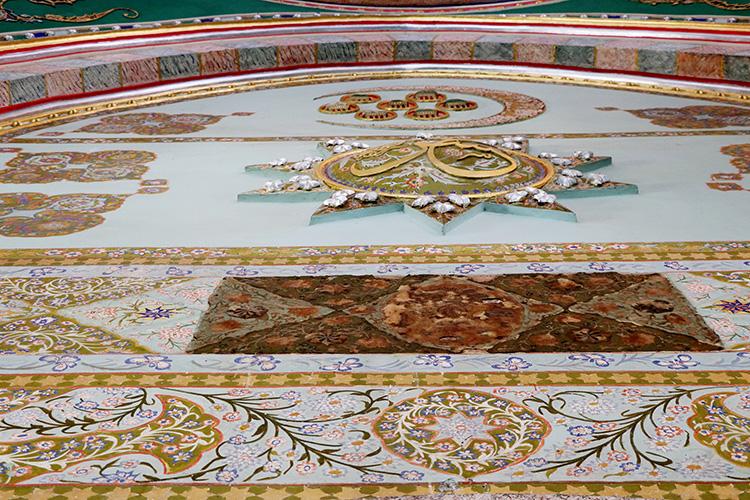
The Green Mosque, located in the Saray Neighborhood of Kütahya, was constructed in Hijri 1321 (Gregorian 1905–1906) with the support of charitable citizens under the initiative of Kütahya Mutasarrıf Ahmed Fuad Pasha. It is known that the mosque’s architecture was designed personally by Mutasarrıf Fuad Pasha, while the interior decorations were executed by Rıza Bey, one of the palace painters serving in Kütahya at the time.
The first wooden mosque was built by Recep Ağa, the Kütahya Mütesellim, who is recorded to have served before Hijri 1101, and for this reason it was long known as the Recep Ağa Mosque. After this initial structure fell into ruin, it was rebuilt and expanded in Hijri 1163–1164 by Anatolia Governor Yahya Pasha, who constructed it anew using both wood and an upper story. During this period, Yahya Pasha also added a Sıbyan Mektebi adjacent to the mosque. Over time, both the mosque and the school fell into disrepair, and in Hijri 1225 (1809 CE), Osman Pasha, son of Kütahya Governor Melek Ahmed Pasha, commissioned Feyzullah Ağa, the Hazinedar, to repair them and appoint a teacher to the Sıbyan Mektebi. Later, Ahmed Edip Efendi, the müderris of the Seyyid Ömer Medresesi, constructed two shops and three stores on the land beneath the mosque and endowed them to the mosque.
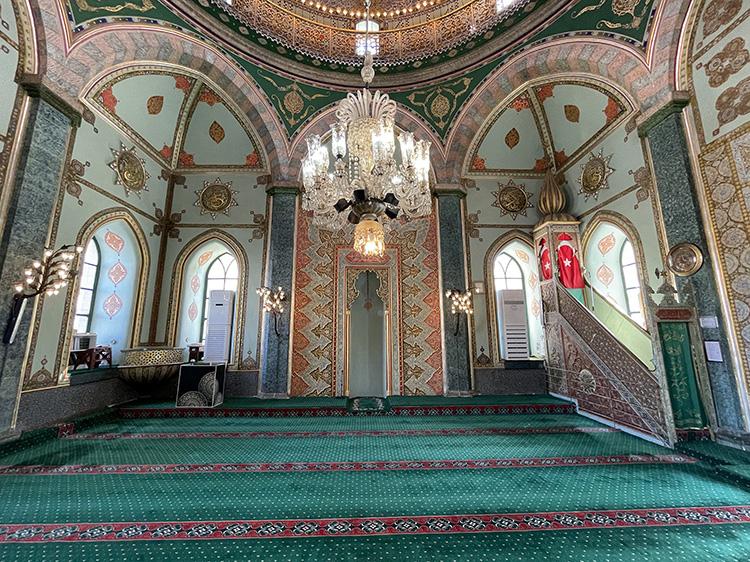
Kütahya Green Mosque (Anadolu Agency)
The mosque is built on a square plan with walls raised in ashlar stone and covered by a central dome resting on an octagonal drum. The entrance is emphasized by a small dome supported by two marble columns, making it one of the late examples of classical Ottoman mosque architecture. Both the central dome and the entrance dome are covered in lead. The building has three windows on the eastern façade and two on each of the other sides. This arrangement ensures adequate natural lighting for the interior space and supports a symmetrical façade composition. The original wooden, oil-painted, spiral staircase in the northwestern corner provides access to the gallery. The underside of the gallery is painted with star and floral motifs.
The mosque’s minaret, constructed by the late Ahmet Minareci, has a twelve-sided shaft. The balcony is enclosed and exhibits Arab-style features. The enclosed balcony added approximately 12 tons of additional weight to the minaret. The minaret stands approximately 35.9 meters tall, with its shaft, neck, honeycomb, and cap sections arranged according to the classical Ottoman minaret scheme.
Along a broad band aligned with the eight windows of the dome drum, the Basmala is followed by Ayet’el-Kürsî, completed in seven sections, while the eighth section features the phrase “Bi hürmeti Seyyid el-Mürselîn vel-hamdü lillahi rabbil âlemîn” written in sülüs script. Above these inscriptions, the phrases “La ikrahe fi’d-dîn” and other verses are rendered in kufic script with gold leaf. Above these, eight prayers begin with “Es-serefü nûrullah” and each is introduced with “Allahümme…” in red sülüs script. On the dome’s base, above the entrance arch, and in various parts of the interior, motifs include crescents, seven taç-ı şerif symbols representing Sufi orders, the Basmala, the verse “İnna fetahna leke fethan mübîna,” the names of Allah and Muhammad, and the names of the four caliphs.
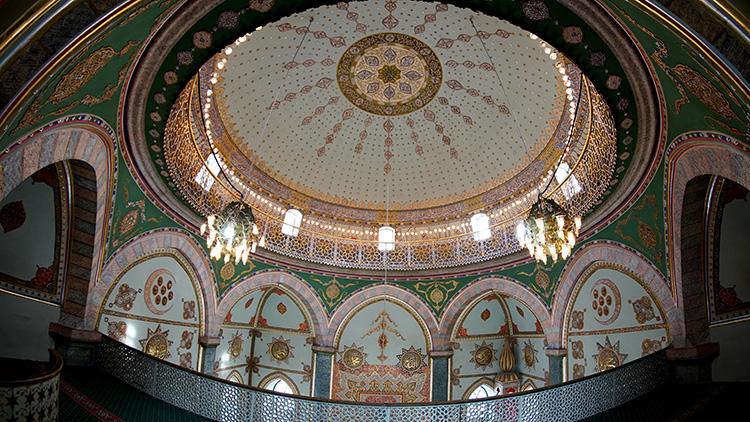
Architectural Plan of Kütahya Green Mosque (Anadolu Agency)
The mosque underwent restoration in 2008 by the Regional Directorate of Foundations. During this restoration, special care was taken to preserve the interior decorations, and a glass gallery was added to the entrance section. Today, the mosque has a capacity to accommodate approximately 250 worshippers simultaneously.
Anadolu Ajansı. "Kütahya’nın Yeşil Cami’si Adını Zengin Motifli İç Süslemelerinden Alıyor." Accessed November 16, 2025. https://www.aa.com.tr/tr/kultur-sanat/kutahyanin-yesil-camisi-adini-zengin-motifli-ic-suslemelerinden-aliyor/2575175
Döven, Mahmud Sami, Cavit Serhatoğlu, Onur Kaplan, and Ramazan Livaoğlu. “Kütahya Yeşil Minarenin Kapalı ve Açık Şerefelid Dinamik Davranışlarının Karşılaştırılması.” *Eskişehir Teknik Üniversitesi Bilim ve Teknoloji Dergisi B - Teorik Bilimler* 6 (2018): 192–203. Accessed November 16, 2025. https://dergipark.org.tr/tr/pub/estubtdb/issue/42755/516085
Kütahya Belediyesi. "Yeşil Camii." *Tarihi Yerler*. Accessed November 16, 2025. https://www.kutahya.bel.tr/tarihiyerler.asp?islem=goster&id=16
Ministry of Culture and Tourism. "Yeşil Camii – Kütahya." *Kültür Portalı*. Accessed November 16, 2025. https://www.kulturportali.gov.tr/turkiye/kutahya/gezilecekyer/yesl-cam

Location | Saray Neighborhood Kütahya | ||||||||
|---|---|---|---|---|---|---|---|---|---|
Year of Construction | Hijri 1321 (Gregorian 1905–1906) | ||||||||
Previous Names | Recep Ağa Mosque | ||||||||
Patron | Governor of Kütahya Ahmed Fuad Pasha | ||||||||
Architect(s) | Governor Ahmed Fuad Pasha | ||||||||
Architectural Plan | Square Plan, Single Dome | ||||||||
Capacity | Approximately 250 people | ||||||||
No Discussion Added Yet
Start discussion for "Kütahya Green Mosque" article
History and Construction Process
Architectural Structure
Current Condition