


This article was automatically translated from the original Turkish version.
Köşkerlik is a traditional Turkish craft of shoemaking and leatherworking. Yemenicilik, çarıkçılık, terlikçilik, mestçilik, and çizme production are all part of this craft, which involves the handmade production of various types of footwear and demands skilled craftsmanship. Historically, köşkerlik has held significant importance as a profession requiring manual dexterity and expertise. For centuries, köşkerler produced the diverse footwear worn by the general population and soldiers in daily life. This craft developed alongside the leatherworking and shoemaking knowledge brought by the Turks during their migration from Central Asia to Anatolia, becoming an integral part of Turkish culture.
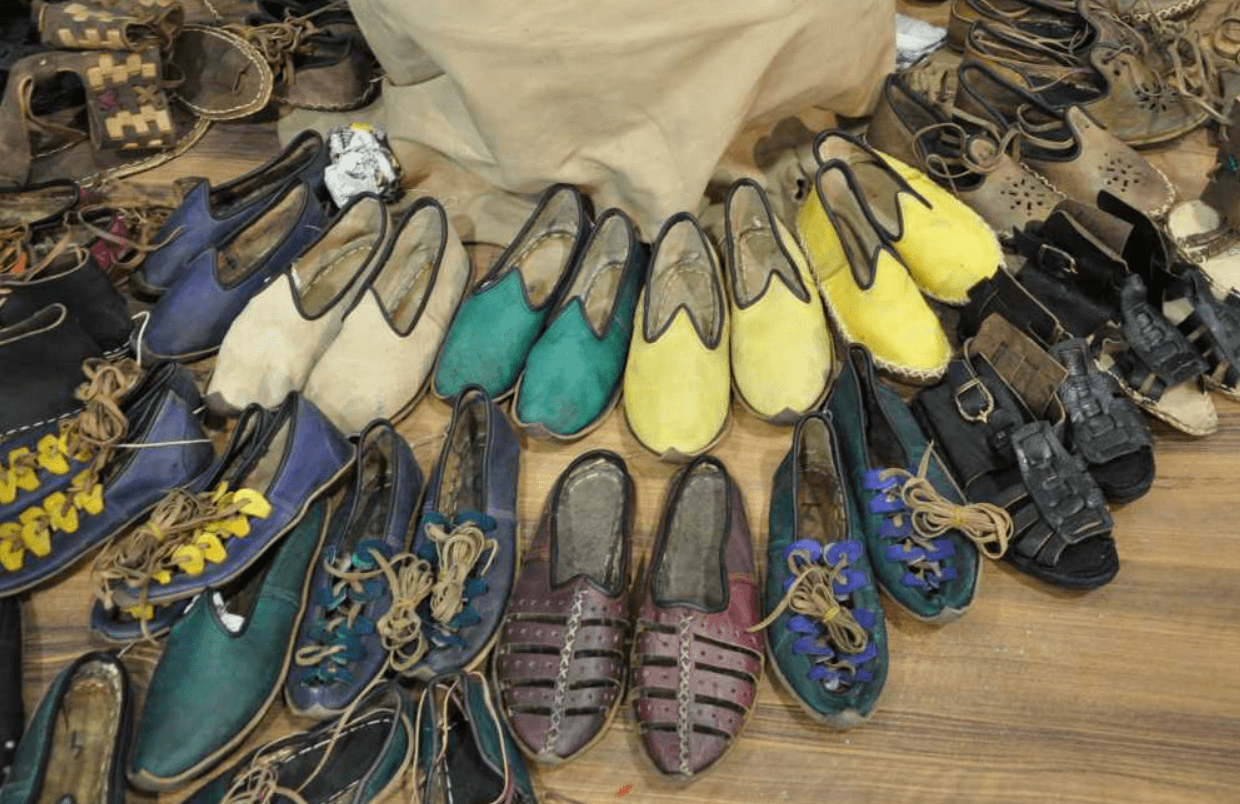
Shoes and Sandals Produced by the Köşker (Source: Culture Portal
The term köşker is derived from the Persian word "keşfger," meaning a person who makes shoes, yemeni, çarık, terlik, and mest. Before the advent of machinery, this craft entirely relied on handwork involving leather processing and shoe production. The products of köşkerler include distinctive types such as the "tokalı Osmanlı yemenisi," worn during weddings, engagements, and special occasions, as well as the "Fatih yemenisi," designed for everyday use.
The earliest traces of Turkish shoemaking are found in the čarık and çizme recovered from kurgan excavations in Central Asia. The term "edik," appearing in the earliest Uyghur texts, is still commonly used in Anatolia today. The Persian-origin word "pabuç" became a key term after the Turks settled in Anatolia. From the 15th century onward, the word "ayakkabı" entered common usage, and clear distinctions emerged between köşkerlik and kunduracılık.
Köşkerler use leather from buffalo, cattle, sheep, and goats in shoe production. The hides are treated with lime-soaked soil and leaves of the palamut tree, colored with natural dyes, and softened with fine oils. Shoes are waterproofed with beeswax. No machinery is used in the production of çarık and yemeni; all manufacturing processes are carried out entirely by hand.
The master shoemaker, owner of the workshop, cuts the leather, assembles the shoe components, and gives the final shape. Apprentices and journeymen perform various tasks under the master’s supervision. Key tools used in shoemaking include lasts, endaze, wooden blocks, pazval, mushta, and various hand tools. Shoes are specially designed according to function and use. For example, types such as the "Karadağ çarığı," worn while working in fields and vineyards, or the "tokalı saray yemenisi," worn in the palace, are produced.
During the Ottoman period, köşkerler were organized within a hierarchical structure. The most authoritative figure was known as Yiğitbaşı; in the early years of the Republic, the titles kâhya and erkân ustası were used. These individuals played a vital role in regulating the trade, resolving disputes, and overseeing standards among artisans. Additionally, köşkerler organized production and sales processes and ensured adherence to professional codes.
"Köşkerlik." Kahramanmaraş İl Kültür ve Turizm Müdürlüğü. Accessed January 14, 2025.https://kahramanmaras.ktb.gov.tr/TR-150387/koskerlik.html.
Traditional Professions Encyclopedia. T.C. Ministry of Trade. Accessed January 14, 2025.

No Discussion Added Yet
Start discussion for "Köşkerlik (Yemenicilik, Çarıkçılık)" article
Definition and Terminology of Köşkerlik
History of Köşkerlik and Shoemaking
Materials and Tools Used in Köşkerlik
Labor and Production Process in Köşkerlik
Köşkerlik and Social Structure