


This article was automatically translated from the original Turkish version.
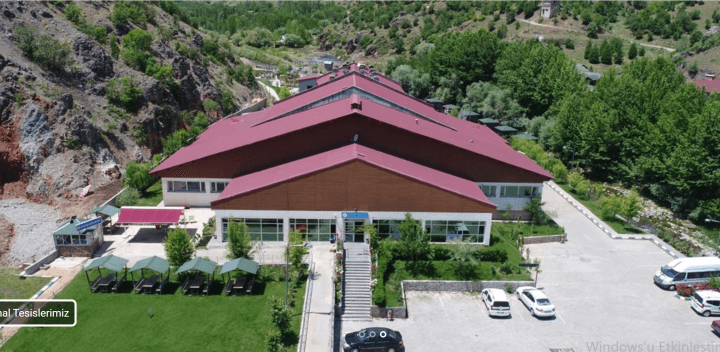
Kös Kaplıcaları (Türkiye Turizm Ansiklopedisi)
Classification(s) | Hyperthermal and oligometallic mineral water | ||||||||
|---|---|---|---|---|---|---|---|---|---|
Historical Origin | Near the ancient Göynük Castle used since the Roman era | ||||||||
Transportation(s) | All-season uninterrupted access via asphalt road | ||||||||
Location | 20th kilometer Bingöl Karlıova highway | ||||||||
Service Units | Restaurant tea garden parking and physical therapy center | ||||||||
Number of Visitors | Daily average of 2000 people in summer months | ||||||||
Geological Structure | East Anatolian Fault Line and metamorphic series | ||||||||
Environmental Flora | Oak juniper and microclimate-influenced fig trees | ||||||||
Drinking Cure | Stomach intestinal and gallbladder disorders | ||||||||
Pools | Separate indoor and outdoor pools for women and men | ||||||||
Facility Types | Hotel motel pension and thermal application hotel | ||||||||
Indications | Rheumatism kidney stones skin and women's diseases | ||||||||
Chemical Composition | Sodium calcium bicarbonate and sulfate | ||||||||
Water Temperature | 47°C at the source, 41°C at the facilities | ||||||||
Settlement | Bingöl Ilıcalar Village | ||||||||
Kös Thermal Springs; Bingöl city center is located approximately 20 kilometers northeast, along the Bingöl-Erzurum (Karlıova) highway, in the settlement of Ilıcalar. This geothermal source is classified as a thermal tourism and balneological therapy resource based on its hydrogeological and chemical characteristics. In literature it is referred to as “Bingöl Thermal Springs,” while locally it is known as “Ilıcalar” or “Hamamlar”. Geographically, these thermal springs are situated on the valley floor divided by the Çal Stream, to the west of the Göynük Çayı valley.【1】 Due to its accessibility via the highway and proximity to surrounding settlements, the area serves as one of Bingöl’s key recreational and health tourism centers.
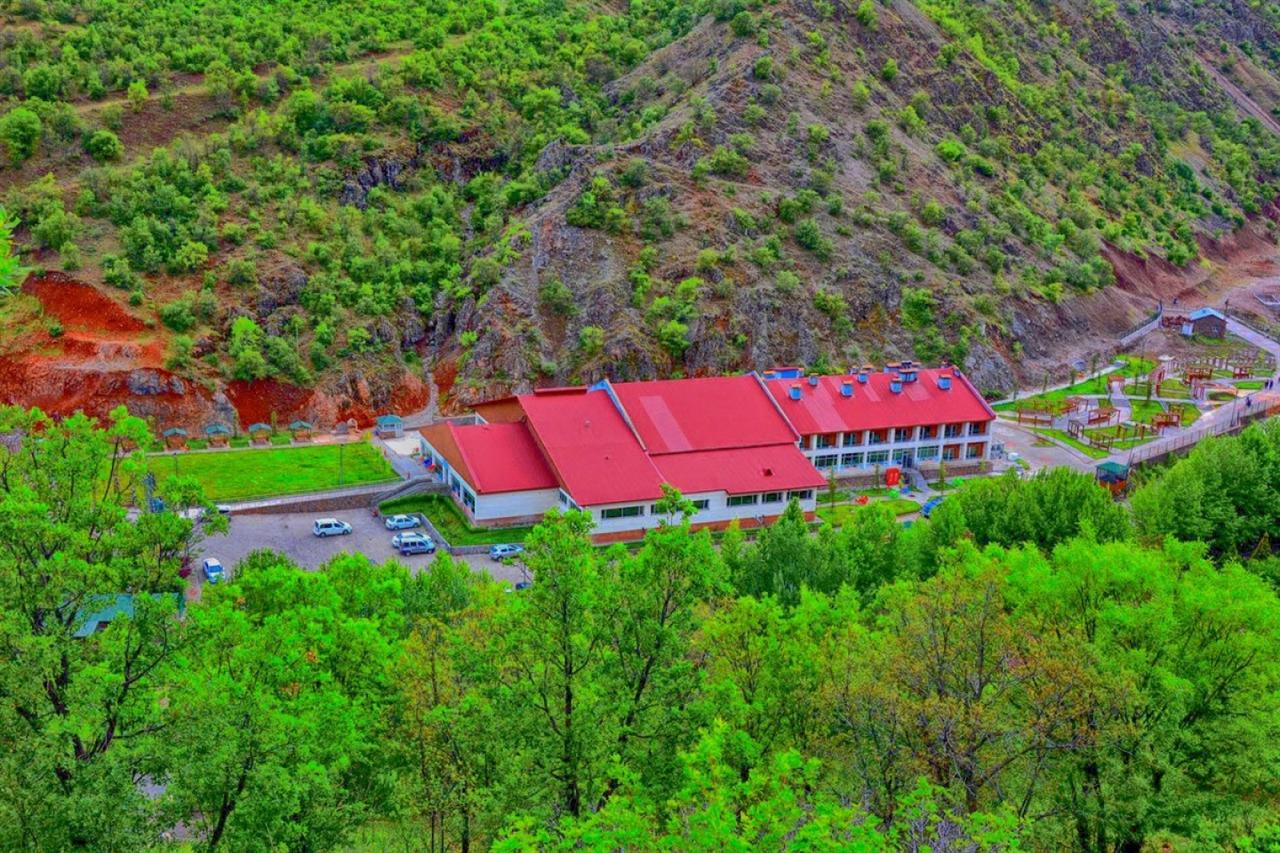
Kös Thermal Springs (Bingöl Municipality)
Thermal spring area lies near the intersection of the North Anatolian Fault Zone and the East Anatolian Fault Zone, two of the most significant tectonic features shaping Türkiye’s geological structure, specifically along the Bingöl-Karlıova fault line. Geologically, the area consists of a metamorphic series containing Paleozoic marble, schist, calc-schist, and crystalline limestone, overlain by basalt and andesite volcanic rocks.【2】
The geothermal waters emerge at contact zones within the crystalline limestone of this metamorphic series, with their discharge point located at the area where Kös Stream exits the basin. Its geographic position deep within a valley floor has created a unique microclimate that mitigates the harsh continental climate of the region, enabling the growth of plant species such as the fig tree, which is difficult to cultivate elsewhere in Bingöl, alongside rich communities of oak, juniper, poplar, and willow.【3】
Analyses conducted by the Department of Medical Ecology and Hydroclimatology at Istanbul University Faculty of Medicine and the Refik Saydam Public Health Central Administration have scientifically established the therapeutic properties of the spring water. The water temperature measured at the source is 47°C, stabilizing between 41°C and 45°C upon reaching the facilities.【4】
According to balneological classification, the water is classified as “hyperthermal” (36–45°C), “oligometallic” (low mineral content, 1.6 mg/l), and “hypotonic” (50.82 mmol/l). Its chemical composition includes anions such as chloride, sulfate, silicate, and bicarbonate, and cations such as sodium, calcium, iron, and aluminum. The water also exhibits characteristics of carbonated, calcareous, and earthy bicarbonate water.【5】
The medical applications of the spring water are categorized into two main types based on its mineral composition and thermal properties: bathing therapy and drinking therapy. Bathing therapy is used as an adjunctive treatment for rheumatic diseases, neuritis, neuralgia, sequelae of fractures and dislocations (orthopedic rehabilitation), gynecological conditions, gout, and peripheral circulatory disorders.
When used as drinking therapy, the water has been found to enhance gastric and intestinal motility, aid digestion, act as a diuretic, and promote gallbladder emptying. Additionally, its fluoride content is reported to help prevent dental caries and address dietary fluoride deficiency, while its calcium content contributes to the treatment of bone disorders. However, due to the presence of sediment, the water is unsuitable for bottled commercial consumption and must be consumed fresh at the source.
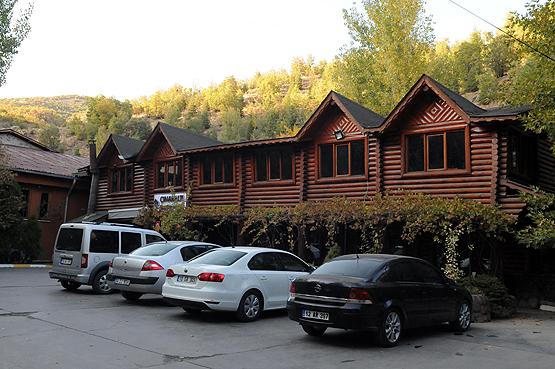
Kös Thermal Springs (AA)
Although the use of thermal springs in the region is believed to date back to the Roman period, the first modern infrastructure development began in 1946 with funding from the Municipalities Bank, and the facilities were operated for many years under the ownership of the Bingöl Provincial Special Administration. Today, the development around the springs is structured differently on either side of the Çal Stream valley.
On the southern bank of the stream lies the Bingöl University-affiliated “Thermal Physics and Rehabilitation Center,” an academically supervised facility featuring 20 hotel rooms, two large separate pools for men and women, and five private family pools. The pool water is completely drained and refreshed each night to meet hygiene standards. On the northern bank, private sector enterprises offering motel, hotel, and pension-style accommodations are located. A more comprehensive facility constructed by the private sector in 2004 includes a 210-bed hotel, sauna, indoor and outdoor swimming pools, and a restaurant.
Although Kös Thermal Springs are accessible year-round, visitor numbers exhibit significant seasonal fluctuations. Tourism activity peaks between June and September, when climatic conditions are most favorable, and declines markedly during winter months.
The area functions not only as a destination for overnight tourists but also as a recreational site for day-trippers from Bingöl and neighboring provinces. Academic studies emphasize the need to move beyond the traditional “hamam” bathing culture and transform the facilities into professional therapy centers under the supervision of physiotherapists and physicians, while integrating activities such as nature walking and camping to diversify tourism offerings.
Accessed November 26, 2025. https://www.aa.com.tr/tr/kultur/ahlatta-acilan-kurslarla-geleneksel-tas-isciligi-yasatiliyor/3116279.
Anadolu Ajansı. "Bingöl kaplıcaları her dönem ilgi görüyor." Accessed February 17, 2026. https://www.aa.com.tr/tr/turkiye/bingol-kaplicalari-her-donem-ilgi-goruyor/949180
Bingöl Belediyesi. "Kös Kaplıcaları." Bingöl Belediyesi Kurumsal Web Sitesi. Last updated September 9, 2021. Accessed February 17, 2026.
Bingöl İl Directorate of Culture and Tourism. "Termal Turizm." Ministry of Culture and Tourism of the Republic of Turkey. Accessed February 17, 2026. https://bingol.ktb.gov.tr/TR-183259/termal-turizm.html
Bulut, İhsan, and Mustafa Girgin. "Bingöl Kös Kaplıcalarının Coğrafi Etüdü." Doğu Coğrafya Dergisi, no. 5 (2001). Accessed February 17, 2026.
Butasım, Nebi. "Bingöl Kaplıcaları." In Online Türkiye Turizm Ansiklopedisi. Edited by Nazmi Kozak. 2019. Accessed February 17, 2026.
https://dergipark.org.tr/en/download/article-file/3299
https://turkiyeturizmansiklopedisi.com/bingol-kaplicalari
https://www.bingol.bel.tr/za/kente-bakis/cografyadoga-zazaca/kos-kaplicalari
Çomak, Nadir, and Burhan Güncegörü. "Kös Kaplıcalarının Turizme Kazandırılması." Marmara Coğrafya Dergisi, no. 26 (July 2012): 55-70. Accessed February 17, 2026.
[1]
Nebi Butasım, “Bingöl Kaplıcaları,” Online Türkiye Turizm Ansiklopedisi, Erişim tarihi: 17.02.2026.
[2]
İhsan Bulut ve Mustafa Girgin, “Bingöl Kös Kaplıcalarının Coğrafi Etüdü,” Doğu Coğrafya Dergisi, sy. 5 (2001), Erişim tarihi: 17.02.2026.
[3]
Nebi Butasım, “Bingöl Kaplıcaları,” Online Türkiye Turizm Ansiklopedisi, Erişim tarihi: 17.02.2026.
[4]
Nadir Çomak ve Burhan Güncegörü, “Kös Kaplıcalarının Turizme Kazandırılması,” Marmara Coğrafya Dergisi, sy. 26 , 55-70, Erişim tarihi: 17.02.2026.
[5]
Nebi Butasım, “Bingöl Kaplıcaları,” Online Türkiye Turizm Ansiklopedisi, Erişim tarihi: 17.02.2026.
Kös Kaplıcaları (Türkiye Turizm Ansiklopedisi)
Classification(s) | Hyperthermal and oligometallic mineral water | ||||||||
|---|---|---|---|---|---|---|---|---|---|
Historical Origin | Near the ancient Göynük Castle used since the Roman era | ||||||||
Transportation(s) | All-season uninterrupted access via asphalt road | ||||||||
Location | 20th kilometer Bingöl Karlıova highway | ||||||||
Service Units | Restaurant tea garden parking and physical therapy center | ||||||||
Number of Visitors | Daily average of 2000 people in summer months | ||||||||
Geological Structure | East Anatolian Fault Line and metamorphic series | ||||||||
Environmental Flora | Oak juniper and microclimate-influenced fig trees | ||||||||
Drinking Cure | Stomach intestinal and gallbladder disorders | ||||||||
Pools | Separate indoor and outdoor pools for women and men | ||||||||
Facility Types | Hotel motel pension and thermal application hotel | ||||||||
Indications | Rheumatism kidney stones skin and women's diseases | ||||||||
Chemical Composition | Sodium calcium bicarbonate and sulfate | ||||||||
Water Temperature | 47°C at the source, 41°C at the facilities | ||||||||
Settlement | Bingöl Ilıcalar Village | ||||||||
No Discussion Added Yet
Start discussion for "Kös Thermal Springs" article
Geological Structure and Geographic Features
Physical and Chemical Characteristics
Medical Indications and Balneological Use
Historical Development and Infrastructure Status
Tourism Potential and Seasonality