


This article was automatically translated from the original Turkish version.
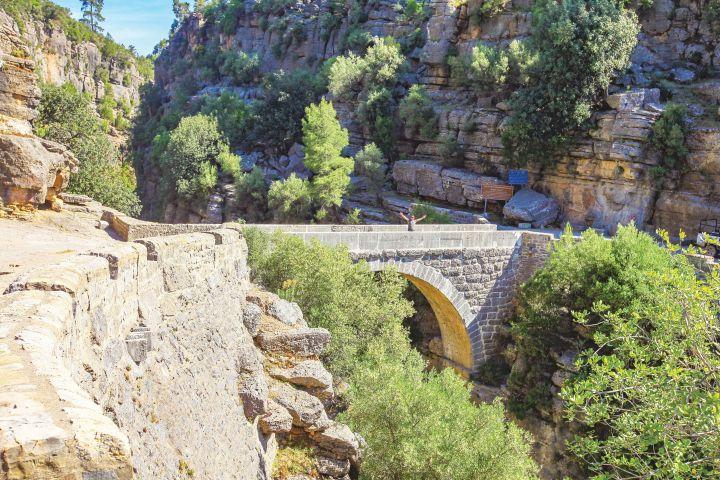
Köprülü Canyon National Park
Location | Antalya/Türkiye 63 km northwest | ||||||||
|---|---|---|---|---|---|---|---|---|---|
Surface Area | 36.614 hectares (366.140 decare) | ||||||||
Foundation Date | 1973 (Declared a national park) | ||||||||
Köprülü Kanyon National Park, Antalya province, 63 kilometers northwest of the Manavgat district, is a natural area covering 366,140 decares. Established as a national park in 1973, this region is situated along the Köprüçay River and the historic ancient city of Selge. The park’s most striking feature is a 14-kilometer-long, over-100-meter-deep canyon carved by the Köprüçay River between the villages of Bolasan and Beşkonak. This canyon holds the distinction of being one of Türkiye’s longest.
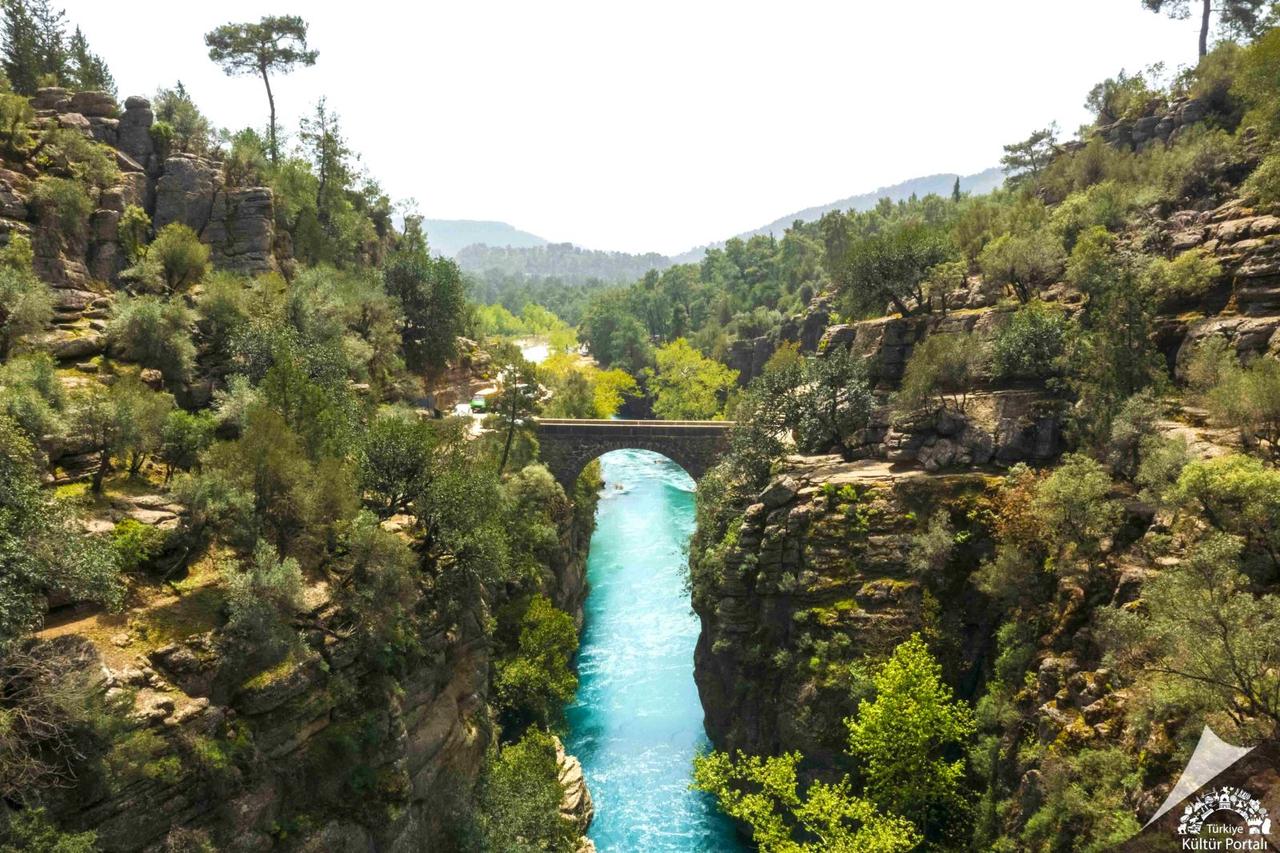
Köprülü Kanyon Milli Parkı (Kültür Portalı)
The Köprüçay River, originating in the Taurus Mountains, forms the park’s primary water source. The river flows through narrow and deep canyons before reaching the Mediterranean Sea south of Serik. Surrounded by steep and difficult-to-climb canyon walls, the Köprüçay is fed by underground springs and is notable for its high flow rate throughout the year. These characteristics make it one of Türkiye’s most important rafting routes. Moreover, its clear, greenish-blue waters are considered among the cleanest flowing rivers in the world.
The park’s geomorphological structure is highly diverse. Unique formations such as the Adam (Şeytan) Rock formations, karstic springs, caves, lapies, and canyons are characteristic of the region. With elevations ranging from 150 to 2,500 meters, the park supports a rich flora and fauna. It hosts the largest natural cedar forest in the Mediterranean Region (400 hectares), 48 rare plant species (44 of which are endemic), and endangered animal species including the Anatolian Ibex, Anatolian Vulture, Golden Eagle, and Black Salamander.
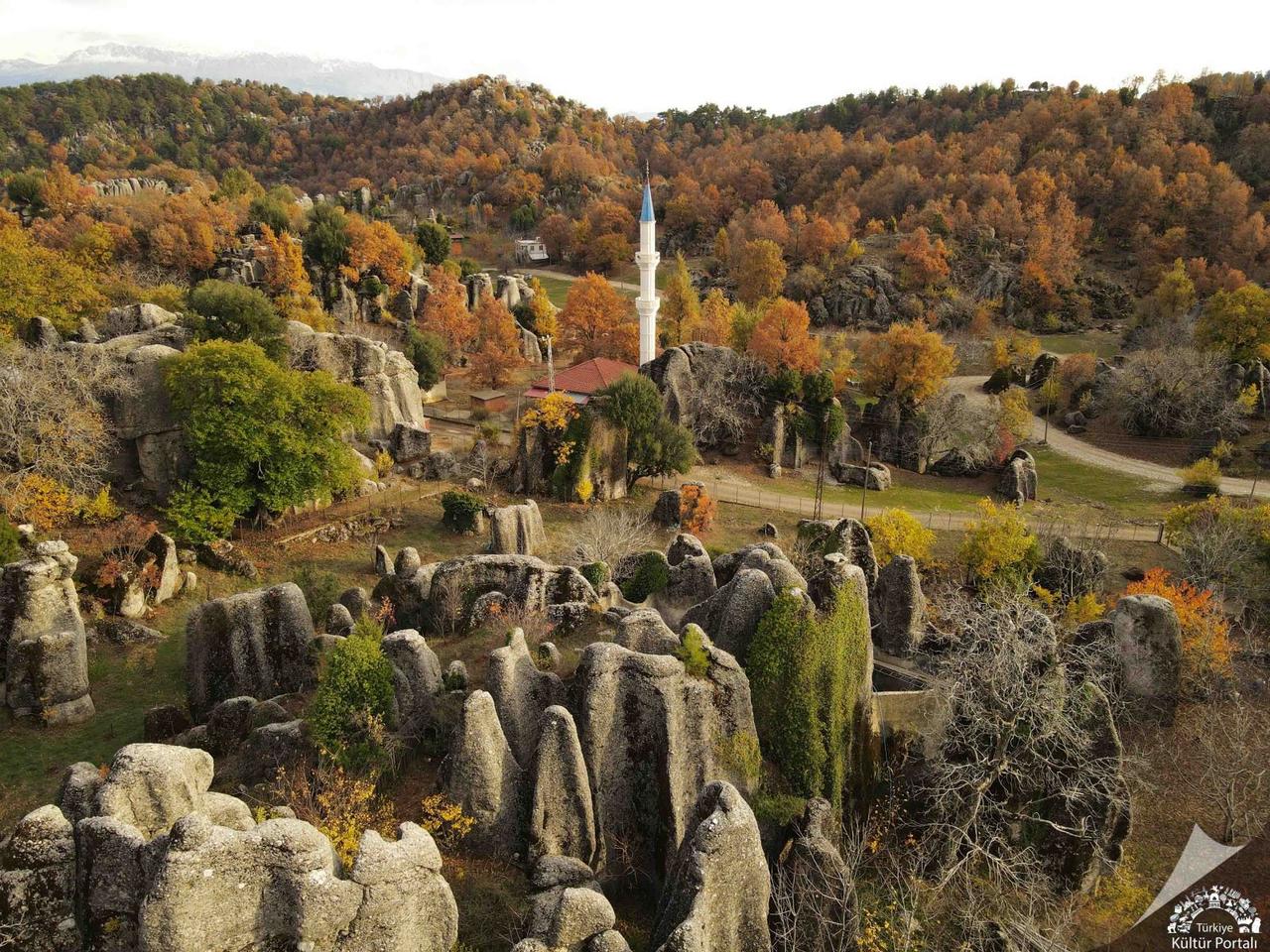
Köprülü Kanyon Milli Parkı (Kültür Portalı)
Köprülü Kanyon National Park also holds significant archaeological value. The ancient city of Selge, founded in the 5th century BCE, features a theater, agora, temples dedicated to Zeus and Artemis, cisterns, and aqueducts. Roman-era bridges at Oluk and Büğrüm, along with the stone-paved historic road connecting Selge to the Pamphylian coastal cities and a 45-kilometer stretch of the Apostle Paul’s Route, shed light on the region’s history. The Apostle Paul’s Route is a significant hiking trail associated with the earliest missionary activities in Anatolia.
The national park offers visitors a variety of activities. In addition to water sports such as rafting, canoeing, canyoning, and swimming, the park promotes nature hiking, rock climbing, cycling, camping, botany observation, wildlife watching, photography, and jeep safaris. The rafting route has two difficulty levels, ranging from 2 to 3, starting at Oluk Bridge for amateurs and at Çaylayan for professionals. Accommodation options within the park include bungalows, tent camping areas, and food and beverage facilities. Access to the park, which has free entry, is provided via an asphalt road along the Antalya-Manavgat highway.
Kültür Portalı. "Köprülü Kanyon Milli Parkı." Türkiye Kültür Portalı. Accessed April 3, 2025.https://www.kulturportali.gov.tr/turkiye/antalya/gezilecekyer/koprulu-kanyon-milli-parki
Türk Tarım. “Adrenalin ve Dinginliğin Buluşma Noktası: Köprülü Kanyon Milli Parkı.” Accessed April 3, 2025.http://www.turktarim.gov.tr/Haber/1112/adrenalin-ve-dinginligin-bulusma-noktasi-koprulu-kanyon-milli-parki
Türkiye Turizm Ansiklopedisi. "Köprülü Kanyon Milli Parkı." Accessed April 3, 2025.https://turkiyeturizmansiklopedisi.com/koprulu-kanyon-milli-parki

Köprülü Canyon National Park
Location | Antalya/Türkiye 63 km northwest | ||||||||
|---|---|---|---|---|---|---|---|---|---|
Surface Area | 36.614 hectares (366.140 decare) | ||||||||
Foundation Date | 1973 (Declared a national park) | ||||||||
No Discussion Added Yet
Start discussion for "Köprülü Canyon National Park" article
Geographical Features and Natural Riches
Historical and Cultural Values
Recreation and Tourism