


This article was automatically translated from the original Turkish version.
+2 More
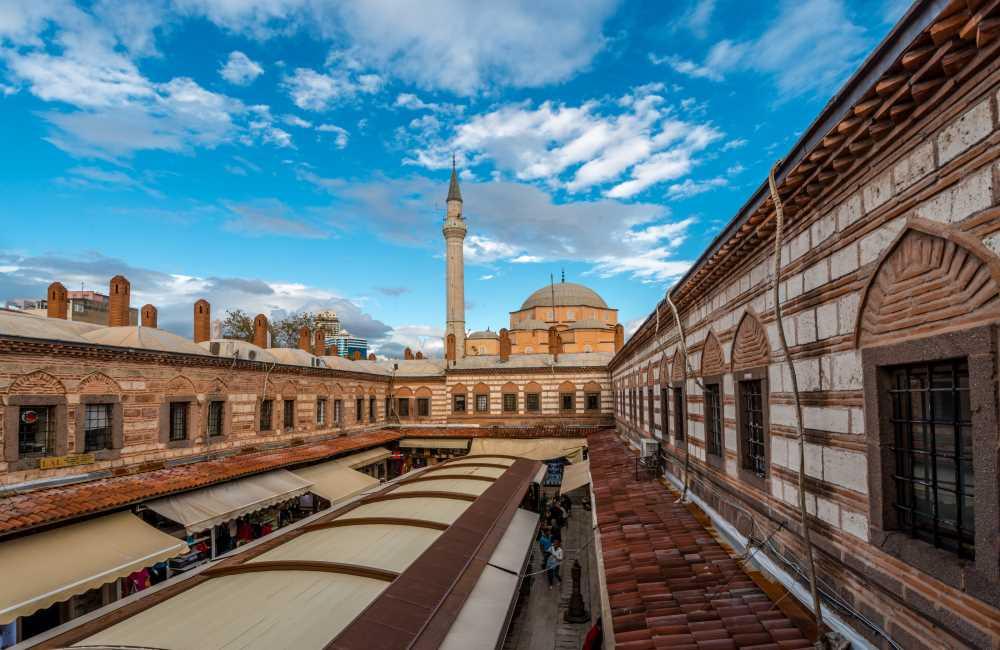
Kızlarağası Hanı
Location | İzmir Konak Inside Kemeraltı Bazaar. | ||||||||
|---|---|---|---|---|---|---|---|---|---|
Year of Construction | 1744–1745 | ||||||||
Patron | Kızlarağası Hacı Beşir Ağa | ||||||||
Bedestens | Çuha, Cevahir, Bakır | ||||||||
Architecture | A two-story Ottoman caravanserai with an area of 4,000 m². | ||||||||
Restoration | It has been repaired many times since 1745. It became a tourist bazaar in 1993. | ||||||||
Function | Formerly trade and accommodation. Now tourist shopping. | ||||||||
Number of Rooms | The upper floor contains 73 accommodation rooms. | ||||||||
Kızlarağası Hanı is located within the Kemeraltı Çarşısı, in the Konak district of İzmir, in the area known as Halim Ağa Çarşısı. Today, the han situated between 871. Sokak and 902 and 906. Sokak is one of the rare surviving Ottoman-era commercial structures in İzmir. The building’s main façade opens onto the former Keresteciler Sokağı. Originally constructed near the shoreline, the han now lies approximately 200 metres inland due to the gradual silting up of the sea.
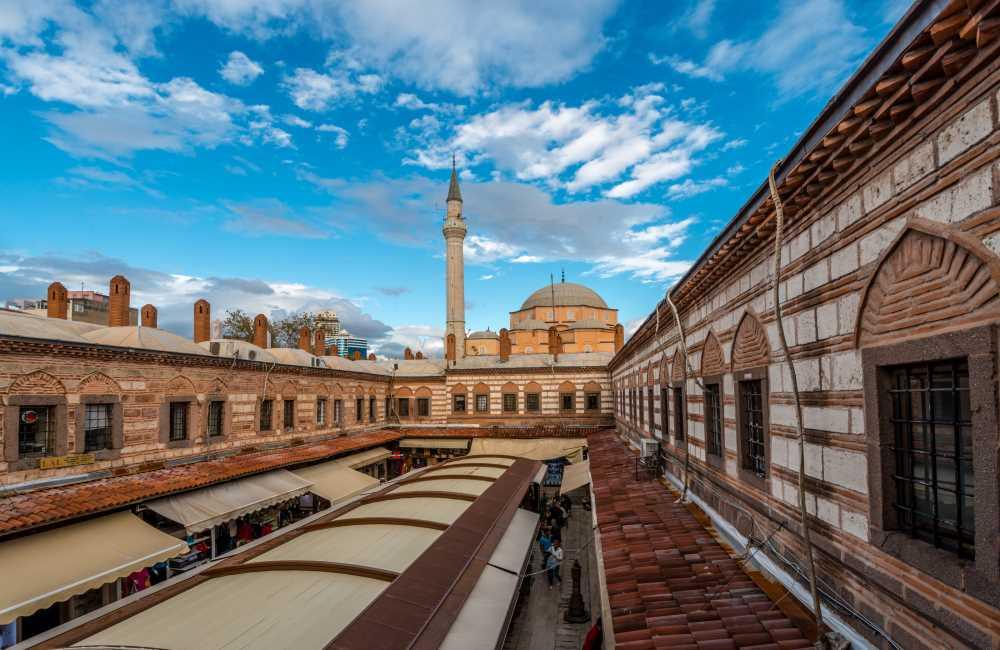
Kızlarağası Hanı (TC.Kültür ve Turizm Bakanlığı)
Kızlarağası Hanı was commissioned by Kızlarağası Hacı Beşir Ağa, who served as Darüssaâde Ağası during the reigns of Sultan Ahmed III and Sultan Mahmud I of the Ottoman State. According to the foundation inscription, construction began in 1744 and was completed in 1745. Although a fountain within the han bears the date 1675, it is believed to have been relocated from another fountain that previously existed in the area.
The han follows the typical Ottoman han layout with a covered arcade and central courtyard. Built on an area of approximately 4,000 m², the structure has a nearly square rectangular plan. At its center lies a courtyard measuring about 600 m². The two-storey building consists of rooms opening onto galleries on the upper floor, while the ground floor comprises shops, corridors and bedestens.
The architectural uniqueness of the building is highlighted by the five-column, six-arched arcade facing the courtyard on the upper floor and the projecting cumbalı şahnişinleri on the façade. The column capitals are decorated with triangular-baklava motifs.
The ground floor of Kızlarağası Hanı comprises three bedestens: the Bakır Bedesteni and Çuha Bedesteni to the north, and the Cevahir Bedesteni to the south, along with a corridor to the east. The corridors connect to streets via external doors on the east and west sides, while internal passageways provide access to the courtyard.
Bakır Bedesteni was constructed in 1746 during the restoration of the han’s main façade. Initially occupied by copperworkers, it later became a center for trading luxury goods such as Iranian silk.
Çuha Bedesteni was originally used by cobblers and later acquired its name after the settlement of çuhacı (felt-makers) in the area.
Cevahir Bedesteni is located on the southern side of the han.
Saçmahane are additional units located to the east of the han, opening onto Çankırılı Sokağı. They were added to the complex in 1745.
The upper floor contains 73 rooms, which served as accommodation for caravan leaders and travelers engaged in trade. The ground floor was used for unloading goods, commercial activities and storage. The rooms feature fireplaces, niches, basements and wooden floors.
Since its construction, the han has suffered damage from various natural disasters. A landslide in 1745 caused collapses on the façade, which were subsequently repaired. In 1778, it sustained significant damage during a major earthquake and underwent substantial restoration in 1779. Over time, the building has been restored following several earthquakes and fires.
1988–1993 saw a comprehensive restoration, after which the han reopened in 1993 as a tourist bazaar. All chimneys were reconstructed based on original examples.
In the 18th century, due to its proximity to İzmir’s port entrance, the han served as a major commercial hub. Goods arriving by caravan were unloaded, sold or stored here. Shops and storage spaces occupied the ground floor, while the upper floor provided lodging. Like other Ottoman hans, the gates were closed in the evening. The han maintained its commercial vitality until the end of the 19th century, after which it gradually lost its significance.
Today, Kızlarağası Hanı functions as a tourist and cultural bazaar. It houses shops selling handicrafts, carpets and kilims, silver jewelry, leather goods, traditional Turkish coffee establishments and souvenir stores. The courtyard has been arranged as a tea garden for visitors to relax.
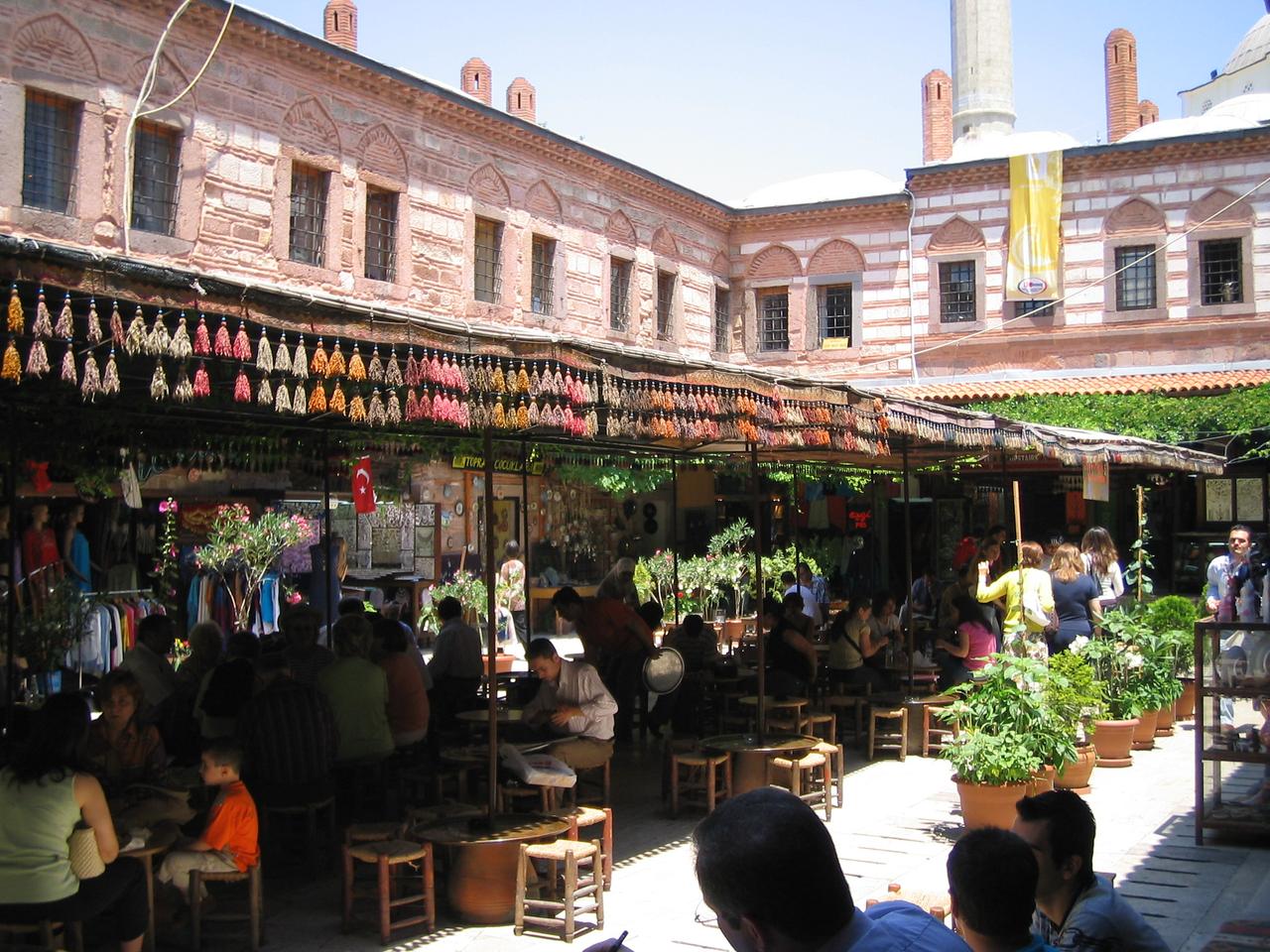
Kızlarağası Hanı (İzmir İl Kültür ve Turizm Müdürlüğü)
Pi Gençlik Derneği. "İzmir Kızlarağası Hanı." Accessed May 25, 2025.https://www.pigenclikdernegi.org/tr/kulturel-miraslarimiz/izmir-kizlaragasi-hani/
T.C. Ministry of Culture and Tourism. "Kızlarağası Hanı."İzmir İl Directorate of Culture and Tourism. Accessed May 25, 2025.https://izmir.ktb.gov.tr/tr-77371/kizlaragasi-hani.html
T.C. Ministry of Culture and Tourism. “Kızlarağası Hanı - İzmir.” *Kültür Portalı*. Accessed May 25, 2025.https://www.kulturportali.gov.tr/turkiye/izmir/gezilecekyer/kizlaragasi-hani
İzmir Büyükşehir Municipality. "Kızlarağası Hanı." İzmir Metropolitan Municipality. Accessed May 25, 2025.https://www.izmir.bel.tr/tr/kizlaragasihani/218

Kızlarağası Hanı
Location | İzmir Konak Inside Kemeraltı Bazaar. | ||||||||
|---|---|---|---|---|---|---|---|---|---|
Year of Construction | 1744–1745 | ||||||||
Patron | Kızlarağası Hacı Beşir Ağa | ||||||||
Bedestens | Çuha, Cevahir, Bakır | ||||||||
Architecture | A two-story Ottoman caravanserai with an area of 4,000 m². | ||||||||
Restoration | It has been repaired many times since 1745. It became a tourist bazaar in 1993. | ||||||||
Function | Formerly trade and accommodation. Now tourist shopping. | ||||||||
Number of Rooms | The upper floor contains 73 accommodation rooms. | ||||||||
Construction Date and Founder
Architectural Features
Bedestens and Corridors
Floor Plan and Room Arrangement
Damage and Restorations
Purpose and Function
Current Status