


This article was automatically translated from the original Turkish version.
+1 More
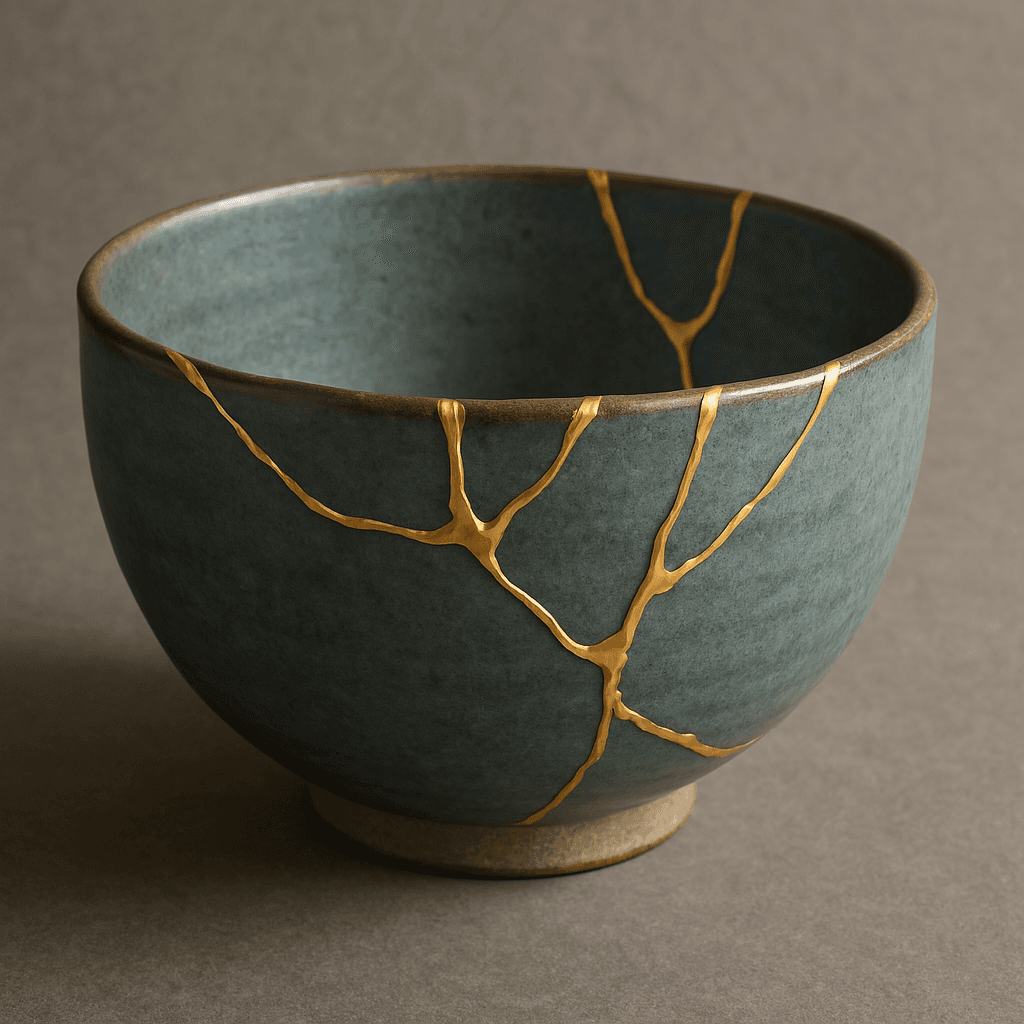
Kintsugi is a traditional Japanese art of ceramic repair. This technique is a method used to restore broken ceramic fragments by strengthening the cracks with a natural substance called urushi, a resin, and applying a mixture of gold, silver, or platinum powder over the repaired areas. The word Kintsugi, meaning “joining with gold,” is not merely a technique for repairing objects; it is also an approach that transforms breaks, damage, and the effects of time into aesthetic elements. This understanding seeks not to conceal flaws in objects but to emphasize the repair process and present the traces of experience as part of an aesthetic whole.
class=\
The origins of Kintsugi extend back to the 15th century and the Ashikaga period. According to legend, the Japanese shogun Ashikaga Yoshimasa became dissatisfied with existing repair methods when his favorite tea bowl broke and was sent to China, where it was repaired with unsightly metal staples. This situation inspired Japanese artisans to develop the gold-joining method not merely to fix broken pieces but to add an aesthetic dimension to the repair. The development of Kintsugi is also closely linked to the Japanese aesthetic concept of wabi-sabi, which holds an important place in Japanese aesthetics. Wabi-sabi is a philosophy that emphasizes transience, simplicity, and beauty found in imperfection. In this context, Kintsugi is not only a repair technique but also a philosophical expression of the impermanence of objects and life.
Kintsugi practices vary according to the techniques employed. The most common method involves adhering broken fragments with urushi and mixing gold powder into the adhesive. Traditionally:
These techniques are applied both to preserve functionality and to transform the repair itself into an aesthetic expression.
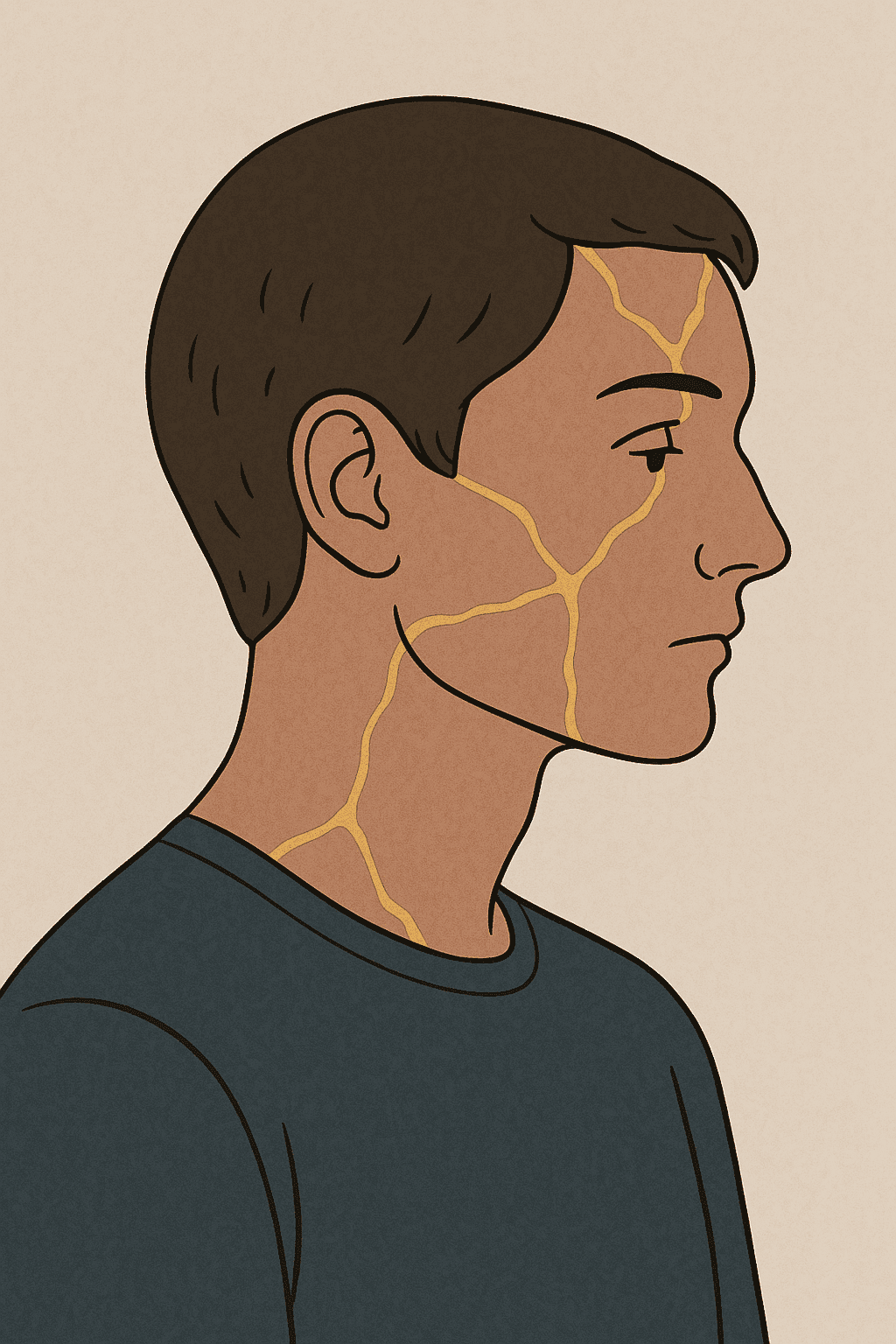
Kintsugi is not limited to the repair of ceramic objects; it is also an approach rich in metaphorical meaning related to human life. This technique is interpreted as suggesting that personal hardships, traumas, and change should not be suppressed but accepted and restructured. In psychology, Kintsugi is used as a metaphorical tool for post-trauma healing, supporting the view that a person’s fractures can be integrated into their personal growth process to restore wholeness.
class=\
Today, Kintsugi has been embraced by artists and therapists. In the art world, works created using Kintsugi techniques demonstrate that flaws, cracks, and imperfections possess their own unique beauty. This approach offers an alternative aesthetic to mass production and consumer culture. In therapeutic contexts, the Kintsugi metaphor serves as a symbolic tool to help individuals mend the fractures in their lives and emerge stronger from the process.
class=\
The Kintsugi perspective asserts that fractures, whether in objects or in human life, do not diminish the value of the entity but instead acquire a new form of wholeness through the processes it has endured and the traces it carries. This viewpoint offers an alternative to the perfection-oriented aesthetics prevalent in modern societies. In Kintsugi, the repair process does not aim to restore an object or situation to its previous state but to transform it into a new form and unity. This approach has inspired diverse interpretations in aesthetic, cultural, and psychological fields and is evaluated across multiple disciplines in the context of human experience.
161–178. DOI:10.7816/ulakbilge-06-21-03
Kanışkan, Ece. "Kintsugi: Yara İzlerinin Güzelliği." ulakbilge dergisi 21, no. 6 (2018):
Keulemans, Guy. “The geo-cultural conditions of Kintsugi.” *The Journal of Modern Craft* 1, no. 9 (2016): 15–34. DOI:https://doi.org/10.1080/17496772.2016.1183946
Suzuki, Daisetz T., and Richard M. Jaffe. Zen And Japanese Culture. BOLLINGEN SERIES LXIV. PRINCETON UNIVERSITY PRESS, 1959.

History
Application Techniques
Philosophical Background