This article was automatically translated from the original Turkish version.
+1 More
Location | Near Yeşilyurt village Niğde province Altunhisar district | ||||||||
|---|---|---|---|---|---|---|---|---|---|
Important Periods | Hittite, Neo-Hittite (Kingdom of Tuwana), Persian, Hellenistic, Roman, Medieval | ||||||||
Discovery(ies) | 2006–2009 surface surveys 2010 geophysical surveys | ||||||||
Important Findings | Monumental city walls (13 m), Persian period temple, animal figurines, painted ceramics | ||||||||
Current Status | Excavations are ongoing | ||||||||
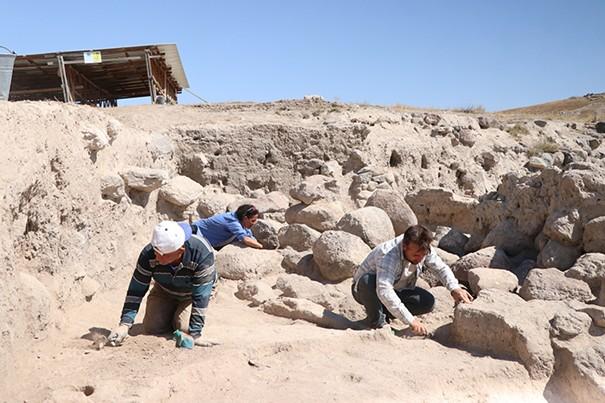
Kınık Höyük is an archaeological settlement located near the village of Yeşilyurt in the Altunhisar district of Niğde Province, Türkiye, at the southern edge of the Central Anatolian region of Cappadocia. The mound measures approximately 300 × 300 metres and rises to a height of 20 metres with a roughly square shape. The central part of the settlement is situated on the summit and terraces of the mound, while the lower town extends around its base. The site has experienced continuous occupation from the Early Bronze Age through the Middle Ages.
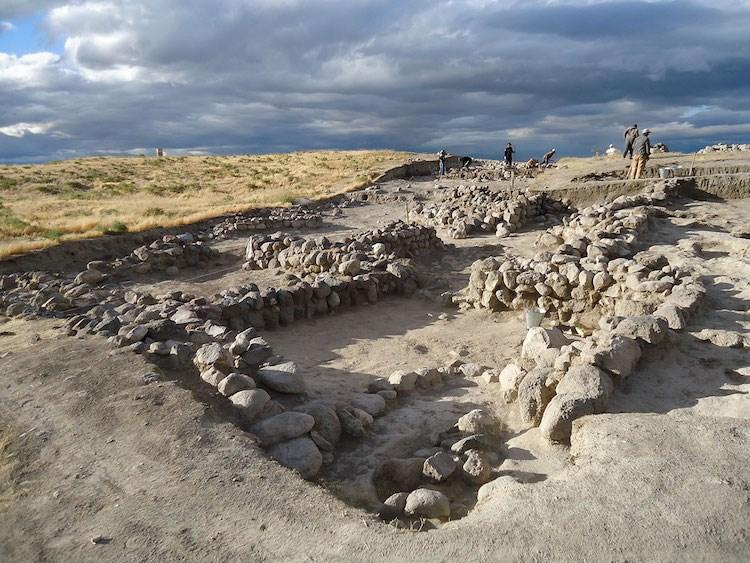
Kınık Höyük (Subgovernorship of Altunhisar, Republic of Türkiye)
Kınık Höyük lies at a crossroads of routes leading from the Central Anatolian plateau through the Taurus passes to the Mediterranean and the Northern Levant, in an area known in antiquity as Southern Cappadocia. This strategic location ensured continuous settlement and transit activity in the region from prehistoric times onward. The mound served as an important centre during the Hittite, Neo-Hittite, Persian, Hellenistic, Roman and Medieval periods.
During the Middle Iron Age (9th–8th centuries BCE), Kınık Höyük is believed to have been the centre of Tuwana, one of the Neo-Hittite kingdoms in the region. Various names have been proposed for the site in written sources, including Uda, Hydekent, Dratai, Frourion Drizion/Idrizion and Tracias, but none have been definitively confirmed.
Between 2006 and 2009, surface surveys conducted by the University of Pavia in Italy covered an area of 800 km² in Southern Cappadocia and identified 40 settlement units. Collaborative studies with geologists from Niğde University revealed changes in settlement patterns linked to approximately 8,000 years of climatic variation.
Geophysical investigations carried out at Kınık Höyük in 2010 revealed the presence of well-preserved monumental structures beneath the surface. With permission granted by the Turkish government, excavation work began in 2011. The excavations are conducted in collaboration between the University of Pavia, the Institute for the Study of the Ancient World (ISAW) at New York University, Erzurum Atatürk University and Niğde University.
Excavations at Kınık Höyük have uncovered architectural remains and artefacts from the Seljuk, Hellenistic, Persian, Middle and Late Iron Age periods.
Excavations since 2010 have also uncovered a 13-metre-high monumental fortification wall dating back 6,000 years. During these investigations, a four-room temple structure covering 100 square metres was discovered. Various animal figurines were recovered from the temple, which has been dated to the 5th century BCE, corresponding to the Persian period.
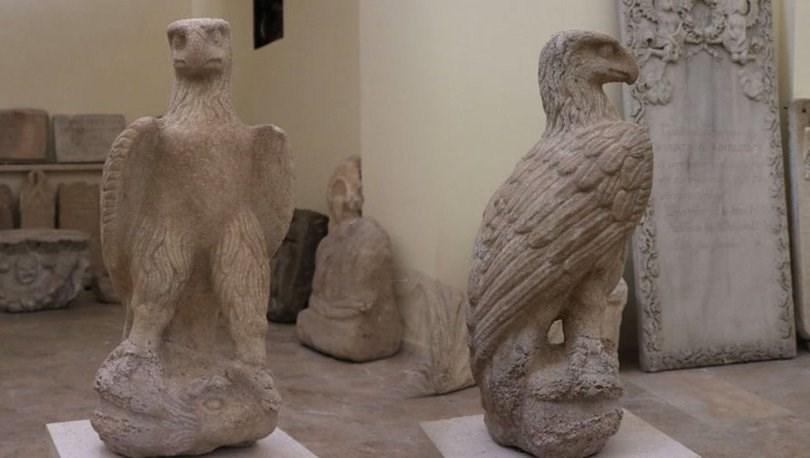
Found Statuettes (Altunhisar District Governorship, Republic of Türkiye)
Excavation data indicate that Kınık Höyük was occupied during various periods from the Early Bronze Age through the Middle Ages. In particular, the Iron Age shows increased settlement density and architectural activity, demonstrating that the region was a significant political and cultural centre during this time.
Anadolu Ajansı. “Kınık Höyük'te Orta Bronz Çağı'na ait sur kalıntıları ve yerleşim yeri bulundu.” Accessed August 16, 2025. https://www.aa.com.tr/tr/kultur/kinik-hoyukte-orta-bronz-cagina-ait-sur-kalintilari-ve-yerlesim-yeri-bulundu/3313233
Kınık Höyük Archaeological Project. "Introduction." *kinikhoyuk.org.* Accessed August 16, 2025. https://www.kinikhoyuk.org/
T.C. Altunhisar District Governorship. "Kınık Höyüğü." Accessed August 16, 2025. http://www.altunhisar.gov.tr/han-koprusu
T.C. Ministry of Culture and Tourism. "Ören Yerleri." *Niğde Provincial Directorate of Culture and Tourism.* Accessed August 16, 2025. https://nigde.ktb.gov.tr/TR-74408/oren-yerleri.html
Location | Near Yeşilyurt village Niğde province Altunhisar district | ||||||||
|---|---|---|---|---|---|---|---|---|---|
Important Periods | Hittite, Neo-Hittite (Kingdom of Tuwana), Persian, Hellenistic, Roman, Medieval | ||||||||
Discovery(ies) | 2006–2009 surface surveys 2010 geophysical surveys | ||||||||
Important Findings | Monumental city walls (13 m), Persian period temple, animal figurines, painted ceramics | ||||||||
Current Status | Excavations are ongoing | ||||||||
Geographical and Historical Context
Research and Excavation Projects
Architecture and Finds
Chronology