


This article was automatically translated from the original Turkish version.
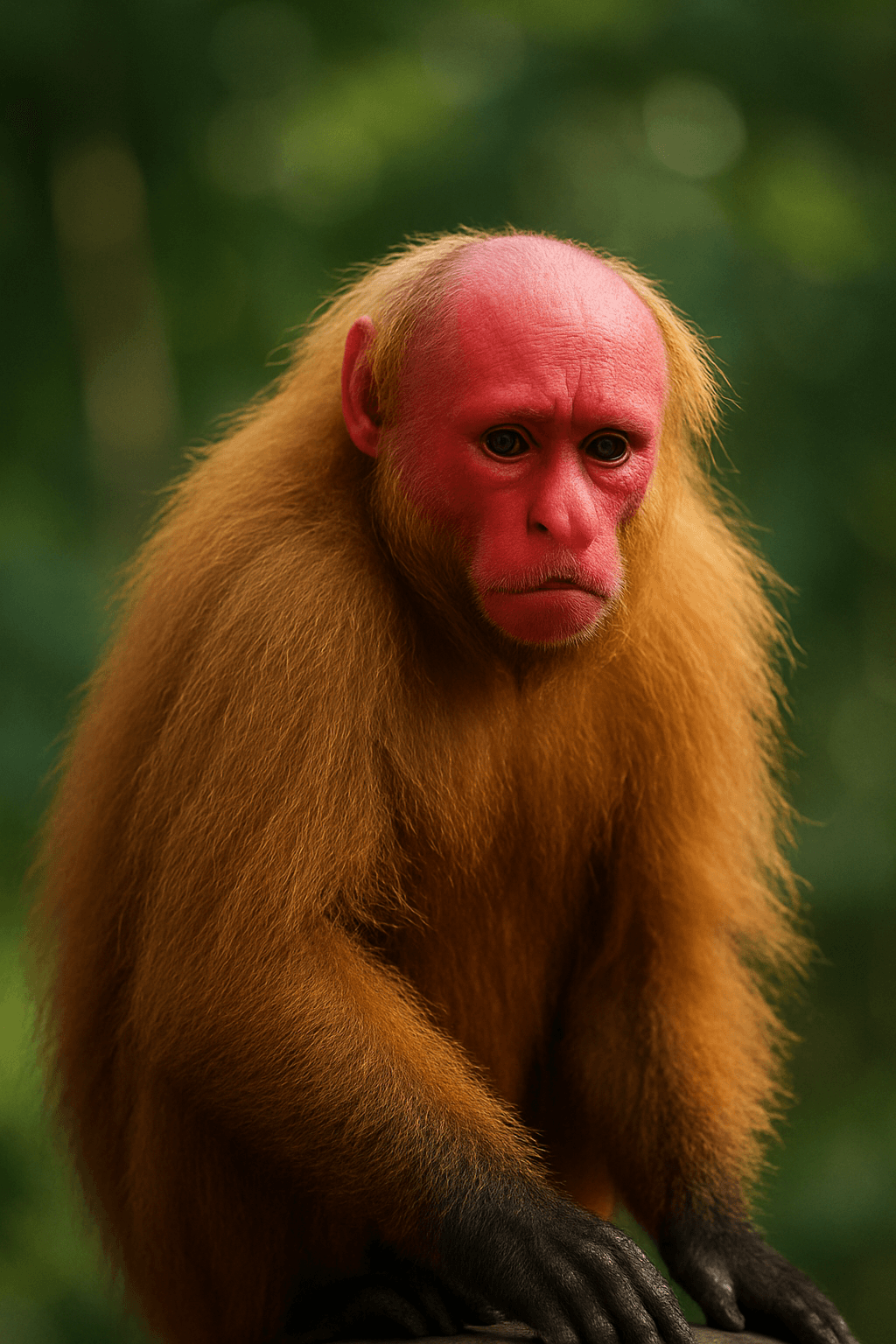
Animal’s Family | Pitheciidae | ||||||||
|---|---|---|---|---|---|---|---|---|---|
Latin Name | Cacajao calvus | ||||||||
Habitat | Amazon rainforests especially western Amazon basin of Brazil (around the Solimões and Japurá rivers) | ||||||||
Genus Characteristics | Red bare face, short tail, thick fur | ||||||||
Kel Uakari (Cacajao calvus) is a primate species native to the Amazon rainforests of South America, recognized by its striking red face.
The Kel Uakari is distinguished particularly by its bright red face and hairless head. This feature is more pronounced in healthy individuals and plays a significant role in mate selection. Their bodies are long and their fur is typically reddish-brown in color. Their tails are very short, which does not limit their movement through trees. Adult Kel Uakaris weigh approximately 3 to 3.5 kg and have body lengths ranging from 38 to 57 cm. Their short tails are a distinguishing trait compared to other New World monkeys. The redness of their faces stems from dense blood vessels beneath the skin and is considered an indicator of health.
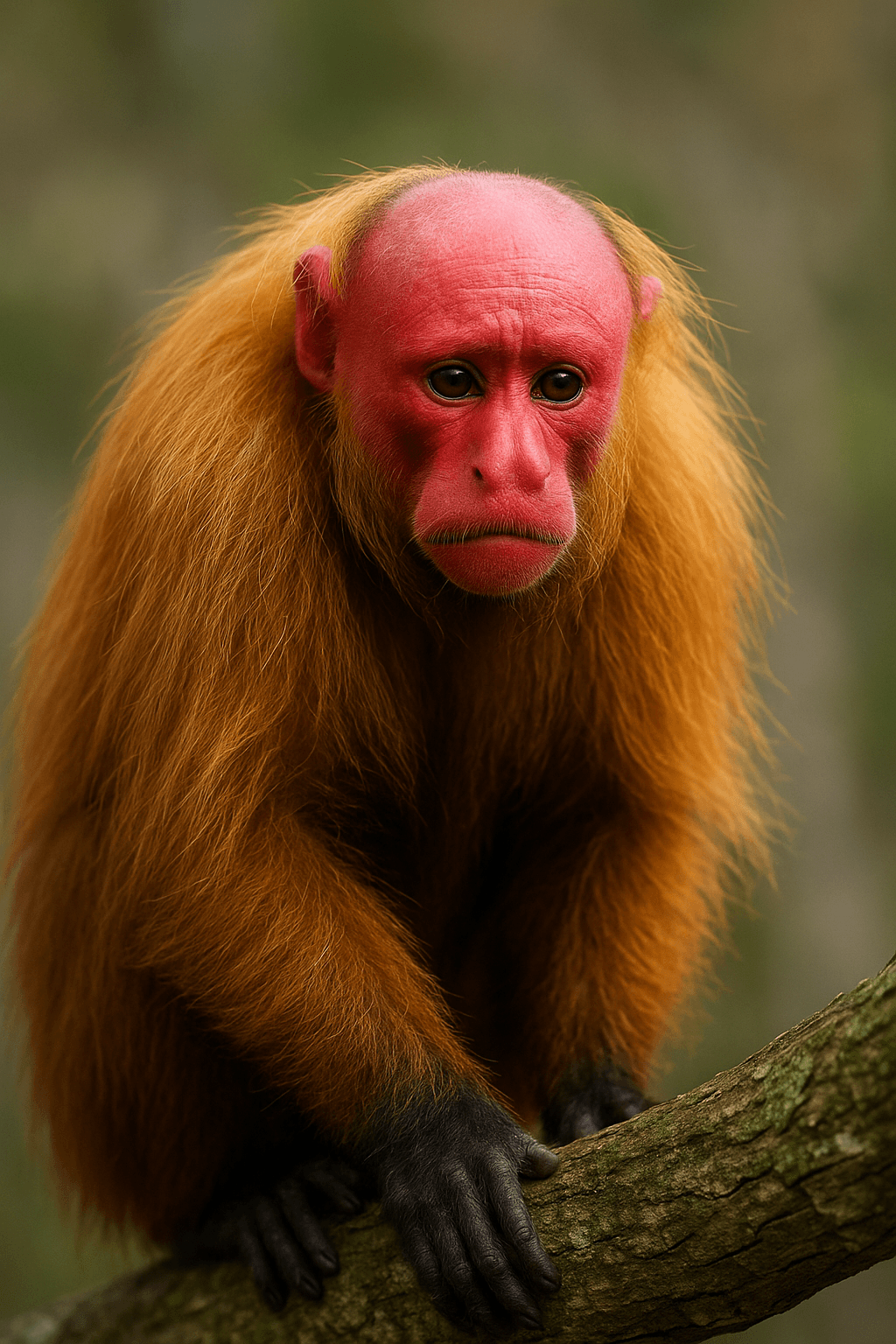
This image was generated by artificial intelligence.
Kel Uakaris inhabit forested areas near water, particularly in western Amazon regions of Peru and Brazil. Seasonally flooded forests in these areas constitute their natural habitat. These primates typically live in the upper canopy of trees and remain entirely arboreal during periods of high water levels. However, during dry seasons, they have been observed descending to the ground in search of food. The limited extent of their habitat is a critical factor in the species’ conservation.
Kel Uakaris are notable for their social structure. They typically live in groups of 10 to 100 individuals. These groups may split into smaller subgroups while foraging and later reunite. These primates are active throughout the day, moving between trees. They use a variety of vocalizations for communication, though they are generally quiet. During threats, they emit loud calls to alert group members.
Kel Uakaris usually give birth to one offspring every two years. Females give birth to a single infant after a gestation period of approximately six months. Infants are carried and nursed by their mothers for several months after birth. Females reach sexual maturity at around three years of age, while males mature at six years. Infants begin transitioning to solid food at 3 to 5 months of age and become independent from their mothers. During this period, they develop social skills and establish their place within the group.
Kel Uakaris face threats from habitat loss and hunting. The destruction of Amazonian forests is reducing their habitat and endangering their populations. Conservation efforts have led to the establishment of protected areas in some regions and the prohibition of hunting. However, the effectiveness of these measures can be enhanced through cooperation and awareness campaigns involving local communities. International conservation organizations are also implementing various projects to protect this species.
Kel Uakaris are sometimes kept as pets or hunted by local communities. However, these practices have negative impacts on the species’ sustainability. Activities such as ecotourism and environmental education can positively influence local communities’ relationships with this species. The conservation of the Kel Uakari is important not only for biological diversity but also for the preservation of cultural heritage.
Animal Diversity Web. "Cacajao calvus." Animal Diversity Web. https://animaldiversity.org/accounts/Cacajao_calvus
Animalia.bio. "Bald Uakari." Animalia.bio.
Bio Explorer. "Bald Uakari Monkey | Cacajao Calvus | Characteristics | Diet." Bio Explorer. https://www.bioexplorer.net/animals/mammals/monkeys/bald-uakari/
National Geographic. "Bald Uakari." National Geographic.
New England Primate Conservancy. "Bald Uakari." New England Primate Conservancy. https://neprimateconservancy.org/bald-uakari/
Wildlife Conservation Society Peru. "Bald Uakari Monkey." WCS Peru. https://peru.wcs.org/en-us/Wildlife/Bald-Uakari-Monkey.aspx

Animal’s Family | Pitheciidae | ||||||||
|---|---|---|---|---|---|---|---|---|---|
Latin Name | Cacajao calvus | ||||||||
Habitat | Amazon rainforests especially western Amazon basin of Brazil (around the Solimões and Japurá rivers) | ||||||||
Genus Characteristics | Red bare face, short tail, thick fur | ||||||||
Physical Characteristics
Habitat and Distribution
Behavior and Social Structure
Reproduction and Young
Threats and Conservation Efforts
Relationships with Humans