

 Recently Added:
This article was automatically translated from the original Turkish version.
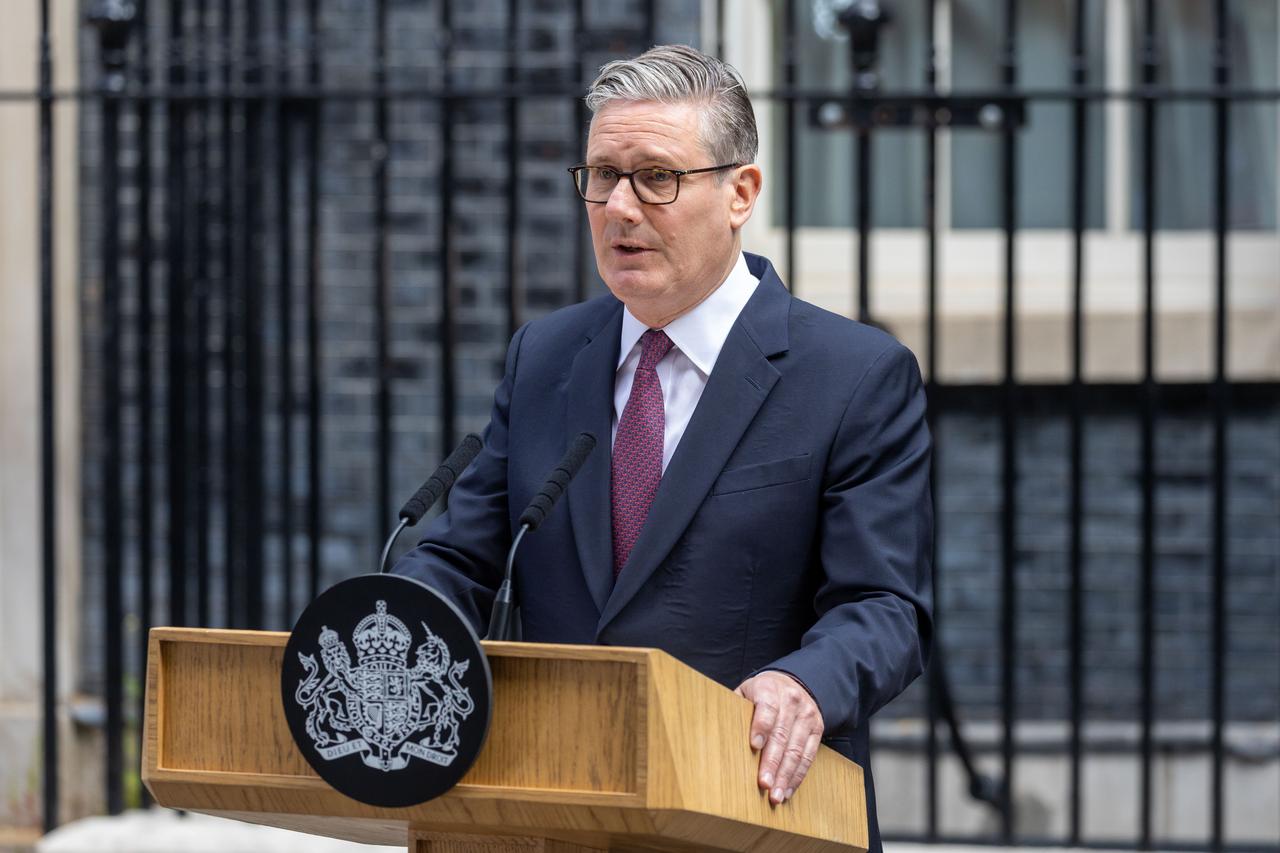
Keir Starmer’s Resignation is a political development that emerged when United Kingdom Prime Minister Sir Keir Starmer announced on 22 June 2026 that he would step down from office after stating that his party, the Labour Party, no longer viewed him as the leader capable of taking it into the next general election. Starmer made the announcement in front of 10 Downing Street, stating that he had informed King Charles III of his decision the same morning and would remain in office until a new leader was chosen.【1】
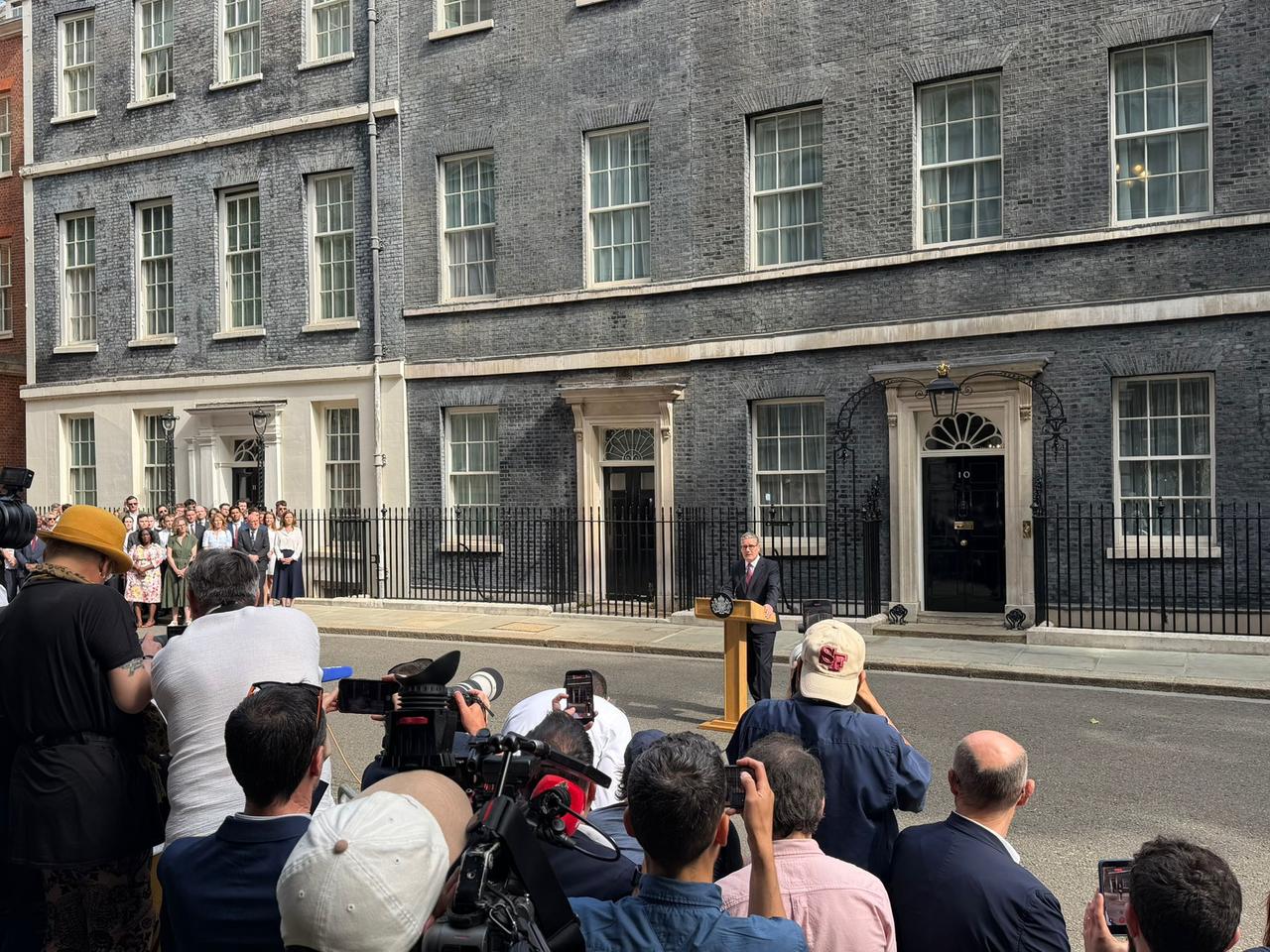
UK Prime Minister Keir Starmer announces his resignation from office in front of Number 10 Downing Street, London, 22 June 2026 – (Anadolu Agency)
Criticism of the Prime Minister intensified following the Labour Party’s victory in the July 2024 general election. While public opinion polls showed declining support for the party, support for the far-right Reform UK, led by Nigel Farage, rose significantly.
In May 2026, local elections were held in approximately 1,400 councils alongside national parliamentary elections in Wales and Scotland. In the local elections, the Labour Party lost 1,496 council seats; Reform UK gained 1,453 council seats and took control of 14 councils. In Wales and Scotland, pro-independence parties came first and Reform UK came second.
During this period, several cabinet changes occurred. Health Secretary Wes Streeting resigned following the election results; a number of junior ministers also stepped down. Defence Secretary John Healey resigned in June 2026 after disagreements over military spending. Public calls for resignation came from Wes Streeting, Scottish Labour leader Anas Sarwar, and Deputy Prime Minister Angela Rayner. According to Anadolu Agency, behind-the-scenes reports indicated that Foreign Secretary Yvette Cooper, Home Secretary Shabana Mahmood, and Secretary of State for Energy Security and Net Zero Ed Miliband had also called on Starmer to resign.
Peter Mandelson was appointed as the United Kingdom’s Ambassador to the United States in December 2024. Mandelson’s past association with convicted sex offender Jeffrey Epstein became a subject of public controversy. It was reported that Mandelson had been appointed without passing a security review and had attended meetings without an official title. Starmer apologised, stating he was unaware of the extent of the relationship, and removed Mandelson from his post approximately nine months after his appointment.【2】
According to the BBC, Starmer blocked Andy Burnham’s candidacy in the Horton and Garton by-election in February 2026. However, after the election results triggered widespread calls for his resignation from MPs, he lacked the authority to repeat such interference. The resignation of the Makerfield MP opened the path for Burnham to return to Westminster.【3】
According to Anadolu Agency’s compilation, while economic indicators and investment agreements showed positive trends, the cost of living remained a contentious issue throughout Starmer’s term. Although measures such as tax cuts and state support for certain bills were introduced, rents, energy bills, and council taxes remained high. During this period, winter fuel payments for pensioners were abolished and employer National Insurance contributions were increased.
In foreign policy, the Starmer government announced, after the first year of the premiership, that it formally recognised the State of Palestine alongside a group of countries and imposed sanctions on numerous Israeli individuals and institutions. The group “Palestine Action” was banned as a “terrorist organisation” on the grounds of its actions. Starmer did not join Israel and the United States in their attacks on Iran and declared that the UK would not permit the use of British bases in the region by the United States; tensions emerged in UK-US relations during this period. According to the same report, migration decreased significantly during his term, hospital waiting times fell, defence spending increased, and relations with the European Union gained momentum.【4】
Andy Burnham, former mayor of Greater Manchester, won the Makerfield constituency in the by-election held on Thursday, 18 June. Burnham received approximately 55 per cent of the 45,510 votes cast and outpolled Reform UK’s second-place candidate by more than 9,000 votes. The result sparked speculation that Burnham could challenge Keir Starmer for the Labour Party leadership.
Following his election victory, Burnham prepared to take the oath as the new MP for Makerfield at Westminster on 22 June 2026. In his acceptance speech, he referred to the political functioning of the country and public dissatisfaction, suggesting the election result could be a turning point.
Keir Starmer announced on Monday, 22 June 2026, that he would resign. He made the announcement in front of 10 Downing Street and confirmed he had informed King Charles III of his decision that same morning. Starmer stated he would continue serving as caretaker prime minister until a new leader was chosen.
According to Al Jazeera, although Starmer could theoretically transfer his powers to Deputy Prime Minister David Lammy, he announced he would remain in office until the leadership contest was completed.
Keir Starmer described the day he became prime minister as the proudest day of his life. He noted that he took over the Labour Party during a difficult period, and said antisemitism within the party had been eradicated and confidence had been restored in the areas of the economy, defence and national security.
Starmer acknowledged the assessment by Labour MPs that he was not the most suitable leader to take the party into the next general election and announced his resignation as party leader. He pledged unwavering support for the new leader, thanked his family in his speech, and stated he would spend more time with them after leaving office.
Starmer announced he would request the Labour Party’s National Executive Committee (NEC) to set a timetable for the leadership election. Nominations are scheduled to open on 9 July and close on 16 July. Under party rules, candidates must secure the support of at least 20 per cent of Labour MPs to enter the race; with 403 parliamentary seats, this means at least 81 MPs. Additionally, candidates must obtain support from 32 of the party’s 634 local organisations or from three affiliated organisations (including at least two trade unions).
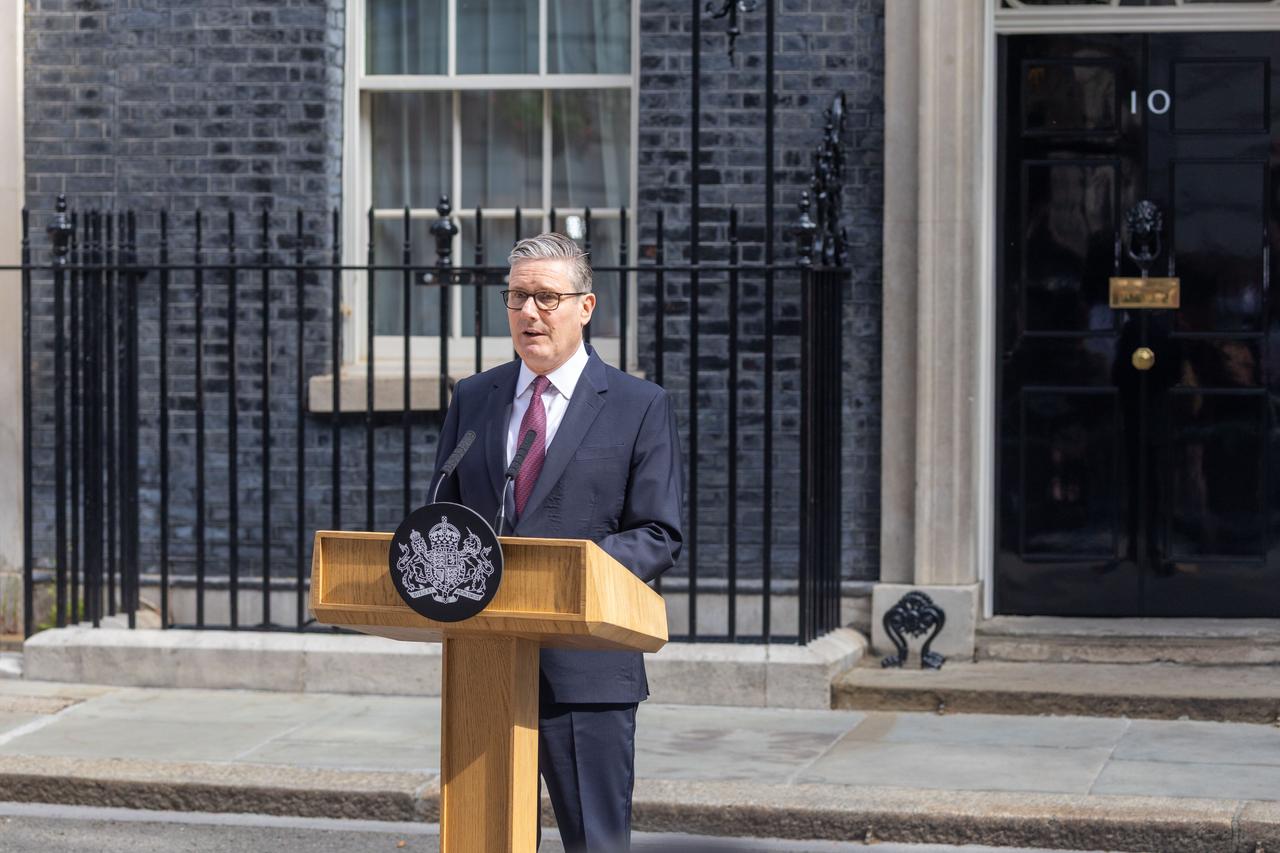
UK Prime Minister Keir Starmer announces his resignation from office in front of 10 Downing Street, London, 22 June 2026 – (Anadolu Agency)
If only one candidate is nominated, that candidate will become party leader without a vote. If more than one candidate meets the threshold, a preferential ballot will be held among party members and affiliated trade union supporters; only those who have been party members for at least six months are eligible to vote. If no candidate receives more than 50 per cent of first-preference votes, lower-ranked candidates are eliminated and their votes redistributed. If a contest occurs, the new leader is expected to be determined before Parliament returns from its summer recess on 1 September.
After a successor is chosen, Starmer will formally submit his resignation as prime minister to King Charles III, who will then invite the new Labour leader to form a government. The winner of the leadership contest will become prime minister without the need for a general election, as the prime minister’s authority derives from the confidence of the House of Commons. The next general election in the United Kingdom is legally required to be held no later than July 2029. Although some factions, including Reform UK, have called for an early election, there is no provision compelling the new leader to call one.
Andy Burnham has confirmed his intention to stand and is considered to have sufficient support among MPs to meet the nomination threshold. Burnham has advocated a model he developed during his mayoralty, combining business-friendly policies with greater public oversight of essential services. Former Health Secretary Wes Streeting, previously considered a potential candidate, announced after Starmer’s resignation that he was withdrawing from the race and endorsing Burnham. Former Deputy Prime Minister Angela Rayner, also mentioned as a potential candidate, has stated she will support Burnham.
Unlike Starmer, who entered the 2024 general election with a 136-page manifesto, Burnham has made only limited policy statements during his one-month campaign in Makerfield.
Starmer is expected to attend a NATO leaders summit on 7 July; he has indicated he will outline the military spending plan that led to Healey’s resignation on that date. Starmer’s planned attendance at the UK-EU summit on 22 July has been postponed following his resignation announcement.
US President Donald Trump, in a post on Truth Social a day before Starmer’s resignation, claimed Starmer had failed on immigration and energy policy and offered him well wishes.
His official title is The Rt Hon Sir Keir Starmer KCB KC MP. Starmer was educated at Reigate Grammar School and studied law at Leeds University. He completed his postgraduate studies at Oxford University, earning a Bachelor of Civil Law (BCL) degree.
Starmer began his legal career as a barrister in 1987, working in private practice before serving as legal adviser to the Police Service of Northern Ireland. In 2002 he was appointed Queen’s Counsel (QC). In 2008 he was appointed Director of Public Prosecutions and led the Crown Prosecution Service until 2013. In 2014 he was knighted for his services to criminal justice.
Starmer was elected as MP for Holborn and St Pancras in May 2015. He was elected leader of the Labour Party in April 2020. He is married with two children; his wife’s name is Victoria.
The official titles held by Starmer until 2026 are: Prime Minister, First Lord of the Treasury, Minister for the Civil Service and Minister for the Union
Al Jazeera. “LIVE: UK’s Starmer Resigns as Prime Minister.” Al Jazeera Live Blog. Accessed June 22, 2026.https://www.aljazeera.com/news/liveblog/2026/6/22/live-uk-pm-keir-starmer-expected-to-announce-his-resignation
Anadolu Ajansı. "ABD Başkanı Trump, İngiltere Başbakanı Starmer’ın İstifa Edeceğini Belirtti." Accessed June 22, 2026.https://www.aa.com.tr/tr/dunya/abd-baskani-trump-ingiltere-basbakani-starmerin-istifa-edecegini-belirtti/3973798
Anadolu Ajansı. “İngiltere Başbakanı Starmer, İşçi Partisi Liderliğinden İstifa Etti.” Accessed June 22, 2026.https://www.aa.com.tr/tr/dunya/ingiltere-basbakani-starmer-isci-partisi-liderliginden-istifa-etti/3974242
LBC. “In Full: Keir Starmer's Resignation Speech.” LBC. Accessed June 22, 2026.https://www.lbc.co.uk/article/read-in-full-keir-starmers-resignation-speech-5Hjdbtc_2/
NBC News. “Keir Starmer Says He Will Quit as U.K. Prime Minister, Clearing the Path for the Country’s 7th Leader in a Decade.” Accessed June 22, 2026.https://www.nbcnews.com/world/united-kingdom/keir-starmer-resigns-prime-minister-andy-burnham-labour-party-britain-rcna257534
PBS NewsHour. “Starmer Is on the Precipice as Pressure Builds for the UK Leader to Resign.” PBS NewsHour. Accessed June 22, 2026.https://www.pbs.org/newshour/world/starmer-is-on-the-precipice-as-pressure-builds-for-the-uk-leader-to-resign
UK Government. “The Rt Hon Sir Keir Starmer KCB KC MP.” GOV.UK. Accessed June 22, 2026.https://www.gov.uk/government/people/keir-starmer
[1]
Al Jazeera, “Why has Keir Starmer resigned as UK prime minister, and who will take over?”, erişim 22 Haziran 2026.
[2]
Anadolu Ajansı, “İngiltere Başbakanı Starmer’ı istifaya götüren süreçte ekonomi ve kaybedilen seçimler etkili oldu”, erişim 22 Haziran 2026.
[3]
BBC News, “Why did Keir Starmer resign and what could happen next?”, erişim 22 Haziran 2026.
[4]
Anadolu Ajansı, “İngiltere Başbakanı Starmer’ı istifaya götüren süreçte ekonomi ve kaybedilen seçimler etkili oldu”,

United Kingdom Prime Minister Keir Starmer announced his resignation as leader of the Labour Party in a statement made outside Number 10 Downing Street on 22 June 2026. Starmer said he had informed King Charles III of his decision the same morning and would remain in office as interim prime minister until a new leader is elected. The resignation follows increasing internal party pressure after the party's electoral losses in May 2026 and Andy Burnham's victory in the Makerfield by-election on 18 June. Nominations for the new Labour Party leader will open on 9 July and if contested the new leader is expected to be determined by 1 September.
No Discussion Added Yet
Start discussion for "Keir Starmer's Resignation (2026)" article
June 22, 2026
The Path to Resignation
June 22, 2026
Developments During the Term
June 22, 2026
Makerfield By-Election
June 22, 2026
Resignation Announcement (22 June 2026)
June 22, 2026
Key Points from the Resignation Speech
June 22, 2026
Leadership Election Process and Rules
June 22, 2026
Possible Candidates
June 22, 2026
Developments in the Next Phase
June 22, 2026
Donald Trump’s Statements
June 22, 2026
Personal and Professional Background