This article was automatically translated from the original Turkish version.
+1 More
Location | Kars Kağızman Tunçkaya (Keçivan) Village | ||||||||
|---|---|---|---|---|---|---|---|---|---|
Period | Ottoman Urartu Middle Ages | ||||||||
Function | Defense, Surveillance, Road Control | ||||||||
Material | Basalt and Andesite Stone | ||||||||
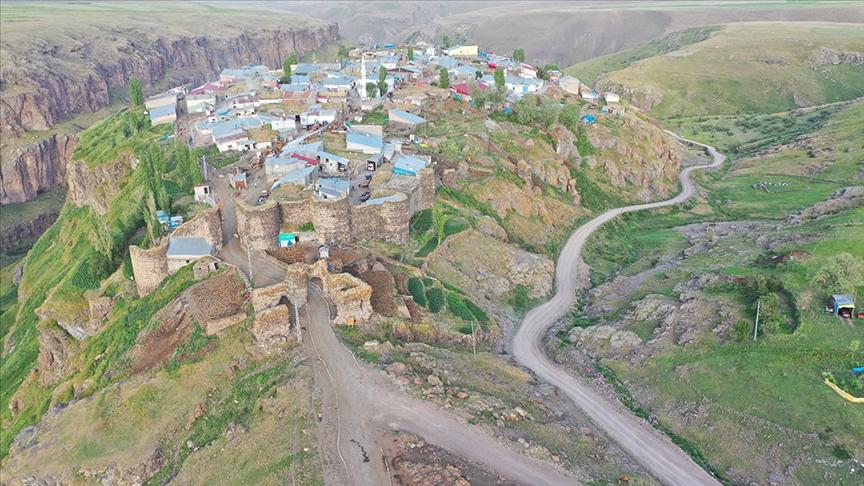
Keçivan Castle, Kars province’s Kağızman district, in the village of Tunçkaya, is a historical defensive structure and settlement site. Located 40 kilometers northwest of the district center, at the foot of Aladağ, the castle once served as a provincial administrative center. The settlement where the castle stands has been known in sources and local tradition as "Keçivan", "Geçivan", or "Geçvan"; since 1960 it has been officially named Tunçkaya. The castle is situated on a ridge connecting the Kars Plateau to the Aras Valley and was registered as an immovable cultural heritage site on 17 March 1989.
The exact construction date of the castle is unknown, but it is believed to have been built before the Seljuk period. It underwent frequent repairs during the Ottoman Empire era. When examining the region’s historical geography, the area where the castle stands is assessed to have been a settlement known as "Artageyra" around 618 AD and later became the estate of the Kamsarakan lords from the Oghuz tribes. The suffixes "Artak", "Artag", or "Arda" found in "Artageyra" and similar place names in the region are thought to derive from roots associated with Asianic peoples or the Saka.【1】
The castle also appears in folk narratives and epics. According to legends, it is said to have been one of the summer pastures of Efrasyab, a figure mentioned in tales recounting the battles of Pijen, Seffak, and Efrasyab. Historical sources indicate that the ruler known in Persian epics as "King Efrasyab of Turan" is identified by the Turks as Alp-Er Tonga, a Saka Turkic leader, and that the Saka Turks settled in the Aras region around 650 BC.【2】
Keçivan Castle possesses a natural defensive system. The castle and its internal village settlement are surrounded by basalt ledges ranging in height from 12 to 20 meters. These natural ramparts strengthened the structure’s defenses. Access to and from the castle is provided through the western gate.
The castle’s architectural features include:
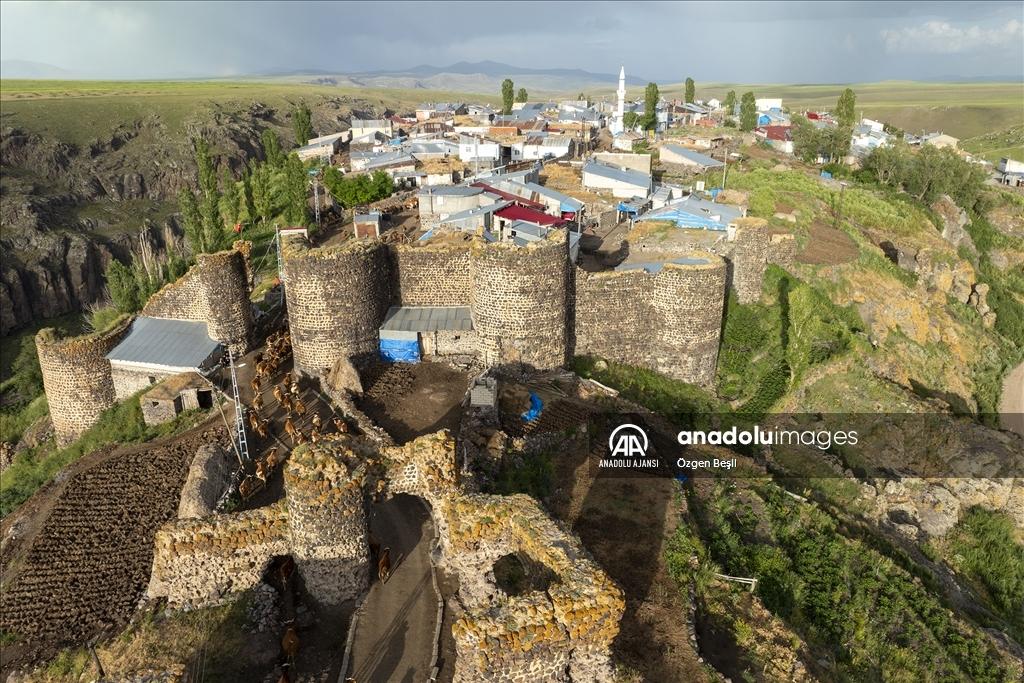
Keçivan (Tunçkaya) Castle (Anadolu Ajansı)
Religious structures are also located within the castle grounds. These include:
Today, the village known as Tunçkaya continues to be inhabited within the historic castle walls. Although the castle ramparts and internal historical structures have suffered considerable damage, they still survive. The site is recognized among the region’s important historical monuments alongside Köroğlu Castle and Çengilli Church in Kağızman district.
Anadolu Ajansı. "Kars'taki 'kale köy' yıllardır Tunçkaya köyü sakinlerini ağırlıyor." Accessed January 19, 2026.https://www.aa.com.tr/tr/pg/foto-galeri/karstaki-kale-koy-yillardir-tunckaya-koyu-sakinlerini-agirliyor
Koday, Zeki, Saliha Koday, and Zerrin Karakuzulu. "Kale İçinde Bir Köy Yerleşmesi Tunçkaya." *Doğu Coğrafya Dergisi* 9, no. 12 (2004). Accessed January 15, 2026.https://dergipark.org.tr/tr/pub/ataunidcd/article/30913
T.C. Ministry of Culture and TourismKars İl Directorate of Culture and Tourism. "Kars Kalesi ve Diğer Kaleler." Accessed January 15, 2026.https://kars.ktb.gov.tr/yazdir?B18AEF097B9A6F269AFE5F58E2C783DE
T.C.Kağızman Belediyesi. "Keçivan Kalesi." Accessed January 15, 2026.http://www.kagizman.bel.tr/kecivan-kalesi
T.C.Kağızman Kaymakamlığı Governorship. "Kağızman Keçivan Kalesi." Accessed January 15, 2026.https://www.kagizman.gov.tr/kagizman-kecivan-kalesi
T.C.Serhat Kalkınma Agency. "Kars." Accessed January 15, 2026.https://www.serka.gov.tr/bolgemiz/kars
Türkiye Kültür Portalı. "Keçivan Kalesi - Kars." Accessed January 15, 2026.https://www.kulturportali.gov.tr/turkiye/kars/kulturenvanteri/kecvan-kales
[1]
T.C. Kağızman Kaymakamlığı, "Kağızman Keçivan Kalesi," Erişim: 15 Ocak 2026, https://www.kagizman.gov.tr/kagizman-kecivan-kalesi
[2]
T.C. Kültür ve Turizm Bakanlığı Kars İl Kültür ve Turizm Müdürlüğü, "Kars Kalesi ve Diğer Kaleler," Erişim: 15 Ocak 2026, https://kars.ktb.gov.tr/yazdir?B18AEF097B9A6F269AFE5F58E2C783DE
[3]
T.C. Kağızman Belediyesi, "Keçivan Kalesi," Erişim: 15 Ocak 2026, http://www.kagizman.bel.tr/kecivan-kalesi

Location | Kars Kağızman Tunçkaya (Keçivan) Village | ||||||||
|---|---|---|---|---|---|---|---|---|---|
Period | Ottoman Urartu Middle Ages | ||||||||
Function | Defense, Surveillance, Road Control | ||||||||
Material | Basalt and Andesite Stone | ||||||||
No Discussion Added Yet
Start discussion for "Keçivan Castle (Tunçkaya Castle)" article
History and Origin
Geographical Location and Architectural Features
Structural Complex: Mosque and Church
Current Condition