


This article was automatically translated from the original Turkish version.
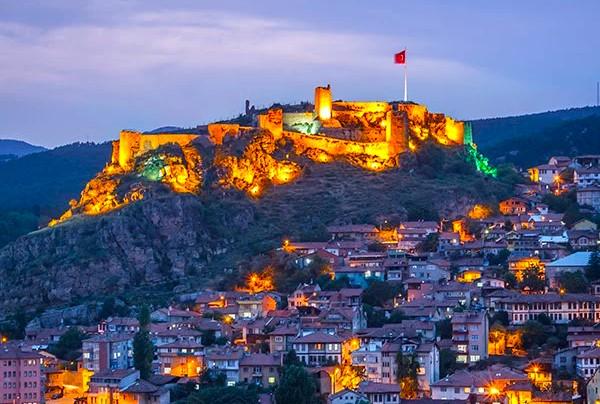
Kastamonu Castle
Type | Castle | ||||||||
|---|---|---|---|---|---|---|---|---|---|
City | Kastamonu | ||||||||
Address | The castle is integrated into the urban fabric of the city. It is located slightly southwest of the city center. | ||||||||
Elevation | It is at an elevation of approximately 860 meters (2,820 ft). | ||||||||
Construction Period and Date | The castle was built during the Byzantine period, particularly under the Komnenos dynasty. Over time it was also used by the Seljuks, the Candarids, and the Ottomans. | ||||||||
South-North Length | 155 meters | ||||||||
East-West Width | 30-50 meters | ||||||||
Restoration | It was restored comprehensively in 2005 and opened to tourism. | ||||||||
Kastamonu Castle is a historical fortress located in the city of Kastamonu in Türkiye. City center lies to its east, and the fortress stands on a massive rock formation that dominates the landscape, making it one of the city’s most iconic symbols.
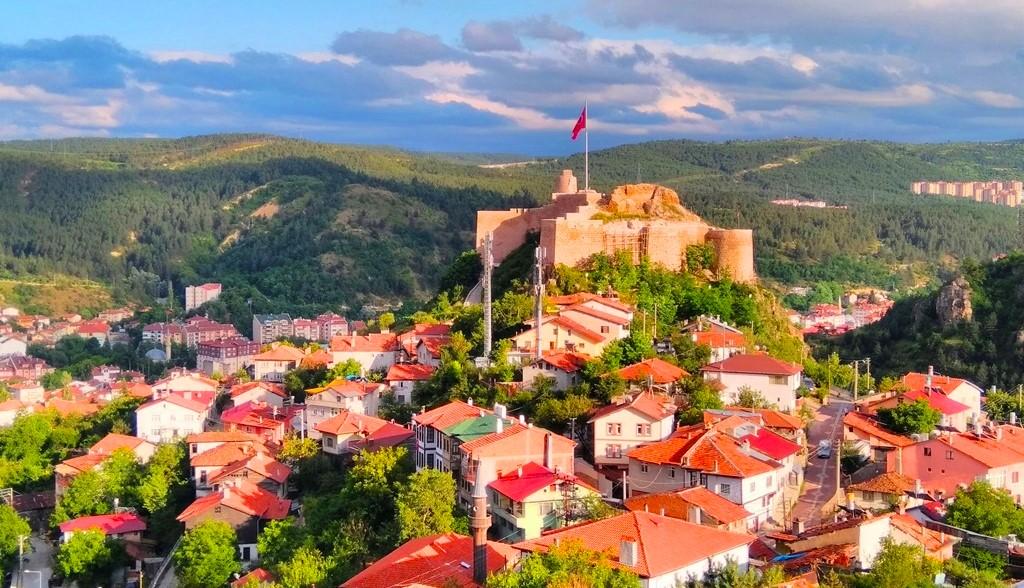
Kastamonu Castle (Anadoluyu Geziyorum)
The fortress dates back to the Byzantine period, particularly the era of the Komnenos dynasty. Built for defense against Turkish incursions, the structure spans 155 metres from south to north and between 30 and 50 metres from east to west. Strengthened by fifteen large towers and bastions, the construction was carried out using stone and mortar, with wooden beams inserted between the masonry to enhance durability. After the Byzantine period, the fortress continued to be used during the Seljuk, Candarogulları Beylik, and Ottoman Empire eras.
One of the most captivating aspects of Kastamonu Castle is the dramatic love story believed to be the origin of the city’s name. According to legend, a romance developed between Moni, the daughter of a Byzantine lord, and a Turkish commander. Despite the commander’s declaration of love through a heartfelt message, the lord opposed the union and threw his daughter from the castle walls, resulting in a tragic end. This poignant tale forms the legendary foundation for the city being called Kastamonu.
The dungeons, cisterns, and escape tunnels within the fortress highlight its strategic significance. Particularly, the staircase-lined passage in the central section of the castle served both as a supply route and as a refuge for civilians during sieges. Kastamonu Castle exhibits characteristics of Byzantine architecture from the Middle Ages. It consists of two sections: an inner and an outer wall. The inner castle is the oldest surviving part. The outer walls were demolished in the late 18th century. Inside the fortress are cisterns, a dungeon, escape tunnels, and a türbe known as “Bayraklı Sultan,” which belongs to a Turkish soldier who died during the conquest of Kastamonu.
During the Ottoman period, the castle remained in active use for a period but gradually lost its importance and began to fall into disrepair due to neglect. A major earthquake in 1943 caused severe damage to the structure. However, thanks to comprehensive restoration work carried out by the Kastamonu Municipality in 2005, the castle was reopened to visitors and regained its place as a vital part of our important historical heritage.
Anadoluyu Geziyorum. "Kastamonu Kalesi Nerede? Kastamonu Kalesi Tarihi, Özellikleri, Hakkında Bilgi, Giriş Ücreti, Nasıl Gidilir?" Accessed April 7, 2025.
Gezibilen. "Kastamonu Kalesi." Accessed April 7, 2025.
Karamehmetoğlu, Tuğçe. "Kastamonu Kalesi ve Aşıklı Sultan Türbesi Üzerine." Uluslararası Sosyal Araştırmalar Dergisi 13, no. 70 (April 2020): 78-85. Accessed April 7, 2025.
T.C. Kültür ve Turizm Bakanlığı Kastamonu İl Kültür ve Turizm Müdürlüğü. "Kastamonu İl Kültür ve Turizm Müdürlüğü." Accessed April 7, 2025.
Şahin, İlhan. "Kastamonu." Türkiye Diyanet Vakfı İslâm Ansiklopedisi. Accessed April 7, 2025.

Kastamonu Castle
Type | Castle | ||||||||
|---|---|---|---|---|---|---|---|---|---|
City | Kastamonu | ||||||||
Address | The castle is integrated into the urban fabric of the city. It is located slightly southwest of the city center. | ||||||||
Elevation | It is at an elevation of approximately 860 meters (2,820 ft). | ||||||||
Construction Period and Date | The castle was built during the Byzantine period, particularly under the Komnenos dynasty. Over time it was also used by the Seljuks, the Candarids, and the Ottomans. | ||||||||
South-North Length | 155 meters | ||||||||
East-West Width | 30-50 meters | ||||||||
Restoration | It was restored comprehensively in 2005 and opened to tourism. | ||||||||
History and Architectural Structure
Legendary Love Story
Strategic Importance and Structural Features
Journey to the Present