

+1 More

Karl Marx
Birth | 1818, Trier (Germany) | ||||||||
|---|---|---|---|---|---|---|---|---|---|
Death | 1883, London | ||||||||
Profession | Economist Revolutionary Philosopher | ||||||||
Famous Works | The Communist Manifesto, Capital | ||||||||
Core Ideas | Class Struggle, Historical Materialism, Alienation | ||||||||
Karl Marx (1818–1883) is one of the most influential and foundational architects of modern social theory. He left a lasting mark on the social sciences through his historical materialist approach, his analyses of class struggle, and his comprehensive critique of the capitalist system. Alongside Friedrich Engels, he co-authored The Communist Manifesto and his magnum opus Capital, which are among his most renowned works. Marx’s ideas extended far beyond economic structures; they transformed numerous disciplines including political theory, philosophy, sociology, and education. His critical perspectives on social inequality, alienation, and ideology have generated enduring impacts in both academic fields and political struggles.
Karl Marx was born on 5 May 1818 in Trier, a city in the Rhineland region then part of the Kingdom of Prussia. His family was of Jewish origin; his father, Heinrich Marx, was a lawyer who embraced Enlightenment ideas and admired the secular legal system established under Napoleonic influence. However, due to Prussian restrictions that barred individuals of Jewish descent from public office, Heinrich Marx converted to Protestantism in 1816 along with his family. This circumstance laid the groundwork for Marx’s later critical stance toward religious institutions, rooted in a socio-political contradiction.
Karl Marx’s childhood unfolded in an environment marked by intellectual curiosity and openness to bourgeois liberal values. Trier, having experienced the effects of the French Revolution, was not alien to revolutionary ideas. Growing up in this atmosphere, the young Marx enrolled at the University of Bonn in 1835 to study law. His student life there blended classical education with romantic poetry. However, pressured by his family to pursue a more serious academic career, he transferred to the University of Berlin in 1836. While continuing his legal studies in Berlin, he shifted his primary interest to philosophy. During this period, he encountered the philosophy of Georg Wilhelm Friedrich Hegel and became involved with the circle of radical Young Hegelians.
This philosophical environment in Berlin played a decisive role in shaping Marx’s later materialist conception of history. Hegel’s historical dialectic provided the philosophical foundation for Marx’s theory of history centered on class struggle. However, Marx rejected Hegel’s idealist approach and adopted a materialist orientation: it is not ideas but material relations of production that determine the course of history.
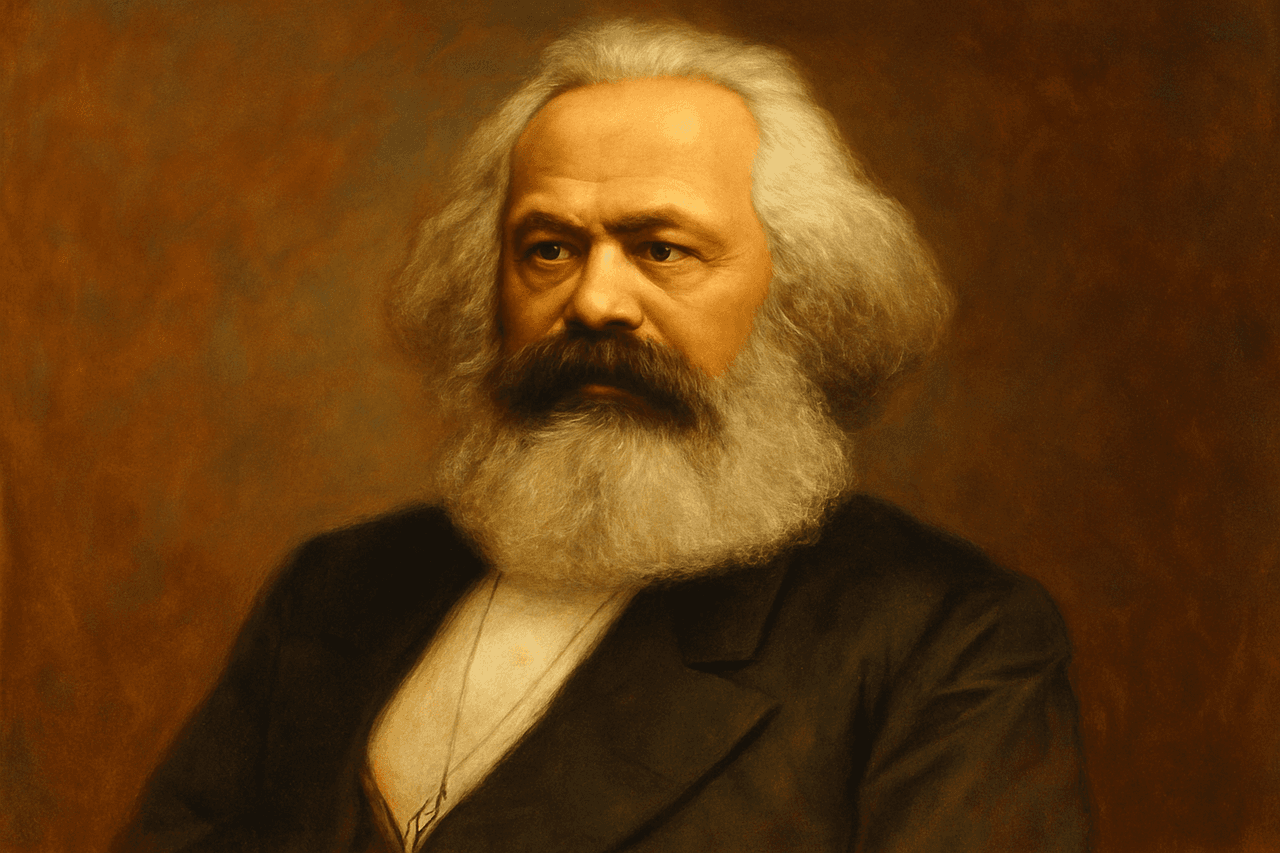
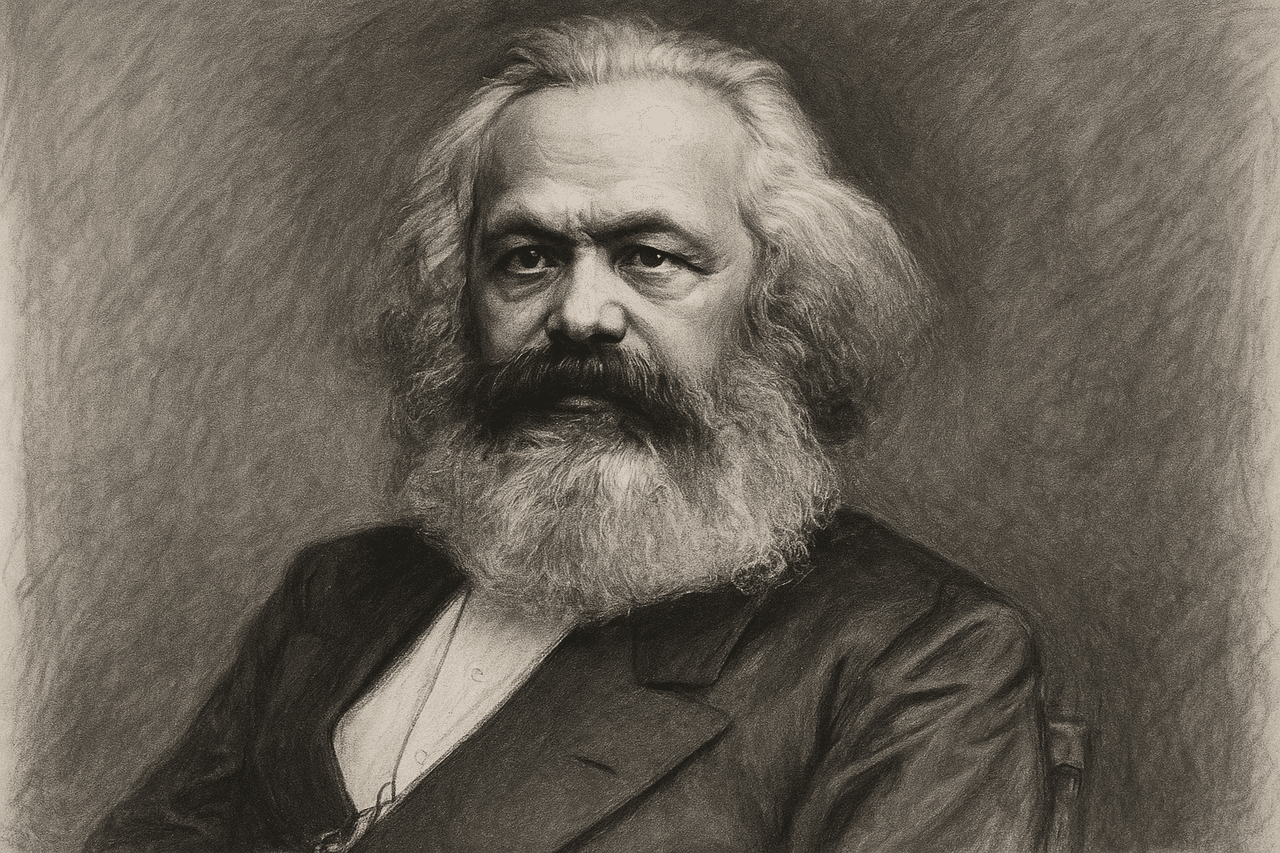
Karl Marx. (Generated by Artificial Intelligence.)
In the early 1840s, Marx began journalism at the radical newspaper Rheinische Zeitung in Cologne. However, his criticisms of the Prussian monarchy and the landed aristocracy led to the paper’s closure. In 1843, Marx moved to Paris, which at the time was the center of revolutionary intellectuals in Europe. There he met French socialists and German émigrés. In 1844, he met Friedrich Engels, who became both an intellectual and material partner, helping Marx ground his ideas in economic and historical foundations.
After Paris, Marx relocated to Brussels and then Cologne, intensifying his political activities during the Revolutions of 1848. However, following the failure and suppression of these revolutions, Marx, like many revolutionaries, was expelled from Prussia and France. In 1849, he settled in London with his family, where he spent the rest of his life. England, the most advanced industrial capitalist society, served as a kind of “living laboratory” for Marx. During this period, he spent years working in the library of the British Museum, laying the groundwork for Capital.
During his years of exile, Marx endured severe financial hardship. While his family struggled with illness, death, and poverty, he never compromised his scholarly output. He was able to complete his writings largely thanks to the financial support of his friend Engels. Marx’s life during this period was not only an intellectual endeavor but also a political struggle. He played an active role in founding the First International (International Workingmen’s Association). However, his health deteriorated significantly from the 1870s onward.
Full title: Manifesto of the Communist Party, written by Karl Marx and Friedrich Engels at the request of the Communist League based in London, prior to the revolutions of 1848. Although merely a short pamphlet, it became one of the most famous and widely circulated documents of revolutionary socialist movements worldwide. Marx and Engels assigned the revolutionary proletariat a historical mission: not only to overthrow the bourgeoisie but to abolish classes entirely and establish a classless, exploitation-free society.
The text consists of four main sections. The first emphasizes that history is the history of class struggles. It explains how the bourgeoisie, through the Industrial Revolution, dismantled feudal classes but produced a new oppressed class: the proletariat. The second section summarizes the principles of the communists and clarifies their differences from other working-class parties. The third critiques contemporary socialist currents—Feudal Socialism, Petty-Bourgeois Socialism, and German or “True” Socialism—highlighting their distinctions from the communist perspective. The fourth section concludes with a call for international revolution: “Workers of all countries, unite!”【1】
At the time of its writing, Europe was swept by a wave of revolution. Yet Marx’s primary aim was not merely to support existing uprisings but to provide them with theoretical direction. The Manifesto was written not only as a literary and political document but as a revolutionary strategy. It has since been translated into countless languages and served as a foundational text for numerous political struggles, from the Soviet Union to guerrilla movements in Latin America.
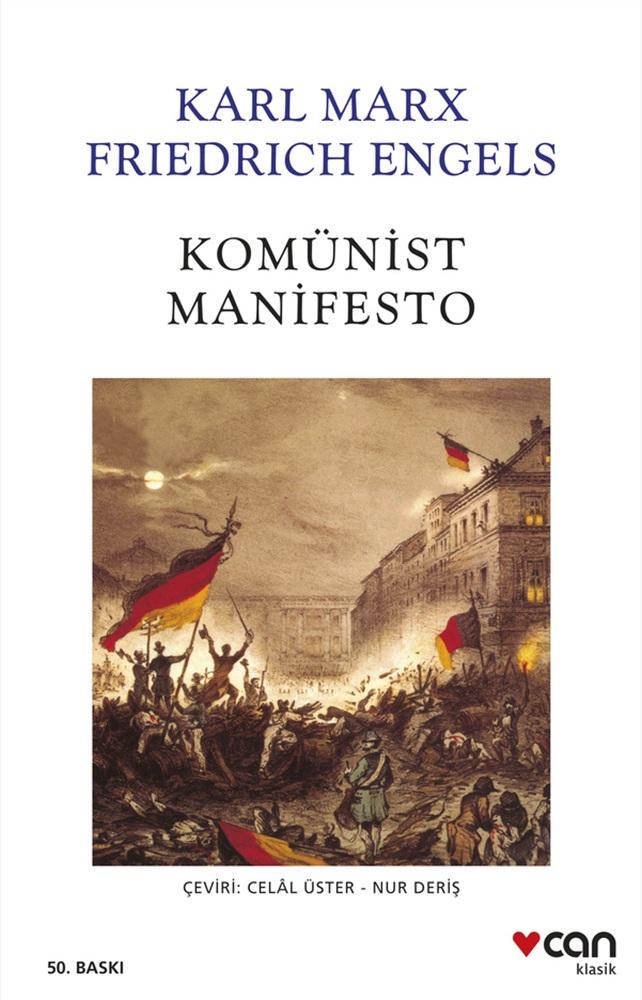
Cover of The Communist Manifesto. (Can Yayınları)
Capital: A Critique of Political Economy is Marx’s most extensive theoretical work, the subject of his lifelong study. The first volume was published in 1867. The subsequent volumes were compiled and published after Marx’s death by Friedrich Engels, using Marx’s notes. Capital builds upon the labor theory of value developed by classical economists such as Adam Smith and David Ricardo, but deepens and systematically critiques the capitalist mode of production.
In the first volume of Capital, Marx begins with the concept of the commodity. He emphasizes that a commodity possesses both use-value and exchange-value. In a society organized around commodity production and exchange, all social relations are mediated through economic forms. Marx introduces the concept of “commodity fetishism”: social relations between people appear as relations between things. Human labor circulates in an abstract and objectified form.
One of his most important concepts is surplus value (Mehrwert). The capitalist pays the worker only enough to sustain life, yet appropriates the entire value produced by the worker. The difference—the surplus value—fuels capital accumulation. Marx defines this process as “structural,” not merely formal, exploitation. Capital details numerous complex issues including the logic of capital accumulation, the reproduction of labor power, the impact of machinery on workers, the reserve army of labor, and cycles of crisis.
During the writing of Capital, Marx conducted years of intensive research in the British Museum library, accumulating thousands of pages of notes. This work became not only an economic but also a foundational text in history, sociology, and political science. Throughout its composition, Marx endured financial hardship and relied on Friedrich Engels’s financial support to continue writing. Capital is not a simple economics textbook; it is the epistemological foundation of Marxist thought.
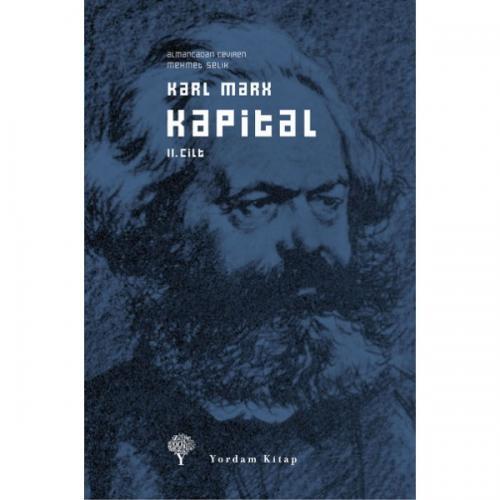
Cover of Capital. (Yordam Kitap)
Written during Marx’s years in Paris, the Economic and Philosophic Manuscripts of 1844 reveal his youthful philosophical orientation and his understanding of human-nature-production relations. These manuscripts were discovered and published only after his death. They herald the emergence of an anthropological materialism that builds upon but transcends Ludwig Feuerbach’s influence. Marx argues here that humans realize their essence through productive activity, yet under capitalism, this productive relationship becomes alien to them.
In these manuscripts, Marx identifies four dimensions of alienation: (1) from the product of labor, (2) from the labor process, (3) from human species-being (Gattungswesen), and (4) from other human beings. This forms the philosophical basis for his later theory of exploitation in Capital. He also argues that the relationship with nature is corrupted, as humans begin to view nature solely as an object of consumption.
These writings demonstrate that Marx was not merely an economist but also deeply concerned with ethical and existential questions. Humans produce not only for bread but for meaning. Yet in capitalist society, when production serves only the market and profit maximization, humans lose their essence.
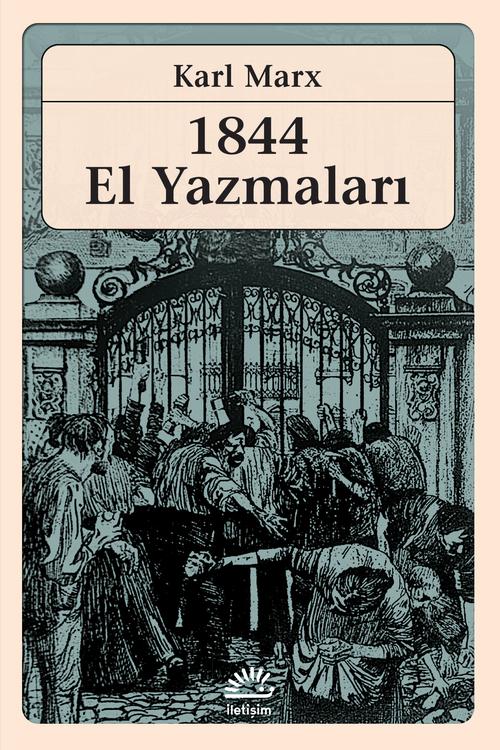
Marx’s Manuscripts. (İletişim Yayınları)
Written by Marx and Engels, The German Ideology is a powerful critique directed against the idealist German philosophy of the time, particularly Hegelianism and Ludwig Feuerbach. In this work, historical materialism is systematically formulated for the first time. It argues that systems of thought arise from modes of social life and therefore must be studied alongside the history of material existence.
The assertion “The ruling ideas are the ideas of the ruling class”【2】 is grounded in this text. That is, ideas become dominant because they are the product of the material power held by the ruling class. This view, which demonstrates that consciousness is not independent of social conditions, is considered the foundational text of modern ideology critique. Marx and Engels argue here that “real history” begins with the material production of individuals and that these relations of production determine political and ideological superstructures.
This work marks Marx’s decisive break from idealist philosophy. He grounds analysis not in consciousness but in social being. However, Marx did not publish it during his lifetime; in his own words, he left it “to the gnawing criticism of the mice.” Nevertheless, it has since been read as the foundational text for a systematic epistemology of Marx’s thought.
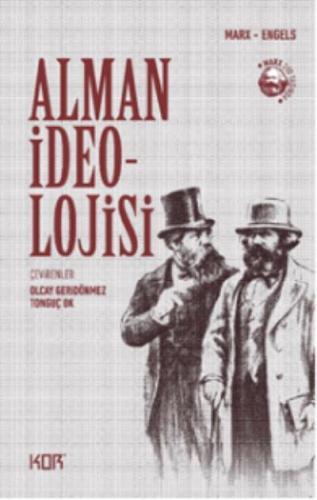
Cover of The German Ideology. (Yayıncılar Kooperatifi)
The cornerstone of Marx’s thought is historical materialism. This approach asserts that the driving force of history is not ideas or individual heroes but material relations of production and class struggles. For Marx, the fundamental questions determining the course of history are: how do human societies produce? Who controls production? And who occupies what position within the production process? Societies have historically passed through different modes of production: primitive communal, slave, feudal, and capitalist. Each mode of production carries its own class structure and contradictions. For example, in feudal society, the lord confronts the serf; in capitalist society, the bourgeoisie confronts the proletariat.
Class struggle is the manifestation and resolution of these contradictions. Marx argues that with the Industrial Revolution, the bourgeoisie seized ownership of the means of production, rendering the proletariat economically dependent. The working class, lacking ownership of the means of production, must sell its labor to survive. Yet within this process, workers develop “class consciousness” as they become aware of their own interests. This consciousness ultimately creates the conditions for revolutionary transformation. For Marx, this revolution is not merely a change of power but a radical transformation of relations of production and social structure.
The concept of alienation (Entfremdung) is one of the most philosophical dimensions of Marx’s critique of capitalist society. He developed this concept primarily in his early 1844 Manuscripts. According to Marx, human nature is productive; humans express themselves by creating and transforming the world. However, capitalist relations of production strip this creative process from the worker. The worker no longer produces for himself but for the interests of the capitalist. This leads to the worker’s alienation from his labor, his product, the production process, other people, and ultimately his own essence.
This alienation represents a multi-layered rupture. First, the worker cannot recognize himself in the product he creates; second, he has no control over the labor process; third, competition with fellow workers makes him alienated from them; fourth, there is a sharp divide between “real life” and the time left after work. This condition leads to psychological fragmentation, moral decay, and identity crisis. This process reduces the modern human to “an abstract activity and a stomach”: human values disappear, leaving only a functional body.【3】
According to Marx, dominant ideas are shaped because the ruling class, by controlling the material means of production, also controls ideological instruments. In other words, the reproduction of social order is achieved not only through physical coercion but also through intellectual hegemony. At this point, Marx’s concept of ideology rests on the claim that people’s ways of perceiving the world can conceal their true interests. People are often unaware of their own interests because their modes of thought are structured to sustain the system’s continuity. This leaves them “living in illusion.”
Although Marx did not write a lengthy treatise specifically on education, his critiques of class structure and ideology clearly reveal his views on the educational system. For Marx, education in capitalist society does not merely foster individual development; it has a deeper function: reproducing the existing class structure. Educational institutions, while preparing individuals for specific economic roles, also internalize social norms, hierarchies, and ideologies. Thus, schools, like factories and families, ensure the continuity of the capitalist social order.
These ideas are strikingly observable in post-colonial countries such as Pakistan. There, the education system generates profound inequality between private and public schools. Upper classes send their children to elite schools, acquiring not only academic but also cultural capital, while children of lower classes are educated in under-resourced public schools with low expectations. Thus, the claim that education promotes equality serves to entrench class privilege. This situation confirms the validity of Marx’s analysis of education as a system that reproduces the interests of the ruling class in the present day.
Karl Marx’s understanding of religion is tightly bound to his materialist conception of history. When critiquing religion, Marx does not simply label it as “false” or “bad”; rather, he analyzes it as a social symptom. His famous phrase “religion is the opium of the people” is often misunderstood superficially but is in fact the result of a far more complex analysis. According to Marx, people turn to religion to alleviate the pain of their social conditions. Religion is the sigh of the oppressed, the soul of a soulless world; yet this also turns it into an instrument of escape from human reality.
Marx’s approach to religion builds on Ludwig Feuerbach’s idea that humans create God as a reflection of their own essence. However, Marx diverges from Feuerbach by emphasizing that religion is not merely an individual psychological project but a social phenomenon rooted in class. Religion is used by ruling classes as an ideological tool: it dulls the anger of the poor with promises of heaven, produces obedient individuals, and thereby sanctifies the social order. Thus, the critique of religion is not merely theological but also political: “the critique of religious illusion” is a precondition for social emancipation.
When compared to today, this analysis remains relevant. Many social systems today are legitimized through religious discourse; people are pacified with metaphysical promises in the face of poverty, inequality, and injustice. In Marx’s view, true freedom is possible only when humans consciously transform their social conditions. Therefore, for him, religion is an ideological veil obstructing genuine liberation.
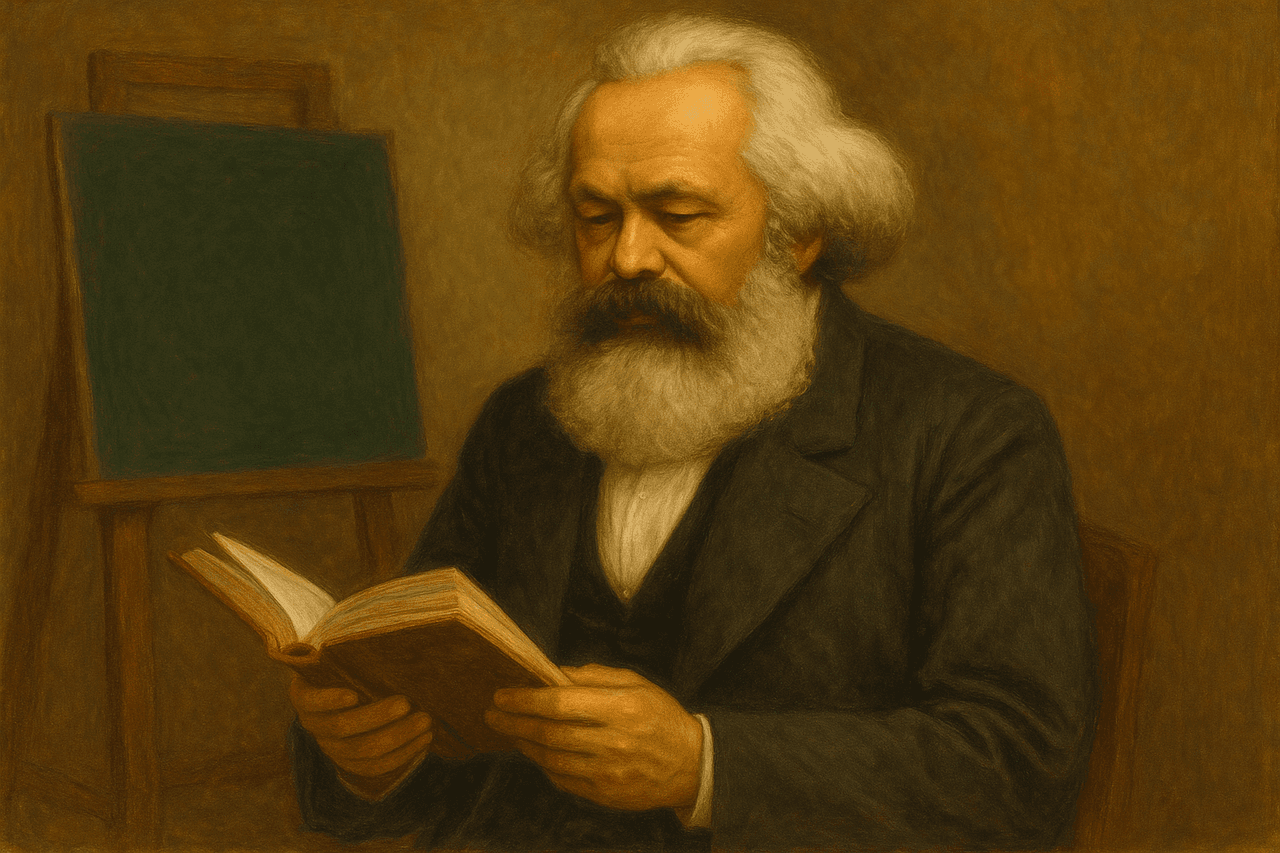
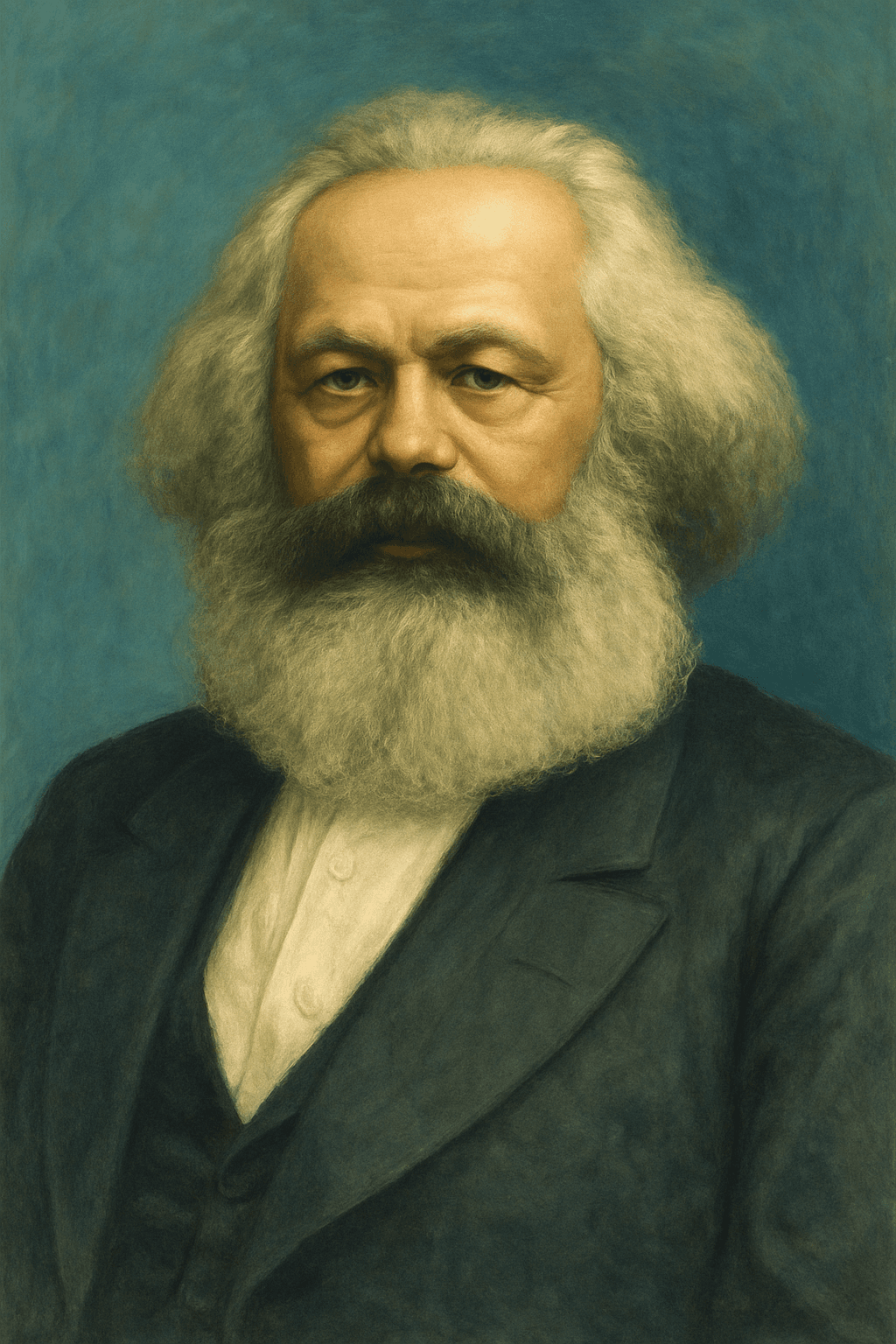
Karl Marx. (Generated by Artificial Intelligence.)
Karl Marx died on 14 March 1883 in his home in London at the age of 64. In his final years, he endured the deaths of his wife Jenny and several of his children, and his health had severely declined. After his death, his closest friend Engels, in his brief speech at Marx’s simple funeral in Highgate Cemetery, described him thus: “Marx’s name will live for centuries. For he was not merely a thinker but a revolutionary.”【4】
At the time of his death, Marx’s ideas had not yet gained widespread global influence. However, within a short time, his writings became the theoretical framework for workers’ movements, socialist parties, and revolutionary organizations. Capital was compiled and published after his death by Engels. Marx’s ideas, especially in the first half of the 20th century, formed the ideological foundation of political regimes in the Soviet Union, China, Cuba, and elsewhere. Simultaneously, they were reinterpreted philosophically and sociologically by thinkers such as the Frankfurt School, Althusser, Gramsci, and many others.
Erikson, Kai. “On Work and Alienation.” *American Sociological Review* 51, no. 1 (1986): 1–8. Accessed June 25, 2025.https://doi.org/10.2307/2095474
Güçlü, İsmail. “Communist Manifesto (Chapter 1).” *Eskişehir Osmangazi Üniversitesi İktisadi ve İdari Bilimler Dergisi* 9, no. 2 (2014): 151–168. Accessed June 25, 2025.https://collective-india.com/wp-content/uploads/2022/07/Communist-Manifesto_marked.pdf
Harvard University. “MARX, KARL.” Michael Rosen Website. Accessed June 25, 2025.https://scholar.harvard.edu/files/michaelrosen/files/karl_marx.pdf
Katz, Claudio J. “Karl Marx on the Transition from Feudalism to Capitalism.” *Theory and Society* 22, no. 3 (1993): 363–389. Accessed June 25, 2025.http://www.jstor.org/stable/657738
Kenton, Will. “Karl Marx: His Books, Theories, and Impact.” *Investopedia.* Accessed June 25, 2025.https://www.investopedia.com/terms/k/karl-marx.asp
Marx, Karl and Engels, Friedrich. *Alman İdeolojisi*. Yaykoop. Accessed June 25, 2025.https://www.yaykoop.com/alman-ideolojisi
Marx, Karl, and Engels, Friedrich. *Komünist Manifesto*. Trans. Celal Üster, Nur Deriş. Istanbul: Can Yayınları, 2024. Accessed June 25, 2025.https://www.canyayinlari.com/komunist-manifesto-9789750739200?srsltid=AfmBOorcVJZwCfPp_-bSG10ahKYIGmkXMIIXg2N-nRFL2Q-u5jSpg5NW
Marx, Karl, and Engels, Friedrich. *Seçme Yapıtlar Üçüncü Cilt*. Trans. Kenan Somer. Ankara: Sol Yayınları, 1979.
Marx, Karl. *1844 El Yazmaları*. Trans. Murat Belge. Istanbul: İletişim Yayınları, 2021. Accessed June 25, 2025.https://iletisim.com.tr/kitap/1844-el-yazmalari/7477?srsltid=AfmBOopK-rOKX_1_iAUDUIJqgYJpWv4XF1iMfiUzOG0r-bUIdTJL98W1
Marx, Karl. *Kapital Cilt II*. Trans. Mehmet Selik. Yordam Kitap, 2021. Accessed June 25, 2025.https://www.yordamkitap.com/kapital-cilt-ii-karton-kapak?srsltid=AfmBOoqXvJb4YtjpYPHkkYtRkCtq8ncJEbBCF8bGDkGAX6KQH2TvyGf
Musto, Marcello. *The Last Years of Karl Marx: An Intellectual Biography*. Redwood City: Stanford University Press, 2020. Accessed June 25, 2025.https://www.degruyterbrill.com/document/doi/10.1515/9781503612532/html
Omer, Sonia; Jabeen, Sadia. “Exploring Karl Marx Conflict Theory in Education: Are Pakistani Private Schools Maintaining Status Quo?” *Bulletin of Education and Research* 38, no. 2 (2016): 195–202. Accessed June 25, 2025.https://eric.ed.gov/?id=EJ1210318
Omonijo, D. O., et al. “Religion as the Opium of the Masses: A Study of Karl Marx's Religious Critique.” *African Research Journal of Arts and Social Sciences* 6, no. 2 (2016): 132–142. Accessed June 25, 2025.https://www.researchgate.net/publication/308867901_Religion_as_the_Opium_of_the_Masses_A_Study_of_the_Contemporary_Relevance_of_Karl_Marx
Stanford Encyclopedia of Philosophy. "Karl Marx." Stanford Encyclopedia of Philosophy. Accessed June 25, 2025.https://plato.stanford.edu/entries/marx/
U.S. Holocaust Memorial Museum. “Karl Marx.” *Holocaust Encyclopedia.* Accessed June 25, 2025.https://encyclopedia.ushmm.org/content/en/article/karl-marx
[1]
Karl Marx ve Friedrich Engels, Komünist Manifesto, Çev. Celal Üster, Nur Deriş. İstanbul: Can Yayınları, 2024.
[2]
Karl Marx ve Friedrich Engels, Alman İdeolojisi, Yaykoop, 2018.
[3]
Kai Erikson, “On Work and Alienation.” American Sociological Review 51, no. 1 (1986): 1–8, Erişim tarihi: 25 Haziran 2025, https://doi.org/10.2307/2095474
[4]
Karl Marx, Friedrich Engels, Seçme Yapıtlar Üçüncü Cilt, Çev. Kenan Somer, Ankara, Sol Yayınları, 1979, syf 198. https://archive.org/details/karlmarxfriedrichengelssecmeyapitlarciltiiisolyayinlari/mode/2up

Karl Marx
Birth | 1818, Trier (Germany) | ||||||||
|---|---|---|---|---|---|---|---|---|---|
Death | 1883, London | ||||||||
Profession | Economist Revolutionary Philosopher | ||||||||
Famous Works | The Communist Manifesto, Capital | ||||||||
Core Ideas | Class Struggle, Historical Materialism, Alienation | ||||||||
Birth, Youth, and Family Origins
Adulthood, Exile Years, and Political Activism
Major Works
1. The Communist Manifesto (1848)
2. Capital (Das Kapital) – 1867 and Beyond
3. Economic and Philosophic Manuscripts of 1844
4. The German Ideology (1845–46)
His Ideas and Ideologies
1. Historical Materialism and Class Struggle
2. Alienation: The Estrangement of the Human Being from Self and World in the Labor Process
3. Critique of Ideology: The Ruling Ideas Are the Ideas of the Ruling Class
His Views on Education
His Views on Religion
Death and Legacy