This article was automatically translated from the original Turkish version.
+2 More
Feature(s) | Communicating with ants | ||||||||
|---|---|---|---|---|---|---|---|---|---|
Province(s) | Sakarya | ||||||||
Period(s) | 11th century | ||||||||
Category | Türbe | ||||||||
Location | Adliye Köyü/Ahmediye Mahallesi | ||||||||
District | Arifiye | ||||||||
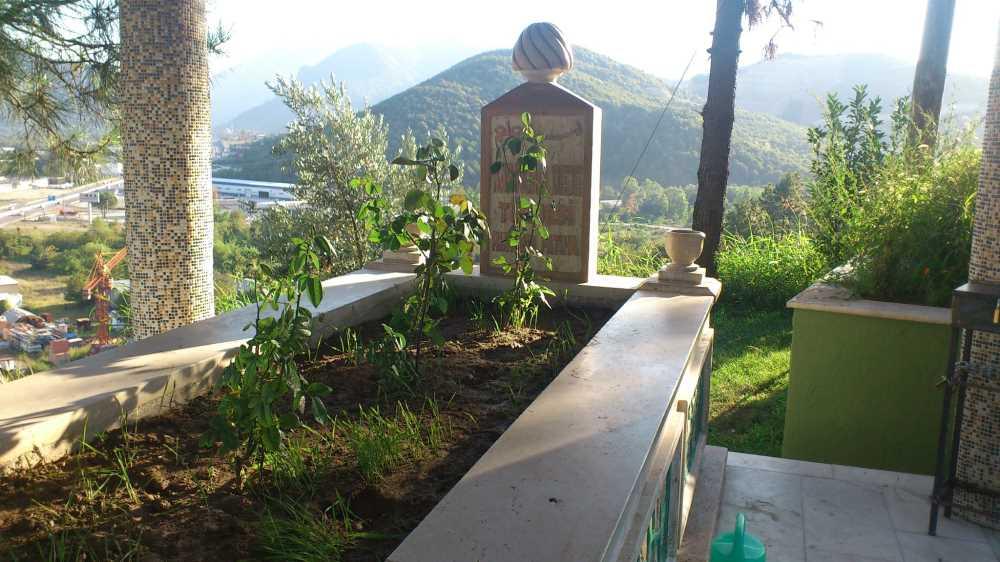
Karıncalı Dede Türbesi is a structure located in the Arifiye district of Sakarya province and is visited under the scope of faith tourism. Situated 12 kilometers from the city center, it is positioned on a high rock within the boundaries of Adliye Village and Ahmediye Neighborhood along the E-25 Highway connecting Adapazarı to Bilecik.
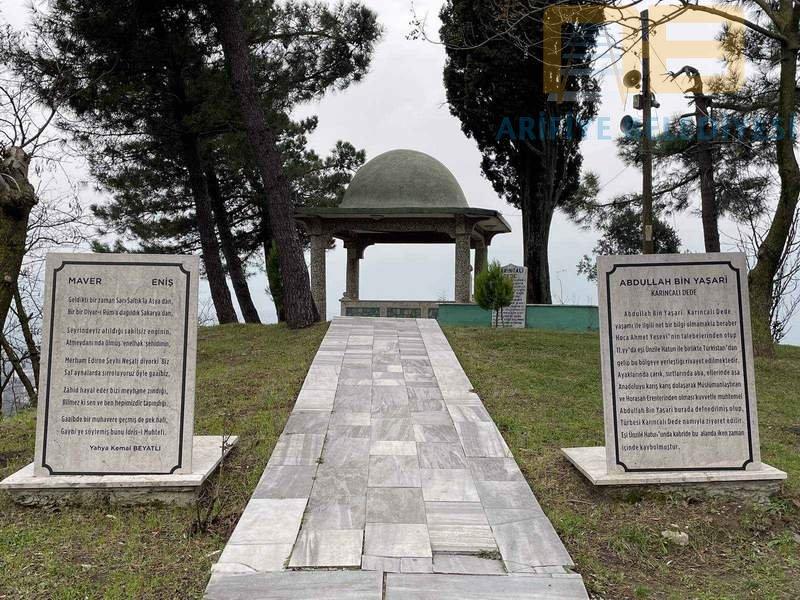
Karıncalı Dede Türbesi (Arifiye Municipality)
The exact time and identity of the person who originally built the tomb as a wooden structure are unknown. According to tradition, the individual buried within the tomb is Abdullah bin Yaşari, a Turkmen dervish from Horasan and a disciple of Hoca Ahmet Yesevi, who is said to have arrived in the Sakarya region in the 11th century. Another tradition holds that Karıncalı Dede was one of three brothers, with the other two brothers said to have resided in the Akyazı and Geyve regions. The tomb took shape over time following the individual’s death, as per his own will, when he was buried in this rocky area.
The name “Karıncalı Dede” or “Karınca Baba” is rooted in the belief that this figure had a special relationship with ants. According to hagiographic accounts, the residents of a village plagued by ants sought his help. Upon his arrival and prayers, the village was freed from the ant infestation. Stories recount how he gathered ants around him, communicated with them, and lived alongside them until the end of his life. These narratives are the reason the tomb and its occupant are known by this name.
Visitors to the tomb are observed tying pieces of cloth to trees in the area as a means of making wishes come true, and scattering rice around the site to feed the ants. Due to the surrounding wooded vegetation, the area around the tomb is also used by visitors as a picnic spot.
Sakarya Arifiye Municipality. "Karıncalı Dede Türbesi Yolu Onarılıyor." Accessed March 23, 2026. https://www.arifiye.bel.tr/guncel/haberler/karincali-dede-turbesi-yolu-onariliyor
Sakarya Şehir Memory. "Evliyalar Şehri Sakarya." Accessed March 23, 2026. https://sehirhafizasi.sakarya.edu.tr/evliyalar-sehri-sakarya/
Türkiye Kültür Portalı. "Karıncalı Dede Türbesi" Accessed March 23, 2026.
https://www.kulturportali.gov.tr/turkiye/sakarya/gezilecekyer/karincali-dede-turbesi

Feature(s) | Communicating with ants | ||||||||
|---|---|---|---|---|---|---|---|---|---|
Province(s) | Sakarya | ||||||||
Period(s) | 11th century | ||||||||
Category | Türbe | ||||||||
Location | Adliye Köyü/Ahmediye Mahallesi | ||||||||
District | Arifiye | ||||||||
No Discussion Added Yet
Start discussion for "Karıncalı Dede Türbesi" article
History and Identity
Origin of the Name and Legends
Visitor Practices