This article was automatically translated from the original Turkish version.
Registration Number | 986 | ||||||||
|---|---|---|---|---|---|---|---|---|---|
Registration Date | 27.12.2021 | ||||||||
Application Number | C2021/000087 | ||||||||
Application Date | 28.02.2021 | ||||||||
Name of the Geographical Indication | Karataş Kıddesi | ||||||||
Product / Product Group(s) | Çörek / Baking and pastry products sweets dough products | ||||||||
Type of Geographical Indication | Mahreç mark | ||||||||
Applicant/Registrant(s) | Karataş Municipality | ||||||||
Address of the Registrant | Yeni Mah. Atatürk Cad. 523 Karataş ADANA | ||||||||
Geographical Boundary | Adana Province Karataş District | ||||||||
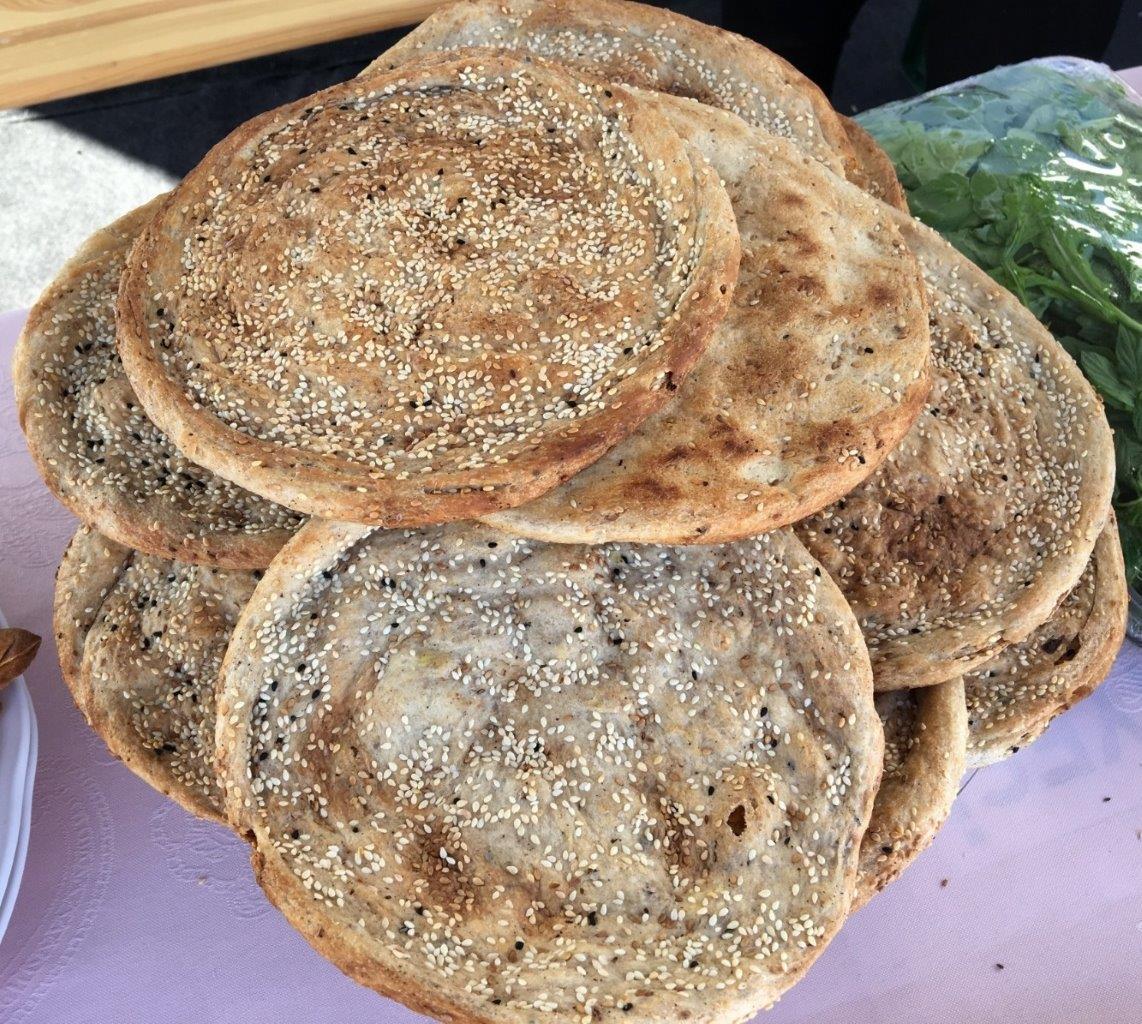
Karataş Kıddesi is a traditional pastry registered with a geographical indication, unique to the Karataş district of Adana. The dough is prepared using bread wheat flour, fresh yeast, margarine, sunflower oil, sesame, aniseed, cinnamon, cloves, nutmeg, and salt. It is shaped into a spiral form, coated with a special spice mixture, and baked in an oven or tandoor. Distinguished by its crisp texture, prominent spice aroma, and circular form, this product is traditionally consumed during the transition from winter to spring, on holidays, and at local events.
Karataş Kıddesi is a traditional pastry produced exclusively in the Karataş district of Adana Province and registered with a geographical indication. It is made by shaping and baking a rich dough composed of bread wheat flour, fresh yeast, margarine, sunflower oil, sesame, aniseed, cinnamon, cloves, nutmeg, salt, and water. A distinctive spice mixture, prepared using the same aromatic ingredients, is applied to the surface to create its characteristic flavor and crisp texture.
This product is notable for its circular shape and spiral coils resembling a snail shell. It is further distinguished by its thin, crisp edges and spiced outer coating. After production, Karataş Kıddesi measures approximately 15 cm in diameter and 1 cm in thickness, and is baked at 150–160 °C for 30–35 minutes in a tandoor or oven.
The dough composition for Karataş Kıddesi is as follows:
The dough ingredients are thoroughly mixed and kneaded, then fermented for 40 minutes to one hour. From the fermented dough, egg-sized pieces are taken and shaped into cylindrical forms approximately 15 cm in length. A channel is hollowed out along the center of each cylinder, into which a spiced filling is inserted. The filling consists of:
After the channel is filled, the cylindrical dough is coiled into a spiral to form the pastry shape. The same spice mixture is applied again to the surface, and the pastry is left to rest for approximately 15 minutes. It is then pressed with the thumb and middle finger to expand its circular form and enhance its crisp texture. The shaped pastries are arranged on trays and baked in a tandoor or oven. After baking, they are cooled for 15 minutes and packaged for sale.
The production of Karataş Kıddesi is a tradition with deep historical roots in the Karataş district. Its association with the seasonal transition from winter to spring, as well as its serving during holidays, festivals, and other special occasions, has established a strong link between the product and its geographical origin. This cultural context demonstrates that Karataş Kıddesi fulfills not only a technical production role but also a social function deeply embedded in regional identity and tradition.
The production of Karataş Kıddesi is restricted exclusively to the administrative boundaries of the Karataş district in Adana Province. The product’s historical cultural character and region-specific production method necessitate this geographical limitation. Production within this defined area is one of the fundamental requirements for its registration with a geographical indication.
When offered for sale, Karataş Kıddesi must be identified by the term “Karataş Kıddesi” and the official geographical indication emblem, either on the product itself or its packaging. If these elements cannot be applied directly to the product, they must be clearly visible at a prominent location within the production facility.
Compliance with the geographical indication registration requirements is monitored under the coordination of the Karataş Municipality. The monitoring body consists of a three-member committee, with one expert each from the Karataş Municipality, the Karataş Chamber of Tradesmen and Craftsmen, and the Adana Provincial Directorate of Agriculture and Forestry. Inspections are conducted at least once annually, and may be carried out at any time in response to specific needs or complaints. These inspections evaluate compliance regarding ingredient proportions, production methods, and proper use of the geographical indication emblem. Additionally, services may be obtained from public institutions, private organizations, or qualified individuals as needed.
Turk Patent and Trademark Office. "Karataş Kıddesi." Accessed August 16, 2025. https://ci.turkpatent.gov.tr/cografi-isaretler/detay/3443.
Turkish Patent and Trademark Office. *Karataş Kıddesi*. Geographical Indication Registration Certificate (PDF). Registration No: 986, Registrant: Karataş Municipality. Accessed August 16, 2025. https://ci.turkpatent.gov.tr/Files/GeographicalSigns/f11f2959-eaf5-46ea-b87a-47cb4af6208c.pdf.

Registration Number | 986 | ||||||||
|---|---|---|---|---|---|---|---|---|---|
Registration Date | 27.12.2021 | ||||||||
Application Number | C2021/000087 | ||||||||
Application Date | 28.02.2021 | ||||||||
Name of the Geographical Indication | Karataş Kıddesi | ||||||||
Product / Product Group(s) | Çörek / Baking and pastry products sweets dough products | ||||||||
Type of Geographical Indication | Mahreç mark | ||||||||
Applicant/Registrant(s) | Karataş Municipality | ||||||||
Address of the Registrant | Yeni Mah. Atatürk Cad. 523 Karataş ADANA | ||||||||
Geographical Boundary | Adana Province Karataş District | ||||||||
Distinguishing Features
Ingredients and Preparation Process
Historical and Cultural Context
Production Area and Geographical Boundary
Labeling and Usage Conditions
Monitoring and Control Process