


This article was automatically translated from the original Turkish version.
+2 More
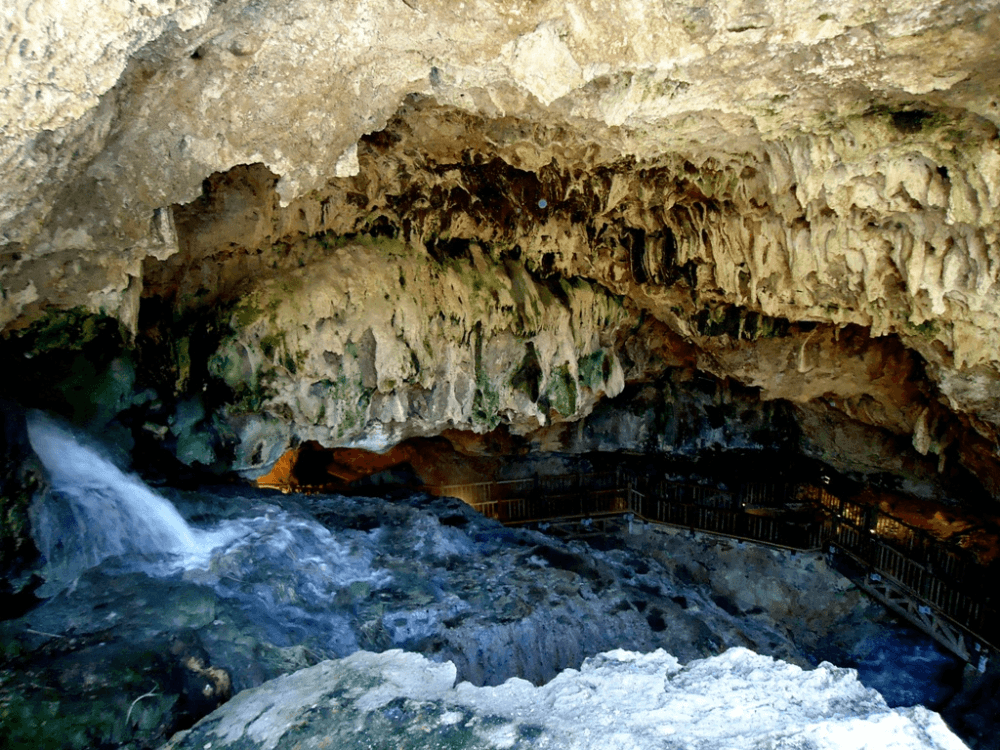
Kaklık Cave
Location | Denizli Honaz District Türkiye Kaklık Neighborhood | ||||||||
|---|---|---|---|---|---|---|---|---|---|
Transportation | 30 km from the city center via the Denizli-Ankara Highway | ||||||||
Cave Type | Düden-Kaynak and Sinkhole Type, Active Cave | ||||||||
Other Name | Cave Pamukkale Küçük Pamukkale | ||||||||
Kaklık Cave, is a cave located within the boundaries of Kaklık Village, Honaz District, Denizli Province, in Türkiye’s Aegean Region. It lies along the Denizli-Ankara Highway, approximately 30 kilometers from the city center of Denizli. Access to the cave is achieved by traveling three kilometers north from Kaklık Village along a side road. Additionally, regular minibus services operate between Denizli city center and Kaklık Village.
Kaklık Cave is an active cave situated in a doline-karst spring and collapse sinkhole setting. The geological formations surrounding the cave consist of Mesozoic limestones, Eocene marl, clay, sandstone, and conglomerates, as well as Miocene-Pliocene layers of clay, sand, marl, and limestone. Quaternary travertine and alluvial deposits also characterize the region.
The cave is adorned with stalactites and stalagmites and is notable for its travertine terraces. Due to its resemblance to the travertine formations at Pamukkale, it is also known as “Little Pamukkale” or “Cave Pamukkale.” The internal temperature of the cave ranges between 24–32 °C and exhibits a constant, humid microclimate.
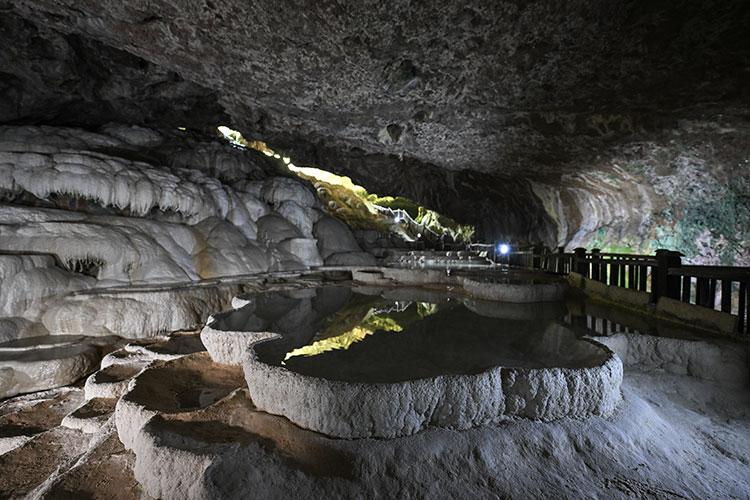
Kaklık Mağarası. (Anadolu Ajansı)
The cave contains abundant thermal water. These waters are clear, colorless, and have a sulfur odor. Analyses have revealed the following characteristics of the cave water:
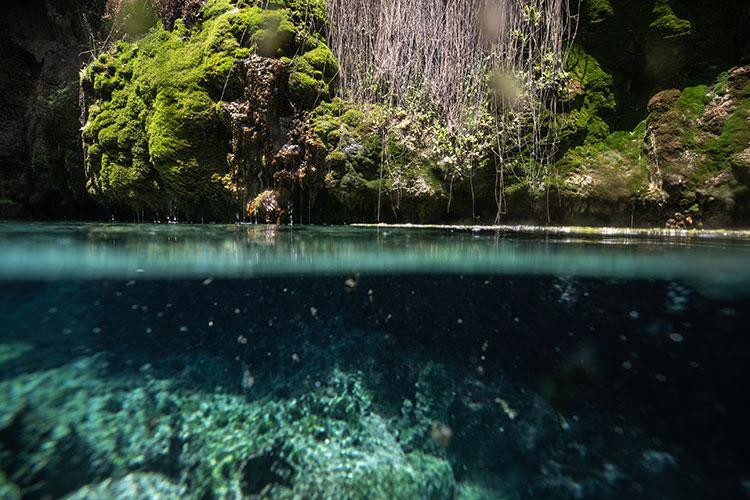
Kaklık Mağarası. (Anadolu Ajansı)
In areas of the cave exposed to direct sunlight and where water continuously drips or flows down the walls, dense growths of mosses and small-leaved ivy species have developed. Depending on lighting conditions, these plants display varying shades of green throughout the day, giving the cave a unique appearance.
Kaklık Cave was opened to tourism in May 2002 under the initiatives of the Denizli Provincial Directorate of Culture and Tourism. Facilities for visitors include a swimming pool, a small amphitheater, viewing platforms, a cafeteria, and restrooms around the cave entrance. Platforms have been constructed allowing visitors to walk above the water inside the cave.
The cave attracts interest from both domestic and international tourists. In recent years, visitor numbers have increased significantly. Particularly strong interest has been observed from tourists arriving from Japan, Korea, and China.
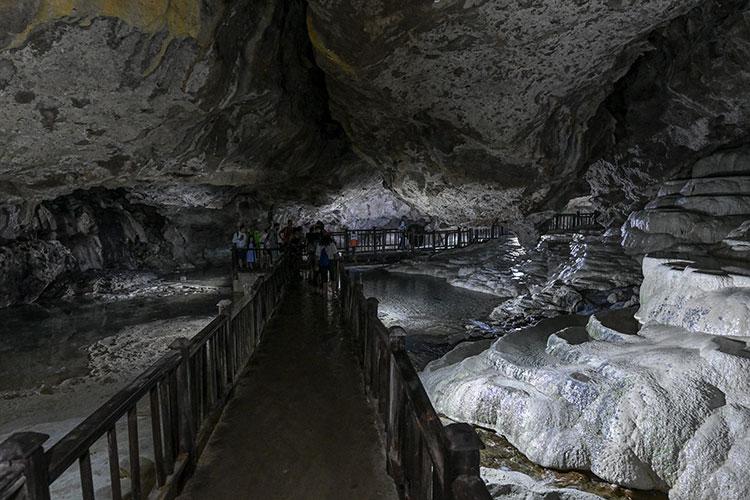
Kaklık Mağarası. (Anadolu Ajansı)
Anadolu Ajansı. “Yerin Altındaki Pamukkale: Kaklık Mağarası.” Anadolu Ajansı, June 4, 2023.https://www.aa.com.tr/tr/kultur/yerin-altindaki-pamukkale-kaklik-magarasi/2934570. Accessed May 16, 2025. Denizli Valiliği. “Kaklık Mağarası Eşsiz Travertenleri ile Turistlerin İlgi Odağı.” Denizli Valiliği Resmî Web Sitesi. Accessed May 16, 2025.http://denizli.gov.tr/kaklik-magarasi-essiz-travertenleri-ile-turistlerin-ilgi-odagi. Honaz Kaymakamlığı. “Kaklık Mağarası.” Honaz İlçesi Resmî Web Sitesi. Accessed May 16, 2025.http://www.honaz.gov.tr/kaklik-magarasi. T.C. Kültür ve Turizm Bakanlığı. “Kaklık Mağarası.” Kültür Portalı. Accessed May 16, 2025.https://www.kulturportali.gov.tr/turkiye/denizli/gezilecekyer/kaklik-magarasi.

Kaklık Cave
Location | Denizli Honaz District Türkiye Kaklık Neighborhood | ||||||||
|---|---|---|---|---|---|---|---|---|---|
Transportation | 30 km from the city center via the Denizli-Ankara Highway | ||||||||
Cave Type | Düden-Kaynak and Sinkhole Type, Active Cave | ||||||||
Other Name | Cave Pamukkale Küçük Pamukkale | ||||||||
Geological Features and Structure
Cave Formation and Physical Characteristics
Hydrogeochemical Properties
Biological Features
Tourism and Facilities
Visitor Profile and Interest