


This article was automatically translated from the original Turkish version.
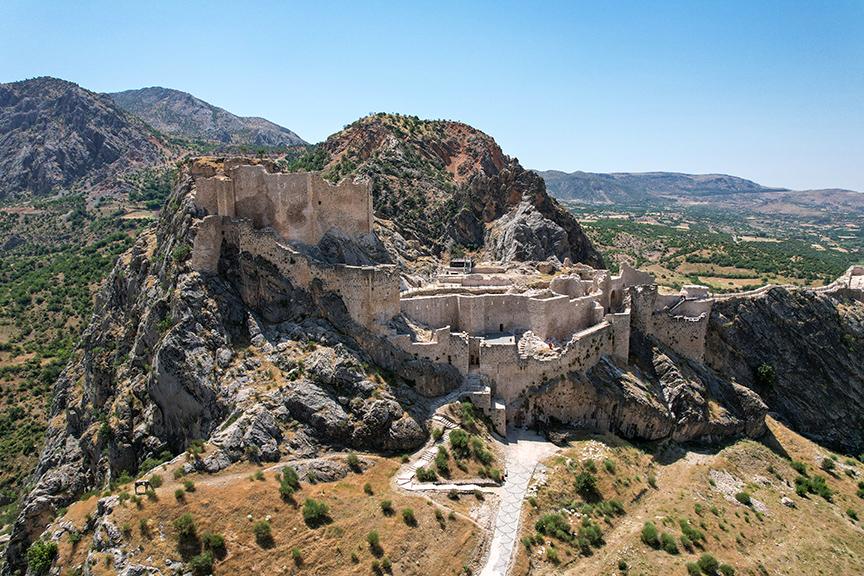
Type | Medieval castle | ||||||||
|---|---|---|---|---|---|---|---|---|---|
City | Adıyaman (Kahta district) | ||||||||
Address | Kahta/Adıyaman Türkiye Bank of the Kahta River Eski Kale Mevkii | ||||||||
Elevation | At approximately 300 metres above sea level Located on the tops of steep cliffs | ||||||||
Construction Period and Date | Dating to the 2nd century BC (Kingdom of Commagena), it later underwent repairs during the Roman, Byzantine, Mamluk and Ottoman periods | ||||||||
South-North Length | Approximately 300 metres | ||||||||
East-West Width | Approximately 150 metres | ||||||||
Restoration Information | Closed to visitors in 2005 for security reasons and restoration work began. The restoration, carried out in three stages, was completed in 2022 and the castle reopened to visitors. After the earthquakes of 6 February 2023, it sustained damage and the fourth stage of restoration began in July 2023. | ||||||||
Kahta Castle is a historical fortress built on steep cliffs beside the Kahta River in the Kahta district of Adıyaman province. Although its exact construction date is unknown, it is believed to have been built during the 2nd century BCE under the Kingdom of Commagene. Positioned directly opposite Arsameia, the summer capital of the Kingdom of Commagene, the castle has been used by various civilizations throughout history due to its strategic location and has undergone multiple renovations across different periods.
Throughout its history, Kahta Castle served as an important military and administrative center during the Kingdom of Commagene, Roman, Byzantine, Mamluk, and Ottoman periods. Particularly during the Mamluk era, it underwent major restoration and became a key station in the postal network.
Architecturally, Kahta Castle exhibits characteristics of Crusader fortresses, having been repaired and expanded during the Ayyubid period. Within the castle complex are water channels, cisterns, dungeons, shops, places of worship, and large rooms.
The architectural structure of the castle bears traces of multiple historical periods. Its walls and buildings reflect features typical of Crusader fortresses, and were restored and expanded during the Ayyubid period. The castle contains water channels, cisterns, dungeons, shops, places of worship, and large rooms.
Kahta Castle is located approximately 60 kilometers from the city center of Adıyaman, in the northern part of the Kahta district. Its construction on steep cliffs provided it with a natural defensive advantage. During the Kingdom of Commagene, it functioned as an administrative center and later served as a significant military and administrative hub during the Roman, Byzantine, Mamluk, and Ottoman periods.
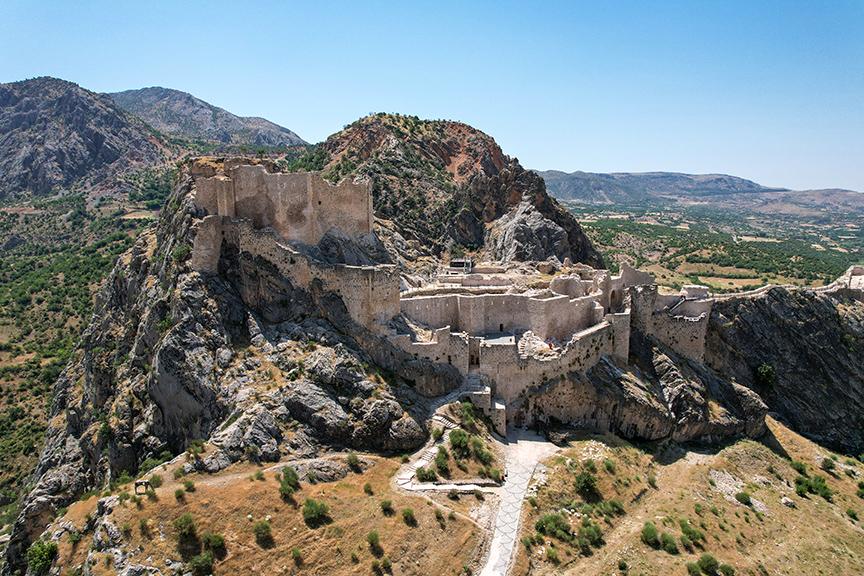
Kahta Kalesi (AA)
Kahta Castle is located approximately 60 kilometers from the city center of Adıyaman, in the northern part of the Kahta district. Its construction on steep cliffs provided it with a natural defensive advantage. During the Kingdom of Commagene, it functioned as an administrative center and later served as a significant military and administrative hub during the Roman, Byzantine, Mamluk, and Ottoman periods.
Throughout its history, Kahta Castle served as an important military and administrative center during the Kingdom of Commagene, Roman, Byzantine, Mamluk, and Ottoman periods. Particularly during the Mamluk era, it underwent major restoration and became a key station in the postal network.
The architectural structure of the castle bears traces of multiple historical periods. Its walls and buildings reflect features typical of Crusader fortresses, and were restored and expanded during the Ayyubid period. The castle contains water channels, cisterns, dungeons, shops, places of worship, and large rooms.
Kahta Castle exhibits characteristics of Crusader fortresses and was restored and expanded during the Ayyubid period. Within the castle complex are water channels, cisterns, dungeons, shops, places of worship, and large rooms.
The architectural structure of the castle bears traces of multiple historical periods. Its walls and buildings reflect features typical of Crusader fortresses, and were restored and expanded during the Ayyubid period. The castle contains water channels, cisterns, dungeons, shops, places of worship, and large rooms.
The architecture of Kahta Castle reflects influences from multiple historical periods. Within the castle complex are water channels, cisterns, dungeons, shops, places of worship, and large rooms. Additionally, the presence of pigeon lofts and hidden passageways demonstrates the castle’s strategic importance for defense and communication.
The castle walls and structures exhibit features typical of Crusader fortresses and were restored and expanded during the Ayyubid period. The castle contains water channels, cisterns, dungeons, shops, places of worship, and large rooms.
The architectural structure of the castle bears traces of multiple historical periods. Its walls and buildings reflect features typical of Crusader fortresses, and were restored and expanded during the Ayyubid period. The castle contains water channels, cisterns, dungeons, shops, places of worship, and large rooms.
Kahta Castle exhibits characteristics of Crusader fortresses and was restored and expanded during the Ayyubid period. Within the castle complex are water channels, cisterns, dungeons, shops, places of worship, and large rooms.
The architectural structure of the castle bears traces of multiple historical periods. Its walls and buildings reflect features typical of Crusader fortresses, and were restored and expanded during the Ayyubid period. The castle contains water channels, cisterns, dungeons, shops, places of worship, and large rooms.
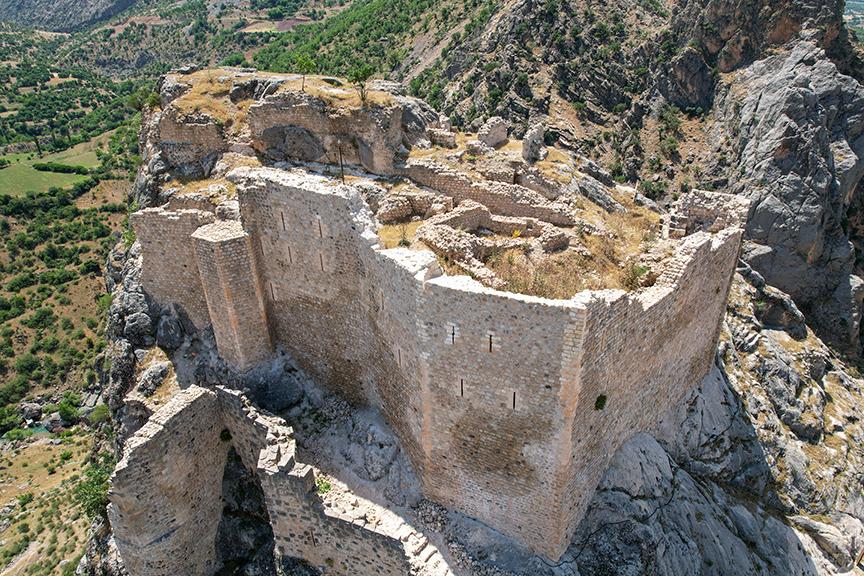
Kahta Kalesi Mimari Özellikler (
Kahta Castle was closed to visitors in 2005 for safety reasons and restoration work began. The restoration, carried out in three phases, was completed and the castle reopened to the public in August 2022.
However, following the earthquakes on 6 February 2023, damage occurred to the castle, prompting the initiation of further restoration work. The fourth phase of restoration, which began in July 2023, was completed and the castle reopened to visitors in mid-2024. As part of the restoration, collapsed walls in the marketplace area were reconstructed and jointing work was carried out in certain sections. Additionally, glass terraces and walking paths were added to allow visitors to examine the historical structure more closely.
The restoration efforts led by the Ministry of Culture and Tourism aimed to preserve the castle’s historical integrity while enhancing its potential for tourism. As a result, Kahta Castle has become a significant destination for regional tourism.
Thanks to these efforts, Kahta Castle has become an attractive destination for both domestic and international visitors. During the restoration process, care was taken to preserve both its aesthetic qualities and historical identity, contributing to the transmission of cultural heritage to future generations. Moreover, the restoration has enhanced the region’s tourism potential and yielded positive economic impacts on Adıyaman.
As part of conservation measures, new arrangements have been introduced in certain areas of the castle to ensure visitor safety. For example, modern elements such as glass terraces and walking paths have not only facilitated the promotion of the castle but also improved the overall visitor experience. Thus, a balanced integration has been achieved between the historical fabric of the structure and modern tourism facilities.
In addition to the restoration works, regular inspections and maintenance activities continue. Local institutions such as the Ministry of Culture and Tourism and the Adıyaman Governorship ensure continuous monitoring of the castle and the preservation of its historical fabric. These efforts serve as a model for the protection of other cultural heritage sites in the region.
In conclusion, Kahta Castle has been strengthened through restoration and is now open to visitors, serving as one of Adıyaman’s iconic symbols of cultural and tourist significance. These initiatives aim to preserve local identity while promoting tourism and hold considerable importance for regional development.
Kahta Castle stands out as one of Adıyaman’s most important tourist sites. Its proximity to globally renowned cultural heritage sites such as Nemrut Dağı has made it an indispensable stop on regional tour routes. Consequently, it has become a major attraction for both domestic and international tourists. Visitors to the castle do not merely observe a physical structure; they also explore the region’s rich historical and cultural heritage.
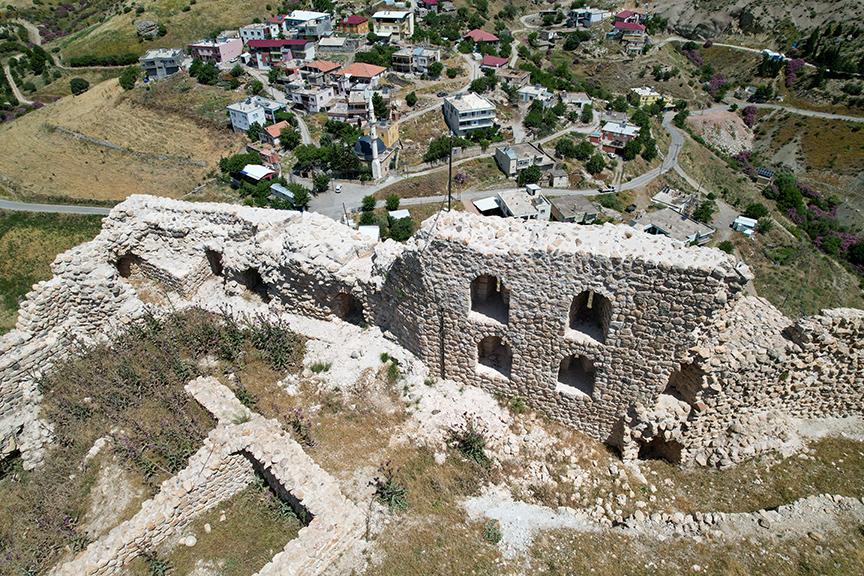
Bir Başka Görünümü (
The castle’s evolving functions across different historical periods carry significant meaning in terms of historical continuity. As a structure bearing traces of civilizations from the Kingdom of Commagene to the Ottoman era, it offers a vivid representation of Anatolia’s layered history. This multi-layered character elevates Kahta Castle beyond a mere military installation, transforming it into a tangible embodiment of cultural heritage.
Beyond its touristic potential, the castle is also an important symbol for the local population. The community identifies with the castle and considers it an integral part of their identity. Thus, Kahta Castle is not merely a tourist attraction; it is a living carrier of cultural memory and local identity.
With these characteristics, Kahta Castle continues to play a vital role in Adıyaman’s tourism sector and cultural heritage landscape. Thanks to conservation efforts and restoration projects, this historical structure remains standing today in all its grandeur, welcoming visitors from around the world.
Anadolu Ajansı. 2024. “Depremlerde hasar gören Kahta Kalesi ziyarete açıldı.” Accessed May 24, 2025.https://www.aa.com.tr/tr/kultur/depremlerde-hasar-goren-kahta-kalesi-ziyarete-acildi/3254754
Arkeoloji ve Sanat. "Kahta Kalesi restorasyonu tamamlanarak ziyarete açıldı." Accessed May 24, 2025.https://www.arkeolojisanat.com/shop/blog/kahta-kalesi-restorasyonu-tamamlanarak-ziyarete-acildi_3_1364280.html
Turgay Polat. 2022. “Eski Kâhta (Yeni Kale) Kalesi’nde Osmanlı Döneminden İzler.” *Adıyaman Üniversitesi Sosyal Bilimler Enstitüsü Dergisi*, Year: 15, Issue: 41. Accessed May 24, 2025.https://dergipark.org.tr/en/download/article-file/2417881

Type | Medieval castle | ||||||||
|---|---|---|---|---|---|---|---|---|---|
City | Adıyaman (Kahta district) | ||||||||
Address | Kahta/Adıyaman Türkiye Bank of the Kahta River Eski Kale Mevkii | ||||||||
Elevation | At approximately 300 metres above sea level Located on the tops of steep cliffs | ||||||||
Construction Period and Date | Dating to the 2nd century BC (Kingdom of Commagena), it later underwent repairs during the Roman, Byzantine, Mamluk and Ottoman periods | ||||||||
South-North Length | Approximately 300 metres | ||||||||
East-West Width | Approximately 150 metres | ||||||||
Restoration Information | Closed to visitors in 2005 for security reasons and restoration work began. The restoration, carried out in three stages, was completed in 2022 and the castle reopened to visitors. After the earthquakes of 6 February 2023, it sustained damage and the fourth stage of restoration began in July 2023. | ||||||||
Geographical Location and Historical Context
Architectural Features and Construction Techniques
Restoration Efforts and Conservation Status
Touristic and Cultural Significance