


This article was automatically translated from the original Turkish version.
Kadayıf dessert is one of the traditional and deeply rooted sweets of Turkish cuisine, made by combining finely shredded dough with syrup. It is commonly enriched with ingredients such as walnut, pistachio, or kaymak and similar substances, and has remained an important part of Anatolian cuisine from the Ottoman era to the present day. It is frequently served during daily meals as well as religious holidays, weddings, and special occasion tables.
The word “kadayıf” derives from the Arabic term “qadāif,” which is used in various forms across the Islamic world. Etymologically, it refers to “thinly stretched dough” or “finely cut food.” In this sense, kadayıf is not merely a dessert but also a cultural product with historical significance.
The history of kadayıf dessert extends back to the early periods of Islamic civilization. Kadayıf-like sweets began to be documented in Arab kitchens from the 10th century onward, and were later refined in Seljuk and Ottoman cuisine to reach their modern form. The term “kadayıf” appears in some 13th-century Arabic culinary treatises. In the Ottoman period, this dessert was regularly prepared in the imperial kitchen and gradually spread to the culinary traditions of the general population.
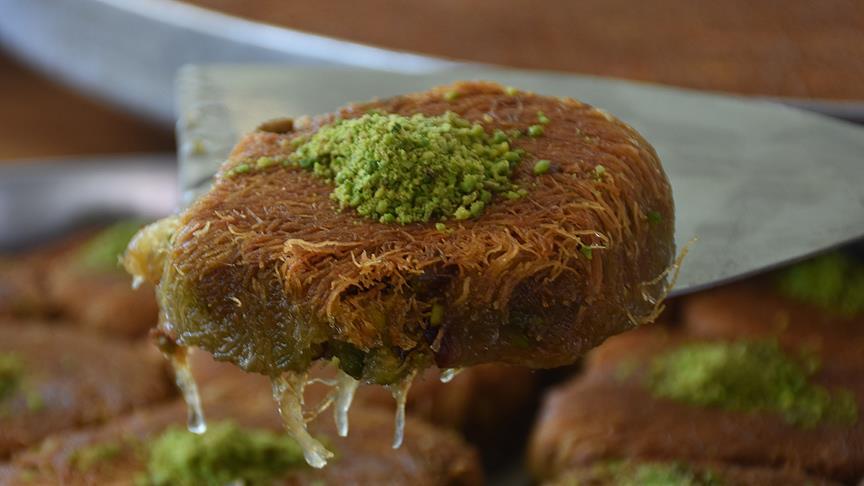
Burma Kadayıf -Anadolu Ajansı
Kadayıf is prepared in various ways across different regions of Anatolia. Among the most common types are:
• Tel Kadayıf: The traditional form made by layering fine strands of dough with walnuts or pistachios and pouring syrup over the top.
• Yassı (Basma) Kadayıf: A type made by compressing the dough and pressing it into a tray. Typically, walnuts are placed between two layers of dough.
• Ekmek Kadayıfı: Made with leavened dough, unlike tel kadayıf, and softened with syrup before serving.
• Kadayıf Dolması: Particularly famous in the Erzurum region, this variety is prepared by wrapping walnut-filled kadayıf in dough and frying it.
The Turkish Ministry of National Education also includes detailed coverage of kadayıf varieties in its vocational training modules. Educational materials provide comprehensive technical instructions on how this dessert is produced.
Kadayıf dessert is typically baked using butter or plain oil, with care taken to ensure even browning on both the top and bottom. The cold syrup poured over the hot dessert preserves its texture and prevents sugar crystallization. Traditionally, it is served with kaymak, ice cream, or as a simple slice.
Kadayıf holds a prominent place among the signature desserts of Ottoman imperial cuisine. It is well known for its frequent appearance on iftar tables during Ramadan. Detailed recipes and presentation methods for kadayıf can be found in Ottoman culinary treatises written by head chefs of the period.
Kadayıf dessert is not only popular in Türkiye but is also known and enjoyed under different names across the Middle East, the Balkans, and North Africa. With advances in industrial production, packaged kadayıf products have become widely available, increasing accessibility to the dessert. Nevertheless, traditional home-made methods continue to retain their significance.
"Osmanlı Saray Kadayıfı Nasıl Yapılır?" Yeni Akit. Accessed March 28, 2025.https://www.yeniakit.com.tr/haber/osmanli-saray-kadayifi-nasil-yapilir-1440170
"Yansımalar." Uluslararası Türk Dünyası Turizm Araştırmaları Dergisi 5, no. 1 (2020): 74–85. Accessed March 28, 2025.https://dergipark.org.tr/tr/download/article-file/1299361
Esenler Belediyesi. "Basma Kadayıf Tatlısı." Accessed March 28, 2025.https://esenler.bel.tr/esenler-kadin/yemek-tarifleri/basma-kadayif-tatlisi/
Karaduman, Emine. "Türk Mutfak Kültüründe Tatlılar: Tarihsel Süreç ve Günümüze"
T.C. Milli Eğitim Bakanlığı. Kadayıf Çeşitleri. Mesleki Gelişim Modülü. Accessed March 28, 2025.https://megep.meb.gov.tr/mte_program_modul/moduller_pdf/Kaday%C4%B1f%20%C3%87e%C5%9Fitleri.pdf
“Kadayıf Nedir ve Tarihçesi Hakkında Neler Biliyoruz?” Kadayıf.gen.tr. Accessed March 28, 2025.https://www.kadayif.gen.tr/kadayif-nedir-ve-tarihcesi-hakkinda-neler-biliyoruz.html
“Kadayıf.” Etymology Turkish. Accessed March 28, 2025.https://www.etimolojiturkce.com/kelime/kaday%C4%B1f
“Kadayıfın Tarihi Kökeni ve Bulunuş Hikayesi.” Ne Zaman Nerede? Accessed March 28, 2025.https://nezamannerede.com.tr/kadayifin-tarihi-kokeni-ve-bulunus-hikayesi/

Kadayıf as a Word and Concept
History
Place and Varieties in Turkish Cuisine
Preparation and Presentation
Place in Ottoman Imperial Cuisine
Kadayıf Today