


This article was automatically translated from the original Turkish version.
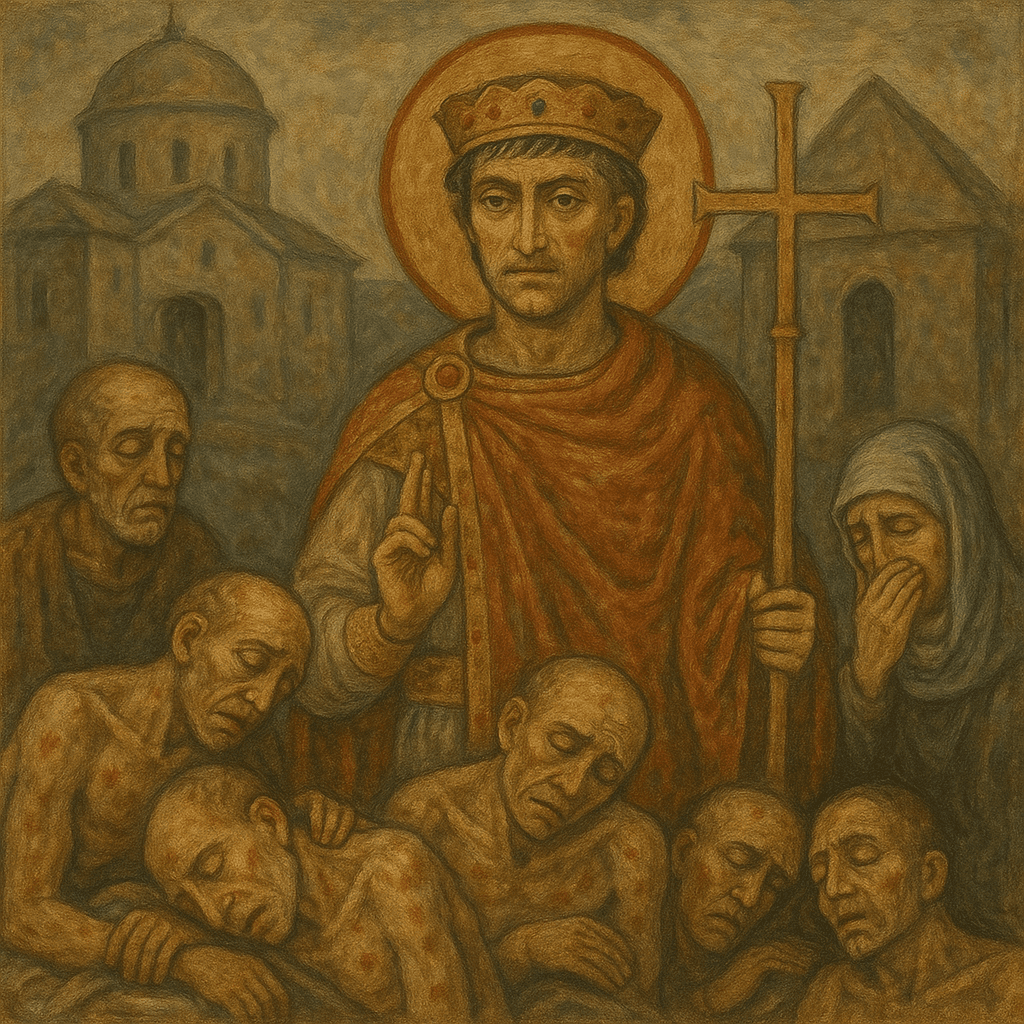
Justinian's Plague
Name | Plague of Justinian (Justinianic Plague) | ||||||||
|---|---|---|---|---|---|---|---|---|---|
Period | 541–~750 CE | ||||||||
Geographic Distribution | Byzantine Empire, Mediterranean, Europe, North Africa, Middle East | ||||||||
Point of Origin | Pelusium (Egypt) | ||||||||
Affected Areas | Constantinople, Italy, Gaul, Britain, Anatolia, North Africa | ||||||||
Causative Bacterium | Yersinia pestis | ||||||||
Vector Carrier | Black rat (Rattus rattus), rat flea (Xenopsylla cheopis) | ||||||||
Primary Species | Bubonic plague, pneumonic plague, septicemic plague | ||||||||
Daily Death Count | Approximately 5,000–10,000 people (according to some sources) | ||||||||
Total Death Toll | Estimated to be between 25 and 50 million | ||||||||
Social Impacts | Economic collapse, waves of migration, strengthening of religious institutions, labor crisis | ||||||||
Plague of Justinian is an epidemic that began in the Byzantine Empire in 541 CE and lasted approximately 200 years. The causative agent of this disease is the bacterium Yersinia pestis, and it is considered the first major plague pandemic recorded in history. The plague first emerged at the port of Pelusium in Egypt and spread to Constantinople via trade routes and grain-carrying ships.
The biological cause of the plague is the plague bacillus transmitted to humans primarily by the rat flea Xenopsylla cheopis. Among the carriers are black rats and migratory rodent species such as gerbils. It is understood that the outbreak initially took the form of bubonic plague and later evolved into pneumonic and septicemic forms.
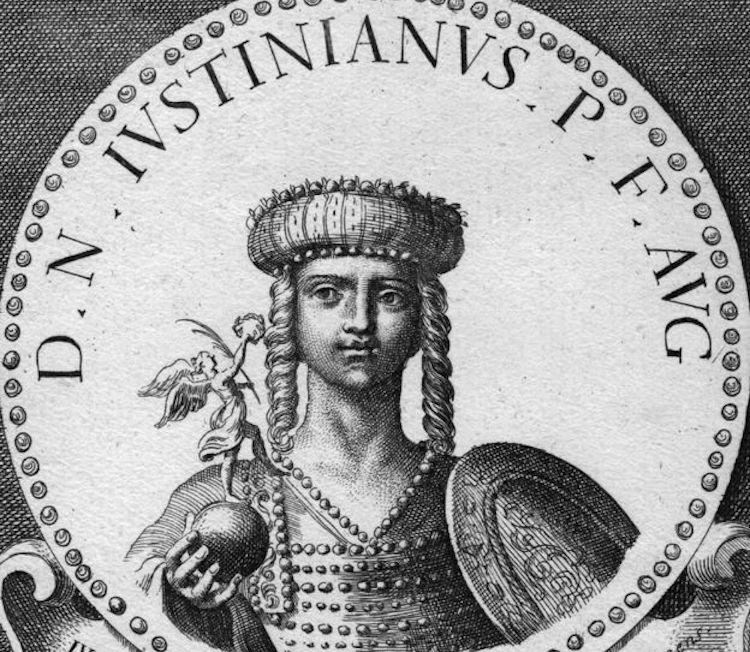
Visual Representing Emperor Justinian I (arkeofili)
New research demonstrates that the plague was not only a microbiological phenomenon but also closely linked to climatic and socioeconomic factors. A major volcanic eruption in 536 caused a “volcanic winter” that devastated agricultural production and led to widespread famines. This forced populations to migrate, creating pathways for the spread of the epidemic. Particularly, trade routes extending from China through the Black Sea to the Mediterranean played a key role in transporting the bacterium across vast regions.
The Plague of Justinian affected not only Constantinople but also a vast region including the entire Mediterranean basin, North Africa, Italy, Gaul, Britain, and the Middle East. It reached inland areas through port cities and was further disseminated by trade and religious missionary activities.
The outbreak occurred in recurring waves at intervals of several decades, each time affecting a large portion of the population. Historians report that during peak periods, between 5,000 and 10,000 people died per day.

Justinyen Vebası Salgınını Simgeleyen Görsel (artıgerçek)
The Plague of Justinian was not merely a health crisis; it fundamentally reshaped social structures, governance systems, and the economy:
The plague affected not only the Byzantine Empire but also later the Ottoman geographical domain. Plague outbreaks observed in Anatolia, Central Asia, and Mesopotamia after the Plague of Justinian continued to occur frequently during the Ottoman Empire. Frequent epidemics in Istanbul were fueled by migration, warfare, and commercial activity, leading to repeated outbreaks across Ottoman territories.
Contemporary archaeogenetic and paleoclimatological studies have clarified the broader impacts of the Plague of Justinian. Analyses of Yersinia pestis DNA support the theory that the pandemic originated in Asia but was transported to the Mediterranean through local environmental conditions and human mobility. Research published in the journal PNAS in 2019 suggests that the climate anomaly of 536 facilitated the spread of the disease.
The Plague of Justinian was not merely a health disaster but a multifaceted crisis that profoundly destabilized the political, economic, and social fabric of the Byzantine Empire. Causing the deaths of hundreds of thousands, the pandemic left lasting effects including population decline, halted production, increased migration, and strengthened religious institutions, laying the foundation for transformations in medieval Europe.
Arkeofili. "Justinyen Vebasının Sebebi Hun Göçleri Olabilir." Accessed May 17, 2025.https://arkeofili.com/justinyen-vebasinin-sebebi-hun-gocleri-olabilir/.
Erol, Yıldız. "Salgını Hatırlamak: Veba Üzerine Tarihsel ve Sosyolojik Bir Analiz." Selçuk Üniversitesi Sosyal Bilimler Enstitüsü Dergisi, no. 48 (2022): 264–277.
Origins OSU. “Connecting the History of COVID to the Justinianic Plague.” Origins: Current Events in Historical Perspective. Accessed May 17, 2025.https://origins.osu.edu/connecting-history/covid-justinianic-plague-lessons.
World History Encyclopedia. "Justinyen Vebası (MS 541–542)." World History Encyclopedia, Trans. Ceren Yalçın. Accessed May 17, 2025.https://www.worldhistory.org/trans/tr/2-782/justinyen-vebasi-ms-541-542/.
Çelik, Hilal. "Iustinianus Vebası: Siyasi, Ekonomik ve Sosyal Etkileri." Fırat Üniversitesi Uluslararası İktisadi ve İdari Bilimler Dergisi 9, no. 2 (2023): 165–187.

Justinian's Plague
Name | Plague of Justinian (Justinianic Plague) | ||||||||
|---|---|---|---|---|---|---|---|---|---|
Period | 541–~750 CE | ||||||||
Geographic Distribution | Byzantine Empire, Mediterranean, Europe, North Africa, Middle East | ||||||||
Point of Origin | Pelusium (Egypt) | ||||||||
Affected Areas | Constantinople, Italy, Gaul, Britain, Anatolia, North Africa | ||||||||
Causative Bacterium | Yersinia pestis | ||||||||
Vector Carrier | Black rat (Rattus rattus), rat flea (Xenopsylla cheopis) | ||||||||
Primary Species | Bubonic plague, pneumonic plague, septicemic plague | ||||||||
Daily Death Count | Approximately 5,000–10,000 people (according to some sources) | ||||||||
Total Death Toll | Estimated to be between 25 and 50 million | ||||||||
Social Impacts | Economic collapse, waves of migration, strengthening of religious institutions, labor crisis | ||||||||
No Discussion Added Yet
Start discussion for "Justinian's Plague (Justinianic Plague)" article
Plague of Justinian
Climatic and Geopolitical Factors
Spread and Geographic Scope
Social, Economic, and Political Impacts
Impacts Before and After the Ottoman Period
Observations from Modern Research