+2 More

Full Name | John Logie Baird | ||||||||
|---|---|---|---|---|---|---|---|---|---|
Birth | 14 August 1888 | ||||||||
Death | 14 June 1946 (aged 57) | ||||||||
Title | Pioneer of Television / Father of Television | ||||||||
Profession | Physicist Businessperson Engineer Inventor | ||||||||
Education | Glasgow and West of Scotland Technical College (Strathclyde University) University of Glasgow | ||||||||
Inventions | First Working Television (Mechanical): 1926, First Color Television: 1928, First Transatlantic Television Broadcast: 1928, Stereoscopic (3D) Television System: 1941 (Patent), First Fully Electronic Color Display: 1944 | ||||||||
John Logie Baird (14 August 1888 – 14 June 1946) was a Scottish inventor, engineer and businessman. He is best known for inventing the first working television system and for his pioneering work in the field, earning him the titles "Father of Television" or "Pioneer of Television". Baird is regarded as one of the inventors of mechanical television.
John Logie Baird’s journey as an inventor began during his childhood and youth in Helensburgh, a town on the west coast of Scotland, then part of the United Kingdom. He was born on 14 August 1888 as the fourth and youngest child of Reverend John Baird and Jessie Morrison Inglis Baird.
As a young boy, Baird showed an early interest in electricity and mechanics, and by the age of twelve he had already turned his curiosity into practical inventions. He built a petrol-powered generator to light up his family home, constructed a small telephone exchange to communicate with friends nearby, and connected his house to neighboring homes.
After completing secondary school, Baird studied at the Glasgow and West of Scotland Technical College (now the University of Strathclyde). He later continued his education at the University of Glasgow. During his university years, he completed a mandatory engineering internship as part of his coursework, which helped him strengthen his theoretical knowledge with practical skills.
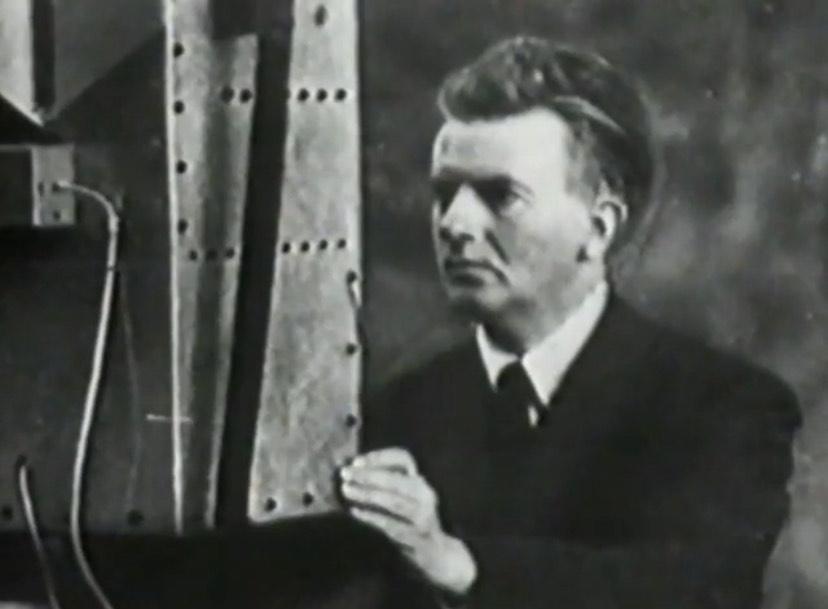
John Logie Baird (Valecrt)
It was during this period that his passion for developing television began to take shape. In 1903, after reading a German book on the photoelectric properties of selenium, he became focused on the idea of transmitting images via electrical signals.
In the early years of his inventive career, Baird experienced several commercial failures. For instance, he attempted to produce diamonds by heating graphite, invented a razor blade made from stainless glass (which shattered upon use), and designed pneumatic (air-filled) shoes. However, his invention of a thermal undergarment called the "Undersock" (thermal socks) brought him financial success, providing the capital he needed to later focus on television research.
Due to health issues, Baird was unable to serve in active military duty during the First World War, but he worked for the Clyde Valley Electrical Power Company, where his electrical engineering background enabled him to contribute to munitions-related tasks.
John Logie Baird’s passion for television and his scientific journey helped bring into existence one of the defining technologies of the 20th century.
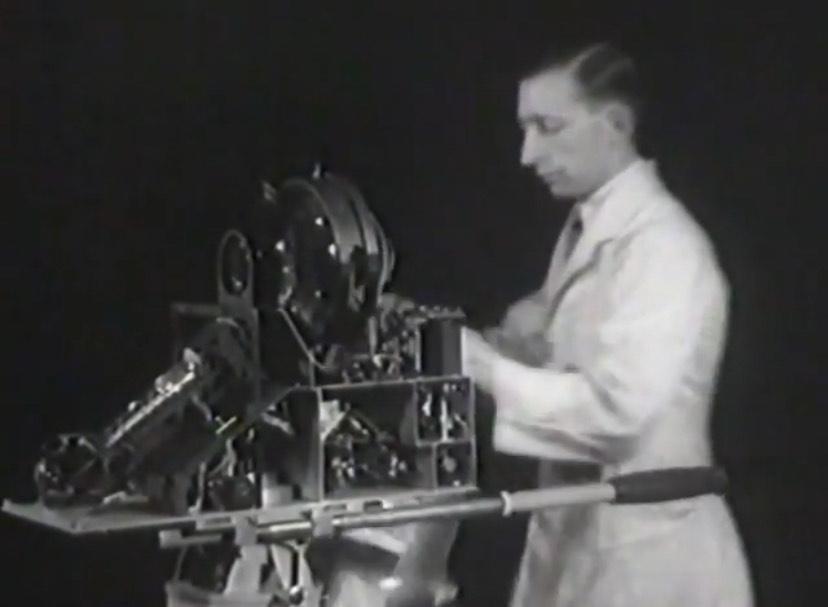
Baird’s initial interest in image transmission began in 1903 after reading a German book on the photoelectric properties of selenium. At the age of 38, on 26 January 1926, the Scottish inventor demonstrated the world’s first working television system before scientists and the press at the Royal Institution in London. This demonstration marked the first public step toward television becoming a mass communication medium.
Baird’s invention was based on the mechanical scanning principle of the Nipkow disk, patented by German inventor Paul Gottlieb Nipkow in 1884. This disk featured a spiral of holes that rotated to break down an image into its component parts and scan them sequentially. Although Nipkow’s patent is regarded by television historians as the "primary television patent", Baird was the first to transform this theory into a functioning device. The first operational mechanical television was rudimentary: the image had a resolution of only 28 lines and was scanned 12.5 times per second, resulting in a very small and low-resolution picture.
John Logie Baird Demonstrating His Invented Television - 1928 (British Pathe)
Baird did not rest on this initial success. He accelerated his efforts to advance television technology and made numerous pioneering contributions. Just two years after inventing television, in 1928, he developed the first color television system. He also became a leading advocate for the transition from mechanical to fully electronic systems. Baird invested in future television technologies as well: in 1941, he obtained a patent for and demonstrated a three-dimensional (stereoscopic) television system with a resolution of 500 lines.
To commercialize and promote his invention, Baird founded the Baird Television Development Company in 1928. Through this company, he transmitted the first transatlantic television signal from London to New York in 1928, laying the foundations for global television broadcasting. In 1929, the BBC (British Broadcasting Corporation) began limited experimental broadcasts using Baird’s system.
In addition to his landmark invention of television, John Logie Baird pursued diverse commercial and technological projects throughout his career. Before turning to television, he developed several projects reflecting his curiosity. For example, he invented and sold a thermal undergarment called the "Undersock", which provided the financial means for his later television work. However, not all his commercial ventures succeeded: his jam factory, established in 1919, closed due to an insect infestation, and early attempts to create synthetic diamonds, stainless glass razor blades (which shattered), and pneumatic shoes ended in failure.
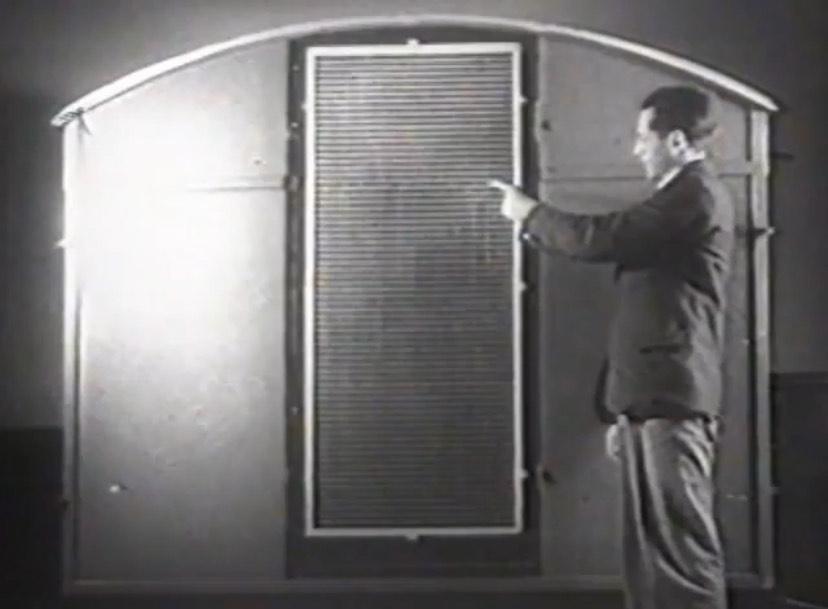
John Logie Baird Demonstrating His First Working Television System to Scientists and the Press (Valecrt)
Even after establishing the fundamental principles of television, Baird continued his research in advanced technological fields. His wartime research particularly positioned him among the leading inventors of his era: he contributed to the development of fiber optics, radio imaging, and especially infrared scanning technologies for covert communication (cryptographic or night vision) systems.
John Logie Baird continued his inventive pursuits until the end of his life and died on 14 June 1946 in Bexhill, England. He laid the foundations of modern television. In 2015, he was inducted into the Scottish Engineering Hall of Fame.
BBC. "John Logie Baird." BBC History. Accessed October 14, 2025.https://www.bbc.co.uk/history/historic_figures/baird_logie.shtml
British Pathe. “TECHNOLOGY: Television: John Logie Baird Demonstrates Television (1928).” YouTube. Accessed October 14, 2025.
Education Scotland. "John Logie Baird." Edinburgh: Education Scotland. Accessed October 14, 2025.https://education.gov.scot/media/l0cis4gh/gael8_johnlogiebairdeng.pdf
Picryl. “New FCC Chairman Listens in Washington DC Aug. 27 — Frank R. McNinch, New Chairman.” Accessed October 14, 2025.https://picryl.com/media/new-fcc-chairman-listens-in-washington-dc-aug-27-frank-r-mcninch-new-chairman?zoom=true
Scottish Engineering Hall of Fame. "John Logie Baird." Scottish Engineering Hall of Fame. Accessed October 14, 2025.https://engineeringhalloffame.org/profile/john-logie-baird
Sığırcı, Mehmet. “Televizyon: Kim, Ne Zaman İcat Etti?” *Bilim Genç*. Accessed October 14, 2025.https://bilimgenc.tubitak.gov.tr/makale/televizyon-kim-ne-zaman-icat-etti
University of Strathclyde. “John Logie Baird.” *Strathclyde Alumni*. Accessed October 14, 2025.https://www.strath.ac.uk/alumni/alumnusalumnaoftheyearaward/alumniinhistory/johnlogiebaird/
valect. "John Logie Baird Early Television & Phonovision." YouTube. Accessed October 14, 2025.https://www.youtube.com/watch?v=lCh3pbIcAYA&t=810s

Full Name | John Logie Baird | ||||||||
|---|---|---|---|---|---|---|---|---|---|
Birth | 14 August 1888 | ||||||||
Death | 14 June 1946 (aged 57) | ||||||||
Title | Pioneer of Television / Father of Television | ||||||||
Profession | Physicist Businessperson Engineer Inventor | ||||||||
Education | Glasgow and West of Scotland Technical College (Strathclyde University) University of Glasgow | ||||||||
Inventions | First Working Television (Mechanical): 1926, First Color Television: 1928, First Transatlantic Television Broadcast: 1928, Stereoscopic (3D) Television System: 1941 (Patent), First Fully Electronic Color Display: 1944 | ||||||||
Early Life and Education
Baird’s Pioneering Role in the Invention and Development of Television
The Birth of the Television Idea
Other Inventions and Research
Death and Legacy