


This article was automatically translated from the original Turkish version.
Jewish Uprising Against the British Mandate
Region | Palestine | ||||||||
|---|---|---|---|---|---|---|---|---|---|
History | 1939–1948 | ||||||||
Basic Causes | Holocaust 1939 White Paper Increasing Jewish immigration to Palestine Promise of a Jewish national homeland | ||||||||
Important Developments | Adoption of the UN Partition Plan (1947) Establishment of the State of Israel (14 May 1948) Operation Agatha (1946) King David Hotel bombing (22 July 1946) Patria disaster (1942) Arab Revolt (1936–1939) Establishment of the Haganah | ||||||||
Total Duration | Approximately 9 years | ||||||||
Following World War I, the separation of Palestine from the Ottoman Empire and its transfer to British control represented not merely a political transition but also the beginning of a new era of conflict. In the 1917 Balfour Declaration, Britain formally pledged to the world’s Jewish population the establishment of “a national home for the Jewish people” in Palestine. This statement directly contradicted promises of independence made to Arabs during the war. The British administration, by making conflicting promises to both Jewish and Arab populations over the same territory, became a party to an unsolvable equation throughout the mandate period. The British mandate over Palestine was formally recognized at the 1920 San Remo Conference and came into effect in 1922 with the approval of the League of Nations.
The primary duties of the British mandate were to facilitate the establishment of a Jewish national home while simultaneously safeguarding the civil and religious rights of the Arab population in Palestine. Yet this mandate definition contained an inherent contradiction from the outset: while Jewish immigration and settlement were encouraged, the political aspirations of the Arab majority living on the same land were postponed and ignored. As Jewish immigration increased rapidly throughout the 1920s, resentment among the Arab population toward British rule and Jewish settlements accumulated. This resentment intensified as a result of both economic competition and political marginalization.
The Establishment of Israel and the Pre-State Mandate Administration (Habertürk)
As Jewish immigration increased, Jewish organizations such as the Haganah emerged, while the British administration simultaneously suppressed Arab protests and adopted a cautious stance toward limiting Jewish immigration. This dual policy eroded trust in the British among both Arabs and Jews. By the mid-1930s, the consequences of Britain’s contradictory policies began to manifest as a more visible crisis. The Arabs felt politically excluded, while the Jews experienced profound disillusionment as Britain restricted immigration opportunities needed to rescue European Jews under Nazi pressure.
In this context, the British mandate assumed not only the responsibility of controlling land and resources, as in traditional colonialism, but also the task of managing the emergence of one national movement and the suppression of another. Yet Britain neither succeeded in controlling the Jewish national movement nor in pacifying Arab opposition; instead, it laid the groundwork for the radicalization of both sides.
From the beginning of Britain’s formal mandate over Palestine, the Jewish community directed itself toward systematically and deliberately building a new national life. During this period, the Jewish settler community known as the “Yishuv” began establishing its own institutions and strengthening its cultural and political autonomy.
With the founding of the Haganah organization in 1920, the Jewish community began to exert influence not only culturally but also militarily in the region. This organization claimed its purpose was to defend Jewish settlements, citing the British administration’s occasional failure to provide adequate security against Arab attacks. Over time, the Haganah evolved into a semi-official military force that developed not only defensive but also active deterrent strategies.
During the same period, demographic structures changed alongside increased Jewish immigration from Europe. Between 1920 and 1939, approximately half a million Jews settled in Palestine through five major waves of Aliyah (mass Jewish immigration). The rise of the Nazi regime in Germany in 1933 further accelerated Jewish immigration.
Among those arriving during these waves were not only farmers and artisans but also intellectuals, engineers, doctors, and political organizers. This significantly expanded the social and technical capacity of the Jewish community while simultaneously fueling economic competition and deepening the perception of demographic threat among Arabs.
The Arab community, meanwhile, continued its political organization. In the 1920s, Palestinian Arabs pursued their claims through peaceful protests and petitions against the British mandate but failed to produce stable leadership. However, the violent events centered in Jerusalem and Hebron in 1929 changed the scale of the Arab-Jewish conflict.
Organizations Influencing the Establishment of Israel (Murat Yülek)
The particularly high number of Jewish deaths in Hebron strengthened defensive instincts and the need for organization within the Jewish community. In the aftermath, efforts to restructure the Haganah accelerated. Meanwhile, the British administration proved inadequate in ensuring security and at times displayed indifference toward Arab actions.
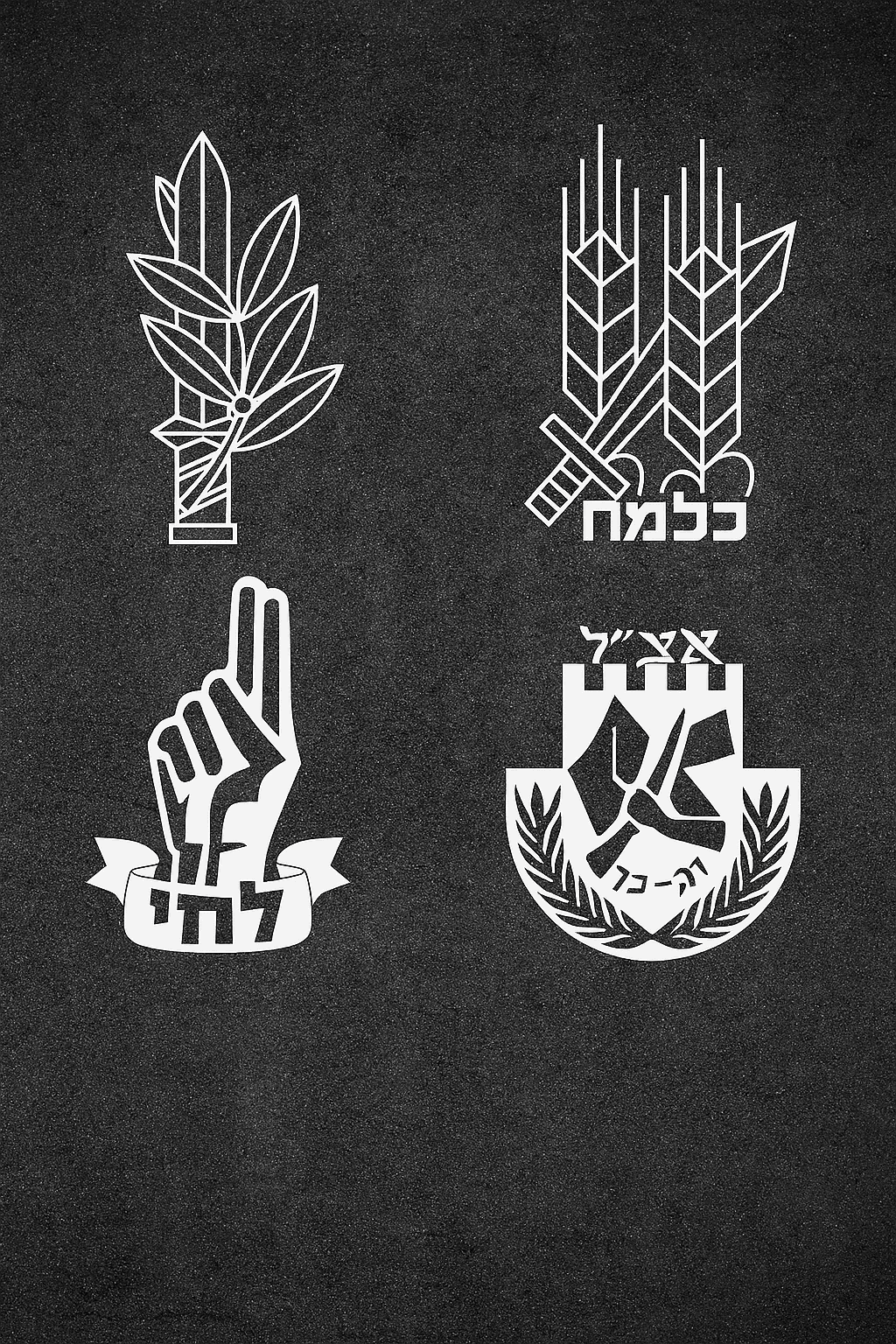
During this period, more radical tendencies also emerged within the Jewish community. In 1931, a group dissatisfied with the Haganah’s conciliatory line founded the Irgun (Irgun Tzvai Leumi). The Irgun embraced armed struggle not only as a defensive measure but also as a tool for offensive action. Shaped within Vladimir Jabotinsky’s framework of “Revisionist Zionism,” this organization later carried out open armed attacks against British targets.
From the British perspective, the administration pursued a contradictory strategy: attempting to appease the Arab population while not disrupting Jewish immigration. Yet this approach damaged the trust of both communities in British rule. The Arabs felt politically excluded; the Jews believed their right to determine their own destiny was being blocked.
During these years, the issue of land ownership became a major problem. Jewish institutions, particularly through the Keren Kayemet (Jewish National Fund), purchased land from Arab landowners. Much of this land was uncultivated; however, the idea of land being sold triggered a sense of betrayal among the local population. These developments heightened social and political tensions within the Arab community and laid the groundwork for the large-scale uprising that erupted in 1936.
1936 marked the turning point when Arab resistance in Palestine under British mandate transformed into an armed uprising. Long-simmering grievances within the Arab community—particularly the rapid increase in Jewish immigration, the transfer of land ownership, and Britain’s persistent postponement of Arab political demands—exploded violently. The uprising began in April 1936 with strikes and demonstrations in Jaffa and quickly evolved into armed rebellion in rural areas. The Higher Arab Committee, organized under the influence of Haj Amin al-Husseini, issued calls for strikes. Economic life came to a standstill; railways, roads, and communication lines were sabotaged. Jewish settlements and British installations became targets.
Initially, the British administration underestimated the rebellion and preferred administrative solutions. However, as the uprising transformed into militia-style organization in rural areas, Britain was pushed toward increasingly harsh methods. Between 1936 and 1939, approximately 20,000 British troops were deployed to suppress the revolt. The British army blockaded villages, conducted search-and-destroy operations, imposed martial law, and killed or arrested hundreds of Arabs. The British also exiled certain Arab leaders to break the political backbone of the rebellion. Although this severity brought short-term success, it fundamentally damaged the trust relationship between Britain and the Arabs in the long term.
In response to the uprising, the Jewish community turned toward tactical cooperation with the British. The Haganah provided intelligence to the British army and protected strategic areas, functioning as an auxiliary security force. This arrangement also served as a form of military training and organizational development for the Haganah. During this period, the first intelligence unit within the Haganah, known as “Shai,” was established. Meanwhile, radical factions that had broken away from the Haganah—particularly the Irgun—began openly sabotaging British targets in some cases. Thus, a clear distinction emerged within the Jewish paramilitary movement between a pragmatic cooperation line and an independent terrorist line.
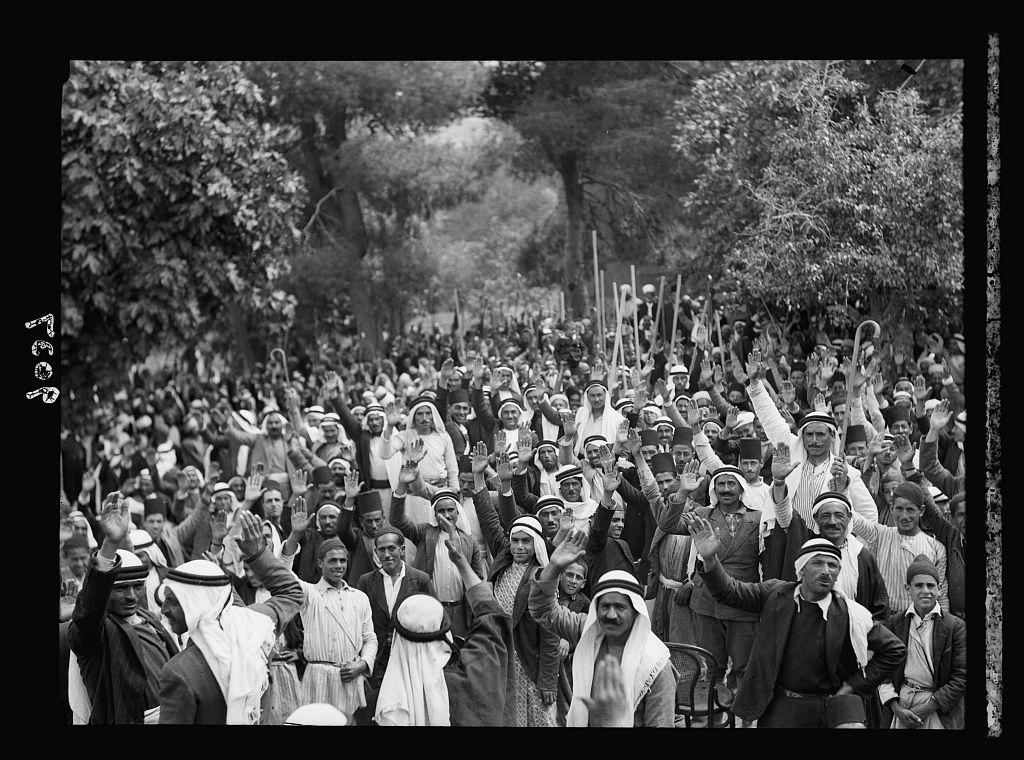
A Scene from the Arab Uprising Triggered by Jewish Immigration in 1936 (Library of Congress)
The British administration did not merely suppress the Arab revolt in 1937; it also proposed for the first time a radical solution to Palestine’s future. The Peel Commission report, led by Lord William Peel, recommended partitioning Palestine into separate Arab and Jewish states. The report was categorically rejected by the Arabs. While the Jewish side welcomed it in principle, it remained cautious due to the narrow boundaries and the unresolved status of Jerusalem. This effectively rendered the proposal unworkable. Ultimately, in 1939 Britain adopted a new policy, issuing the White Paper that restricted Jewish immigration and promised political sovereignty to the Arabs.【1】
The 1939 White Paper declared that no more than 75,000 Jewish immigrants would be admitted to Palestine over five years, and further immigration would require Arab consent. Additionally, Jewish rights to purchase land were severely restricted. Britain sought to win the support of the Arab world as World War II loomed while simultaneously controlling Jewish immigration to preserve stability in the region. Yet this new policy was vehemently rejected by the Jewish community in Palestine. The closure of immigration channels at a time when anti-Semitic waves were peaking in Europe and the Nazi threat was rapidly intensifying triggered deep disillusionment and radicalization within the Jewish community.
The 1936–1939 Arab Uprising forced Britain to question the sustainability of its mandate; for the Jewish community, it laid the groundwork for institutionalizing the shift from defense to offense. For the Arabs, the uprising became a memory of a movement launched with great hope but ending in failure due to weak leadership, disorganization, and British repression. This uprising produced structural effects that would later influence the political awakening of the Arab population and transform Jewish strategies of armed struggle.
The 1939 White Paper deepened uncertainties regarding the future of the Jewish community in Palestine and caused a serious rupture in relations between Britain and the Zionist movement. The restriction of immigration quotas and the ban on land acquisition created a profound sense of betrayal among Jews who viewed Palestine as a refuge against rising antisemitism in Europe.
From 1939 onward, Nazi Germany’s aggressive foreign policy and systematic persecution of Jews made Palestine an urgent destination for thousands of Jews seeking to escape Central Europe. Yet Britain, fearing Arab backlash, refused to permit this immigration and began using its navy to intercept ships attempting to bring refugees.
During this period, strategic divisions within the Jewish community became evident. While the Haganah avoided direct confrontation with Britain, it supported clandestine immigration operations (Aliyah Bet), establishing sea routes to smuggle Jews from Europe into Palestine. In the early 1940s, dozens of illegal immigrant ships sailed the Mediterranean, only to be seized by the British and their passengers sent to detention camps.
One of the most significant events occurred in November 1940 when the ship Patria exploded in Haifa harbor. The incident, which killed over 250 Jewish immigrants, intensified debates within the Jewish community regarding both British policy and the methods of defense organizations.
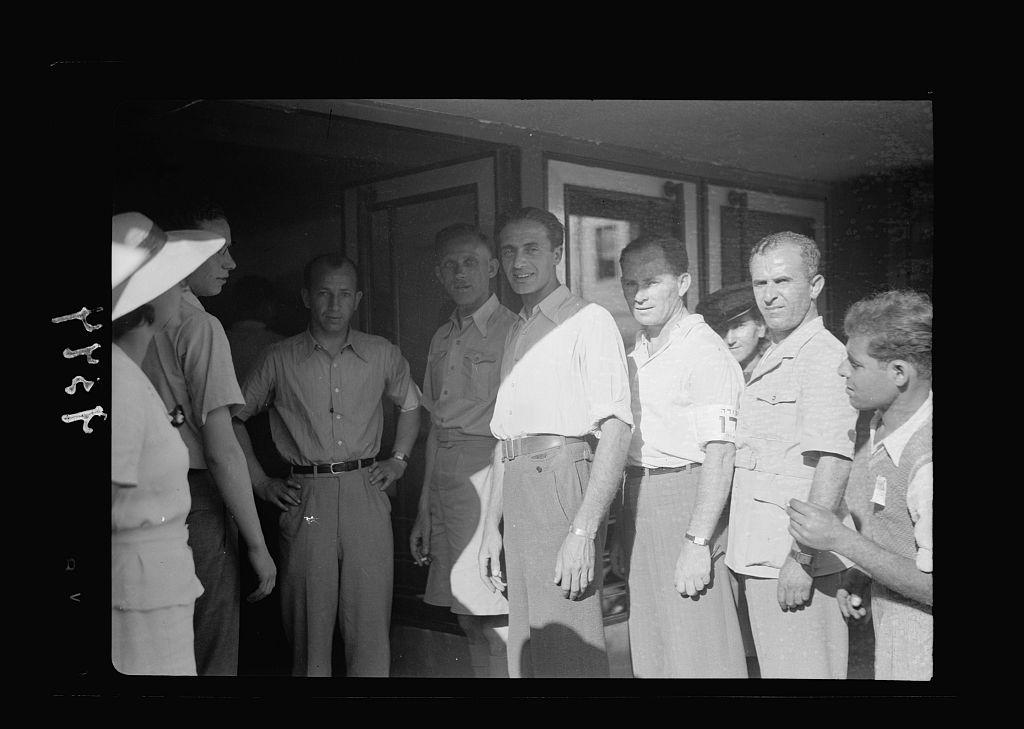
Group of Jews Protesting the British White Paper Policy (Library of Congress)
In 1941, a group that further radicalized Revisionist Zionism founded Lehi (Lohamei Herut Yisrael – Fighters for the Freedom of Israel), which began advocating armed struggle not only against Arabs but also directly against British presence. Unlike the Irgun, Lehi developed such fanatical anti-British sentiment that it even considered cooperating with Nazi Germany. In this respect, Lehi evolved into a structure based on dogmatic and individual terrorism rather than classical national liberation movements.
During World War II, the view that “first defeat fascism, then settle accounts with the British” became dominant within the Jewish community. The Haganah formed volunteer units alongside the British army to fight Nazi Germany; approximately 30,000 Palestinian Jews joined the British forces. Many of these units gained combat experience on Middle Eastern, North African, and Italian fronts and received training in military discipline and modern warfare techniques. This limited cooperation with Britain during the war provided the Haganah with a critical cadre base for its postwar armed campaigns.
Yet during the same years, collective anger against Britain’s White Paper policy accumulated within the Jewish community. This anger would erupt into open rebellion after the war ended. By 1945, two-thirds of Europe’s Jews had been murdered by the Nazis. The majority of survivors did not wish to remain in Europe and demanded to go to Palestine. Britain’s stance on immigration had not changed. Organizations such as the Haganah, Irgun, and Lehi began viewing this policy not merely as a governance issue but as an existential threat.
The patience and waiting exhibited by the Jewish community during the war years gave way to organized resistance after 1945. Britain’s sovereignty over Palestine was now questioned not only militarily but also morally; the institutional foundations of Jewish resistance were largely completed during this period.
With the end of World War II, the Jewish community in Palestine turned toward direct and open armed struggle against Britain. The conflict deferred during the war had transformed into a systematic resistance. Hundreds of thousands of Jewish refugees surviving the Holocaust sought to immigrate to Palestine, yet Britain continued enforcing the immigration restrictions of the 1939 White Paper. This situation led the Jewish underground organizations—Haganah, Irgun, and Lehi—to unite around a common goal: forcing Britain to withdraw from Palestine.
In the summer of 1945, the Jewish Resistance Movement was established, bringing together these three organizations for coordinated actions. Under this framework, the Haganah focused on smuggling immigrants and sabotaging infrastructure; the Irgun carried out more aggressive and symbolic attacks; and Lehi conducted direct political assassinations. This structure allowed different strategies to be pursued simultaneously within the Jewish community.
Primary targets included railway lines, police stations, radar stations, oil pipelines, and British military bases. By 1946, the scale and intensity of attacks had dramatically increased. On July 22, 1946, the King David Hotel bombing carried out by the Irgun became one of the most striking examples of this campaign.
The bombs placed in this building, which served as the headquarters of the British civil administration, killed 91 people and generated widespread international reaction. This act demonstrated that the Jewish resistance had crossed a psychological threshold and had strategically adopted direct targeting of Britain.
In the same year, through Haganah-led operations such as “Night of the Trains” and “Night of the Bridges,” the country’s transportation infrastructure was largely paralyzed. Lehi continued its individual assassination campaigns, targeting British officers and intelligence personnel. During this period, the organizations did not limit themselves to military targets; they also employed psychological warfare and morale-degrading propaganda. Radio broadcasts, wall posters, and leaflets were used to conduct intimidation campaigns against British soldiers.
The Jewish resistance developed not only as a military tactic but also as a strategy to influence global public opinion. Refugee ships departing from European camps—such as the Exodus 1947—were intercepted by British naval forces and generated intense criticism of Britain in the world press. Jewish organizations transformed these ships into symbols of resistance, increasing popular support and intensifying international pressure.
Another notable feature of this phase of armed revolt was the beginning of the collapse of British administration. As political control weakened, Jewish local organizations increasingly assumed administrative functions. Particularly, Palmach units affiliated with the Haganah carried out not only sabotage but also community relations, local security, and civil infrastructure protection. This reflected a transitional phase in which the Jewish community was preparing the structures of a future state.
By the end of this period, Britain, confronted with rising economic costs, growing public opposition, and the unstoppable spread of resistance, abandoned its claim to solve the Palestine issue alone and decided to hand it over to the international community. Thus, in early 1947, the United Nations entered the scene and the partition plan came to the forefront, marking the transition of the revolt into a diplomatic phase.
Following 1945, the escalating Jewish resistance pushed the British administration toward more systematic and harsh measures. During this period, Palestine became for Britain not merely a colonial administration issue but also a critical test of the prestige and military credibility of its weakening empire. However, in planning and implementing counter-revolt strategies, Britain demonstrated serious political and operational weaknesses. The lack of coordination among military units, police forces, intelligence networks, and civil administration expanded the maneuvering space for Jewish underground organizations.
The British first turned to large-scale arrest campaigns. Martial law was declared in suspected settlements; house raids, mass arrests, and interrogations intensified. Searches for weapons were conducted in Jewish settlements, and individuals suspected of belonging to the Irgun or Lehi were often imprisoned administratively without trial. Some of these individuals were even exiled to camps outside Palestine, such as in Eritrea or Kenya. These practices provoked backlash because they targeted not only insurgents but the broader Jewish community.
In the summer of 1946, the British launched Operation Agatha (known in Jewish sources as “Black Sabbath”), one of the largest counter-operation campaigns against the Jewish resistance. During this operation, Haganah centers, kibbutzim, and agency offices were raided; hundreds of people, including senior officials of the Jewish Agency, were arrested. The aim was to dismantle organizational networks, but the Haganah’s centralized yet redundant structure prevented long-term collapse. Moreover, these raids generated greater legitimacy for resistance against Britain among broad sections of the Jewish community.
British intelligence agencies (MI5 and CID) attempted to identify the leadership of the Irgun and Lehi, but the underground organizations’ secrecy techniques, use of false identities, and cell-based structures limited their success. For example, Irgun leader Menachem Begin successfully evaded British intelligence for years. Similarly, Yitzhak Shamir, a Lehi member who later became Prime Minister of Israel, was actively involved in assassination operations during this period.
The British army and police forces gradually suffered from declining morale. British soldiers, unable to deter attacks in Palestine, became increasingly inward-looking and reactive, driven by rising casualties and harsh public reactions. Some military units were accused of excessive use of force against Jewish civilians, damaging Britain’s international image. Meanwhile, public opinion in Britain accelerated its questioning of the costs, casualties, and political uncertainty surrounding Palestine.
Another significant development during this period was the effectiveness of Jewish propaganda. Repression in Palestine resonated in Western public opinion, especially in the United States. Jewish organizations portrayed Britain as a repressive power closing its doors to Jews rescued from the Holocaust. This narrative particularly influenced the American administration; President Truman pressured Britain to admit 100,000 Jewish refugees to Palestine. Britain’s resistance to this demand further eroded international support.
By 1947, Britain clearly acknowledged its inability to manage the situation in Palestine militarily, politically, and economically. Its counter-revolt strategies neither crushed the resistance nor won public support. On the contrary, each wave of repression created greater legitimacy for Jewish resistance and strengthened its organization. This failure compelled Britain to transfer the Palestine issue to the United Nations, thereby transitioning the revolt into a diplomatic phase.
By 1947, Britain declared it lacked the capacity to resolve the Palestine issue alone and handed the matter over to the international community. Behind this decision were rising security expenditures, military losses, public discontent, and especially pressure from the United States. As U.S. global influence grew after World War II, the Washington administration sought greater say over the fate of European Jewish refugees and called on Britain to develop a new immigration policy for Palestine.
In this context, in 1946 Britain and the United States established the Anglo-American Committee of Inquiry to produce a joint solution to the Palestine issue. The committee’s primary task was to examine the situation of Jewish refugees in Europe and make recommendations regarding their future settlement. The committee conducted field investigations in various camps and in Palestine, hearing numerous testimonies. Its report recommended the immediate admission of 100,000 Jewish refugees to Palestine and suggested the possibility of establishing a federal structure granting equal rights to Arabs and Jews.
However, this proposal satisfied neither the Arabs nor the Jewish leadership. The Arabs firmly opposed any further Jewish immigration and viewed the federal structure as a step toward establishing a Jewish state. The Jewish leadership supported the immigration demand but was lukewarm toward the idea of an equal-sharing federation. The majority of the Zionist movement believed that no lasting solution to the Palestine issue was possible without the establishment of an independent and sovereign Jewish state.
Following the commission’s report, Britain’s political indecisiveness became even more apparent. It maintained an ambiguous stance, trying not to damage relations with the United States while avoiding the loss of its position in the Arab world. Yet the intensifying Jewish resistance and mounting international pressure forced Britain toward a final decision. On February 14, 1947, Foreign Secretary Ernest Bevin announced in the House of Commons that the British government could no longer resolve the Palestine issue and that the matter would be transferred to the United Nations. This declaration signaled Britain’s de facto withdrawal from the mandate and the international shaping of the future political solution.
The United Nations General Assembly established a special commission, UNSCOP (United Nations Special Committee on Palestine), to examine the Palestine issue. The commission held meetings with both Jewish and Arab parties; however, the Arab side refused official cooperation. Ultimately, UNSCOP prepared a plan recommending the partition of Palestine into Arab and Jewish states and the establishment of an international status for Jerusalem. This proposal was approved by the UN General Assembly on November 29, 1947, with 33 votes in favor, 13 against, and 10 abstentions.
The Jewish leadership viewed the plan as a partial victory and accepted it. The fact that sovereignty had gained international legitimacy for the first time, despite limited territory, facilitated its adoption. The Arab side categorically rejected the plan. To them, it contradicted Palestine’s demographic and historical realities and granted the Jewish state more land than it deserved in terms of population and ownership.
Although the UN resolution marked a turning point in international legal and diplomatic terms, in practice it initiated a new wave of violence. Immediately after the resolution, armed clashes broke out between Jews and Arabs in Palestine. The British administration, rather than mediating between the parties, focused on safe withdrawal and orderly evacuation preparations. Thus, Britain ended its mandate administration without producing a solution and fully withdrew from Palestine in May 1948.
The UN partition plan adopted in November 1947 represented a political victory for the Jewish community in Palestine and an unacceptable loss for the Arabs. The clashes that began immediately after the resolution turned into a civil war before Britain had even left the mandate. Jewish underground organizations redirected their armed struggle, previously directed against the British, toward Arab militia groups. Britain, meanwhile, adopted a policy of neutrality and focused its military units on evacuation preparations. This created a vacuum of security and political authority, which became an opportunity for the Jewish community to practically build a state.
At the end of 1947 and the beginning of 1948, Jewish paramilitary forces—particularly the Haganah and Palmach—gained the upper hand in certain areas against Arab militias. During this period, the Haganah effectively used its military experience and intelligence networks, previously acquired against the British, in operations against Arabs. Meanwhile, organizations such as the Irgun and Lehi drew attention through violent actions targeting villages with Arab civilian populations. The massacre at Deir Yassin on April 9, 1948, in which numerous Arab civilians were killed, deepened the psychological dimension of the conflict. The event triggered widespread fear among the Arab population, leading thousands to flee their villages.
The Jewish side completed not only its military but also its political preparations during this period. Under David Ben-Gurion’s leadership, the Jewish Agency continued its diplomatic outreach and laid the institutional foundations of the new state. Temporary administrative bodies were established, security units were unified under a single command, and armed forces were consolidated to form the infrastructure of the Israel Defense Forces (IDF). In this transition, the Haganah played a central role; organizations such as Lehi and Irgun were later integrated into the official security structure.
The Establishment of Israel and Subsequent Controversies (BBC News)
On May 14, 1948, as Britain fully withdrew from Palestine, David Ben-Gurion declared the establishment of the State of Israel in Tel Aviv. This declaration symbolized the culmination of the Jewish national movement’s half-century-long political, diplomatic, and military struggle. Just hours after Britain’s departure, neighboring Arab states—primarily Egypt, Jordan, Syria, Lebanon, and Iraq—declared war on the newly established Israel, initiating the 1948 Arab-Israeli War.
The Jewish revolt represented a far more complex process than a classic anti-colonial movement. It was a structure with multi-layered objectives: international recognition, acceptance of Jewish immigrants, and statehood. Armed struggle was merely one instrument among others; the movement was primarily pursued through diplomatic pressure, social organization, and ideological mobilization.
The legacy of the revolt directly shaped Israel’s state-building process. The Haganah became the core of the IDF; the Jewish Agency formed the foundation of the provisional government; and Ben-Gurion’s leadership consolidated both political authority and military control. Britain’s military and diplomatic failure not only ended its mandate in Palestine but also accelerated its withdrawal from other colonies—including India, Burma, and Africa—in the following years. In this respect, the Jewish revolt stands as a symbolic turning point in the dissolution of global colonialism.
Audiovisual Sources
Charters, David Anderson. *Insurgency and Counter-Insurgency in Palestine, 1945-1947.* PhD thesis, King's College, University of London. Accessed July 18, 2025.https://kclpure.kcl.ac.uk/portal/files/2934237/254144.pdf.
Dursun, Davut. "İsrail." *Türkiye Diyanet Vakfı İslâm Ansiklopedisi*, Volume 23, pp. 184-188. İstanbul: Türkiye Diyanet Vakfı, 2001. Accessed July 18, 2025.https://islamansiklopedisi.org.tr/israil#2-tarih
Erinç, Sırrı. "İsrail." *Türkiye Diyanet Vakfı İslâm Ansiklopedisi*, Volume 23, pp. 181–183. İstanbul: Türkiye Diyanet Vakfı, 2001. Accessed July 18, 2025.
Koestler, Arthur. *Promise and Fulfilment: Palestine.* New York: The Macmillan Company, 1949. Accessed July 18, 2025.https://archive.org/details/promiseandfulfil006754mbp
Research Works
Zvada, Ľubomír and Jiří Lach. "Bloody Years of the Jewish Insurgency in British Mandatory Palestine 1939-1948: From the White Paper to the State of Israel." *Vojenské rozhledy* 31, no. 3 (2022): 121-136. Accessed July 18, 2025.https://www.researchgate.net/publication/363887563_Bloody_years_of_the_Jewish
Özkartal, Fatih. "İsrail'in Kuruluşunda İngiltere'nin Tarihi Rolü." İktibas Dergisi. Accessed July 18, 2025.https://iktibasdergisi.com/2018/05/15/israilin-kurulusunda-ingilterenin-tarihi-rolu/.
“Israel-Palestine: Changing Borders Over the Years with Maps.” BBC News Türkçe. Accessed July 18, 2025.https://www.youtube.com/watch?v=F2Hu8iOvTys.
“Jewish protest demonstrations against Palestine White Paper, May 18, 1939. Young men outside one of the so-called recruiting offices or 'census taking' [Jerusalem].” Matson (G. Eric and Edith) Photograph Collection, Library of Congress. Accessed July 18, 2025.
“Palestine disturbances 1936. Palestine Arabs at Abou Ghosh taking the oath of allegiance to the Arab cause, viz. to fight Jewish immigration, etc. digital file from original.” Matson (G. Eric and Edith) Photograph Collection, Library of Congress. Accessed July 18, 2025.
“İsrail Devleti nasıl kuruldu?” Habertürk. Accessed July 18, 2025.https://www.youtube.com/watch?v=HFGUn8qeHxI.
“İsrail Nasıl Kuruldu? İsrail'i Kuran Terör Örgütleri.” Murat Yülek. Accessed July 18, 2025.https://www.youtube.com/watch?v=GbSHXVcETlY.
[1]
Literatürde "White paper of 1939" olarak bilinir. 1939 Beyaz Kitabı ya da 1939 İngiliz Beyaz Kitabı isimleriyle de bilinir.

Jewish Uprising Against the British Mandate
Region | Palestine | ||||||||
|---|---|---|---|---|---|---|---|---|---|
History | 1939–1948 | ||||||||
Basic Causes | Holocaust 1939 White Paper Increasing Jewish immigration to Palestine Promise of a Jewish national homeland | ||||||||
Important Developments | Adoption of the UN Partition Plan (1947) Establishment of the State of Israel (14 May 1948) Operation Agatha (1946) King David Hotel bombing (22 July 1946) Patria disaster (1942) Arab Revolt (1936–1939) Establishment of the Haganah | ||||||||
Total Duration | Approximately 9 years | ||||||||
No Discussion Added Yet
Start discussion for "Jewish Uprising Against the British Mandate" article
The Emergence of Paramilitary Structures (1918–1936)
The 1936–1939 Arab Uprising and the Transformation of British Policy
Organization Under the White Paper Regime (1939–1945)
1945 Onward: The Open Phase of Armed Revolt
British Counter-Revolt Policies (1945–1947)
The Anglo-American Commission and the United Nations
The Legacy of the Revolt: The Path to the Establishment of Israel