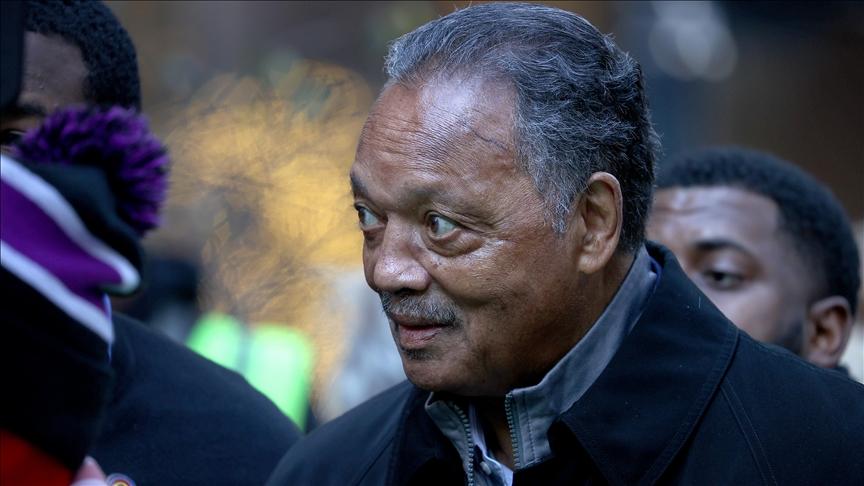

Doğum tarihi | 1941-10-08 | ||||||||
|---|---|---|---|---|---|---|---|---|---|
Ölüm tarihi | 2026-02-17 | ||||||||
Eş | Jacqueline Lavinia Brown | ||||||||
Known Roles | Founder of Operation PUSH; founder of the Rainbow/PUSH Coalition | ||||||||
Full Name | Jesse Louis Jackson | ||||||||
Profession(s) | Baptist pastor politician civil rights leader | ||||||||
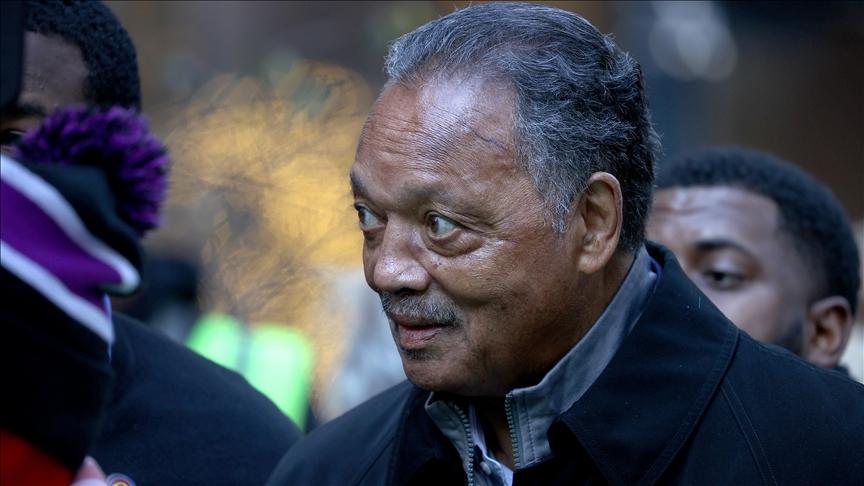
Jesse Louis Jackson, born on October 8, 1941 in South Carolina, is recognized as one of the leading figures in the United States civil rights movement. In the 1960s he played an active role within the American civil rights movement, participating in mass campaigns against racial discrimination. During this period he worked alongside Martin Luther King Jr. and emerged as a prominent figure within the movement’s organizational structure.
It is reported that Jackson was near the scene when Martin Luther King Jr. was assassinated in Memphis in 1968. This event became one of the turning points that shaped his subsequent political and social activism. The experience gained in the civil rights struggle transformed him from merely an activist into a nationally recognized leader.
As a Baptist minister, Jackson fused religious rhetoric with the struggle for social justice. His faith-based approach integrated demands for economic equality and democratic representation, sustaining a long public life.
In the 1960s Jackson participated in campaigns advocating for African American voting rights, equality in education, and the end of discrimination in public spaces. He took part in civil rights marches and mass protests, gaining national visibility. His leadership practice was grounded in the combined use of mass mobilization and institutional organization.
In the 1970s he played a leading role in founding the organization Operation PUSH, which centered its mission on economic equality and institutional representation. Later, it merged with the Rainbow Coalition to form a broader social coalition aimed at uniting diverse ethnic and class groups on a common political platform.
Jackson’s organizational approach extended beyond protest-based strategies to include negotiation processes with corporations, financial institutions, and political parties. Thus, the civil rights struggle became linked to the economic sphere, and the concept of structural inequality was addressed within a broader framework.
Jackson ran for the presidency of the United States under the Democratic Party banner in 1984 and 1988. These candidacies were regarded as historic milestones in the quest for political representation of African Americans and other minority groups at the national level. The percentage of votes he won in primary elections demonstrated the mobilization of a broad base of support.
The demands he raised during his presidential campaigns—economic justice, equal access to education, and strengthening voting rights—brought greater visibility to these issues within the Democratic Party’s policy agenda. This process contributed to a transformation in the party’s internal representation dynamics.
The slogan “Keep hope alive” used in his campaigns became the conceptual framework for political mobilization. This phrase evolved into a symbolic element that conveyed the struggle for social justice and equality to broad audiences through the idea of hope.
In the later stages of his career, Jackson assumed an active role on the international stage. He engaged in mediation efforts during various hostage crises and established contacts with different governments. These activities are regarded as examples of civil society-based diplomacy.
In the context of the Middle East, he made statements regarding the Palestinian issue and maintained contact with Arab-American communities in the United States. These initiatives strengthened the connection between foreign policy debates and their domestic social dimensions. Jackson’s approach made visible the role of social actors in international processes beyond state-centered diplomacy.
His international activities were grounded in a human rights-oriented perspective on foreign policy. This approach contributed to broader resonance within the American public discourse on global justice and equality.
In 2017 Jackson was diagnosed with Parkinson’s disease. In subsequent years he battled progressive supranuclear palsy, a rare neurodegenerative condition. These health issues reduced his visibility in public life but did not diminish his symbolic standing in the civil rights movement.
He died on February 17, 2026 in Chicago, Illinois at the age of 84. His family stated that he had dedicated his life to the struggle for social justice and equality. Following his death, numerous political leaders and civil society representatives in the United States and internationally issued messages of condolence.
Assessments have emphasized Jackson’s pivotal role in the institutionalization of the civil rights movement following Martin Luther King Jr. Thus, his life is recorded as part of the continuum of social struggle extending from the second half of the 20th century into the 21st century.
Al Jazeera. “Jesse Jackson helped empower US Arabs and raise Palestinian cause.” Accessed February 18, 2026. https://www.aljazeera.com/news/2026/2/18/jesse-jackson-helped-empower-us-arabs-and-raise-palestinian-cause
Anadolu Ajansı. "US civil rights leader Jesse Jackson dies at 84." Accessed February 18, 2026. https://www.aa.com.tr/en/americas/us-civil-rights-leader-jesse-jackson-dies-at-84/3832856
BBC News. “Barack Obama pays tribute to 'true giant' as Jesse Jackson dies aged 84.” Accessed February 18, 2026. https://www.bbc.com/news/live/c394g14n3rzt
BBC News. “Jesse Jackson: A life in pictures.” Accessed February 18, 2026. https://www.bbc.com/news/articles/cn0zjz58nzqo
CNN. "The Rev. Jesse Jackson, pioneering civil rights activist and racial 'pathfinder,' dies at 84." Accessed February 18, 2026. https://edition.cnn.com/2026/02/17/us/reverend-jesse-jackson-death
The Guardian. “Jesse Jackson was the living bridge between King and Obama.” Accessed February 18, 2026. https://www.theguardian.com/us-news/2026/feb/17/jesse-jackson-legacy-king-obama
The Guardian. “Obama, Trump and Biden lead tributes to Jesse Jackson: ‘one of America’s greatest patriots.’” Accessed February 18, 2026. https://www.theguardian.com/us-news/2026/feb/17/jesse-jackson-death-tribute

Doğum tarihi | 1941-10-08 | ||||||||
|---|---|---|---|---|---|---|---|---|---|
Ölüm tarihi | 2026-02-17 | ||||||||
Eş | Jacqueline Lavinia Brown | ||||||||
Known Roles | Founder of Operation PUSH; founder of the Rainbow/PUSH Coalition | ||||||||
Full Name | Jesse Louis Jackson | ||||||||
Profession(s) | Baptist pastor politician civil rights leader | ||||||||
Civil Rights Struggle and Organizational Development
Political Engagement and Presidential Candidacies
International Initiatives and Diplomatic Activities
Later Years and Death