


This article was automatically translated from the original Turkish version.
Black Hole
Producer | Christopher Nolan Emma Thomas Lynda Obst | ||||||||
|---|---|---|---|---|---|---|---|---|---|
Screenwriter | Christopher Nolan Jonathan Nolan | ||||||||
Actor | Casey Affleck Michael Caine Mackenzie Foy Jessica Chastain Anne Hathaway Matthew McConaughey John Lithgow Ellen Burstyn Bill Irwin | ||||||||
Production Date | 2014 | ||||||||
Film Duration | 169 min | ||||||||
Film Genre | Science fiction, Adventure, Drama | ||||||||
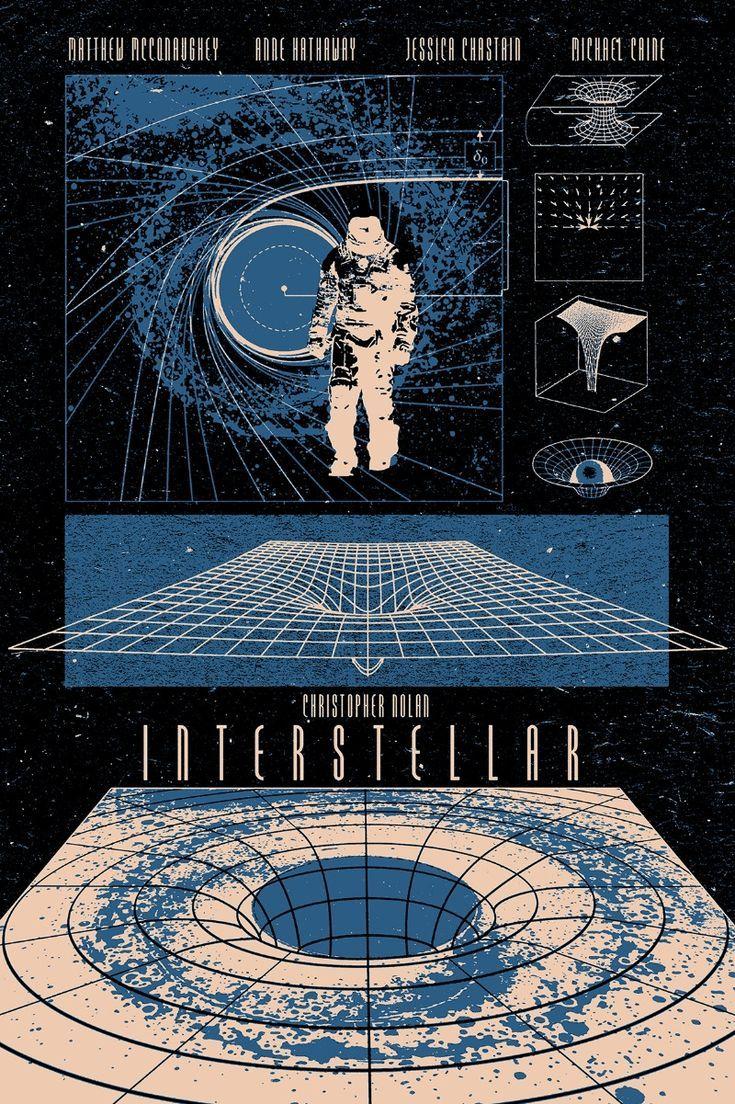
"Interstellar" is a 2014 science fiction film directed by Christopher Nolan. The film was written by Jonathan Nolan and Christopher Nolan and, with contributions from Kip Thorne, was meticulously developed with scientific accuracy in mind.
The film is set in a future where living conditions on Earth have deteriorated and humanity is searching for a new habitable world. Crops have been wiped out by disease, dust storms have become widespread and oxygen levels have declined.
Cooper, a former NASA pilot played by Matthew McConaughey, is assigned a mission to find habitable planets in distant galaxies using time dilation and wormholes.
While exploring complex scientific concepts such as general relativity, black holes and time dilation, the film also deeply examines human emotions, love and the impact of time on human life. Additionally, the film’s title "Interstellar" is mentioned only once within the film itself.
Cooper is a former NASA pilot and engineer who joins a space mission to save humanity’s future. McConaughey successfully conveyed the emotional depth and paternal feelings of his character.
Amelia is a scientist and Cooper’s crewmate on the space mission. Hathaway compellingly portrayed both the scientific and emotional dimensions of Amelia’s character.
Jessica Chastain – Murph Cooper (Adult)
Murph is Cooper’s daughter and undergoes a journey from childhood to adulthood throughout the film. Chastain, as the adult Murph, vividly demonstrates the character’s intelligence and determination.
Foy portrays the young Murph, highlighting her curiosity and intellect.
Professor Brand is the key scientist behind NASA’s mission and a character dedicated to saving humanity. Caine brings experience and depth to the role.
Tom is Cooper’s younger son. Although he appears less frequently in the film, he reflects the family dynamics and the impact of Cooper’s absence.
Damon’s portrayal of Mann introduces a surprising twist and serves as a major turning point for viewers. Mann is a scientist struggling to survive on another planet during the space mission.
Irwin provides the voices for two robots that accompany Cooper on his mission. TARS and CASE play important roles in both the humorous and emotional moments of the film.
Burstyn portrays the elderly Murph and delivers a powerful performance in the film’s emotionally resonant final scenes.
Donald is Cooper’s father and reflects the family’s situation and the hardships faced on Earth.
The black hole Gargantua in the film was simulated based on real physical calculations. Theoretical physicist Kip Thorne from Caltech provided consultation on how black holes would appear and interact. This simulation accurately depicted effects such as light bending and time dilation.
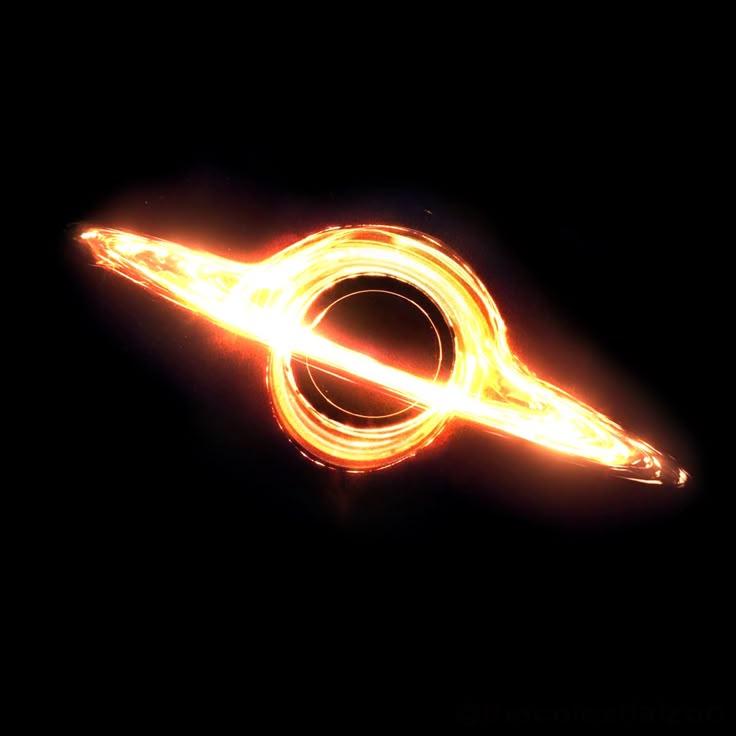
Representative image of the Gargantua black hole
The differing rates of time passage on different planets were visualized in accordance with the theory of general relativity. This is particularly demonstrated on Miller’s planet, where time passes much more slowly. The shape of the "Endurance" spacecraft in the film was designed to resemble a clock with 12 teeth.
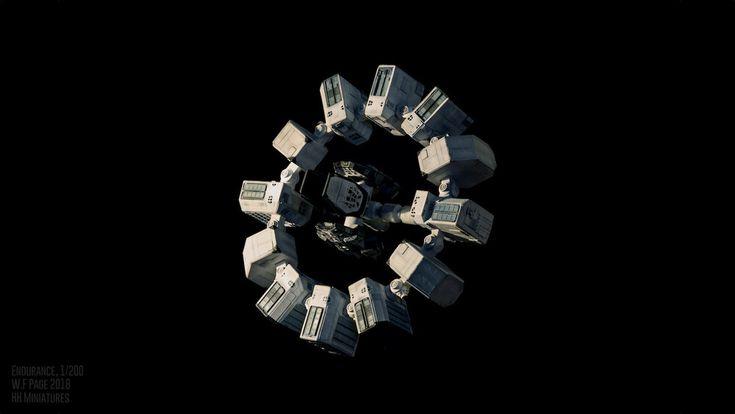
The Endurance spacecraft
CGI (Computer-Generated Imagery): The VFX (Visual Effects) company Double Negative produced over 850 VFX scenes for the film. These scenes include black holes, wormholes and the giant waves on Miller’s planet.
The wormhole in the film was visualized based on Thorne’s theoretical models, giving viewers an idea of what it might feel like to pass through a wormhole.
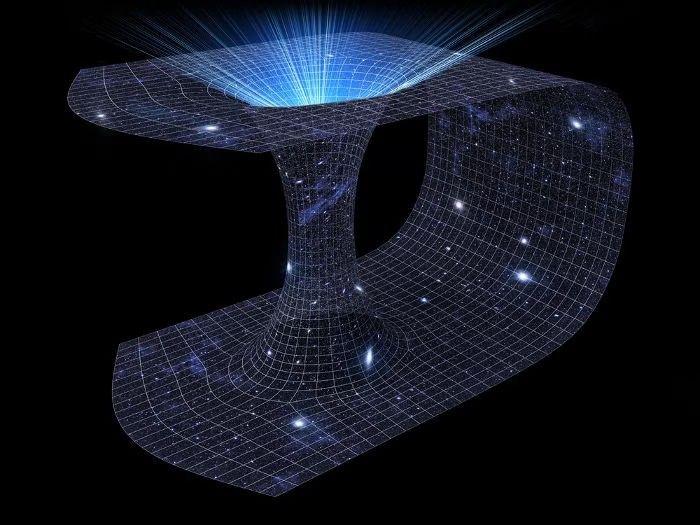
Theoretically modeled wormhole
Each planet in the film was detailed to reflect its own physical properties. The giant waves on Miller’s planet were created using realistic water simulations.
The light bending and shadows around black holes were simulated using real physical models. This process was far more complex than traditional CGI.
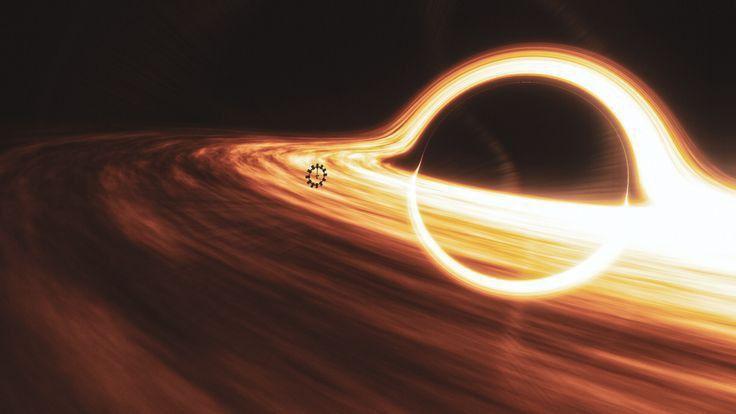
Representative image of the speed of light
Some scenes in the film were rendered in real time using techniques never before attempted. This was particularly used in the black hole sequences to provide viewers with a more immersive experience.
The film earned over $677 million worldwide, becoming one of Nolan’s highest-grossing films.
"Interstellar" received four nominations at the Academy Awards:
Best Visual Effects
Best Sound Editing
Best Sound Mixing
Best Original Score (composed by Hans Zimmer)
Nominated for Best Original Score at the Golden Globes.
Five nominations at the BAFTA Awards including Best Visual Effects and Best Sound.
Nominated for Best Cinematography by the American Society of Cinematographers (ASC).
"Interstellar" has become a classic within the science fiction genre. Its approach to themes such as time travel, black holes and humanity’s future resonated with a broad audience and sparked discussions within scientific communities.
By collaborating with real scientists, the film pioneered the visualization of black holes and wormholes. With contributions from scientists like Kip Thorne, the film offered an experience that was both entertaining and educational.
These achievements elevated "Interstellar" beyond being merely a box office success, establishing it as a significant cinematic and scientific work.
Behind the Scenes: The Visual Effects of Interstellar. Wired. November 7, 2014.
Interstellar, directed by Christopher Nolan (2014; Los Angeles, CA: Paramount Pictures, 2014), Blu-ray.
Interstellar. Box Office Mojo. Accessed February 12, 2025.
Interstellar. Metacritic. Accessed February 12, 2025.
Interstellar. Rotten Tomatoes. Accessed February 12, 2025.
Interstellar: The Science Behind the Visual Effects. Double Negative.
James, Oliver, Eugénie von Tunzelmann, Paul Franklin, and Kip S. Thorne. "Visualizing Interstellar’s Wormhole." American Journal of Physics 83, no. 6 (2015): 486-499.
McLean, Duncan. "The Visual Effects of Interstellar." FX Guide, October 29, 2014.
Nolan, Christopher. "Interview with Christopher Nolan on the Visual Effects of Interstellar." Interview by Dan Jolin. Empire Magazine, November 2014.
Page, W. "Endurance Spacecraft." HIH Miniatures. 2018. (Accessed February 11, 2025).
Thorne, Kip S. The Science of Interstellar. New York: W.W. Norton & Company, 2014.
Black Hole
Producer | Christopher Nolan Emma Thomas Lynda Obst | ||||||||
|---|---|---|---|---|---|---|---|---|---|
Screenwriter | Christopher Nolan Jonathan Nolan | ||||||||
Actor | Casey Affleck Michael Caine Mackenzie Foy Jessica Chastain Anne Hathaway Matthew McConaughey John Lithgow Ellen Burstyn Bill Irwin | ||||||||
Production Date | 2014 | ||||||||
Film Duration | 169 min | ||||||||
Film Genre | Science fiction, Adventure, Drama | ||||||||
Producers of the Film
Time and Space
The Mission
Science and Emotion
Cast
Matthew McConaughey – Joseph Cooper
Anne Hathaway – Amelia Brand
Mackenzie Foy – Murph Cooper (Child)
Michael Caine – Professor John Brand
Casey Affleck – Tom Cooper
Matt Damon – Dr. Mann
Bill Irwin – Voice of TARS & CASE
Ellen Burstyn – Murph Cooper (Elderly)
John Lithgow – Donald
Black Hole Simulation
Time Dilation
Technology and Creativity
Wormhole
Planets and Environment
Light and Shadow
Real-Time Rendering
Film’s Achievements
Box Office Success
Academy Awards
Other Awards and Nominations
Cultural Impact
Scientific Contribution