


This article was automatically translated from the original Turkish version.
+2 More
International Day for Monuments and Sites (IDMS) is an international observance held annually on 18 April to promote the protection of cultural heritage and raise awareness about it. First proposed in 1982 by the International Council on Monuments and Sites (ICOMOS), this special day was officially adopted in 1983 by the 22nd session of the UNESCO General Conference. The choice of this date was influenced by the emphasis that historical structures and sites are not merely physical entities but also represent the shared values and collective memory of humanity.
Today, the International Day for Monuments and Sites is celebrated worldwide through various activities organized by ICOMOS national committees, UNESCO, local governments, academic institutions and civil society organizations, among many other stakeholders. These activities include exhibitions, seminars, guided tours of monuments and heritage sites, and educational programs focused on conservation. Annual celebrations, each centered on a different theme, aim to draw attention to the most pressing heritage issues of that year.
Under the 2025 theme “Heritage Under Threat from Disasters and Conflict: Lessons from ICOMOS’s 60 Years of Action”, the focus has been on the resilience of cultural heritage and preparedness during crises. Activities under this theme encompass multifaceted practices such as inventorying heritage sites against hazards, damage assessment, and documenting traditional knowledge and practices. In the face of increasingly complex threats, IDMS continues to serve as an important international tool for sustaining awareness of cultural heritage.
Source: Youtube-Turkish Museums
The International Day for Monuments and Sites was first proposed on 18 April 1982 by the International Council on Monuments and Sites (ICOMOS). The proposal emerged during a symposium held that same year in Tunisia and was endorsed by ICOMOS’s Executive Council. Subsequently, at its 22nd session in 1983, the UNESCO General Conference recommended that member states observe 18 April each year as this special day.
The date of 18 April was chosen to coincide with the anniversary of the Second International Congress of Architects and Technicians of Historic Monuments, held in Venice in 1964. The Venice Charter (International Charter for the Conservation and Restoration of Monuments and Sites), adopted at this congress and forming the foundation of modern conservation principles, remains a globally recognized document in the field of cultural heritage. This congress and the Charter also laid the direct groundwork for the establishment of ICOMOS.
Initial commemorations began with limited events organized by ICOMOS national committees but over the years have expanded into a global initiative with participation from ICOMOS scientific committees, UNESCO, local governments, academic institutions and civil society organizations. Activities have diversified to include seminars, public sessions, site visits, exhibitions, documentary screenings and social media campaigns. Each year a distinct theme is selected to highlight various issues related to cultural heritage. For example, in 2024, the theme “Cultural Heritage Through the Lens of Disasters and Conflicts” commemorated the 60th anniversary of the Venice Charter.
Key international documents underpinning the day include, above all, the Venice Charter (1964). Subsequent documents such as ICOMOS’s founding statute (1978), the World Heritage Convention (UNESCO, 1972), the Nara Document on Authenticity (1994), and recent thematic reports on IDMS have strengthened the institutional and intellectual foundation of this observance. Within this framework, IDMS is not merely a commemorative occasion but also an important instrument for scientific production and advocacy.
The fundamental purpose of the International Day for Monuments and Sites is to raise awareness of the necessity to protect cultural assets that belong to humanity’s shared heritage and to foster global awareness on this issue. In this context, “cultural heritage” is understood as a broad concept encompassing not only monuments, buildings and archaeological sites but also cultural landscapes, traditional ways of life, crafts and oral traditions—both tangible and intangible values. Cultural heritage is the totality of knowledge, experience and aesthetic understanding that shapes the identity of societies, creates meaningful links between the past and the present, and is transmitted from generation to generation.
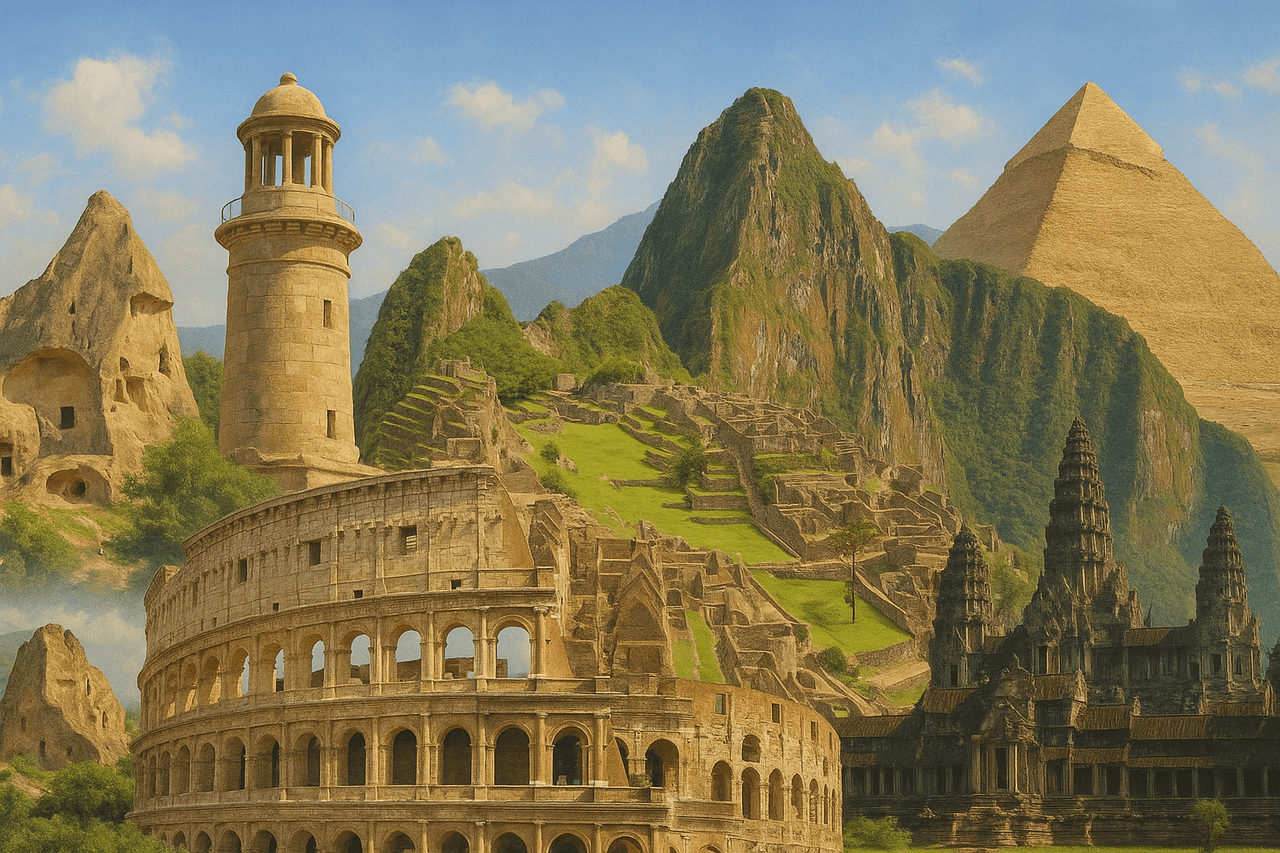
Representative image of monumental structures (Generated by Artificial Intelligence).
Through these activities, diverse segments of society—particularly students, academics, professionals and local communities—gain educational and experiential connections with heritage sites. Seminars, guided tours and workshops held in educational institutions have become effective tools for transmitting cultural heritage to younger generations. At the academic level, the day fosters interdisciplinary interaction among fields such as architecture, urban planning, archaeology, art history and cultural studies. Thus, heritage work is enriched not only by conservation techniques but also by ethical, sustainability and social participation dimensions.
Worldwide, activities supported by ICOMOS are shaped according to the annual theme. For instance, under the 2025 theme “Heritage Under Threat from Disasters and Conflict”, field presentations, documentation workshops and risk management seminars are being organized in various countries. ICOMOS supports these activities through social media campaigns, video presentations and trilingual communication kits, aiming to build a global network of engagement.
In Türkiye, under the coordination of ICOMOS Türkiye National Committee, events are held in many cities. In previous years, programs in cities such as Adana, Mersin, Antakya, Diyarbakır, Istanbul and Bursa have prominently featured academic presentations, archaeological site visits (e.g., Misis Ancient City, Zerzevan Kalesi), thematic exhibitions and cultural heritage workshops. The 2017 celebrations in Adana were organized around the theme “Cultural Heritage and Sustainable Tourism” and involved active participation from local authorities, academics and the public.
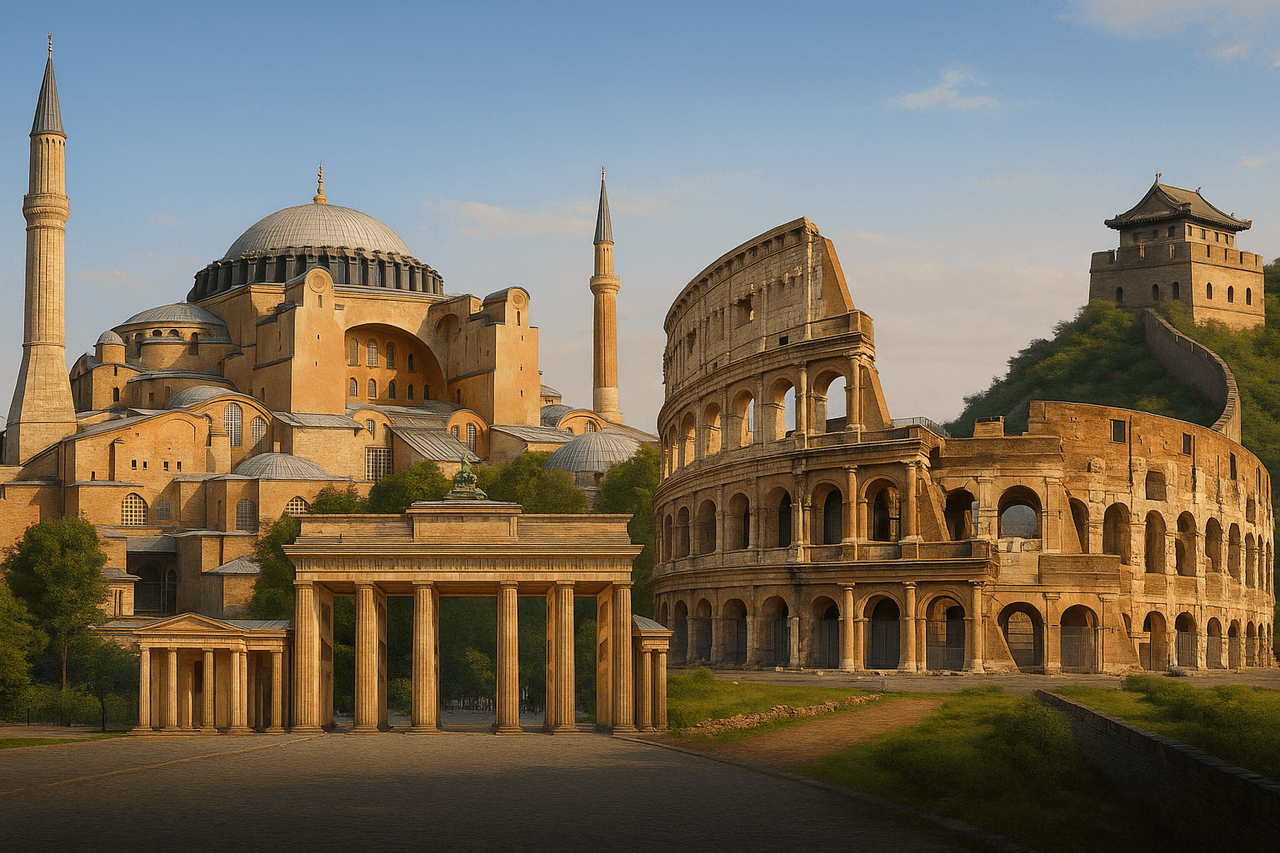
Representative image of some important structures worldwide (Generated by Artificial Intelligence).
More than 167 countries worldwide participate in IDMS activities through their ICOMOS National Committees. Particularly rich in cultural heritage, countries such as Italy, France, China, India, Türkiye, Germany, Spain and Mexico are strongly represented in these activities. These nations stand out due to their large number of sites on the UNESCO World Heritage List and their robust conservation infrastructure.
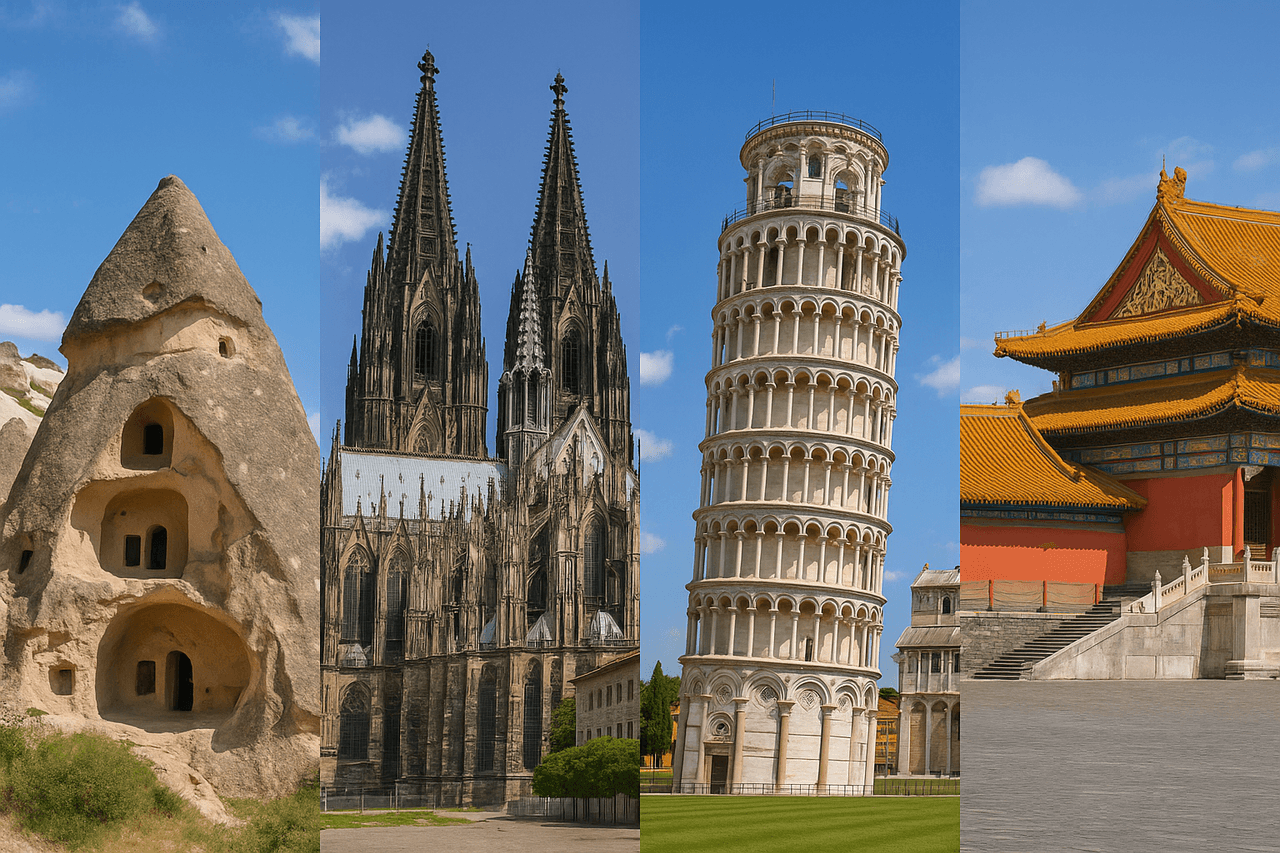
Representative image of heritage sites from Türkiye, Germany, Italy and China (Generated by Artificial Intelligence).
Numerous civil actors participate in these activities, including ICOMOS national and scientific committees, UNESCO advisory bodies, heritage associations, cultural heritage foundations and professional groups specializing in restoration and conservation. In Türkiye, NGOs such as TMMOB Chamber of Architects, History Foundation and Sulukule Platform occasionally support these events. Additionally, various museum associations and local culture platforms make significant contributions on the ground.
In Türkiye, municipal authorities in major cities and districts such as Istanbul, Adana, Mersin, Bursa, Diyarbakır and Eskişehir organize seminars, exhibitions and site visits under the IDMS framework. Municipalities serve as venues for events, provide promotional support and offer logistical assistance to promote local heritage, its restoration and increased public participation.
Universities, research centers and conservation programs play a vital role in these activities. In Türkiye, institutions such as Mimar Sinan Fine Arts University, Istanbul Technical University, Çukurova University, Middle East Technical University and Hacettepe University contribute through academic presentations, student-involved workshops and scholarly discussions. Furthermore, departments in conservation, archaeology, urban planning and art history provide a scientific foundation for evaluating heritage.
Ahunbay, Zeynep. "Arkeolojik Mirasın Korunmasına Yönelik Uluslararası İlkeler." *Mimar.ist* 81, (2024): 45-48.Accessed adresi
Chasing World Heritage. "International Day for Monuments and Sites." Accessed April 17, 2025.https://chasingworldheritage.com/f/international-day-for-monuments-and-sites
ICOMOS. “18 April - Celebrating International Day for Monuments and Sites.” ICOMOS.org. Accessed April 17, 2025.Accessed adresi
ICOMOS. “International Day for Monuments and Sites 2025 – Heritage under Threat from Disasters and Conflicts: Preparedness and Learning from 60 years of ICOMOS Actions.” ICOMOS.org. Accessed April 17, 2025.Accessed adresi
ICOMOS. “Uluslararası Anıtlar ve Sitler Konseyi – ICOMOS.” ICOMOS.org. Accessed April 17, 2025.Accessed adresi
ICOMOS. “World Heritage.” ICOMOS.org. Accessed April 17, 2025.https://www.icomos.org/world-heritage/
UNESCO. “Celebrating Our Past: A Look At International Day For Monuments And Sites April 18th 2024.” UNESCO Body and Mind Wellness Club. Accessed April 17, 2025.https://unescobmw.org/2024/04/02/international-day-for-monuments/
UNESCO. “IInternational Day for Monuments and Sites 2021 - Complex Pasts: Diverse Futures.” UNESCO World Heritage Convention. Accessed April 17, 2025.https://whc.unesco.org/en/news/2274
UNESCO. “International Day for Monuments and Sites.” UNESCO World Heritage Convention. Accessed April 17, 2025.https://whc.unesco.org/en/events/1164/

No Discussion Added Yet
Start discussion for "International Day of Monuments and Sites" article
History
Purpose and Significance
Activities
Themes by Year (Selected Years)
Institutional Structure and Participants