Inkars: Children of the Sun
A powerful civilization that lived approximately 500 years ago along the western coast of South America, high in the Andes Mountains. This society succeeded in building massive stone cities without the use of wheels or iron tools. The region they inhabited lies within the modern borders of Peru, Chile and Colombia.
Where and How Did the Incas Live?
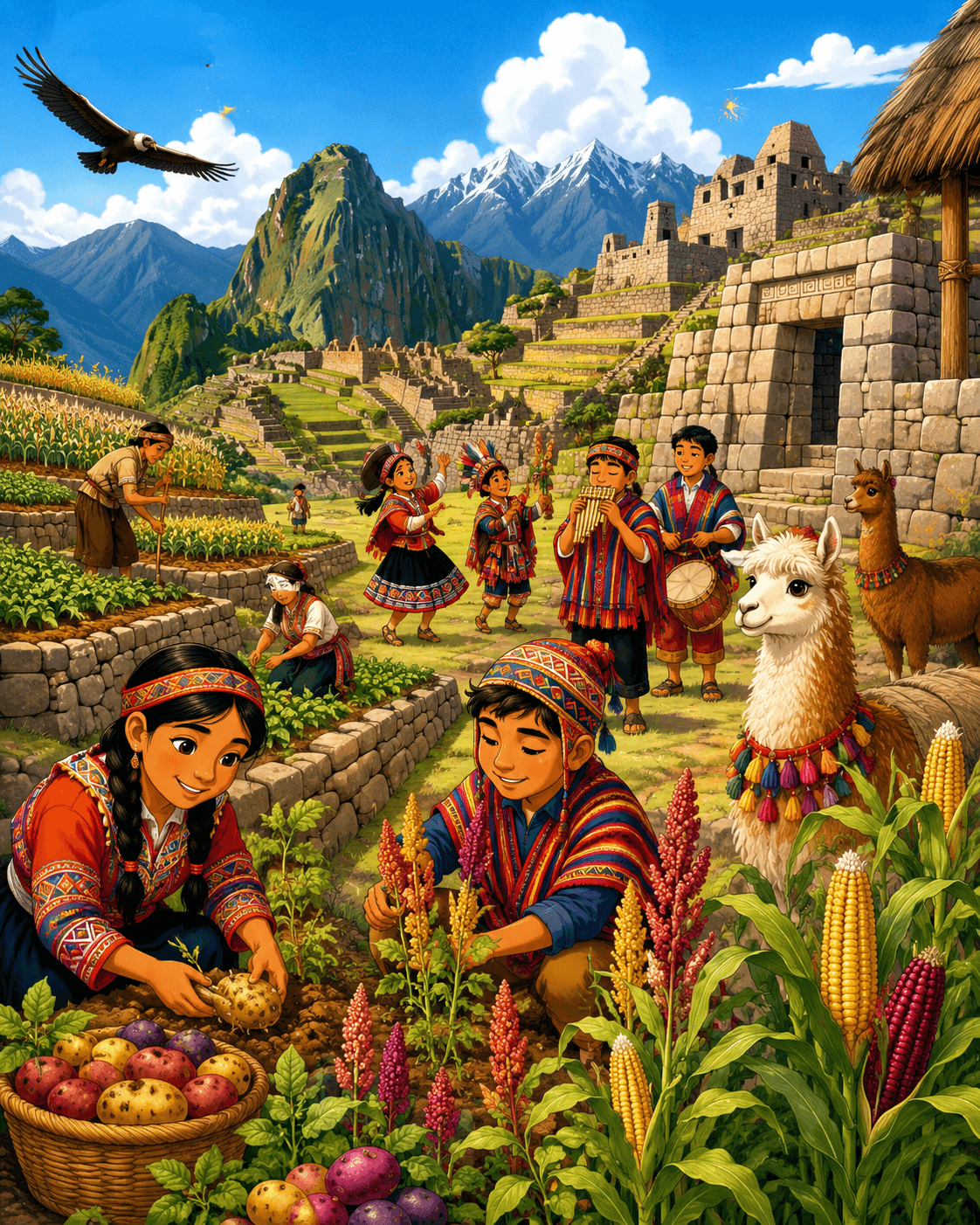
The Incas settled in the Cusco Valley of Peru around the year 1100. When the ninth ruler, Pachacuti, came to power in 1438, he transformed a small kingdom into the largest empire the Americas had ever seen. They called their capital city Cusco the “navel of the world.” To survive in the steep and mountainous terrain, they built terraced fields known as “terraces.” Thanks to these terraces, they cultivated potatoes, maize, quinoa and beans on steep slopes. They also constructed advanced irrigation channels to bring mountain water to their fields.
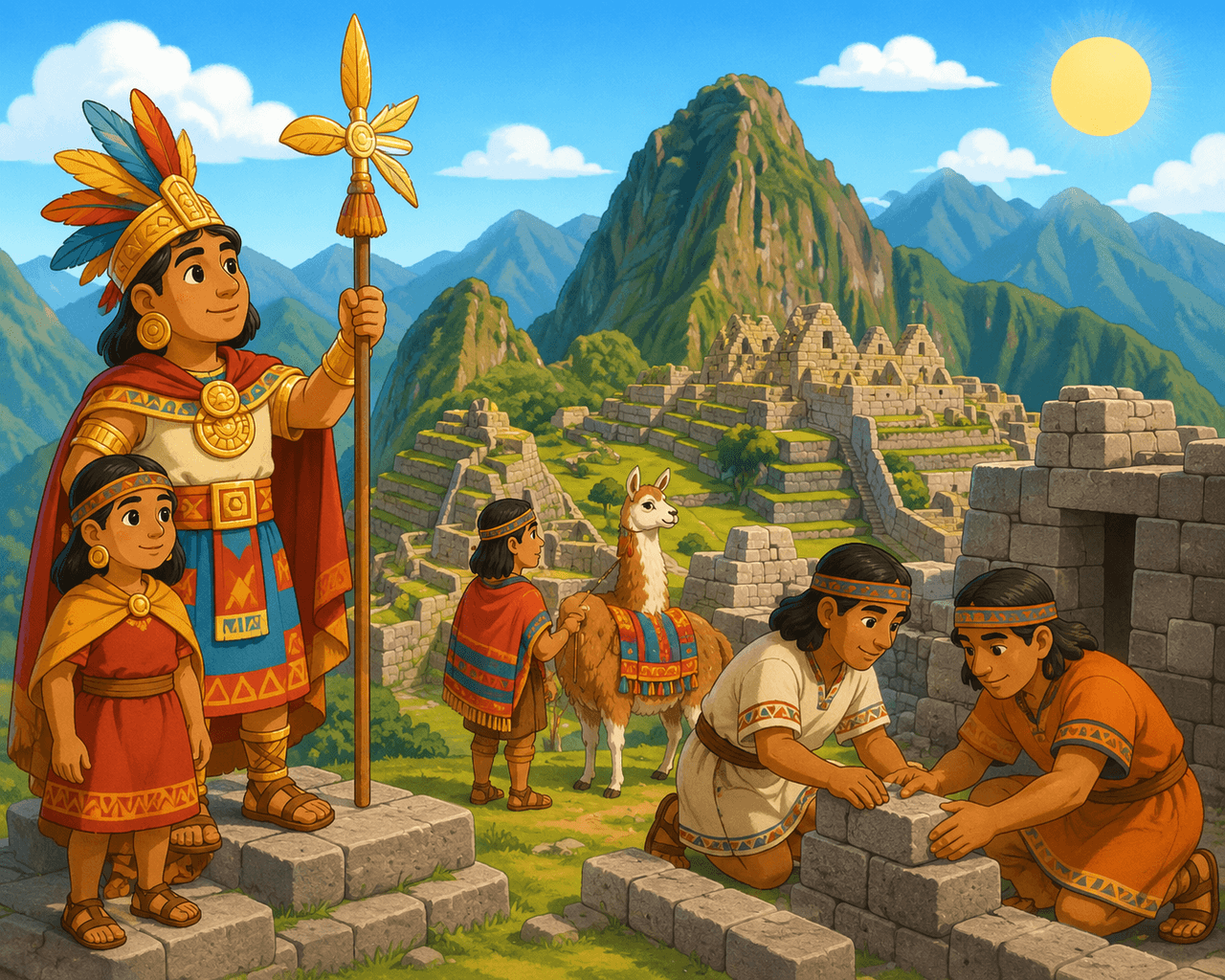
The Incas (generated by artificial intelligence)
Engineering Marvels: How Was Machu Picchu Built?
Built around 1450 by Emperor Pachacuti, Machu Picchu is the most famous city of the Incas. The city is situated on a mountain ridge approximately 2,430 meters above sea level. The Incas fitted massive granite blocks together with such precision that not even a razor blade can fit between them. These structures were built without mortar. The interlocking stone design allows buildings to sway slightly during violent earthquakes and then settle back into place. The city also features an advanced water system powered by gravity, consisting of 16 stone fountains.
Daily Life and Interesting Customs of the Incas
The Incas had no written alphabet as we understand it; they recorded information using knotted cords called “quipus.” The colors of the cords and the position of the knots conveyed information about numbers and significant events. The empire operated a labor system called “mit’a,” under which every family worked for the state during specific times of the year on projects such as road construction or farming. To maintain communication, they built over 30,000 kilometers of roads and used messengers known as “chasquis,” who could carry messages up to 240 kilometers in a single day.
What Happened to the Inca Empire?
In 1532, a Spanish army led by Francisco Pizarro arrived in Inca territory. At the time, the Incas were embroiled in a civil war, and diseases brought from Europe such as smallpox had decimated much of the population. The empire ended in 1533 with the death of the last emperor, Atahualpa.
However, Inca culture did not disappear entirely. Today, more than eight million people in Peru still speak Quechua, the language of the Incas. Moreover, crops they cultivated such as maize and potatoes have spread throughout the world.
- The Incas performed successful brain surgeries centuries before modern medicine.
- The Incas discovered how to freeze and dry potatoes, allowing them to store these foods without spoilage for up to ten years.
- When young people reached adulthood, they were given new names reflecting their personalities, such as “Star” or “Jaguar.”
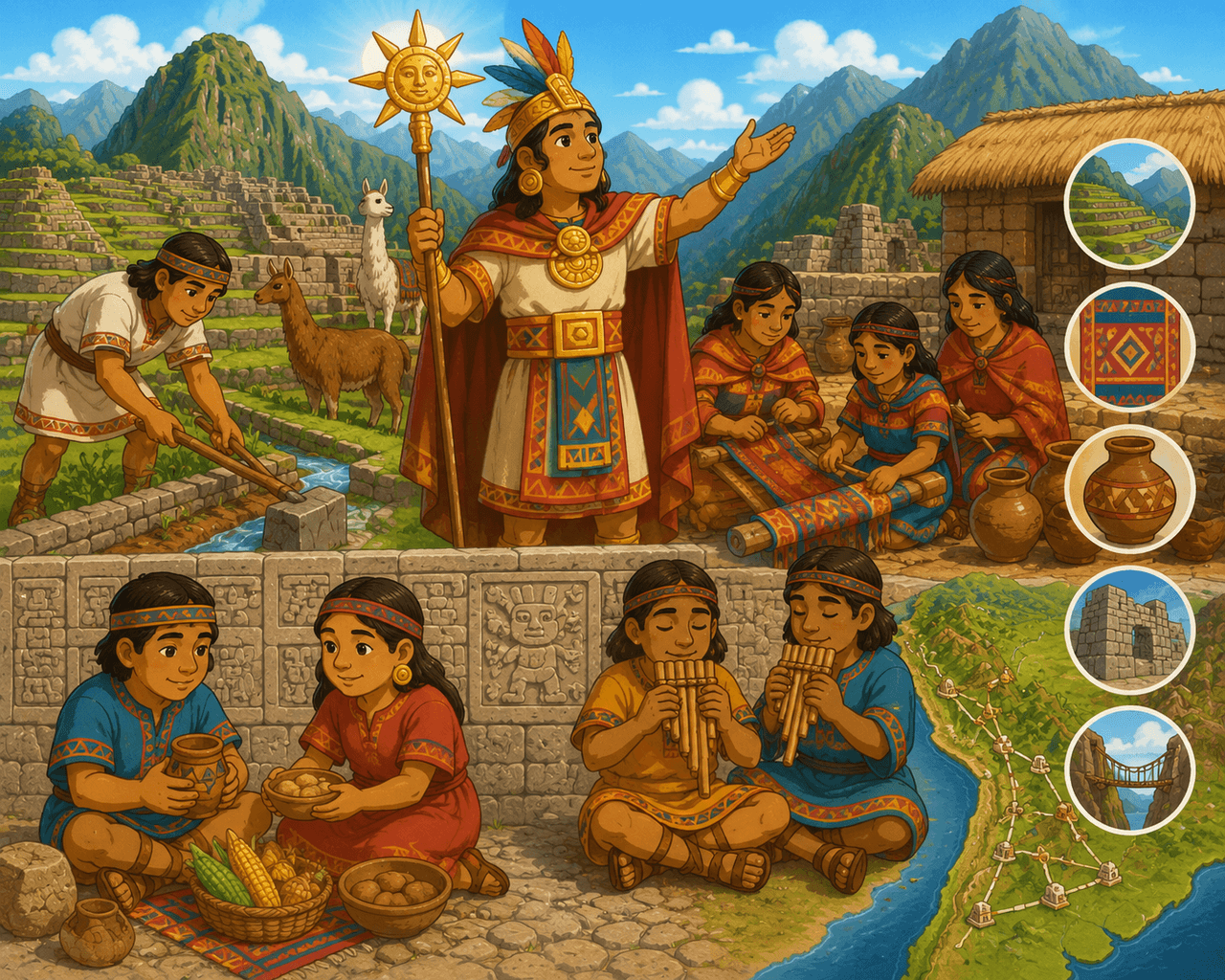
Inca civilization (generated by artificial intelligence)
Traces of the Incas Today
Although the Inca Empire ended approximately 500 years ago, the legacy of this great civilization continues to live on today in South America and around the world. We can see the Inca heritage in many areas—from their architecture and languages to their agricultural methods and words we use in daily life.
A Living Language and Words
The official language of the Incas, Quechua, has not disappeared. More than eight million people in countries such as Peru, Ecuador and Bolivia continue to speak it. In fact, we unknowingly use some Quechua words in our daily lives. For example, words such as condor, llama, poncho, puma and quinoa have passed directly from the Inca language into other languages around the world.
Enduring Monumental Structures
The structures built by the Incas—without mortar and with stones perfectly fitted together—continue to astonish modern engineers. Cities such as Machu Picchu have stood for over 500 years despite frequent and violent earthquakes in the region. The terraces (stepped fields) the Incas carved into steep mountain slopes still prevent soil erosion and are used for farming today. Their advanced irrigation channels continue to inspire modern engineers in the efficient use of water and drainage systems.
Cultural Traditions and Festivals
Inca culture lives not only in stone but also in people’s celebrations. Every year in June, the city of Cusco in Peru hosts Inti Raymi (Festival of the Sun), a grand celebration that recalls the ancient rituals of the Incas.