badge icon

This article was automatically translated from the original Turkish version.
Article

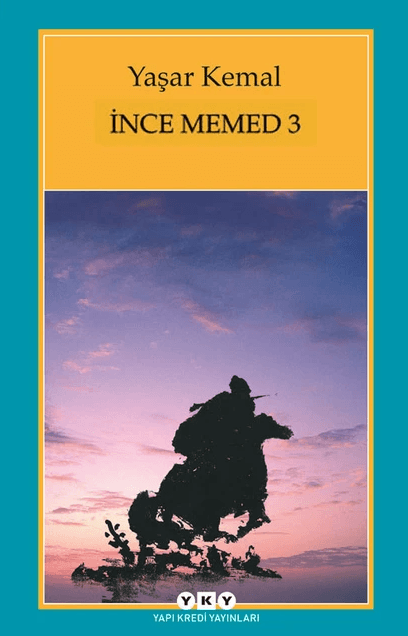
Ince Mehmet 3 (Book)

Quote
3.png

Publisher(s)

Yapı Kredi Yayınları

Publication Date(Text)

1984

Language(s)

Turkish

Author(s)

Yaşar Kemal

Genre

Novel

Next Book

İnce Mehmet-4

Previous Book

İnce Mehmet-2

Page

629

Yaşar Kemal’s novel *İnce Mehmed-3* (a sequel to Ince Mehmed-1 and Ince Mehmed-2) is regarded as one of the landmark works of Turkish literature and offers a profound exploration of social critique, individual resistance, and people struggle. Work does not merely narrate the personal journey of a single hero but also lays bare the social and cultural fabric of the era, the resistance against this structure, and the inner conflicts of the individual. In this context, *İnce Mehmed-3* presents a multilayered building thematically, with the psychological depth of its characters holding great significance in the novel.

Content

*İnce Mehmed-3* continues the narrative of the previous novels in the series and centers on the struggle of İnce Mehmed, who lives in the rural regions of Anatolia. While addressing the individual’s quest for freedom and justice, it also reveals the cultural structure and living conditions of the Anatolian people. Yaşar Kemal’s descriptions and linguistic style strengthen the novel’s fictional structure, transforming it into a broad narrative rich in social elements.

Themes Explored

The thematic structure of *İnce Mehmed-3* encompasses various elements centered on social and individual struggle.

1. Freedom and Resistance

  • İnce Mehmed’s struggle represents more than an individual rebellion; it embodies the people’s pursuit of freedom and justice. The novel treats resistance not merely as physical conflict but also as an ideological struggle. This theme carries a critical dimension toward the social structure.

2. Social Structure and Class Struggle

  • The impact of the feudal system in Anatolian villages and its oppression of the populace constitute one of the novel’s central conflicts. İnce Mehmed’s resistance is not only an act of individual defiance but also gives voice to the oppressed peasants. In this sense, the novel offers a critique of class inequality.

3. Nature and Human Relationship

  • Yaşar Kemal’s depictions show nature assuming a central role in the novel’s narrative. Nature is not merely a backdrop but functions as a metaphor reflecting the characters’ inner worlds. İnce Mehmed’s relationship with nature strengthens his quest for freedom and his bond with the people.

4. Individual and Social Identity

  • İnce Mehmed’s transformation into the people’s hero represents the intersection of individual identity search and social responsibility. The character’s internal conflicts and evolution deepen the novel’s psychological dimension.

5. Justice and Equality

  • İnce Mehmed’s struggle is not merely a personal quest for rights but also embodies a mission to achieve social equality and justice. Throughout the novel, Mehmed’s conception of justice merges with the people’s fight for liberation, acquiring an idealistic character.

Characters in İnce Mehmed-3

  • İnce Mehmed: The protagonist of the novel, a rebellious figure who fights for the people’s freedom.
  • Hürü Ana: A wise character who supports İnce Mehmed and provides spiritual strength to his struggle.
  • Seyran: One of the characters who enriches the novel’s emotional dimension.
  • Topal Ali: An important figure in İnce Mehmed’s circle, notable for his involvement in the struggle.
  • Murtaza Ağa: A representative of the feudal system and a figure on the opposing side of İnce Mehmed’s struggle.
  • Ferhat Hoca: A character influential in religious and social matters. Yaşar Kemal uses this character to voice his critiques of the social structure.
  • Müslüm: A character embedded in village life who influences İnce Mehmed’s struggle.
  • Arif Saim Bey and Ali Safa Bey: Powerful figures of the feudal system who draw attention through the oppression and injustice they impose on the peasants.
  • Molla Duran Efendi: A prominent figure of authority in society, distinguished by his religious identity.

Bibliographies

Kemal, Yaşar. İnce Mehmet 3. İstanbul: Yapı Kredi Yayınları, 2020.

Author Information

Avatar
AuthorElyesa KöseoğluDecember 19, 2025 at 7:13 AM

Tags

Discussions

No Discussion Added Yet

Start discussion for "Ince Mehmet 3 (Book)" article

View Discussions

Contents

  • Content

  • Themes Explored

    • 1. Freedom and Resistance

    • 2. Social Structure and Class Struggle

    • 3. Nature and Human Relationship

    • 4. Individual and Social Identity

    • 5. Justice and Equality

  • Characters in İnce Mehmed-3

Ask to Küre