

This article is not approved yet.
+2 More
Deployment Scale | Pre-commercial to hyperscale | ||||||||
|---|---|---|---|---|---|---|---|---|---|
Efficiency Metric | PUE 1.02–1.10 | ||||||||
Applications | Data centers, AI clusters, cryptocurrency mining | ||||||||
Primary Fluids | Dielectric synthetics/hydrocarbons | ||||||||
Cooling Method | Direct fluid submersion | ||||||||
Technology Type | Thermal Management System | ||||||||
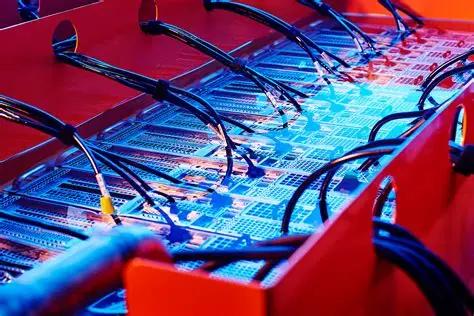
Immersion cooling is a thermal management technique that submerges electronic components in dielectric liquids to dissipate heat directly at the source. Utilizing fluids with high thermal conductivity and electrical insulation properties, this method eliminates the need for fans and reduces reliance on energy-intensive air conditioning. It supports high-density computing applications like artificial intelligence (AI), high-performance computing (HPC), and cryptocurrency mining, with cooling capacities reaching 100 kW per tank. The technology operates at higher temperatures than air cooling, enabling efficient waste heat recovery and reducing power consumption. Global market revenue for liquid cooling reached $745 million in 2023, with projected growth driven by escalating computational demands.
Dielectric fluids absorb heat 20× more efficiently than air due to superior thermal conductivity and volumetric heat capacity. Single-phase systems circulate liquid coolants (e.g., synthetic hydrocarbons) through heat exchangers without phase change, while two-phase systems leverage latent heat absorption during fluid vaporization. The latter achieves 98% heat removal from components but faces challenges related to fluid toxicity and complexity.
Per- and polyfluoroalkyl substances (PFAS) in two-phase fluids have led to lawsuits and production halts. Microsoft and Meta suspended research due to carcinogenic risks. Single-phase bio-fluids mitigate this via OECD 301-certified biodegradability.
Immersion cooling reduces energy use by 30–50% compared to air cooling. It achieves PUEs below 1.10 by eliminating chiller plants and leveraging waste heat for district heating. Water consumption drops near zero, as dry coolers replace evaporative towers.
Captured heat (up to 40°C output) supports agricultural greenhouses, swimming pools, and industrial processes. Bitcoin mining operations increasingly repurpose heat for residential heating, offsetting operational costs.
Asperitas. “What Is Immersion Cooling.” Asperitas. Accessed August 16, 2025. https://www.asperitas.com/what-is-immersion-cooling.
Data Center Dynamics. “Barriers to Liquid Immersion Cooling.” DCD. Accessed August 16, 2025. https://www.datacenterdynamics.com/en/opinions/barriers-to-liquid-immersion-cooling/.
Robb, Drew. “Exploring Immersion Cooling – Part 1: The Advantages.” Upsite. Accessed August 16, 2025. https://www.upsite.com/blog/exploring-immersion-cooling-part-1-the-advantages/.
Robb, Drew. “Exploring Immersion Cooling – Part 2: The Challenges.” Upsite. Accessed August 16, 2025. https://www.upsite.com/blog/exploring-immersion-cooling-part-2-the-challenges/.
Submer. “Immersion Cooling: Removing the Barriers to Adoption.” Submer. Accessed August 16, 2025. https://submer.com/blog/immersion-cooling-removing-the-barriers-to-adoption/.
Submer. “What Is Immersion Cooling?” Submer. Accessed August 16, 2025. https://submer.com/blog/what-is-immersion-cooling/.
Supermicro. “What Is Immersion Cooling?” Supermicro. Accessed August 16, 2025. https://www.supermicro.com/en/glossary/immersion-cooling.
Vertiv. “Immersion Cooling Systems: Advantages and Deployment Strategies for AI and HPC Data Centers.” Vertiv. Accessed August 16, 2025. https://www.vertiv.com/en-us/about/news-and-insights/articles/blog-posts/advancing-data-center-performance-with-immersion-cooling/.

Deployment Scale | Pre-commercial to hyperscale | ||||||||
|---|---|---|---|---|---|---|---|---|---|
Efficiency Metric | PUE 1.02–1.10 | ||||||||
Applications | Data centers, AI clusters, cryptocurrency mining | ||||||||
Primary Fluids | Dielectric synthetics/hydrocarbons | ||||||||
Cooling Method | Direct fluid submersion | ||||||||
Technology Type | Thermal Management System | ||||||||
No Discussion Added Yet
Start discussion for "Immersion Cooling Systems" article
Thermodynamic Principles and System Architectures
Heat Transfer Mechanisms
System Configurations
Dielectric Fluids and Material Compatibility
Fluid Types and Properties
Material Degradation Challenges
Implementation Challenges and Mitigation
Toxicity and Environmental Risks
Retrofitting Constraints
Operational Workflows
Energy Efficiency and Environmental Impact
Performance Metrics
Waste Heat Utilization
Modern Applications and Deployment Models
High-Density Computing
Global Adoption Status
This article was created with the support of artificial intelligence.