


This article was automatically translated from the original Turkish version.
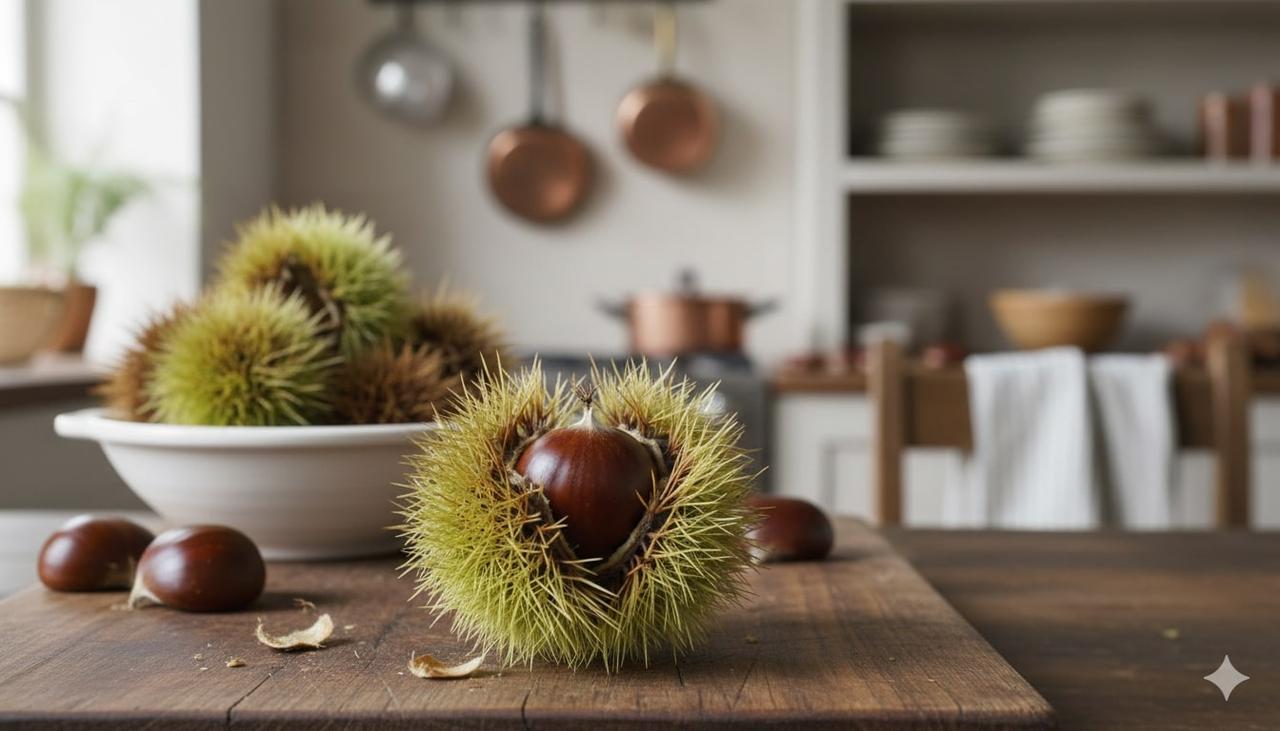
Iinuma Kuri (generated with artificial intelligence.)
Geographical Indication | Iinuma Kuri | ||||||||
|---|---|---|---|---|---|---|---|---|---|
Class | Fruit | ||||||||
Production Area | Ibaraki Region, Higashi-Ibaraki District, Ibaraki Town | ||||||||
Applying Organization | Shimo-Iinuma Chestnut Production and Marketing Association | ||||||||
Registration Number | 38 | ||||||||
Protection Date | 23.06.2017 | ||||||||
Iinuma Kuri is a special variety of chestnut cultivated in the town of Ibaraki, within Ibaraki Prefecture, Japan, and is registered with the country’s Geographical Indication (GI) system.
Iinuma Kuri chestnuts are large and glossy in appearance. This distinctive look results from a specialized cultivation technique that produces only one fruit per bur, combined with thorough washing and sorting processes. Traditionally, chestnuts grow three per bur, but Iinuma Kuri producers have focused on cultivating large chestnuts with one per bur. Through repeated pollination studies, they have achieved stable production of one to two large chestnuts per bur without reducing overall yield.
All harvested chestnuts are washed in a specialized machine, ensuring their undersides are spotless and shiny. Additionally, the chestnuts are stored in cold storage facilities with a layer of wood shavings, which prevents drying, rotting, and quality degradation while preserving their high sugar content and sweetness for shipment. Producers perform two rounds of sorting, before and after shipment, and conduct collective selections at collection points. This three-stage selection process significantly reduces the rate of defective products entering the market.
Due to its market price being approximately twice that of chestnuts from other regions during the same season, Iinuma Kuri is regarded as one of the highest-quality chestnuts available.
About Iinuma Kuri (Geographical Indication Products Information Website)
The Iinuma Kuri cultivation area is located in the town of Ibaraki, Ibaraki Prefecture, Japan. The production zone consists of a flat plateau at approximately 30 meters above sea level, covered with weakly acidic volcanic ash soil that provides excellent water retention, aeration, and drainage. The region also enjoys a stable climate with an average annual temperature of about 13.6 degrees Celsius and annual precipitation of approximately 1,354 millimeters.
The history of chestnut cultivation in this region dates back centuries; the Hitachi Fudoki, compiled in the sixth year of the Wado era, records that high-quality chestnuts have been grown in what is now the town of Ibaraki since ancient times. The transition to modern chestnut farming began around 1933 with the planting of chestnut trees in cultivated fields, and proactive chestnut orchards were established around 1963. In 1968, cooperatives composed largely of progressive farmers were formed to improve chestnut quality and achieve better profitability through planned shipments. Iinuma Kuri was granted geographical indication protection on 23 June 2017.
Geographical Indication Product Information Site. "38 Iinuma Kuri." YouTube. Accessed October 24, 2025. https://www.youtube.com/watch?v=ob9ZdxFyuwA
Japan Geographical Indication. "Iinuma Kuri." Japan Geographical Indications Center. Accessed October 25, 2025. https://pd.jgic.jp/en/register/entry/38.html
MAFF. “GI Act Register Entry S38.” Ministry of Agriculture, Forestry and Fisheries. Accessed October 25, 2025. https://www.maff.go.jp/e/policies/intel/gi_act/register/s38.html

Iinuma Kuri (generated with artificial intelligence.)
Geographical Indication | Iinuma Kuri | ||||||||
|---|---|---|---|---|---|---|---|---|---|
Class | Fruit | ||||||||
Production Area | Ibaraki Region, Higashi-Ibaraki District, Ibaraki Town | ||||||||
Applying Organization | Shimo-Iinuma Chestnut Production and Marketing Association | ||||||||
Registration Number | 38 | ||||||||
Protection Date | 23.06.2017 | ||||||||
Characteristics and Quality
Cultivation Area and History