


This article was automatically translated from the original Turkish version.
+2 More
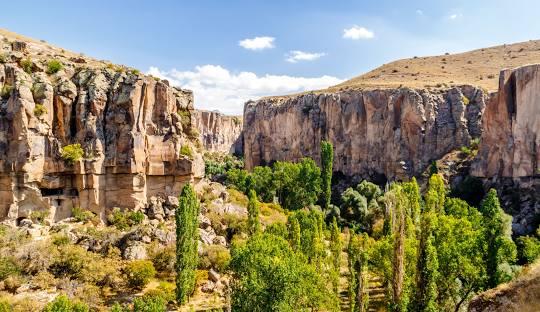
Ihlara Valley
Geographical Shape | Canyon, Valley | ||||||||
|---|---|---|---|---|---|---|---|---|---|
Location | Aksaray Güzelyurt | ||||||||
Museum Card | Valid | ||||||||
Ihlara Valley is a famous valley located in the province of Aksaray, Türkiye, renowned for its natural beauty and historical richness. Stretching from the village of Ihlara to Selime, the valley is 14 kilometers long and shaped by the Melendiz River. Its depth reaches up to 100 meters in places, making it an ideal destination for both nature hikers and history enthusiasts.
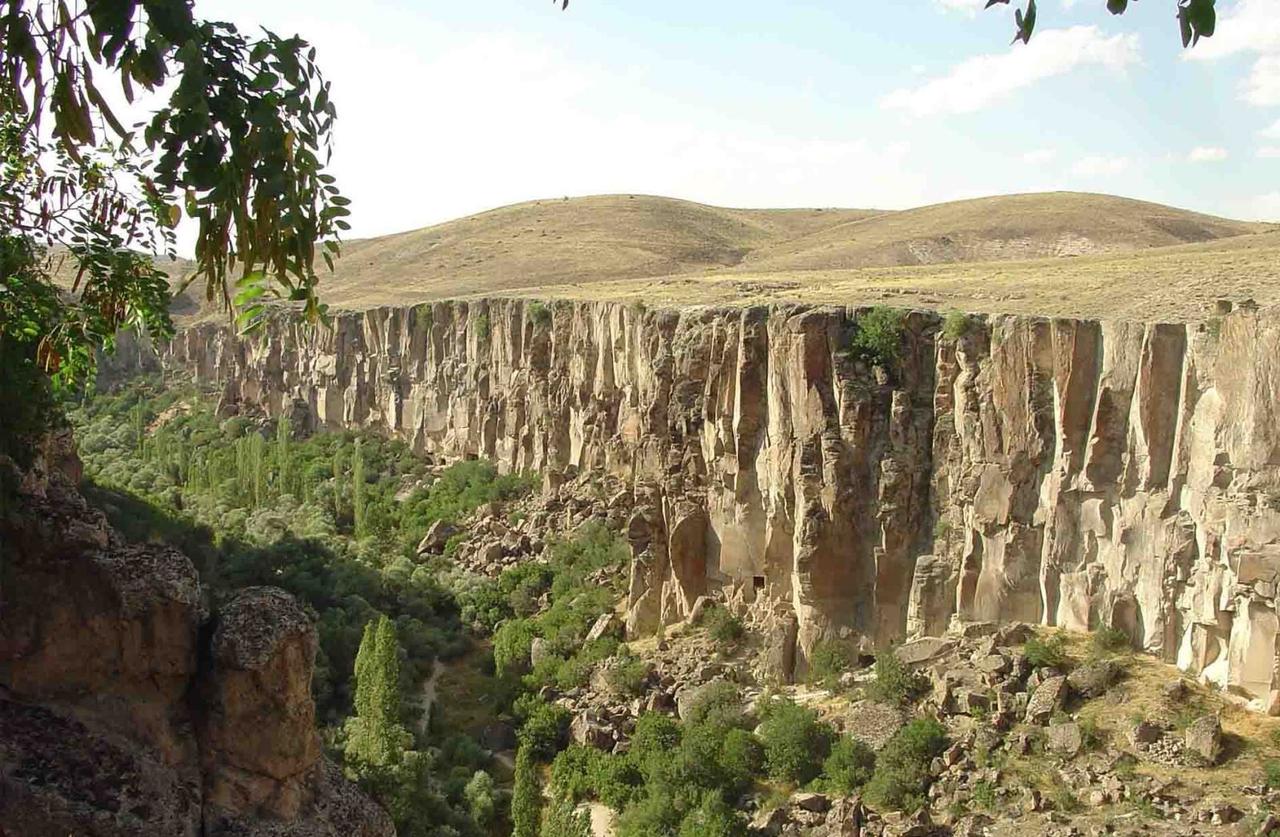
Ihlara Valley, Aksaray - Türkiye Culture Portal
Ihlara Valley also draws attention for its profound historical and cultural heritage, equal to its natural beauty. Formed over millions of years by the erosion of the Melendiz River, this deep canyon has served as a home to numerous civilizations through its towering cliffs, rock-cut churches, and monasteries.
Ihlara Valley and its surroundings were under the rule of the Hittite Empire in the 2nd millennium BCE. During this period, small settlements and trade routes developed in the region. After the Hittites, the area came under the dominion of the Phrygians and Persians. Following the conquests of Alexander the Great, traces of the Hellenistic period began to appear.
The Roman Empire period marked a significant turning point for Ihlara Valley. The Romans, recognizing the region’s strategic location, established military roads and settlements. During this time, Christianity spread rapidly and the area became an important refuge for early Christians.
From the 4th century onward, Ihlara Valley became a center for solitude and worship for Christian monks and priests. The valley’s natural structure was ideal for those seeking an isolated life away from the outside world. Rock-cut churches, monasteries, and living quarters were constructed during this period. There are approximately 105 churches in the valley, of which 12 are open to visitors.
Major Churches,
1. Ağaçaltı Church, Located at the entrance of the valley beside the Melendiz River, the church was created by expanding a natural cave. Its frescoes depict scenes from the Bible, particularly the Annunciation, the Flight into Egypt, the Nativity of Jesus, and the Dormition of the Virgin Mary. The frescoes are rendered in deep red and brown tones and date from the late 9th to early 10th century. The church has a cross-shaped, single-nave, domed plan and reflects early Byzantine art characteristics. The techniques and color palette used in the frescoes illustrate the iconographic traditions of the period.
2. Yılanlı Church, Named after the snake depictions on its walls, the church features a scene of four sinning women being punished by snakes. It also includes battle scenes of Saint George and Saint Theodore. Dating from the 9th century, the church has a rectangular, single-nave, barrel-vaulted plan. It conveys didactic messages centered on the themes of sin and punishment. The narrative style of the figures in the frescoes is particularly striking.
3. Sümbüllü Church, Named after the hyacinth flowers growing around it, this church stands out for its columned and gallery structure. Frescoes depict scenes from the life of Jesus and images of saints. Dating from the 10th century, its plan is two-tiered: the lower level served as living quarters for monks, while the upper level was used for worship. Architecturally unique, its gallery structure is rare. The composition and color usage in the frescoes are rich and elaborate.
4. Kokar Church, Its name derives from the strong odor emitted by the incense and candles used here in the past. Frescoes include scenes from both the Old and New Testaments, such as the Last Supper, the Betrayal, the Crucifixion, and the Resurrection. Dating from the 9th and 10th centuries, the church has a T-shaped, cross-plan layout. The frescoes are detailed and colorful, displaying a rich iconography in the narration of religious stories. Fresco decorations are densely applied on both ceilings and walls.
5. Pürenliseki Church, Named after the püren plant growing around it, the frescoes depict scenes such as the Annunciation, the Nativity, the Baptism, and the Crucifixion. The church walls also feature depictions of saints and angels. Dating from the 10th century, it has a two-nave, barrel-vaulted plan. The scenes in the frescoes are rendered with fine detail and vibrant colors. Its two-nave structure makes it architecturally distinctive.
6. Kırkdamaltı Church (Saint George Church), The church’s most notable feature is the depiction of Seljuk Sultan II. Mesud in its frescoes. This situation reflects the tolerance and interaction between Christian and Muslim communities of the time. Frescoes also include images of Saint George and Saint Theodore alongside those of Jesus and the Virgin Mary. Dating from the 13th century (according to inscriptions, 1283–1295), it has a single-nave, barrel-vaulted plan. It is one of the rare examples of its period, showcasing both Turkish and Byzantine art in a single work. The inscriptions and dating in the frescoes are significant for art history.
7. Direkli Church, Named for the two columns dividing its central nave, the frescoes depict biblical scenes and images of saints. Dating from the 10th century, it has a three-nave basilica plan. Its basilica structure and columned design demonstrate architectural diversity. The figurative narration in the frescoes is rich and expressive.
8. Karagedik Church, Although much of the roof and walls have collapsed, parts of the interior frescoes have been preserved. They depict scenes from the life of Jesus and images of saints. Dating from the 11th century, it has a closed Greek cross plan. Its architectural layout and decorations are noteworthy. The composition and style of the frescoes reflect Middle Byzantine art.
9. Eğritaş Church, Frescoes depict Jesus, the Virgin Mary, and various saints. The church walls also feature geometric and botanical motifs. Dating from the 10th and 11th centuries, it has a single-nave, barrel-vaulted plan. Although partially damaged, the remaining frescoes exhibit characteristics of Byzantine painting. It represents regional art through its architecture and decorations.
10. Bahattin Samanlığı Church, It acquired its name from its past use as a hayloft. Frescoes depict biblical scenes, angels, and saints. Dating from the 9th and 10th centuries, it has a single-nave, barrel-vaulted plan. The richness of color and composition in the frescoes is striking. The church provides valuable information about local church architecture of the period.
11. Saint Georges (Kaledere) Church, Frescoes include scenes such as Saint George’s battle with the dragon. The stonework and reliefs on the church’s exterior are also noteworthy. Dating from the 13th century, it has a single-nave plan. The vibrant colors and dynamic figures in the frescoes reflect the artistic sensibilities of the period. It stands out for its decorative elements both inside and outside the structure.
12. Ala Church, Frescoes depict scenes such as the Ascension of Jesus, the Dormition of the Virgin Mary, and icons of saints. Vivid colors and intricate craftsmanship attract attention. Dating from the 11th century, it has a single-nave, barrel-vaulted plan. The details and composition of the figures in the frescoes are rich. The church reflects the religious and artistic tendencies of its time.
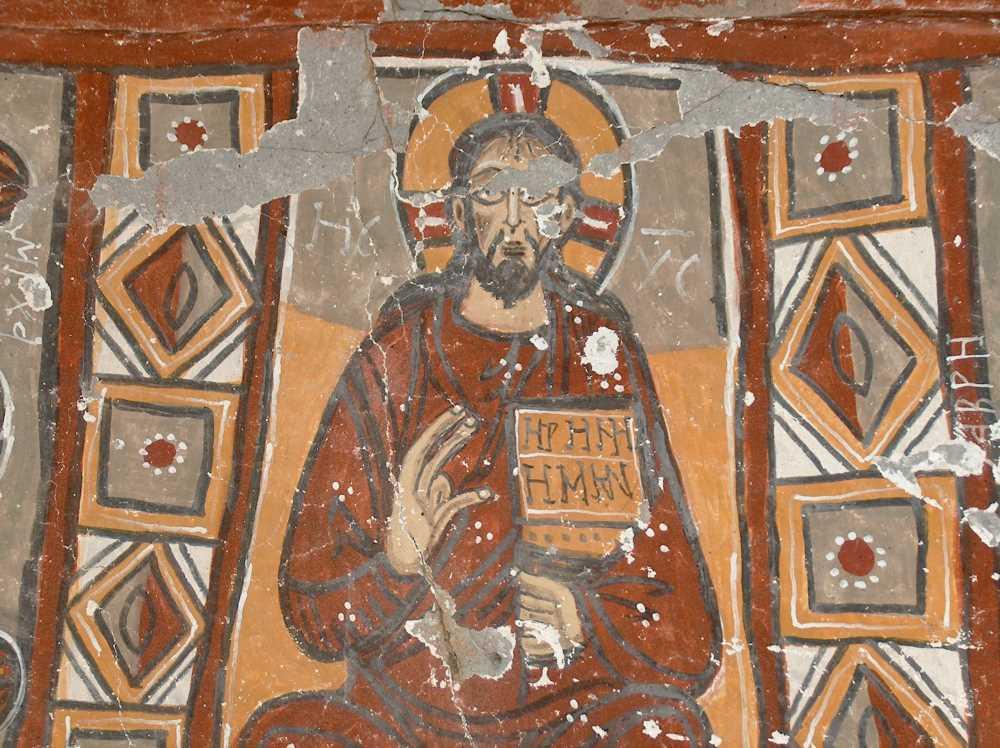
Yılanlı Church, Ihlara Valley -
During the Byzantine period, religious and cultural activities in Ihlara Valley continued to flourish. Frescoes extensively depicted biblical scenes, the lives of saints, and religious motifs. These works preserve the artistic understanding and iconography of the era for posterity.
In the 11th century, the region came under the rule of the Seljuk Turks. Although Islam began to spread during this period, the Christian population in the valley maintained its presence. The Seljuk period was one of cultural diversity and tolerance. There are also Turkish-Islamic works in Ihlara Valley dating from this era.
During the Ottoman Empire, Christian and Muslim populations continued to live together in the valley. However, over time, the Christian population gradually declined. With the 1924 Population Exchange, the Rum population migrated to Greece and the settlements in the valley were abandoned.
The churches of Ihlara Valley are not merely religious spaces; they are significant works reflecting the artistic sensibilities of their time. The colors, details of figures, and compositions in the frescoes provide valuable information for art historians. Inscriptions and symbols within the churches offer clues about the social structure and belief systems of the period.
From the second half of the 20th century, intensive archaeological research began in Ihlara Valley. These efforts have played a crucial role in uncovering the valley’s historical and cultural heritage. Today, national and international projects are underway to preserve and restore the valley’s monuments.
UNESCO has included Ihlara Valley in its World Heritage Tentative List. This highlights the valley’s international significance and the need for its protection.
Ihlara Valley is one of the most impressive natural formations in the Cappadocia region. Formed over millions of years by the erosion of the Melendiz River through volcanic tuff, this deep canyon attracts both local and international tourists with its unique geological structure and exceptional natural beauty.
The formation of Ihlara Valley began with the cooling and hardening of lava and tuff ejected by nearby volcanic mountains (Hasan Dağı and Melendiz Dağı). Over millions of years, the Melendiz River eroded these soft tuff layers, creating a canyon approximately 14 kilometers long and up to 110 meters deep in places. The steep slopes and towering cliffs of the valley stand as witnesses to these geological processes.
The Melendiz River is the life-giving element of the valley. Its cool, clear waters flow along the valley, supporting natural ecosystems and offering visitors a tranquil environment. During the summer months, the river revitalizes the surrounding vegetation and contributes to the development of a microclimate within the valley.
Despite being located in the semi-arid climate of Central Anatolia, Ihlara Valley boasts a rich vegetation cover. Influenced by the Melendiz River, the valley floor is densely populated with trees such as willow, poplar, walnut, oak, and almond. Additionally, endemic plant species and various shrubs grow on the valley slopes.
The valley provides habitat for a variety of animal species. It is an ideal location for birdwatchers, hosting raptors such as hawks, eagles, kestrels, and buzzards, as well as smaller birds like nightingales, sparrows, and robins. Foxes, rabbits, turtles, and various reptiles also inhabit the valley’s ecosystem.
The valley’s depth and the presence of the Melendiz River have created a microclimate in the region. This microclimate provides milder temperatures and higher humidity levels than the surrounding continental climate. As a result, the valley has developed a rich vegetation cover and high biological diversity.
Ihlara Valley is an ideal destination for hiking and trekking. The approximately 14-kilometer walking trail offers visitors the opportunity to explore both natural beauty and historical remains. Along the route, visitors can see ancient rock-cut dwellings and churches.
The valley also offers unique landscapes for photography enthusiasts. The combination of towering cliffs, lush green vegetation, and the Melendiz River creates stunning visual spectacles. Seasonal variations in color palettes and light effects provide photographers with irreplaceable shots.
The region is also rich in geothermal resources. Nearby Ziga Thermal Springs are an important center for thermal tourism. The waters of these springs are beneficial for various skin and rheumatic conditions.
Ihlara Valley was declared a protected area in 1990 to safeguard its natural beauty and ecosystem. Sustainable tourism activities in the region help maintain ecological balance while contributing to the local economy.
Exploring the deep historical and cultural richness of Ihlara Valley sheds light on the ancient past of Anatolia. If your journey ever leads you to this enchanted valley, you can be certain that with every step you will feel the breath of history. Moreover, the valley’s natural beauty and unique atmosphere will offer visitors peace and inspiration.
1. Ministry of Culture and Tourism of the Republic of Türkiye. 2021. *İhlara Vadisi Tanıtımı*. Accessed 2021. https://www.ktb.gov.tr/. 2. Aksaray Provincial Directorate of Culture and Tourism. 2020. *Melendiz Çayı'nın İklim ve Doğal Hayat Üzerindeki Etkileri*. Accessed 2020. https://aksaray.ktb.gov.tr/. 3. General Directorate of Forestry. 2019. *İhlara Vadisi Flora ve Fauna Raporu*. 4. General Directorate of Nature Conservation and National Parks. 2018. *Aksaray İli Biyolojik Çeşitlilik Envanteri*. 5. General Directorate of Meteorology. 2017. *İhlara Vadisi Mikroklima Raporu*. 6.TürkiyeTurizm Bakanlığı and Development Agency. 2021. *İhlara Vadisi Gezi Rehberi*. Accessed 2021. https://www.goturkiye.com/. 7. International Federation of Photographic Art (FIAP). 2018. "Türkiye'nin Doğal Fotoğraf Alanları: İhlara Vadisi". 8. General Directorate of Mineral Research and Exploration. 2015. *Aksaray İli Jeotermal Kaynaklar Envanteri*. 9. Ministry of Environment and Urbanization of the Republic of Türkiye. 2020. *İhlara Vadisi Koruma Planı*. 10. Rodley, Lyn. *Cave Monasteries of Byzantine Cappadocia*. Cambridge: Cambridge University Press, 1985. 11. Ousterhout, Robert G. *A Byzantine Settlement in Cappadocia*. Washington, D.C.: Dumbarton Oaks Research Library and Collection, 2005. 12. Thierry, Nicole. *Nouvelles Églises Rupestres de Cappadoce II*. Paris: Librairie Orientaliste Paul Geuthner, 1983. 13. Restle, Marcell. *Die Byzantinische Wandmalerei in Kleinasien*. Recklinghausen: Verlag Aurel Bongers, 1967. 14. Özşen, Selçuk. *İhlara Vadisi ve Çevresi Kaya Kiliseleri*. Ankara: Kültür veTurizm Müdürlüğü Yayınları, 1996. 15. Ünal, Mehmet. *Kapadokya Bölgesi'nde Kaya Oyma Yapılar ve Kiliseler*. İstanbul: Arkeoloji ve Sanat Yayınları, 1998. 16. Ministry of Culture and Tourism of Turkey. *Cultural Inventory of Cappadocia*. Ankara: Ministry Publications, 2010. 17. Gökyıldırım, Selma. "Ihlara Vadisi Fresklerinin İkonografisi." *Sanat Tarihi Araştırmaları Dergisi* 14, no. 2 (2005): 45–78. 18. Çevik, Nurettin. *Kapadokya Kaya Kiliseleri*. Nevşehir: Kapadokya Araştırma ve Uygulama Merkezi, 2007. 19. Dere, Turgay. "Ihlara Vadisi'nin Turizm Potansiyeli." *Anadolu Coğrafya Dergisi* 23, no. 1 (2012): 89–102.

Ihlara Valley
Geographical Shape | Canyon, Valley | ||||||||
|---|---|---|---|---|---|---|---|---|---|
Location | Aksaray Güzelyurt | ||||||||
Museum Card | Valid | ||||||||
A Journey Through the Depths of History
Nature’s Hidden Paradise