badge icon

This article was automatically translated from the original Turkish version.
Article

Hyperloop Technology

Quote
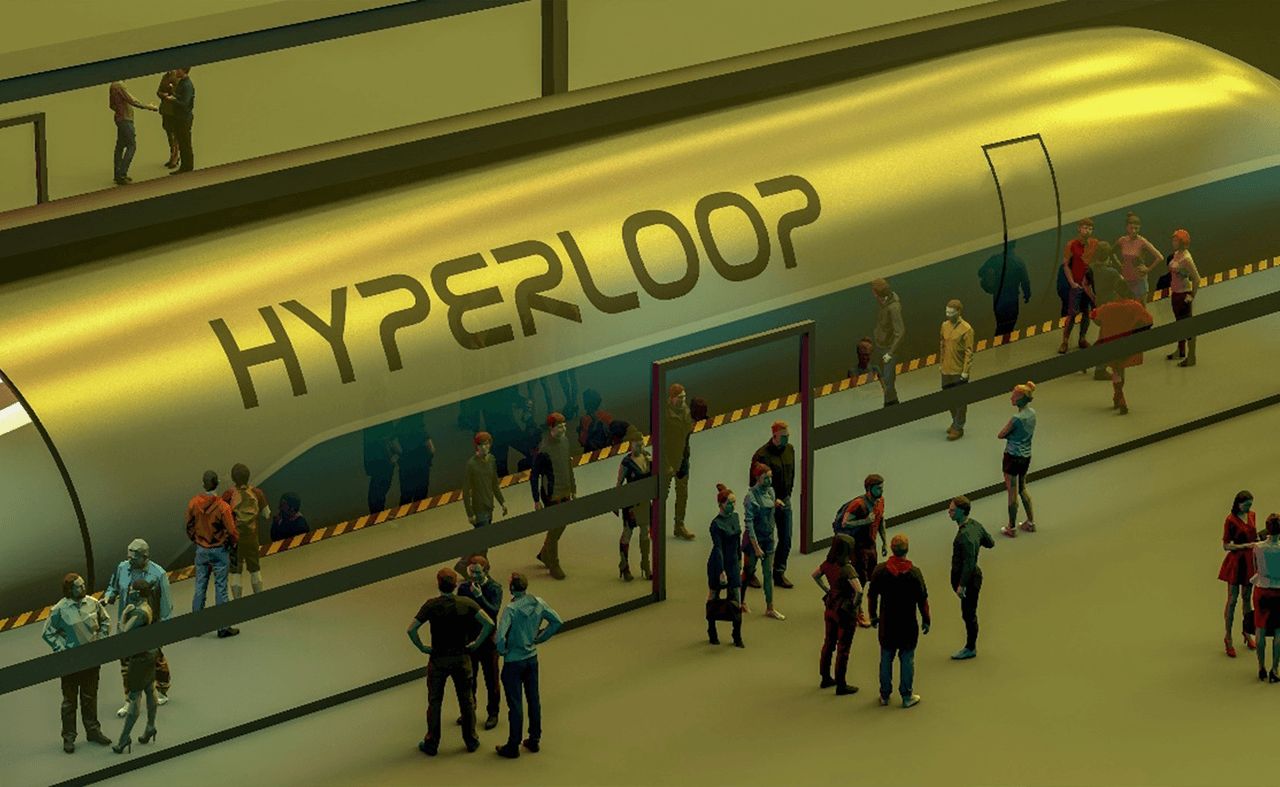
hyperloop.png

Hyperloop Technology

Technology

Smart transportation systems

Hyperloop is a transportation concept developed for ultra-high-speed intercity travel. Proposed by Elon Musk, founder of Tesla and The Boring Company, it is presented as an alternative to traditional transportation methods. Hyperloop aims to transport passengers and cargo at high speeds using capsules propelled by electromagnetic force within vacuum tubes.

Principle of Operation of Hyperloop

The fundamental principle of Hyperloop is the movement of specially designed capsules, or pods, within a tube system that minimizes air resistance. This system enables ultra-high speeds by reducing friction and aerodynamic drag to a minimum. The key principles of the system are as follows:

  1. Vacuum Tube System: The tubes are designed to create a low-pressure environment to reduce air resistance.
  2. Magnetic Levitation (Maglev) Technology: Pods move suspended in mid-air without contact with rails, using electromagnets.
  3. Linear Induction Motor: Electromagnetic forces accelerate and decelerate the capsules.
  4. Electric Compressor System: A compressor at the front of the pod pushes air to the rear, reducing aerodynamic resistance.

Technical Specifications of Hyperloop

  • Maximum Speed: Approximately 1,210 km/h (750 mph)
  • Travel Time: Potential to cover the distance between Los Angeles and San Francisco in about 30 minutes
  • Capacity: Ability to carry multiple passengers or cargo per trip
  • Energy Source: Solar panels, Tesla motors and batteries
  • Route and Infrastructure: Planned to be built on elevated viaducts following highway routes, designed to withstand earthquakes

Advantages of Hyperloop

  1. Fast Travel: Can cover long distances faster than air travel.
  2. Energy Efficiency: Operates on solar energy and electricity, offering an environmentally friendly transportation alternative.
  3. Low Operating Cost: Potentially more economical in the long term compared to conventional railways and air transport.
  4. Comfort and Safety: Passenger capsules are designed for comfort and equipped with high-level safety measures.

Challenges and Criticisms of Hyperloop

  1. Infrastructure Cost: Although Elon Musk has suggested Hyperloop could be built for $6 billion, experts consider this estimate overly optimistic.
  2. Technical Barriers: Engineering challenges such as stability at high speeds, passenger comfort, and the sustainability of the vacuum system remain unresolved.
  3. Regulations and Legal Processes: As a new transportation system, approval by governments and local authorities may take considerable time.
  4. Safety Concerns: The system faces criticism regarding how it will establish safety protocols against vibrations and emergency scenarios.

Hyperloop Projects Worldwide

Elon Musk’s companies are not developing Hyperloop systems alone. Various companies and consortia from different countries are conducting research in this field:

  • Virgin Hyperloop One: The Hyperloop initiative supported by Richard Branson is developing route plans in the United States, Canada, India, Mexico and the United Kingdom.
  • Hyperloop Transportation Technologies (HTT): Developing projects in China, Indonesia, South Korea, France and the Czech Republic. Construction began in 2019 on the Abu Dhabi–Dubai line.
  • ET3 Global Alliance: Working on hypersonic vacuum train systems based on maglev principles. Projected speeds could reach up to 6,500 km/h, potentially reducing travel time between New York and Beijing to two hours.

Hyperloop vs Maglev Comparison

Although Hyperloop is a different concept from maglev trains, it shares some similarities. Maglev trains are high-speed trains that move without touching rails and are currently in active use in Japan, China and South Korea. Hyperloop seeks to achieve even higher speeds by combining this concept with vacuum tubes.

The Future of Hyperloop

The future of Hyperloop depends on technological advancements, investor interest and government support. While it has the potential to become the new standard for intercity ultra-high-speed transport, its large-scale feasibility is still in the testing phase. If the technical and financial barriers can be overcome, Hyperloop could become one of the transportation systems of the future and fundamentally transform connectivity between metropolitan areas.
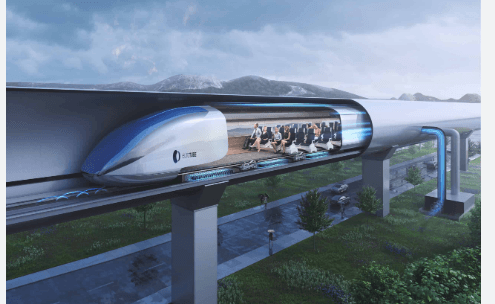
Hyperloop in the Future (Credit: sanayigazetesi.com)

Bibliographies

Discovery. (2020). "Hyperloop: Elon Musk's Tube Travel."

MIT. (2020). High-Speed Transport System Analysis. Massachusetts Institute of Technology.

Musk, E. (2013). "Hyperloop Alpha." Tesla.

Author Information

Avatar
AuthorCansu Işıl HatiDecember 24, 2025 at 8:48 AM

Tags

Discussions

No Discussion Added Yet

Start discussion for "Hyperloop Technology" article

View Discussions

Contents

  • Principle of Operation of Hyperloop

  • Technical Specifications of Hyperloop

  • Advantages of Hyperloop

  • Challenges and Criticisms of Hyperloop

  • Hyperloop Projects Worldwide

  • Hyperloop vs Maglev Comparison

  • The Future of Hyperloop

Ask to Küre