


This article was automatically translated from the original Turkish version.
Hüseyin Cavid House Museum, Azerbaijan literature’s great poet and dramatist Hüseyin Cavid (1882–1941), is a memorial museum established to preserve the memories of his life, art and family.
Museum is located in building number 8 on Istiqlaliyyət Street (formerly Communist Street) in Baku and operates under the Azerbaijan National Academy of Sciences.
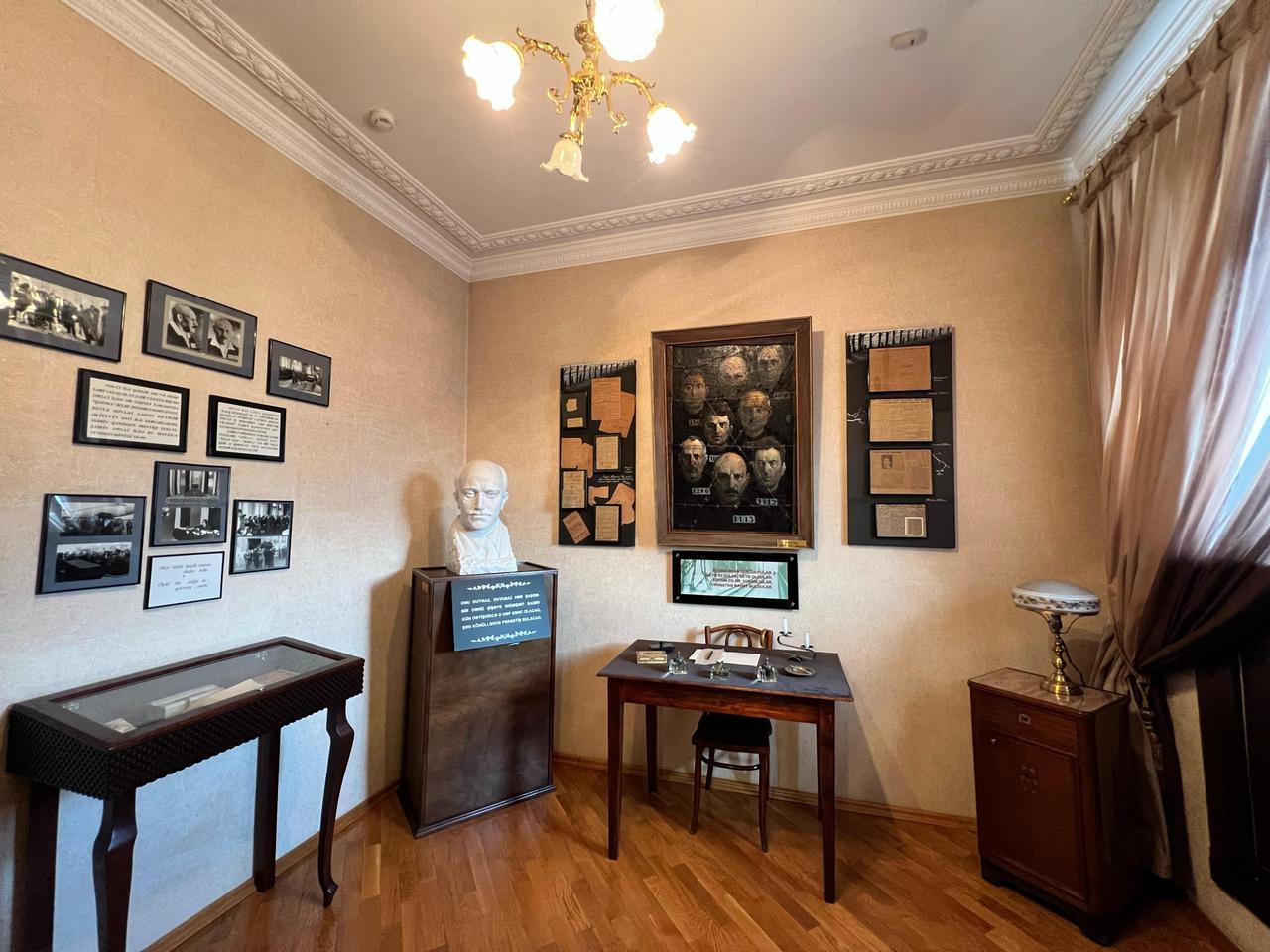
View from Inside the Museum (Duygu Şahinler)
The decision to establish the museum was adopted by the Central Committee of the Communist Party of Azerbaijan on 21 July 1981. This decision foresaw the opening of memorial museums in Baku and Nakhchivan in honor of the 100th anniversary of Hüseyin Cavid’s birth and the restoration of the façade of his house in Baku where he lived between 1920 and 1937, along with the placement of a commemorative plaque.
On 14 August 1981, the Ministry of Culture of Azerbaijan issued Order No. 228 to organize the commemorations. On 15 December 1981, Order No. 522 planned the opening of a memorial museum in Baku. However, initially the museum was established not in the rooms where Hüseyin Cavid lived but in the rooms where he gave lectures. This situation caused the museum to be distanced from the actual environments where Cavid lived and produced his works.
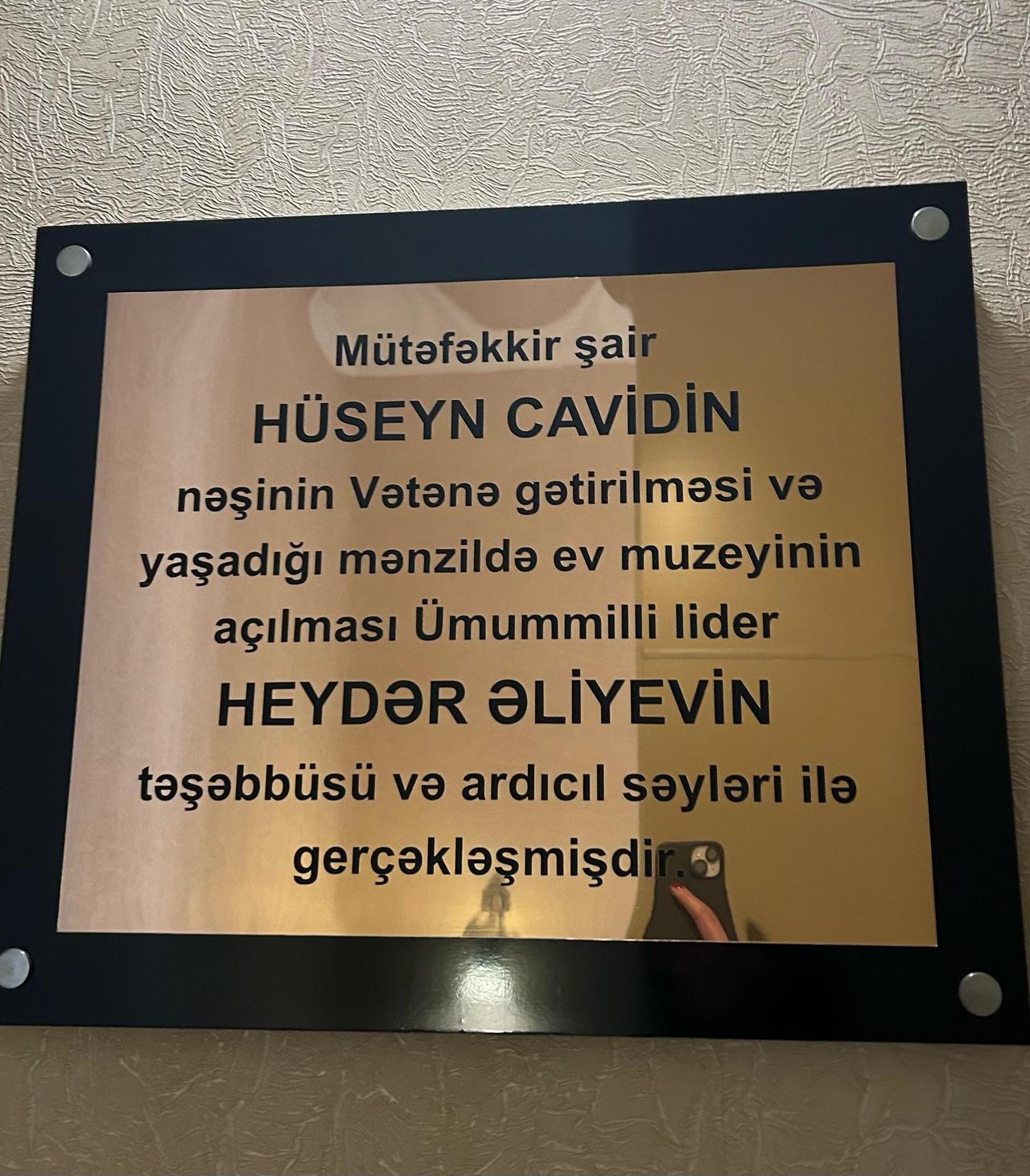
On 10 June 1995, during a historic meeting chaired by President of Azerbaijan Heydar Aliyev, this issue was reconsidered. By a decision of the Council of Ministers dated 10 July 1995, a total area of 245 square meters — comprising the entrance on the second floor and the spaces on the third floor of the apartment where Hüseyin Cavid lived (8 Istiqlaliyyət Street) — was designated as the Hüseyin Cavid House Museum.
Information Sign about the Museum (Duygu Şahinler)
One hundred thirty square meters of the museum are arranged as a permanent exhibition space. Visitors enter through the second floor and step into the living atmosphere of the Cavid family. Among the approximately 1,000 objects on display are Hüseyin Cavid’s handwritten manuscripts, household items and clothing belonging to his family, books, family photographs, and posters and programs of staged theatrical works.
Additionally, musical scores of compositions by Cavid’s son Artagul Cavid — including “Nine Variations” dedicated to Uzeyir Hajibeyov, “Let There Be Love”, and “Poem for Violin and Piano” — along with records, letters and various documents are exhibited. Documents related to the work of his daughter Turan Cavid also hold significant importance.
One of the most striking sections of the museum is Hüseyin Cavid’s study room and the “Repression Room.” Here, Oqtay Sadigzade’s dramatic painting “Victims of the Repression of 1937 – Black Writing” and V. Ucatay’s work “Above the Storm” are exhibited, both serving as elegies in honor of Cavid and all victims of repression.
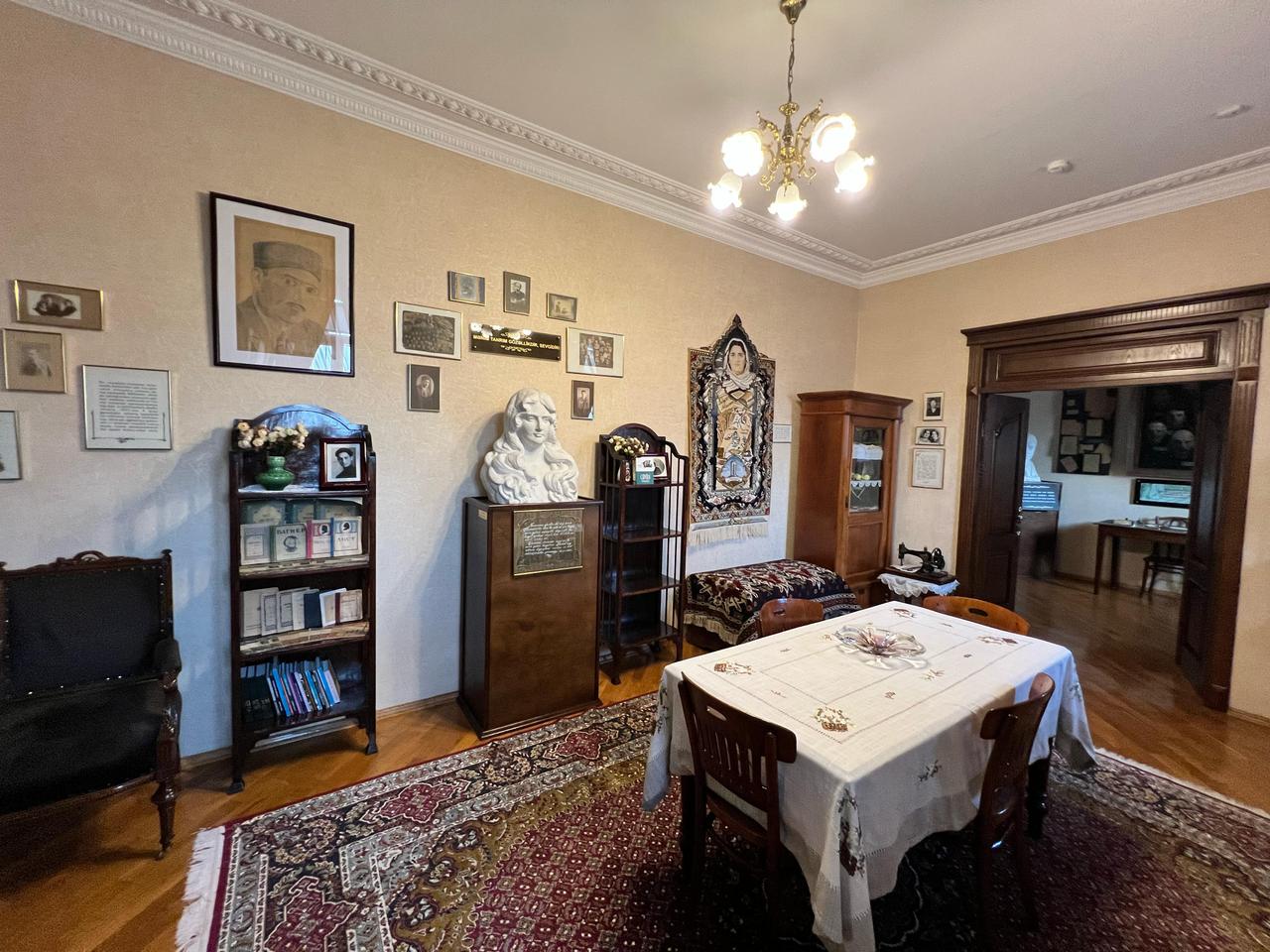
View from Inside the Museum (Duygu Şahinler)
The museum’s collection highlights the following:
Today, the Hüseyin Cavid House Museum operates as a scientific institution under the Azerbaijan National Academy of Sciences. The museum comprises five main departments:
The museum’s main archive preserves approximately 11,000 objects, a number that increases annually. The archive contains Hüseyin Cavid’s handwritten manuscripts, research materials, documents, audio and visual recordings, as well as personal archives belonging to his daughter and son.
Due to the earthquake that struck Baku in 2000, the museum was closed for a period. After restoration, it was reopened on 24 October 2002 with the participation of President Heydar Aliyev. This date also marks the 120th anniversary of Hüseyin Cavid’s birth.
The museum has published numerous works to date:
The museum annually commemorates the birthdays and memorial days of Hüseyin Cavid and his family with special ceremonies. It also maintains regular cooperation with the Hüseyin Cavid House Museum in Nakhchivan and provides methodological support.
The Hüseyin Cavid House Museum is a living monument to Azerbaijan’s culture, art and historical memory. It continues its mission to preserve, study and transmit the literary, artistic and intellectual legacy of the Cavid family to future generations.
Hüseyn Cavidin Ev Muzeyi. "Muzeyin Tarixi." AZƏRBAYCAN RESPUBLİKASI MƏDƏNİYYƏT NAZİRLİYİ HÜSEYN CAVİDİN EV-MUZEYİ. Accessed April 21, 2025.https://www.huseyncavid.az/az.php?go=tarix

No Discussion Added Yet
Start discussion for "Hüseyin Cavid House Museum" article
Establishment Process
Museum Layout and Collection
Artworks and Special Objects
Functions and Scientific Activities
Reopening and Publication Activities