This article was automatically translated from the original Turkish version.
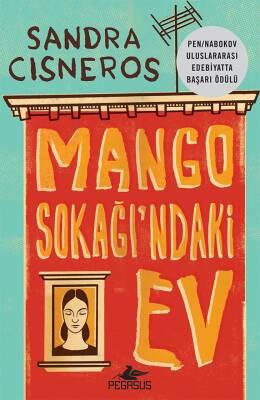
Author(s) | Sandra Cisneros | ||||||||
|---|---|---|---|---|---|---|---|---|---|
Translator(s) | Sevinç Seyla Tezcan | ||||||||
Genre | Novel | ||||||||
Number of Pages | 176 | ||||||||
Original Language | English | ||||||||
Publisher(s) | Pegasus Yayınları | ||||||||
Publication Date | 2019 | ||||||||
The House on Mango Street (The House on Mango Street) is a novel in short vignettes written by Mexican-American author Sandra Cisneros and published in 1984. The novel explores themes of identity, gender, poverty, and belonging through the eyes of Esperanza Cordero, a young girl living in a Latino neighborhood in Chicago.
The novel begins with Esperanza and her family moving into a new house on Mango Street in Chicago. Although this home represents an improvement over their previous residences, it is still not the house Esperanza dreams of.
Throughout the novel, Esperanza seeks to understand her identity through her relationships with the people in her neighborhood, especially the women. The poverty, violence, and social pressures experienced by her neighbors intensify her desire to leave Mango Street one day.
By the end of the novel, Esperanza still lives on Mango Street, but she has become a mature individual who understands she can permanently leave. Writing becomes the means by which Esperanza emotionally detaches from Mango Street and will later enable her to achieve physical separation through education and economic independence. Esperanza vows to return one day to help those she leaves behind.
Esperanza’s journey of self-discovery is intertwined with her connections to her neighborhood and family. She questions the limitations imposed by being both Latina and female. The desire to own her own home and define her own identity is a recurring theme throughout the novel.
Home and place are linked to Esperanza’s dreams, desires, and longing for autonomy. Her vision of having a house of her own symbolizes her yearning for freedom.
The novel reveals how women in the neighborhood are constrained by men and burdened by social norms.
Esperanza’s desire to write is central to the novel. Storytelling serves as both a tool for personal liberation and a means of reconstructing her identity.
The narrative unfolds in the first person singular from Esperanza’s perspective. The language is simple, poetic, and at times childlike in its perception. Although each section appears as an independent observation or experience, when read as a whole, they reveal Esperanza’s process of growth and awakening. This structure transforms the work into both a personal coming-of-age story and a social document.
• Esperanza Cordero: The protagonist of the novel. A young Mexican-American girl who lives on Mango Street in Chicago.
• Magdalena “Nenny” Cordero: Esperanza’s younger sister. Esperanza is protective of Nenny, but Nenny’s childish behavior sometimes embarrasses her.
• Mama: Esperanza’s mother. She regrets having dropped out of school and not achieving more in life.
• Papa: Esperanza’s father. He works long hours and is rarely home.
• Sally: A girl Esperanza meets during adolescence who has matured earlier than her peers.
• Marin: A Puerto Rican girl who lives on Mango Street with her cousins.
• Minerva: A woman close to Esperanza’s age who has two children and is neglected by her partner. She expresses her struggles through poetry and inspires Esperanza.
• Alicia: A young woman who continues her education and strives to build her own life despite difficult circumstances.
• Rafaela: A beautiful woman locked inside her home by her husband at night.
• Mamacita: A very overweight woman who has recently moved to Mango Street. Her husband worked hard to bring her from Mexico to Mango Street, but Mamacita never leaves the house and refuses to learn English. She is a character who struggles to adapt to a new country and suffers from social isolation.
Cisneros, Sandra. Mango Sokağı'ndaki Ev. Çev. Sevinç Seyla Tezcan. Pegasus Yayınları, 2019.

Author(s) | Sandra Cisneros | ||||||||
|---|---|---|---|---|---|---|---|---|---|
Translator(s) | Sevinç Seyla Tezcan | ||||||||
Genre | Novel | ||||||||
Number of Pages | 176 | ||||||||
Original Language | English | ||||||||
Publisher(s) | Pegasus Yayınları | ||||||||
Publication Date | 2019 | ||||||||
No Discussion Added Yet
Start discussion for "House on Mango Street (Book)" article
Summary
Themes
Identity and Belonging
Place and the Home
Gender Roles and Social Pressure
Language and Narrative
Narrative Technique and Style
Characters