


This article was automatically translated from the original Turkish version.
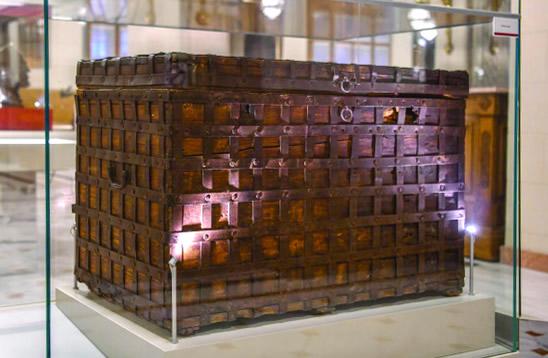
Home Voting Boxes
Usage | Farmer mutual aid fund | ||||||||
|---|---|---|---|---|---|---|---|---|---|
Purpose(s) | Provide agricultural credit | ||||||||
Year of Establishment | 1863 | ||||||||
Founder(s) | Mithat Pasha | ||||||||
Popularization Through Legal Framework | 1867 | ||||||||
Transformation (Closure) | 1883 | ||||||||
Successor | Ziraat Bankası | ||||||||
Country Chests were an important agricultural credit institution established in the second half of the 19th century in the Ottoman Empire to meet the financial needs of rural communities and support agricultural development. A primary objective was to free farmers from the cycle of debt prevalent during a time of widespread usury and to support their production.
The foundations of the Country Chests were laid in 1863 in Şehirköy (Pirot) through the initiative of Mithat Paşa, who was then the governor of Niş. This first chest was established using capital pooled by the local population through the traditional communal labor system known as "imece." The concept of "imece" was based on villagers cooperating in collective production activities such as sowing and harvesting, and contributing a portion of their harvest or earnings to a common fund. This structure reflected the cooperative and community-based character of the Country Chests at their inception.

Mithat Paşa (Generated using artificial intelligence)
The Country Chests derived their name from the wooden chests initially used to store funds. Over time, these were replaced by more secure primitive metal containers crafted by local artisans. Management of the chests was carried out by four elected village representatives known as "chest trustees," typically consisting of two Muslims and two Christians. This governance model facilitated the participation of different religious communities within a single institution in the multi-confessional Ottoman society.
Financial records were meticulously maintained:
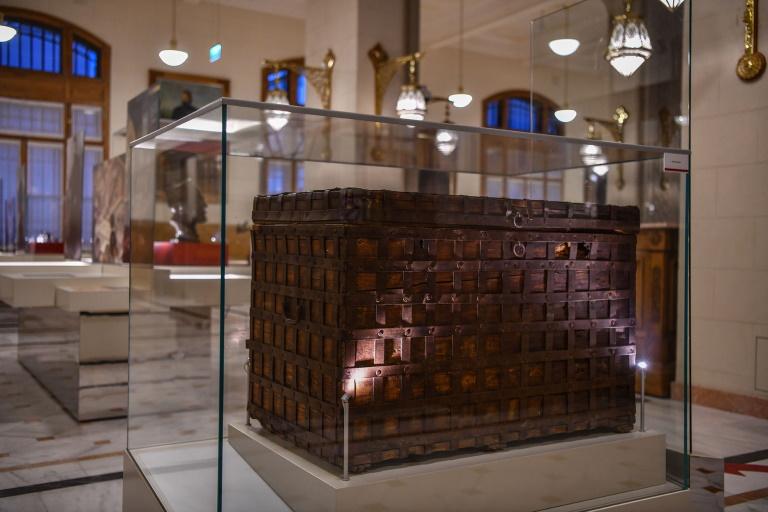
Country Chests (Ziraat Bankası)
The institutionalization and nationwide expansion of the Country Chests were formalized by the "Country Chests Regulation" enacted in 1867. Under this regulation, chests were established in every province of the Ottoman Empire and became a vital component of the agricultural credit system.
The Country Chests aimed to protect farmers from the high interest rates of usurers by providing low-interest credit. After deducting operational expenses, two-thirds of the profits generated from lending activities were allocated to meet the basic communal needs of the region where the chest was located—such as the construction and repair of schools, roads, and bridges. This demonstrated that the chests were not merely financial instruments but also direct contributors to the improvement of rural infrastructure and the enhancement of social welfare.
Although the Country Chests provided essential services aligned with their founding objectives, they gradually became inadequate due to increasing demands and persistent challenges such as insufficient capital and administrative shortcomings. These limitations highlighted the need for a more institutionalized and centralized structure. In 1883, these agricultural credit institutions were reorganized under the name "Menafi Sandıkları" and ultimately formed the foundation of Ziraat Bankası in 1888, established with a modern banking approach.
The Country Chests played a pioneering role in addressing rural financial challenges, supporting agricultural production, and promoting local development in the Ottoman Empire. They are recognized as a crucial stage in the evolution toward the modern agricultural credit system and the establishment of Ziraat Bankası.
Dereci, Şeyma. "Osmanlı Döneminde Ziraat Bankası’nın Tarım Dışı Uygulamaları." *VAKANÜVİS- Uluslararası Tarih Araştırmaları Dergisi/ International Journal of Historical Researches* 8, no. 1 (Spring 2023). Accessed June 9, 2025. https://dergipark.org.tr/tr/download/article-file/2758285
Doğan, Cabir, and Ferhat Güngör. "Midilli Memleket Sandıkları (Osmanlı Devleti Hâkimiyetindeki Midilli Adası’nda Zirai Kredi Teşkilatı Kurma Konusunda İlk Teşebbüs)." *Elektronik Sosyal Bilimler Dergisi* 14, no. 53 (Spring 2015): 298–309. Accessed June 9, 2025. https://dergipark.org.tr/tr/download/article-file/70631
Güngör, Ferhat. *Osmanlı Devleti Zirâî Kredi Teşkilatları (1863-1888)*. PhD thesis, Süleyman Demirel University Institute of Social Sciences, Department of History, Isparta, 2015. Accessed June 9, 2025. https://openaccess.hacettepe.edu.tr/bitstream/handle/11655/36208/10639363.pdf?sequence=1&isAllowed=y
Küçük, Bumin. "Türk Kültüründe Yardımlaşma Örneği: İmece Usulünden Yardım Sandıklarına." *Türk Kültürü ve Hacı Bektaş Velî Araştırma Dergisi*, no. 113 (March 2025): 421-439. Accessed June 9, 2025. https://dergipark.org.tr/en/download/article-file/4526778
Ziraat Bank KKTC. "Bankamız Tarihçesi." Accessed June 9, 2025. https://www.ziraatbank-kktc.com/tr/bankamiz-tarihcesi
Çatak, Şeyma. *Memleket Sandıklarından Menafi Sandıklarına Ziraat Bankası (1863-1918)*. Master's thesis,Hacettepe Üniversitesi, Institute of Atatürk's Principles and History of Revolution, Department of Atatürk's Principles and History of Revolution, Ankara, 2024. Accessed June 9, 2025. https://tez.yok.gov.tr/UlusalTezMerkezi/tezDetay.jsp?id=mFll_FGdVMfvcaGAqzjAEg&no=fCRZdawBix9pP2kF7iKcBQ

Home Voting Boxes
Usage | Farmer mutual aid fund | ||||||||
|---|---|---|---|---|---|---|---|---|---|
Purpose(s) | Provide agricultural credit | ||||||||
Year of Establishment | 1863 | ||||||||
Founder(s) | Mithat Pasha | ||||||||
Popularization Through Legal Framework | 1867 | ||||||||
Transformation (Closure) | 1883 | ||||||||
Successor | Ziraat Bankası | ||||||||
No Discussion Added Yet
Start discussion for "Home Election Boxes" article
Founding and Early Steps
Structure and Operation
Legal Framework and Expansion
Economic and Social Contributions
Evolution and Transition to Ziraat Bankası