


This article was automatically translated from the original Turkish version.
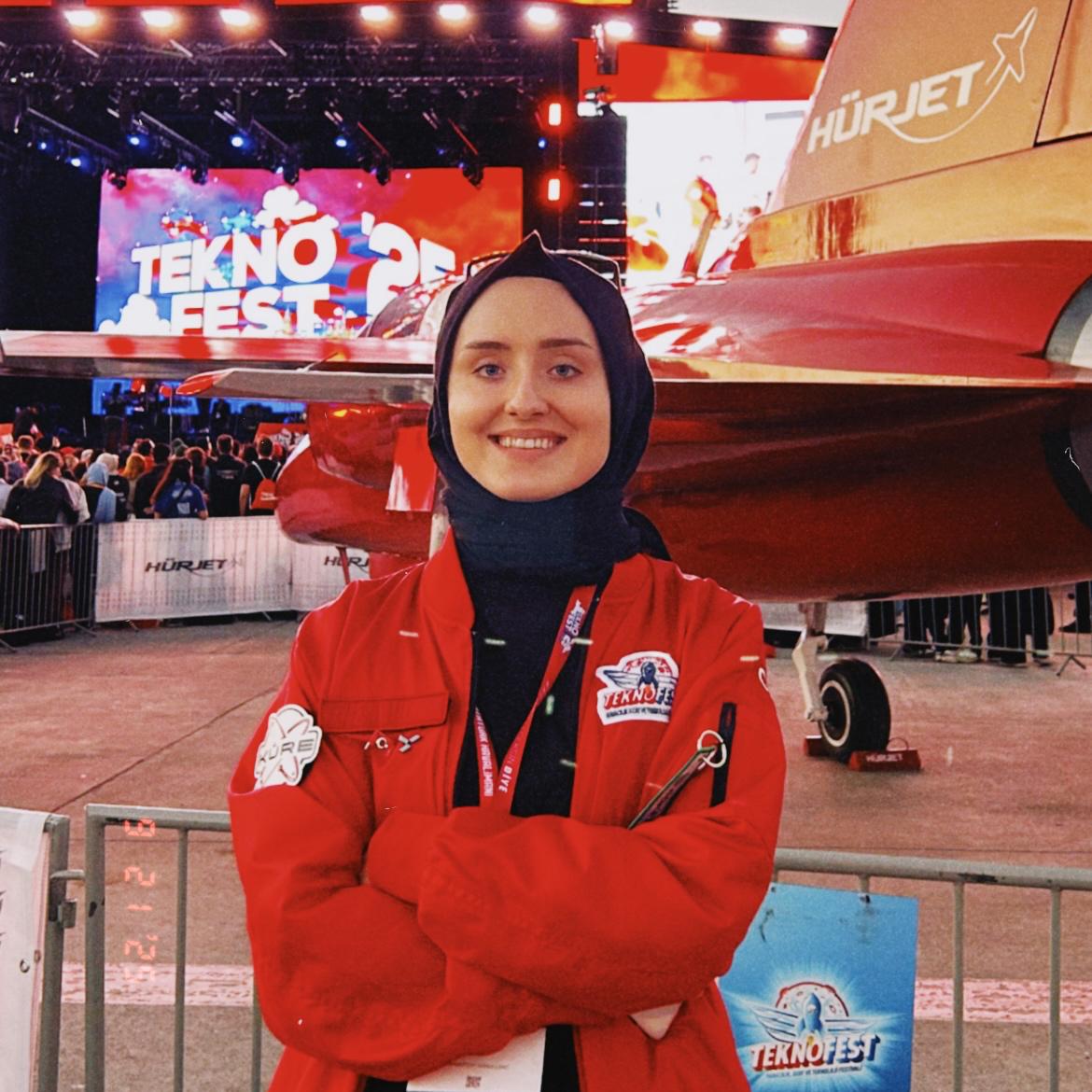
Bayram mornings have a unique sound. The rush of households waking early, the aroma of breakfast rising from kitchens, ironed clothes waiting on the edges of chairs, elders calling out “rise early”… No matter where a person is, they carry within them the feeling of bayram from childhood. Yet when exile is involved, bayram becomes not merely a day of joy but one of the moments when distance is felt most acutely.
Exile is often thought of simply as living in another city or country. Yet exile can also be a sense of absence even amidst a crowd. During bayram days, this absence becomes more visible. For bayram reminds us of family, togetherness, and gathering around the same table. It is on such days that people most keenly realize how far apart they truly are.
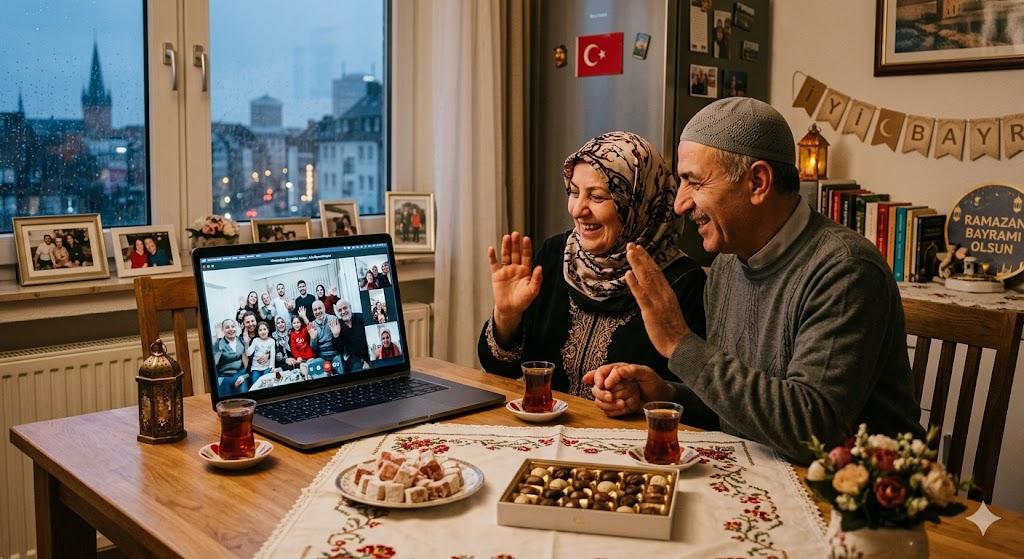
Visual Representing Bayram in Exile (Generated by Artificial Intelligence)
Bayrams are, by nature, collective rituals. In social psychology, rituals provide individuals with a sense of security by reinforcing their belonging to a group. For the migrant in exile, the absence of a “father’s house” to visit after the bayram prayer or a “neighbor” to knock on the door can generate a feeling of social invisibility. Attempting to celebrate bayram in a place where everyone else awakens to a normal workday becomes an effort to sustain one’s identity alone.
Today, technological advancements have shifted the concept of exile from the physical to the digital. Yet virtual bayram tables bring with them a psychological paradox: the illusion of closeness. The migrant who sees loved ones through a screen may feel more intensely the guilt and deprivation of not being physically present. The emptiness created by inability to touch or to smell can sometimes be more exhausting than physical distance.
One of the most healing aspects of migrant psychology is the bonds formed with those who share similar fates. In exile, bayrams give rise to “chosen families”—friends, fellow migrant neighbors—who take the place of biological kin. Gathering around a table sharing the same longing alleviates loneliness and strengthens the sense of shared destiny inherent in migration.
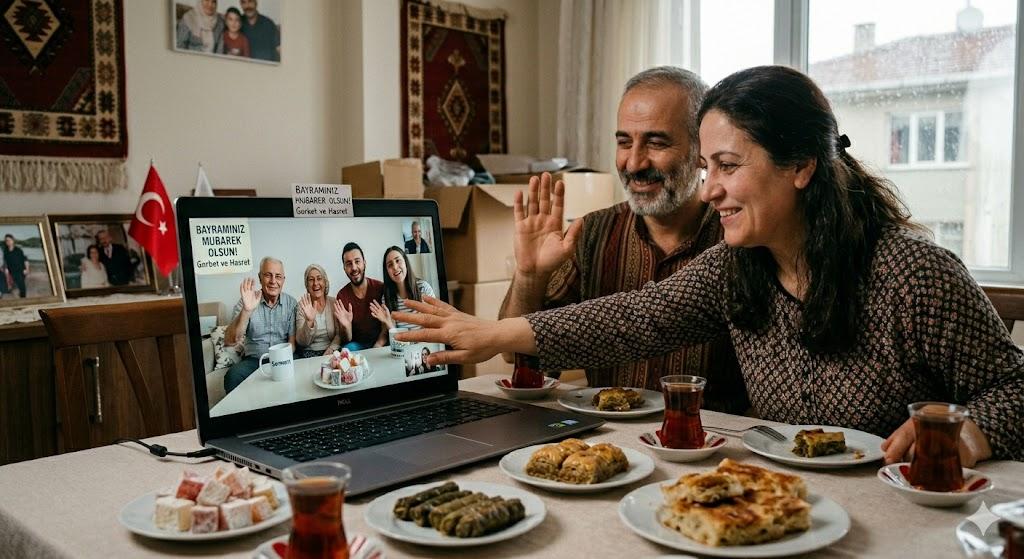
Visual Representing Bayram in Exile (Generated by Artificial Intelligence)
Bayram in exile is a story of incompleteness, deep longing, and above all, immense resilience. On this day, the migrant does not merely celebrate a holiday but honors the vast inner sense of “home” they carry within. Perhaps the elders to kiss hands are far away, but the cultural heritage they carry remains the strongest compass reminding them of who they are, no matter where they are in the world.
Remember; bayram is not experienced only in a place but within the inner geography where a person carries those they love.
Üstün, Nida. "Gurbette Bayram: Uzaktaki Kokunun, Yakındaki Hasreti." Unpublished story, 2026.
The Psychology of an “Incomplete” Ritual
Digital Bridges and Visual Exile
A New Belonging: “Chosen Families”
The Dance of Sadness and Hope