


This article was automatically translated from the original Turkish version.
+1 More
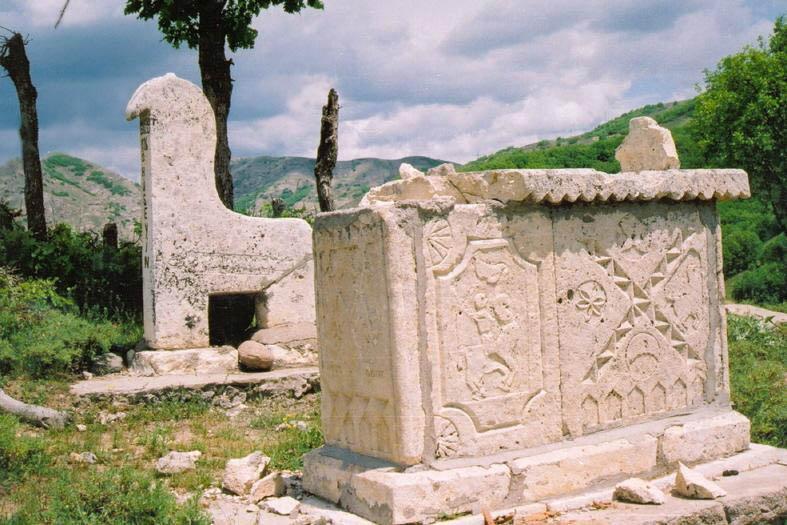
Tunceli Provincial Directorate of Culture and Tourism. "Grave Stones." Tunceli Culture Portal. Access date 21 June 2025 https://tunceli.ktb.gov.tr/TR-57330/mezar-taslari.html
Historical Grave Stones with Ram Heads
Form | Ram, Bull, Sheep | ||||||||
|---|---|---|---|---|---|---|---|---|---|
Period(s) | 250–500 Years | ||||||||
Cultural Context | Akkoyunlu, Karakoyunlu, Turkmen Tradition, Alevi Belief | ||||||||
Motifs | Sword, Dagger, Weaving Loom | ||||||||
Meaning(s) | Gender Religious Indicator Social Status Occupation | ||||||||
The sheep, horse, and ram-shaped tombstones found in Tunceli province are regional tombstones dated to approximately 250 to 300 years ago. Typically carved from a single piece of rock, these tombstones weigh between 200 and 300 kilograms. They are positioned upright and oriented to face the same direction.
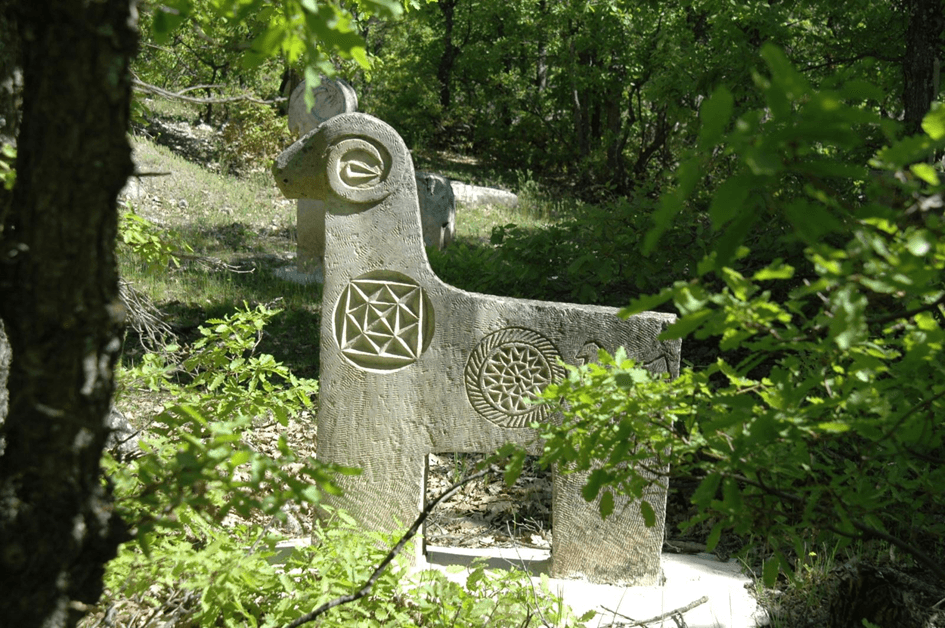
Ram-Headed Historical Tombstones (Türkiye Culture Portal)
These tombstones are located in the old cemeteries of various villages and hamlets across Tunceli, usually on elevated areas such as hilltops or the upper parts of villages. The stones found in these cemetery sites bear traces of the Akkoyunlu and Karakoyunlu burial traditions of the region.
Although the tombstones are carved in simple forms, they feature relief figures related to warfare and weapons such as swords, daggers, spears, shields, knives, rifles, pistols, and arrows; daily life motifs such as looms, jugs, forks, and combs; as well as animal and plant designs. These decorations serve not only an ornamental purpose but also convey information about the deceased’s gender, profession, social status, and beliefs.
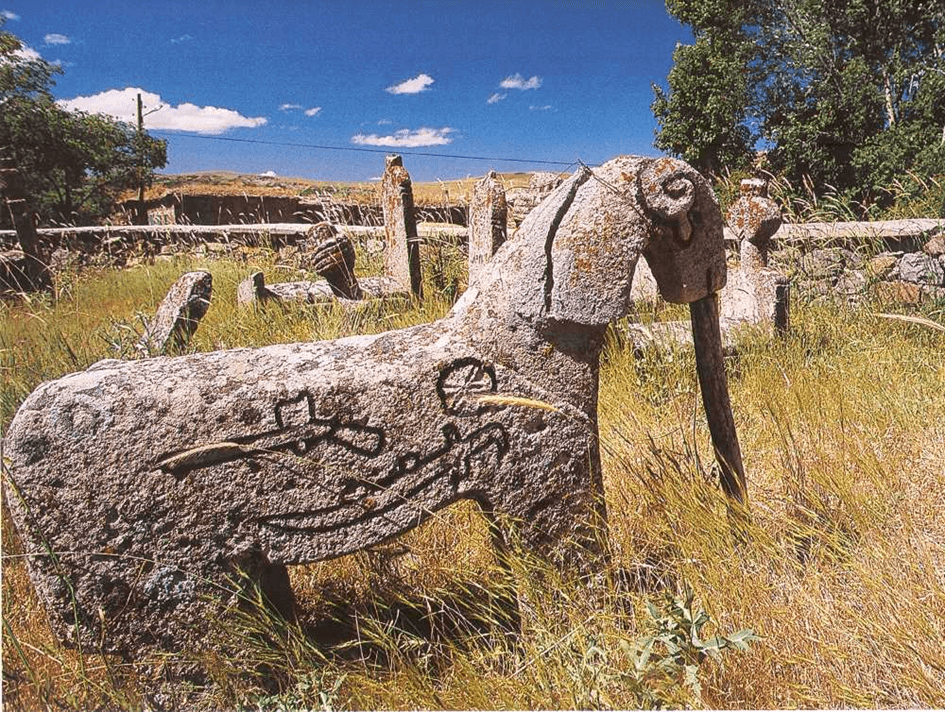
Ram-Headed Historical Tombstones (Türkiye Culture Portal)
Motifs such as swords, shields, horses, rams, and rifles indicate that the deceased was male and a warrior. Symbols like lamps and scales are associated with religious figures; needles, spindles, and hand figures with women. Pitchers and trays symbolize personal traits such as generosity and hospitality. Motifs such as Zulfiqar (the sword of Hz. Ali) and the sun throne found on some tombs indicate that the deceased belonged to the Alevi faith.
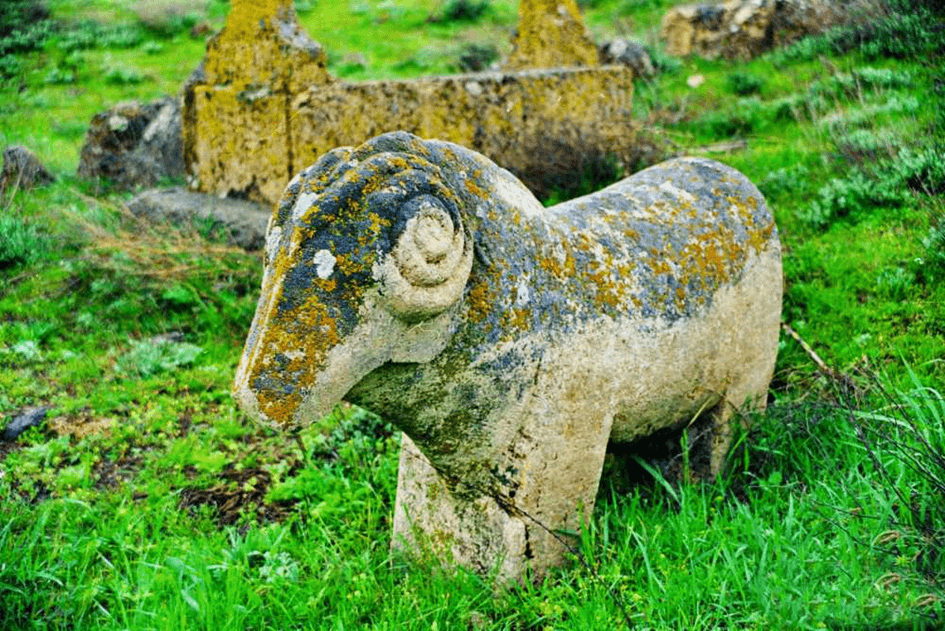
Ram-Headed Historical Tombstones (Türkiye Culture Portal)
These tombstones in Tunceli are tangible expressions of the region’s traditional customs, norms, and belief systems. Shaped by the fusion of Alevi faith and the cultural values of the local population, these tombstones constitute an important archaeological and ethnographic resource.
Approximately 70 ram- and horse-shaped tombstones are under conservation at the Tunceli Museum. Additionally, around 30 tombstones have been officially registered and placed under protection, along with the sites where they are located. The museum maintains an inventory of the tombstones, records their details, and carries out conservation work.
Anadolu Ajansı. "Tunceli’deki tarihi koç ve at biçimli mezar taşları 500 yıllık kültürün izlerini taşıyor." Accessed June 21, 2025. https://www.aa.com.tr/tr/kultur-sanat/tuncelideki-tarihi-koc-ve-at-bicimli-mezar-taslari-500-yillik-kulturun-izlerini-tasiyor/2456372
Hozat Kaymakamlığı. "Tarihi Mezar Taşı." Hozat Belediyesi. Accessed June 21, 2025. http://www.hozat.gov.tr/tarihi-mezar-tasi
Tunceli Valiliği İl Kültür ve Turizm Müdürlüğü. "Mezar Taşları." Tunceli Kültür Portalı. Accessed June 21, 2025. https://tunceli.ktb.gov.tr/TR-57330/mezar-taslari.html

Tunceli Provincial Directorate of Culture and Tourism. "Grave Stones." Tunceli Culture Portal. Access date 21 June 2025 https://tunceli.ktb.gov.tr/TR-57330/mezar-taslari.html
Historical Grave Stones with Ram Heads
Form | Ram, Bull, Sheep | ||||||||
|---|---|---|---|---|---|---|---|---|---|
Period(s) | 250–500 Years | ||||||||
Cultural Context | Akkoyunlu, Karakoyunlu, Turkmen Tradition, Alevi Belief | ||||||||
Motifs | Sword, Dagger, Weaving Loom | ||||||||
Meaning(s) | Gender Religious Indicator Social Status Occupation | ||||||||
No Discussion Added Yet
Start discussion for "Historical Ram-Headed Grave Stones" article
Geographical and Historical Context
Motifs and Decorations
Social and Cultural Functions
Cultural and Belief Context
Conservation and Inventory Efforts