Origin(s) | United States (Hiller Aircraft Corporation) | ||||||||
|---|---|---|---|---|---|---|---|---|---|
Units Produced | 3 prototypes | ||||||||
Engines and Powerplant | 2 × Continental C-85-12 piston engines | ||||||||
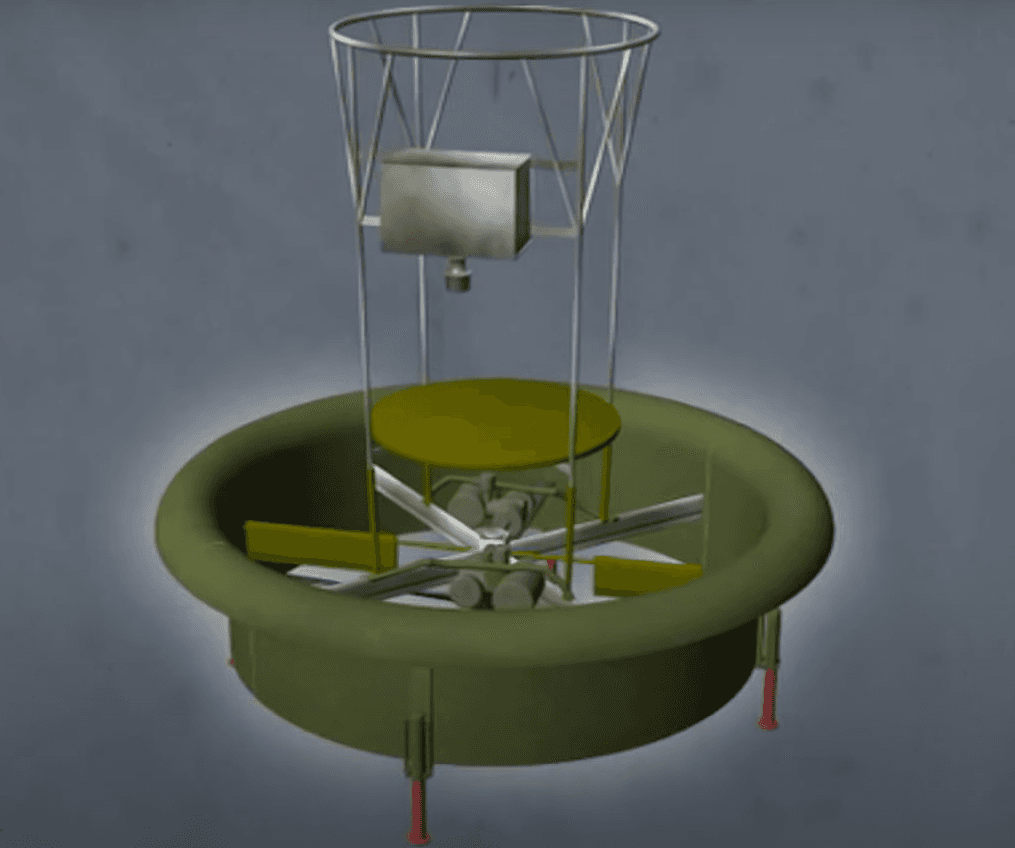
Propulsion System | Central air-cushion platform driven by coaxial contra-rotating propellers | ||||||||
Control System | Directional control by shifting the pilot’s center of gravity | ||||||||
Maximum Takeoff Weight | Approximately 320 kg | ||||||||
First Flight(s) | 1955 | ||||||||
Dimension(s) | Diameter: approximately 1.8 meters | ||||||||
The Hiller VZ-1 Pawnee was an experimental aircraft evaluated by the U.S. Army in the 1950s. Described as a "flying platform," the vehicle was intended to allow a single person to be directed a few meters above the ground with vertical take-off and landing (VTOL) capability. The design is a notable example of the research conducted on individual air mobility.
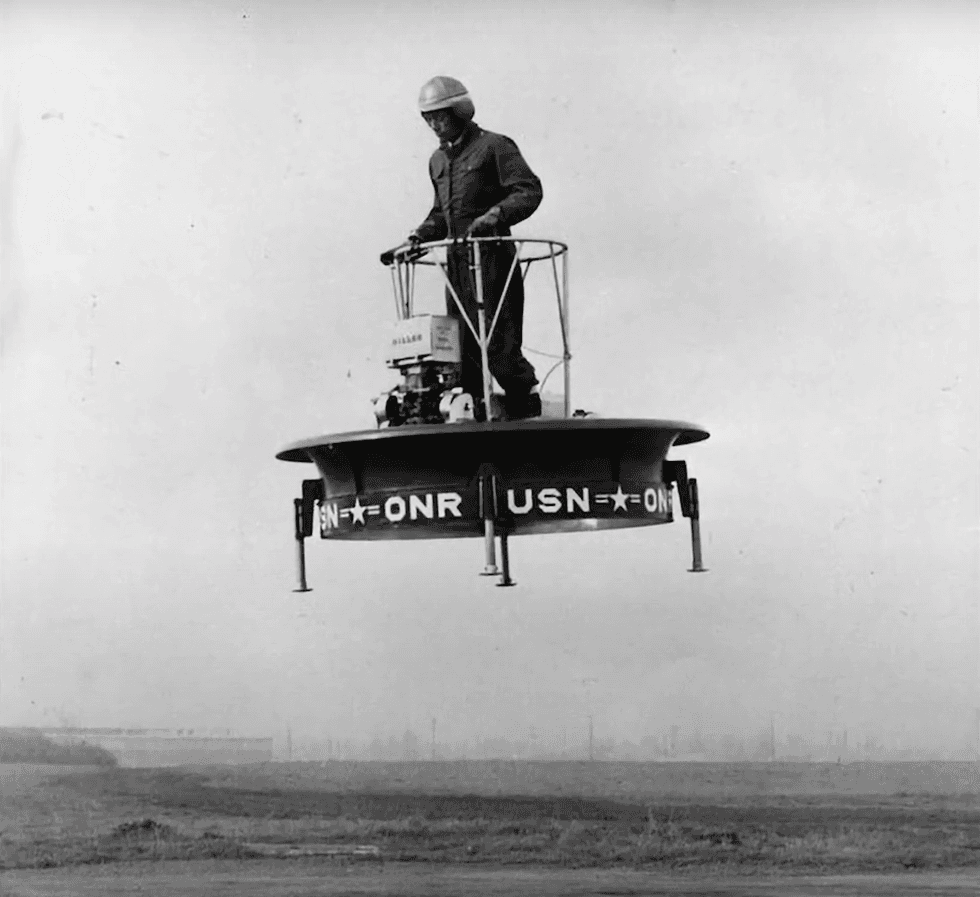
Hiller VZ-1 Pawnee (Retro Transport)
In the 1950s, the U.S. Army was exploring small, highly maneuverable aircraft that could be used alongside ground troops. As part of this effort, it sought alternative solutions for reconnaissance, surveillance, and light cargo transport. Hiller Aircraft developed the VZ-1 Pawnee project within this framework. The goal was to design a simple flying platform that a pilot could steer using their body movements.
Hiller VZ-1 Pawnee (Smithsonian Channel)
The Hiller VZ-1 Pawnee had the following design characteristics:
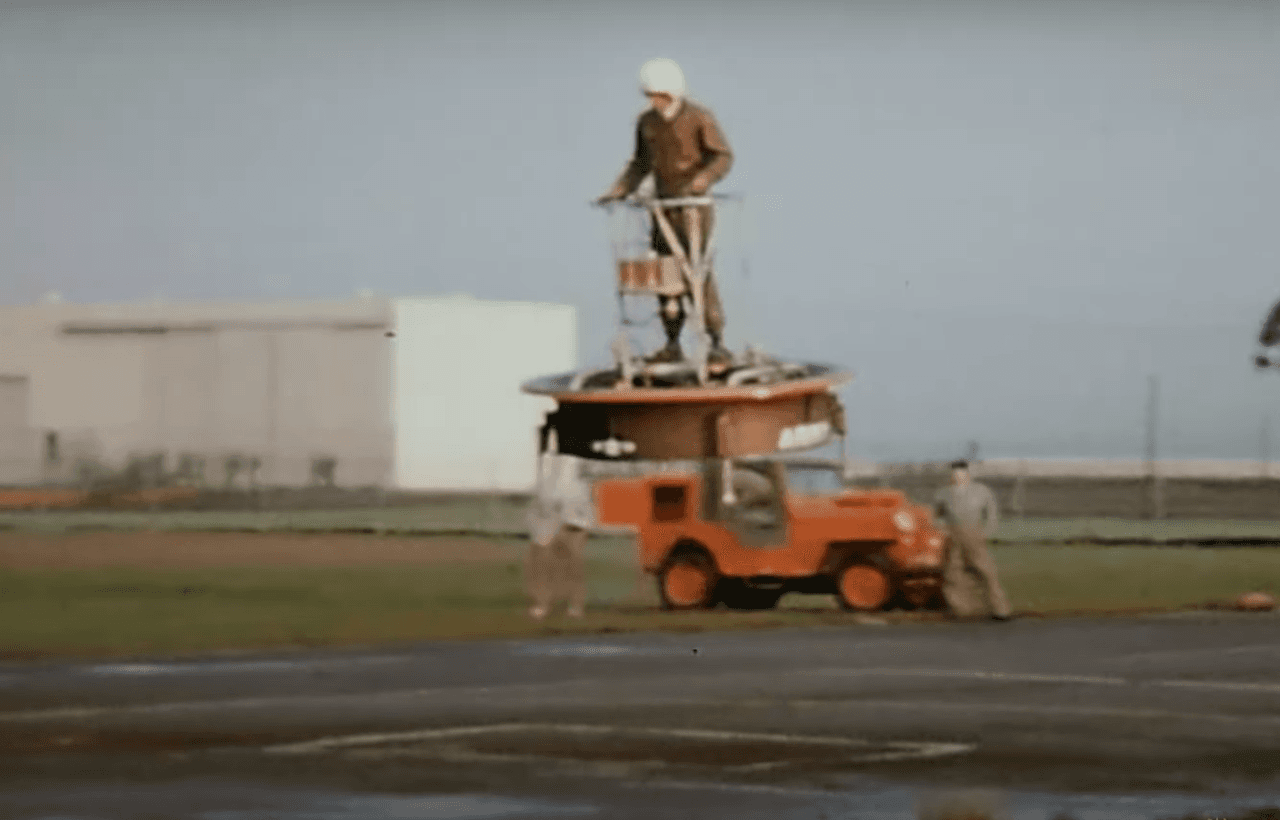
Hiller VZ-1 Pawnee (Smithsonian Channel)
The Hiller VZ-1 Pawnee was subjected to various test flights in the late 1950s. These tests evaluated the vehicle's flight capabilities and its body-movement-based control concept. However, the tests revealed the aircraft's operational limitations. Its low speed, limited range, and insufficient carrying capacity restricted its suitability for military missions. Control difficulties in windy conditions and stability issues at higher altitudes were also factors that prevented the continuation of the project. For these reasons, the VZ-1 Pawnee was removed from the development process in the early 1960s and never reached an operational stage. A few prototypes that were produced are now exhibited in museums.
Although it was never used operationally, the Hiller VZ-1 Pawnee is regarded in aviation history as an example of experimental research into personal aircraft and vertical take-off and landing (VTOL) technologies. The "flying platform" concept and the body-movement-based control approach provided technical data and experience for subsequent VTOL systems and individual air mobility projects. The project holds a place in historical records as part of the engineering trials and technological quests in this field.
DBpedia. "Hiller VZ-1 Pawnee." Accessed: 16 August 2025. https://dbpedia.org/page/Hiller_VZ-1_Pawnee.
Hiller Aviation Museum. "Flying Platform." Accessed: 16 August 2025. https://www.hiller.org/flying-platform/.
Hubschraubermuseum Bückeburg. "Hiller VZ-1 Pawnee." Accessed: 16 August 2025. https://www.hubschraubermuseum.de/index.php/en/?view=article&id=192:hiller-vz-1-pawnee-en&catid=0.
Kass, Harrison. "The U.S. Military Spent the 1950s Developing the VZ-1 Pawnee." The Debrief. Accessed: 16 August 2025. https://thedebrief.org/the-us-military-spent-the-1950s-developing-vz-1_pawnee/.
Retro Transport. "Hiller VZ-1 Pawnee." YouTube. Accessed: 16 August 2025. https://www.youtube.com/watch?v=H3FEgYI1RbQ.
Smithsonian Channel. "The Segway of Airplanes." YouTube. Accessed: 16 August 2025. https://www.youtube.com/watch?v=8aVIzyWO1HE.

Origin(s) | United States (Hiller Aircraft Corporation) | ||||||||
|---|---|---|---|---|---|---|---|---|---|
Units Produced | 3 prototypes | ||||||||
Engines and Powerplant | 2 × Continental C-85-12 piston engines | ||||||||
Propulsion System | Central air-cushion platform driven by coaxial contra-rotating propellers | ||||||||
Control System | Directional control by shifting the pilot’s center of gravity | ||||||||
Maximum Takeoff Weight | Approximately 320 kg | ||||||||
First Flight(s) | 1955 | ||||||||
Dimension(s) | Diameter: approximately 1.8 meters | ||||||||
Purpose of Development and History
Design and Technical Specifications
Operational Status and Fate
Significance and Legacy
This article was created with the support of artificial intelligence.