


This article was automatically translated from the original Turkish version.
+1 More
Hemşin Sock
Registration Number | 841 | ||||||||
|---|---|---|---|---|---|---|---|---|---|
Registration Date | 09.08.2021 | ||||||||
Application Number | C2021/000111 | ||||||||
Application Date | 10.03.2021 | ||||||||
Name of the Geographical Indication | Hemşin Çorabı | ||||||||
Product / Product Group(s) | Handicraft Products Other Than Socks Kilims and Textiles Carpets | ||||||||
Type of Geographical Indication | Geographical Indication | ||||||||
Applicant/Registrant(s) | Hemşin Municipality | ||||||||
Address of the Registrant | Ortaköy Neighborhood, Atatürk Street, Government House, 1st Floor, Hemşin RIZE | ||||||||
Geographical Boundary | Rize Province Hemşin District | ||||||||
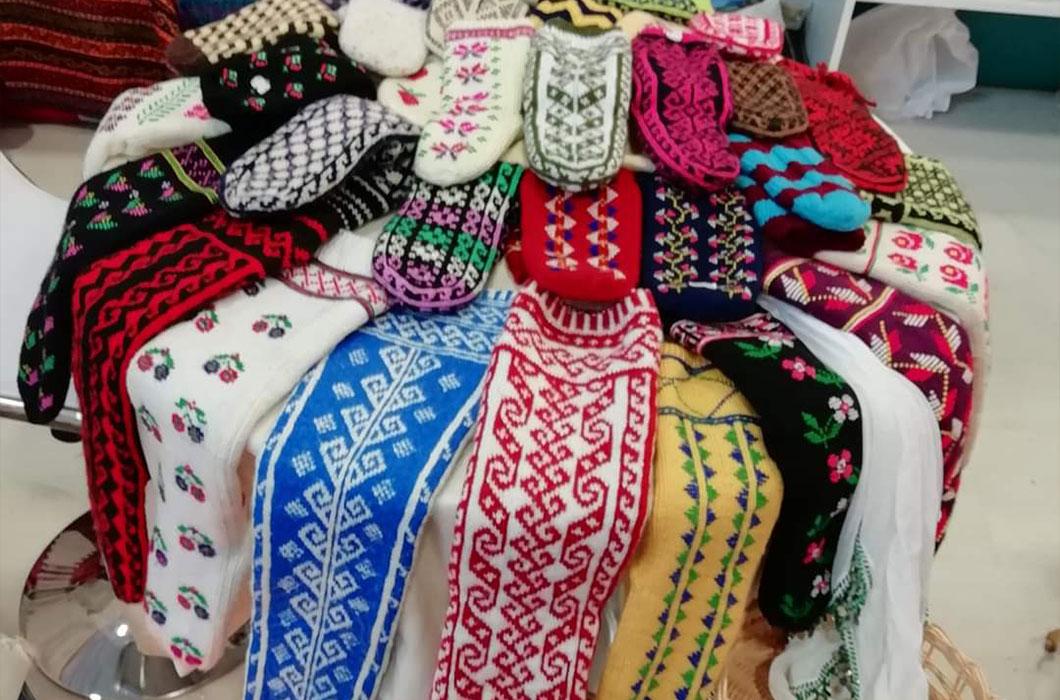
Hemşin socks are a traditional handicraft product produced in the Hemşin district of Rize Province in Türkiye’s Black Sea Region. The primary raw materials used are sheep’s wool and goat hair. Hemşin socks are knitted using five needles of size 2.5–3 (locally called “cağ”). Historical records first mention Hemşin socks in the 19th century, specifically in the 1879 and 1881 Trabzon Vilayeti Salnameleri, which note that wool socks were produced and sold in the Hemşin subdistrict.
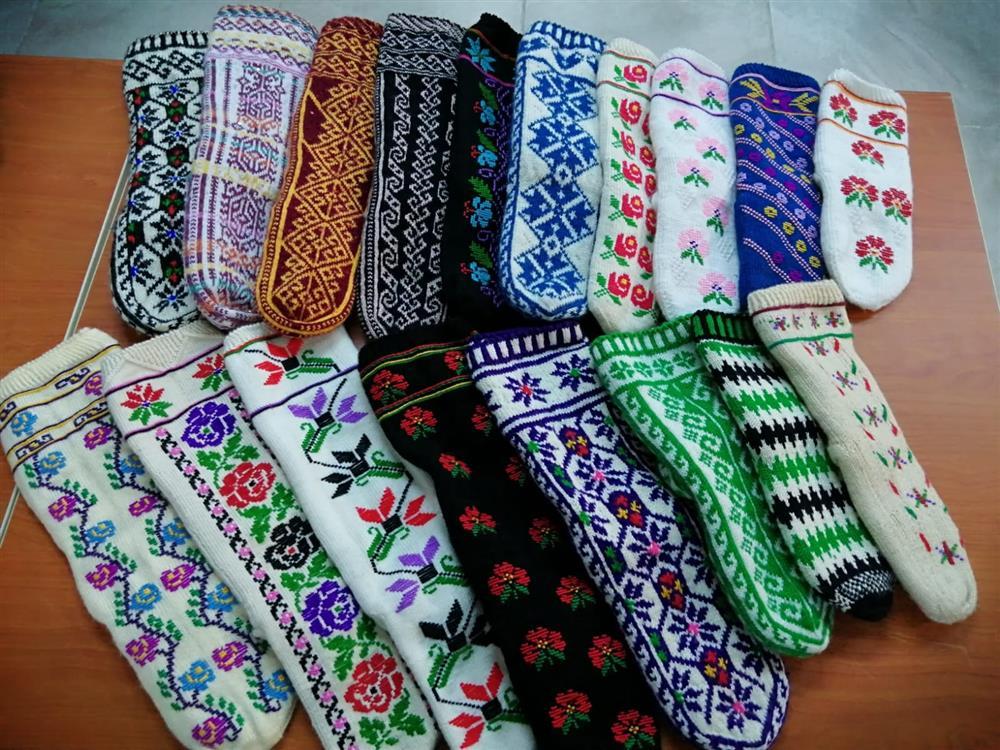
Rize Hemşin Socks (Ministry of Culture and Tourism of the Republic of Türkiye)
Hemşin socks were registered as a geographical indication on 09.08.2021. The application was submitted on 10.03.2021 under application number C2021/000111. The registration holder is the Hemşin Municipality, located at Ortaköy Mahallesi, Atatürk Caddesi, Hükûmet Konağı Kat: 1, Hemşin/Rize. The geographical boundary of the product is limited exclusively to the Hemşin district of Rize Province. The product or its packaging must bear the inscription “Hemşin Çorabı” and the geographical indication emblem. If this is not feasible, the inscription and emblem must be visibly displayed at the production site.
Sheep’s wool and goat hair are primarily used in the production of the socks. However, production with other types of yarn is also possible. The characteristic colors are red, blue, green and white. Contrasting colors are preferred to enhance the visibility of the motifs. Typically, the background color is light (white, yellow, etc.), while the motif colors are dark and dominant.
The sheep’s wool used in Hemşin socks is typically sheared twice a year, in May, June and September. Additional wool is also obtained in autumn from mature sheep. The raw wool (called “yapağı”) obtained from shearing is washed, dried and cleaned of impurities. Low-quality wool is separated and discarded. This sorting process is known in the Hemşin region as “kerkur etmek.”
The wool is combed using a wool comb to separate it into smaller tufts, locally called “tapul.” Combing cleans the wool and separates the fibers, making them easier to spin. Well-combed wool results in fewer breaks during the subsequent yarn production stage.
The tapul wool is twisted into yarn using a traditional tool called a “yiğ.” The yiğ is a wooden rod with a circular wooden piece, approximately 6–7 cm in diameter, at its tip, known as an “araşak.” The araşak facilitates rotation and helps transform the wool into yarn. In some areas, this tool is also called “kirman.” The wool is spun into fine yarn using this device. The twisting is done manually, often supported by the knee. The yiğ is rotated repeatedly around itself to form the yarn. To prevent breakage, the resulting thread is wound onto a spindle. Subsequently, the yarn is twisted again in the opposite direction, either two or three times, using a tool called an “ilik,” to produce the final yarn.
Goat hair is processed similarly, but it is not washed beforehand. Instead, it is cleaned by hand and combed before being spun into yarn using the same method as sheep’s wool.
The yarn is dyed using natural dyes. The main dyeing materials include onion peel, walnut shell, red cabbage and tea. The yarn is boiled in cauldrons to achieve the desired colors.
Hemşin socks are knitted using five needles of size 2.5–3. Knitting begins at the toe (peceğ). The starting method and number of stitches vary depending on the pattern and foot size. The number of stitches is increased to form a circular shape for the front and sole sections. This process continues up to the ankle. Then, using the two lower needles, the sole is knitted and the heel is shaped to complete the “ökçe.”
The upper part of the sock (konç), above the ankle, is knitted with colored threads to create motifs on the front and back surfaces. This section can be of any desired length. The knitting is finished with a ribbed section approximately four fingers wide. The finishing technique is called “peronk.” This method can be applied using either a needle or a knitting needle. There is general similarity in the starting and finishing techniques between colored and white socks.
The motifs used in the socks are inspired by natural elements and traditional designs. Common motifs include bird’s eye, bird’s foot, ram’s horn, chain, keroç, horse hoof, kaytan and sheep’s eye. The plain sections are knitted using a technique of alternating knit and purl stitches. The structure of the motifs determines the knitting pattern. The selection and placement of motifs may vary according to the experience and preferences of the knitter.
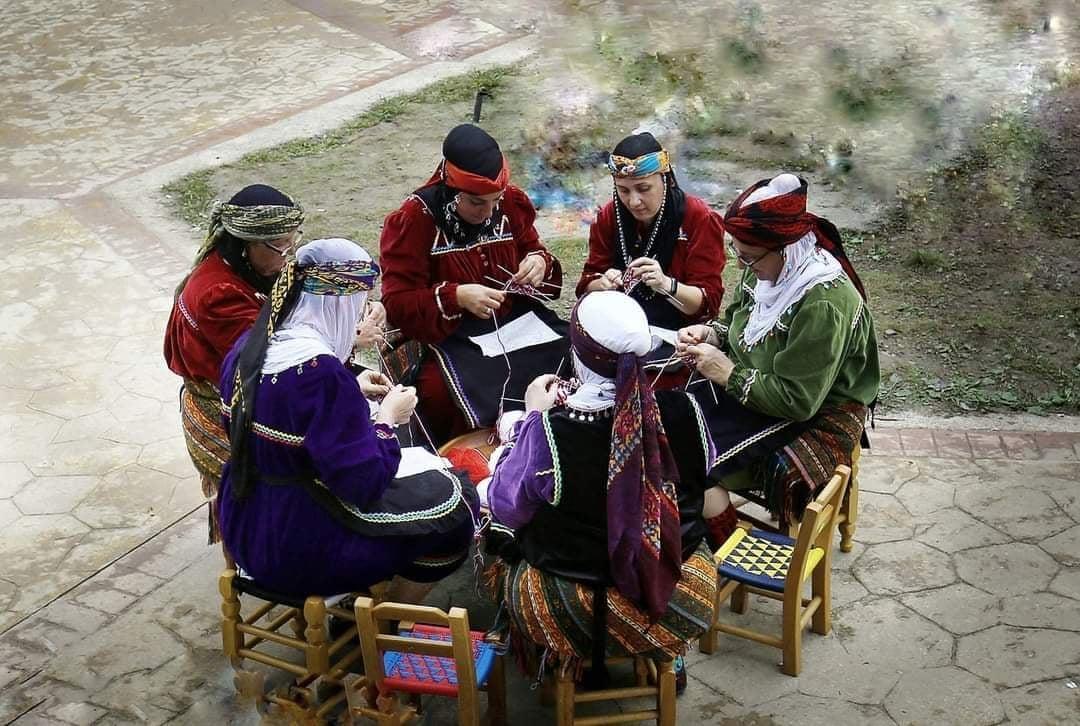
Rize Hemşin Socks (Ministry of Culture and Tourism of the Republic of Türkiye)
The earliest written record concerning Hemşin socks is the 1879 Trabzon Vilayeti Salnamesi. The historical connection and production tradition establish a unique bond between the product and the Hemşin district. Therefore, all production processes for Hemşin socks must be carried out within the boundaries of the Hemşin district of Rize Province.
The production and processing procedures are monitored under the coordination of the Hemşin Municipality. The monitoring board consists of representatives from the Hemşin Municipality and the Hemşin District Public Education Center, along with experts in the field. Inspections are conducted at least once a year, and additional inspections are carried out as needed or in response to complaints.
The monitoring process ensures compliance with the production methods and finishing techniques, as well as the correct use of the inscription “Hemşin Çorabı” and the geographical indication emblem. When necessary, support or services may be obtained from public or private institutions or relevant individuals. The registering authority has the legal authority to pursue legal proceedings to protect the rights associated with the geographical indication.
T.C. Ministry of Culture and Tourism. "Hemşin Çorabı." Accessed May 21, 2025. https://rize.ktb.gov.tr/Resim/389473,2417300504065126636918995410888234611588789njpg.png?0
T.C. Ministry of Culture and Tourism. "Hemşin Çorabı." Accessed May 21, 2025. https://rize.ktb.gov.tr/Resim/389476,24176100740651259769190618328515639581106161njpg.png?0
Turk Patent and Trademark Office. "Hemşin Çorabı Coğrafi İşaret Tescil Belgesi ve Teknik Şartnamesi." Accessed May 20, 2025. https://ci.turkpatent.gov.tr/Files/GeographicalSigns/824386f9-ef96-4e75-9083-265ac03f54b6.pdf
Turkish Patent and Trademark Office. "Hemşin Çorabı - Coğrafi İşaret Detay Sayfası." Accessed May 20, 2025. https://ci.turkpatent.gov.tr/cografi-isaretler/detay/3630

Hemşin Sock
Registration Number | 841 | ||||||||
|---|---|---|---|---|---|---|---|---|---|
Registration Date | 09.08.2021 | ||||||||
Application Number | C2021/000111 | ||||||||
Application Date | 10.03.2021 | ||||||||
Name of the Geographical Indication | Hemşin Çorabı | ||||||||
Product / Product Group(s) | Handicraft Products Other Than Socks Kilims and Textiles Carpets | ||||||||
Type of Geographical Indication | Geographical Indication | ||||||||
Applicant/Registrant(s) | Hemşin Municipality | ||||||||
Address of the Registrant | Ortaköy Neighborhood, Atatürk Street, Government House, 1st Floor, Hemşin RIZE | ||||||||
Geographical Boundary | Rize Province Hemşin District | ||||||||
Geographical Indication and Registration Details
Materials and Colors Used in Production
Production Method
Preparation of Wool
Yarn Production
Yarn Dyeing
Knitting the Sock
Motifs and Patterns
Geographical Production Requirement
Monitoring and Control